Log in
Sign up for FREE
arrow_back
Library

Copy of Mutations Virtual Lab (5/28/2026)

star
star
star
star
star
Last updated about 2 hours ago
17 questions
Untitled Section
2
1
1
1
1
2
1
1
2
2
1
2
1
2
1
Exit Ticket
Required
0
Required
0
Part 1 - The Original DNA
  1. Click Transcribe to form a strand of mRNA from the original DNA. After this process is complete, click Translate to form a protein from the mRNA.
  2. This original DNA is the non-mutated strand of DNA; the mRNA and protein formed from the original DNA are also the original mRNA and protein.
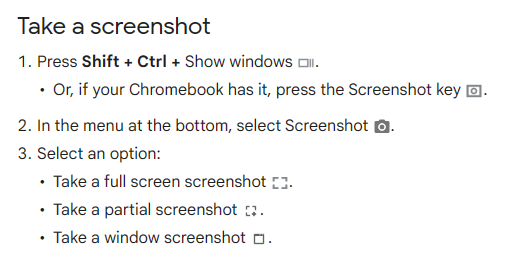
  3. Take a screenshot of this protein and attach it to question 1.
Question 1
1.
Starting from Met, record all of the amino acids in the protein formed in the original protein (put a space or a hyphen without a space between each amino).

*If you see isoleucine (Ile), it is abbreviated with a capital "I" ("eye") lowercase "l" and "e".

Original (non-mutated) protein - _______

Attach the screenshot of the original protein, click "Show Your Work," and attach it there.

Strong Advice - write this protein down on a sheet of paper for an easier comparison to other proteins.

Question 2
2.
A codon is a group of three (3) nucleotides on an mRNA that encodes for one amino acid. How many codons were on the original mRNA strand (don't forget the stop codon)? _______
Question 3
3.
Hydrophobic vs. Hydrophilic Amino Acids

Hydrophobic is a word that is used to describe chemicals that are repelled by, and will not interact with, water. Hydrophilic is used to describe chemicals that are attracted to, and will interact with, water.

The cell membrane is made up of primarily phospholipids that have hydrophilic "heads" that tend to point toward the fluid in and around of the cells, and hydrophobic "tails" that point away from the fluid in and around the cells. These "tails" tend to position themselves so that they are as far from water as possible, but still are part of the cell membrane.

Think about what hydrophobic and hydrophilic mean, as well as the example of the phospholipids provided. Then examine the amino acids in the original protein. Two of these aminos are differently colored than the rest. Based upon their behavior, do you think they are hydrophilic or hydrophobic? _______
Question 4
4.
In this model, the bottom strand of DNA was transcribed to make the mRNA. However, which strand of DNA is most similar to the mRNA strand, the non-template strand (the top) or the template strand (the bottom)?

Hint - click Transcribe, let the mRNA form across the screen, then click Stop and compare the mRNA with the top and bottom strand of DNA.

Which DNA strand is most similar to the mRNA? _______
Part 2 - Substitution Mutation 1
  1. Click on the third nucleotide in the second codon on the template strand (bottom) of the DNA.
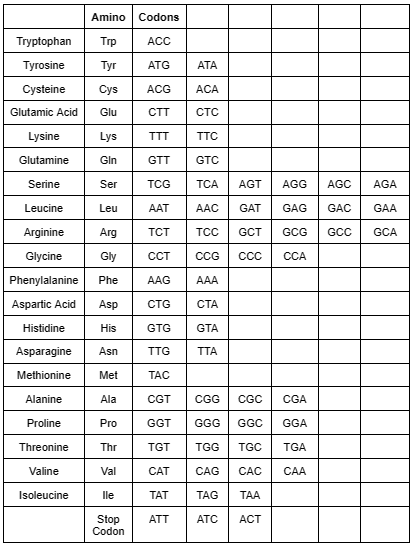
  2. Click Substitution Mutation, then create a substitution mutation that causes a silent mutation (use the codon chart provided to assist you).
  3. Click Show Protein and compare it to the original protein to ensure that the mutation is truly a silent mutation.
Substitution Mutation - often a type of point mutation that occurs when one nucleotide is swapped out for a different nucleotide on a strand of DNA.

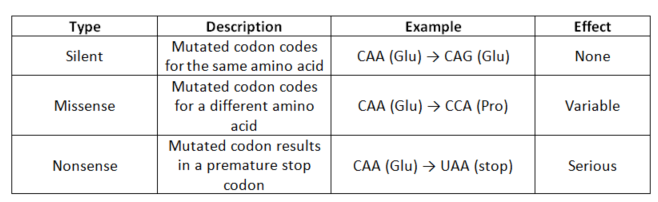
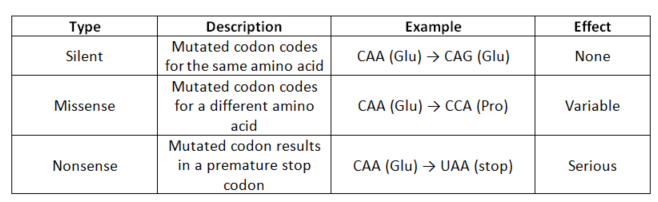
Substitution mutations could have one of three effects on the protein that is formed (see the table, below).

Question 5
5.

Some substitution mutation result in a protein that will work improperly but others do not. Why is this?

Tip - Review the information about substitution mutations, above. Speak about what substitution mutations are and of the type(s) of substitution mutations that do not cause a change in protein function.

Part 3 - Substitution Mutation 2
  1. Click either the 1st or 2nd nucleotide in the third codon on the template strand (bottom) of the DNA.
  2. Click Substitution Mutation, then create a substitution mutation on that nucleotide.
  3. Click Show Protein and compare it to the original protein to see the change that occurred in the protein.

Question 6
6.

What is the resulting protein (copy down all of the amino acids in the polypeptide, beginning from Met, separating each amino acid by one space or a hyphen without a space)?

Include a screenshot of this protein, below.

Question 7
7.

What effect does this mutation have on the protein (compare it to the original protein)?

Question 8
8.

What effect might this mutation have on the function of the protein?

Tip - examine the chart provided in the hint.

Part 4 - Insertion Mutations
  1. Click Edit DNA and make an insertion mutation by inserting a C between the 5th and 6th codons.
  2. Click Show Protein and compare it to the original protein.
Insertion Mutation - a type of frameshift mutation. Occurs when a nucleotide is added to a DNA molecule. It causes all of the other nucleotides, from the point of insertion to the end of the DNA strand, to move down one position. The impact on the protein strand from this type of mutation is often quite profound, leading to different amino acids from the mutation point to the end of the protein. At times, an insertion mutation can lead to an early stop codon, meaning that the protein will be missing amino acids. At other times, an insertion mutation can lead to a missing stop codon, meaning that the protein has more amino acids than it should. Either way, the proteins that are formed from this type of mutation will generally have a different function than the original protein, or no function at all.
Question 9
9.

Record the resulting polypeptide chain (amino acids) - separate each by one space or a hyphen without a space.

Include a screenshot of the protein, below.

Question 10
10.

What effect does this mutation have on the protein? Compare it to the original polypeptide. In your answer, describe how the amino acid chain (polypeptide) changed and state at which amino acid position the first different amino occurs at by number (1-11).

Question 11
11.

Would this mutation allow the protein for perform the intended function of the original protein? Why or why not?

Part 5 - Deletion Mutations
  1. Click Edit DNA and create a deletion mutation by deleting the first nucleotide in the 4th codon.
  2. Click Show Protein.
Deletion Mutations - a type of frameshift mutation. Occurs when a nucleotide on DNA is deleted. This causes the rest of the DNA strand to shift one place to the left. This likely leads to a change in all of the codons from to point of mutation to the end of the DNA strand. The overall impact that deletion mutations have on the protein are similar to that of insertion mutations.
Question 12
12.

Record the resulting polypeptide chain (amino acids) - separate each by one space or a hyphen without a space.

Include a screenshot of the protein, below.

Question 13
13.

What effect does this mutation have on the polypeptide? Compare to the original polypeptide. In your answer, state at what amino acid position is the first change to the polypeptide chain visible (from 1-11)?

Part 6 - Comparing Substitution and Frameshift Mutations (insertion/deletion)
  1. Click Edit DNA and create a substitution mutation by changing the second nucleotide of the 8th codon to an A.
  2. Click Show protein.
Question 14
14.

What is the resulting protein (copy down all of the amino acids in the polypeptide, beginning from Met, separating each amino acid by one space or a hyphen without a space)?

Include a screenshot of this protein, below.

Question 15
15.

Why would insertion mutations generally have a greater impact on the protein than substitution mutations?

Question 16
16.

Provide a list of one to two concepts, ideas, or things that you either learned or understood better after having completed this activity.

Question 17
17.

After having completed this activity, my confidence regarding this concept has/is:
Significantly increased
Moderately increased
Somewhat increased
Unchanged
Somewhat decreased
Moderately decreased
Significantly decreased