Copy of Electron Configuration Reading w/Questions (Oct 2023) (5/28/2026)
star
star
star
star
star
Last updated about 2 hours ago
0 questions
Electron Configurations
Ground state electron configurations are the foundation for understanding molecular bonding, properties, and structures. The ground state electron configuration sheds light on many different atomic properties, from the electrons in an atom to the differing orbitals. Fundamentally, understanding electron configuration leads to an understanding of the periodic table.
Introduction
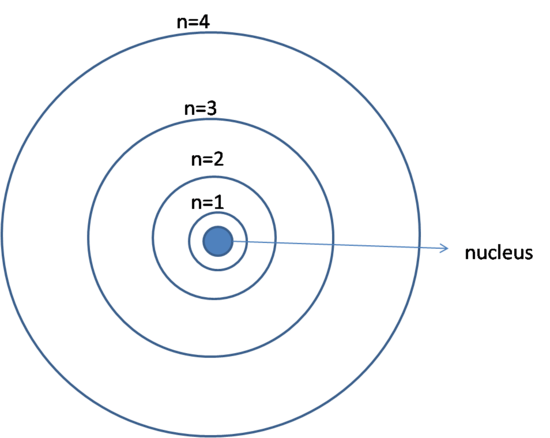
In 1913, Niels Bohr proposed that electrons could orbit an atom at a certain distance without collapsing into the atom and that each orbit distance had its unique energy level.
This model proposed the Bohr atom, which shows circular orbits surrounding the nucleus.
Orbitals
In addition to having different energy levels, orbitals also have different shapes and orientations, and two electrons can occupy each. For each principal quantum number, n, there is one s orbital, three p orbitals, five d orbitals, and seven f orbitals. Therefore, an s orbital can hold two electrons, a p orbital can hold six electrons, a d orbital can hold ten, and an f orbital can hold fourteen.
Aufbau Principle
The Aufbau principle states that electrons must fill the lowest energy levels first.
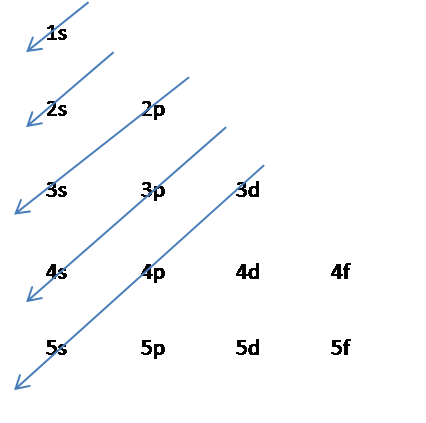
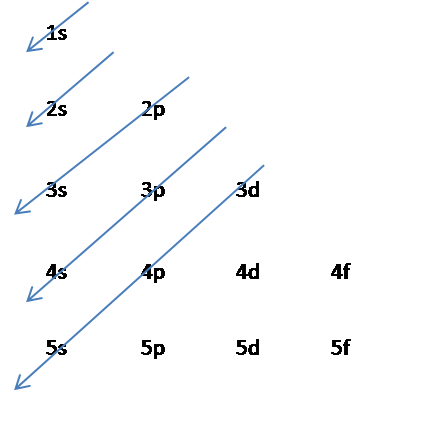
Following the model, electrons fill the 1s orbital with two electrons, the 2s with two electrons, the 2p with six electrons, the 3s with two electrons, the 3d with 10 electrons, etc.
There are some exceptions to the Aufbau Principle. This occurs mainly with electrons in the d orbital where extra stability is obtained from a half-filled or fully-filled d orbital. Therefore, if there are 4 electrons, or 9 electrons in the d orbital, it will move one electron from the s orbital below it to fill the extra space.
Example 1: Chromium
Chromium's electron configuration, following the model, would be: 1s2 2s2 2p6 3s2 3p6 4s2 3d4, but instead, it is 1s2 2s2 2p6 3s2 3p6 4s1 3d5 because there is extra stability gained from the half-filled 3d orbital.
Hund's Rule and Pauli's Exclusion Principle
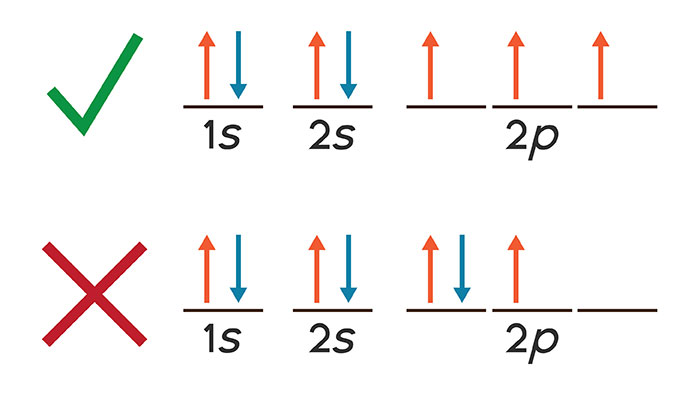
Hund’s rule states that when filling sub-levels other than s orbital, electrons must not be spin paired in the orbitals until each orbital contains one electron, and no orbital can have two electrons with the same spin.
Pauli's Exclusion Principle states that no two electrons can have the same quantum numbers. An orbital can only hold 0, 1, or 2 electrons. They must have opposite spins if there are 2 electrons in the orbital.
When diagramming electrons filling sub-orbitals in each energy level and orbital, electrons are drawn as arrows to show the direction or spin that they are traveling. Recall from Hund's rule that electrons cannot be paired until each sub-orbital has one electron and that Pauli's exclusion principle states that each electron in every sub-orbital must spin in a different direction. Therefore, in each sub-orbital that holds two electrons, the first must spin upward, and the other must spin downward (see the image below; each line represents a sub-orbital).
An s-orbital has only one sub-orbital; p-orbitals have three sub-orbitals; d-orbitals have five sub-orbitals; and f-orbitals have seven sub-orbitals. Each sub-orbital can hold up to two electrons, spinning in opposite directions.
Orbitals and the Periodic Trend
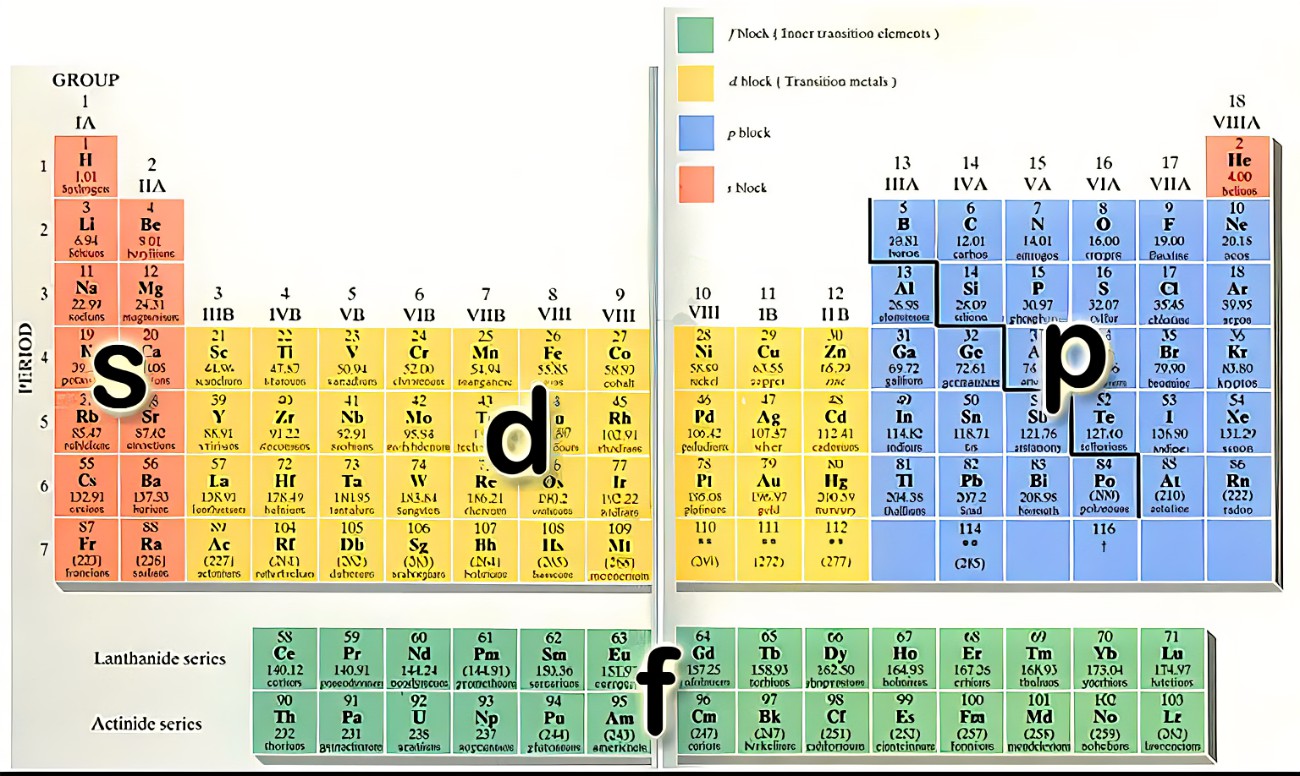
Valence electron shells in the periodic table follow a trend. This can be referred to as the s block, the p block, the d block, and the f block (lanthanides and actinides), meaning that, in its ground state (lowest energy level), an element in a certain "block" will have its valence electrons in the s, p, d, or f orbitals depending on how many electrons it has.
How to Write Ground State Electron Configurations
The Basics
Electron configurations are written using the principal quantum number n, followed by the orbital (s, p, d, or f) with the total number of electrons written as superscripts. Example: 1s2, a few main steps should be followed for writing ground state electron configurations.
Find the number of electrons in the atom. Example: Na: 11 e- Na+: 10 e-
Fill orbitals following the model until all electrons have been accounted for.
After that, it is important to check for a nearly half-filled or filled d orbital (d4 or d9) and adjust accordingly by removing an electron from the s orbital beneath it.
Example 1: Sodium (Na): 11 e-
1s2 2s2 2p6 3s1
or
Na+: 1s2 2s2 2p6 (from the loss of 1 e-)
Example 2: Chromium (Cr): 24
Cr: 1s2 2s2 2p6 3s2 3p64s2 3d4 half-filled orbital, s orbital beneath it.
1s2 2s2 2p6 3s2 3p64s1 3d5
The second line in the example is the actual electron configuration of chromium. It differs because the 4s orbital is beneath the 3d in energy. According to the filling order, chromium will fill the 3d orbital first with 5 electrons before adding the sixth electron to the 4s orbital, giving it a stable noble gas configuration. This results in greater stability for the chromium atom since the electrons are spaced out equally - each 3d sub-orbital is half-full, and the 4s orbital is half-full.
Shorthand Notation
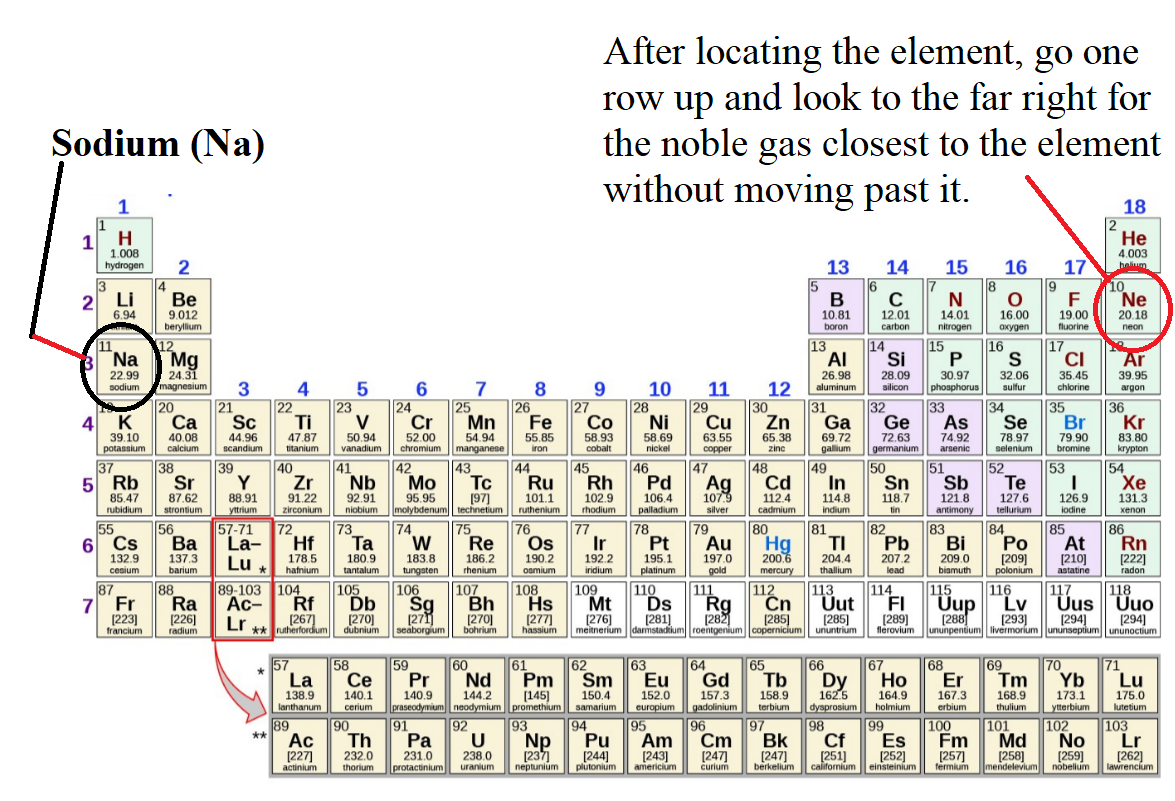
Because writing the entire electron configuration can become cumbersome, there is a shorthand option. It uses the symbol of the noble gas (elements to the farthest right period) in the period above the element to represent the electron configuration before it.