2
The result of meiosis are cells (sperm and egg) called
The zygote, which is formed by the fusion of two haploid gametes, is
B.4.5 Make and defend a claim based on evidence that inheritable genetic variations may result from: (1) new genetic combinations through meiosis, (2) viable errors occurring during replication, and (3) mutations caused by environmental factors.
Learning Goals:
I can explain most of the events of meiosis I and II.
I can explain the purpose behind meiosis.
I can explain how meiosis is related to reproduction.
I can explain the difference between haploid and diploid cells and in which types of cells we find them.
The result of meiosis are cells (sperm and egg) called
The zygote, which is formed by the fusion of two haploid gametes, is
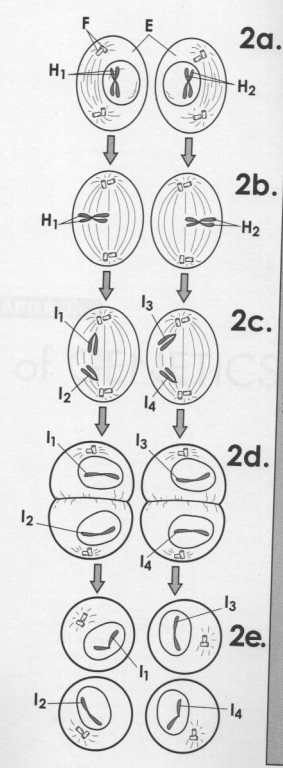
Meiosis consists of two rounds of
Meiosis I, the first round of meiosis, results in cells that are
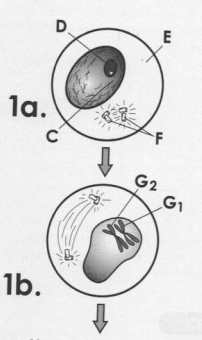
In prophase I (prophase of meiosis I), the cell begins with
In prophase I, once the homologous chromosomes come together,
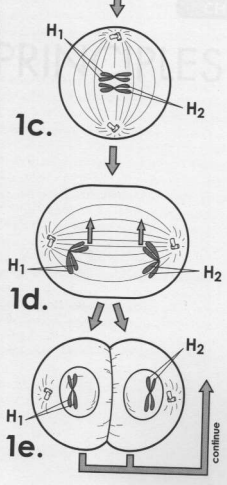
During metaphase of meiosis I (metaphase I), each chromosome consists of
During
By the end of meiosis I (telophase I), the chromosomes have been distributed into
When the cell leaves meiosis I and enters meiosis II, each chromosome still consists of
The sister chromatids will be separated during
During telophase of meiosis II, the cells are divided; this is called
At the end of telophase of meiosis II,
In males, the gametes must undergo further
In males, meiosis results in the formation of four gametes (sperm cells); however, in females, this same process results in only
Use the information in the above reading to help you sequence each of these statements according to their proper order in meiosis.
| Draggable item | arrow_right_alt | Corresponding Item |
|---|---|---|
Seventh | arrow_right_alt | Homologous pairs of chromosome line up in the center of the cell. |
Sixth | arrow_right_alt | Homologous pairs of chromosomes are separated, each moving to opposite sides of the cells. |
Second | arrow_right_alt | Cytokinesis occurs on two already existing cells. |
Eighth | arrow_right_alt | Two (2) nuclear membranes form that are haploid (n). |
Third | arrow_right_alt | Four (4) nuclear membranes form that are haploid (n). |
First | arrow_right_alt | Spindle fibers attach to one side of each homologous pairs of chromosomes |
Fifth | arrow_right_alt | Individual chromatids are separated and are moved to opposite sides of the cells. |
Fourth | arrow_right_alt | Crossing over may occur. |
Use the above reading to help you to identify the stage of meiosis that each statement is in. Each stage may be used more than one time.
Prophase I | Metaphase I | Anaphase I | Telophase I | Prophase II | Metaphase II | Anaphase II | Telophase II | |
|---|---|---|---|---|---|---|---|---|
Homologous chromosome line up in the center of the cell | ||||||||
The individual chromatids separate apart. | ||||||||
Homologous pairs pairs of chromosomes move to opposite sides of each cell | ||||||||
Four (4) haploid (n) daughter cells form | ||||||||
Individual (non-paired) chromosomes line up across the middle of the cell. | ||||||||
Chromosomes condense (wrap tightly around histones) and become visible. | ||||||||
Sister chromatids separate from each other. | ||||||||
Two (2) haploid (n) daughter cells form | ||||||||
Sister chromatids separate into individual chromosomes. | ||||||||
Two (2) nuclear envelopes reform. | ||||||||
Spindle fibers attach to one side of the homologous chromosome pairs | ||||||||
One nuclear envelope breaks down. | ||||||||
Unpaired chromosomes line up; spindle fibers are attached to both sides of each chromosome | ||||||||
Crossing over occurs. |