Log in
Sign up for FREE
arrow_back
Library

Copy of Decomposition Reactions (with a smidgen of a review of combination reactions) (5/28/2026)

star
star
star
star
star
Last updated about 2 hours ago
13 questions
1
1
1
1
1
1
1
1
1
1
1
1
1

Sample Problem: Decomposition Reactions

When an electric current is passed through pure water, it decomposes into its elements. Write a balanced equation for the decomposition of water.

Step 1: Plan the problem.

Water is a binary compound composed of hydrogen and oxygen. The hydrogen and oxygen gases produced in the reaction are both diatomic molecules.

Step 2: Solve.

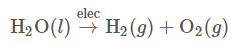
The skeleton (unbalanced) equation:

Note the abbreviation “elec” above the arrow to indicate the passage of an electric current to initiate the reaction.

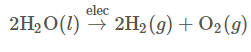
Balance the equation.


Step 3: Think about your result.

The products are elements and the equation is balanced.
How does an airbag explode at just the right time in the event of a car accident? Learn more in this simulation:
Question 1
1.

Question 2
2.

Question 3
3.

Question 4
4.

Question 5
5.

Question 6
6.

Question 7
7.

Question 8
8.

Question 9
9.

Question 10
10.

Question 11
11.

Question 12
12.

Question 13
13.


How does a decomposition reaction work?

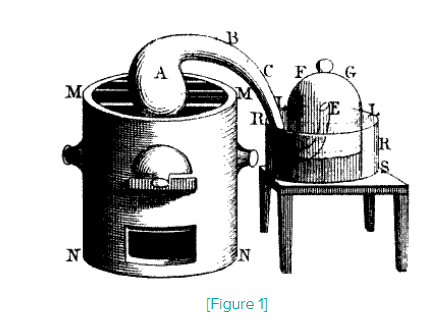
Antoine Lavoisier is widely known as the “father of modern chemistry.” He was one of the first to study chemical reactions in detail. Lavoisier reacted mercury with oxygen to form mercuric oxide as part of his studies on the composition of the atmosphere. He was then able to show that the decomposition of mercuric oxide produced mercury and oxygen. The diagram above shows the apparatus used by Lavoisier to study the formation and decomposition of mercuric oxide.

Decomposition Reactions
A decomposition reaction is a reaction in which a compound breaks down into two or more simpler substances. The general form of a decomposition reaction is:
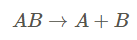


Most decomposition reactions require an input of energy in the form of heat, light, or electricity.

Binary compounds are compounds composed of just two elements. The simplest kind of decomposition reaction is when a binary compound decomposes into its elements. Mercury(II) oxide, a red solid, decomposes when heated to produce mercury and oxygen gas.
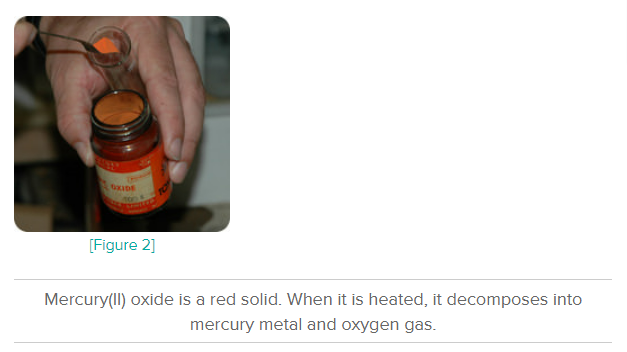


A reaction is also considered to be a decomposition reaction even when one or more of the products are still compounds. A metal carbonate decomposes into a metal oxide and carbon dioxide gas. For example, calcium carbonate decomposes into calcium oxide and carbon dioxide.



Metal hydroxides decompose on heating to yield metal oxides and water. Sodium hydroxide decomposes to produce sodium oxide and water.



Some unstable acids decompose to produce nonmetal oxides and water. Carbonic acid decomposes easily at room temperature into carbon dioxide and water.

This reaction is classified as:
combination
single displacement
synthesis
decomposition
This reaction is classified as:
displacement
decomposition
combination reaction
synthesis reaction
What form of energy can be used for a decomposition reaction to take place (select all that apply)?
Light
Electric
Motion
Heat
Mental
Decomposition reactions form:
Simpler compounds for a complex compound
Complex compounds for a simpler compound
A single product
All of these are correct
None of these are correct
Into what does a binary compound often decompose?
Its component elements
A different binary compound
A ternary compound
Two binary compounds
Metal hydroxides often decompose into __________ and ___________.
a metal oxide and a hydroxide ion
a metallic element and water
a metal oxide and water
a metallic element and a hydroxide ion
Metal carbonates often decompose into ___________ and ____________.
a metallic element and a carbonate ion
a metal oxide and carbon dioxide
a metal oxide and a carbonate ion
a metallic element and carbon dioxide
True
False
Which of the following is correctly balanced decomposition reaction for silver oxide?
An element may undergo a chemical decomposition reaction.
True
False
Which of the following is not a decomposition reaction?
Two compounds reacting to form another compound is what type of reaction?
decomposition
combustion
combination
displacement
This is an example of a combination/synthesis reaction.

True
False