Log in
Sign up for FREE
arrow_back
Library

Copy of How Pathogens are Spread (5/28/2026)

star
star
star
star
star
Last updated about 2 hours ago
12 questions
1
1
1
1
1
1
1

Why?

Communicable diseases are spread between individuals by different methods, but they are all caused by pathogens, which are commonly called “germs.” Knowledge of pathogens and the ways in which they can be spread helps humans understand and prevent disease outbreaks.
1
Question 1
1.
Question 2
2.

Explain your answer to 1d.

1
Question 3
3.
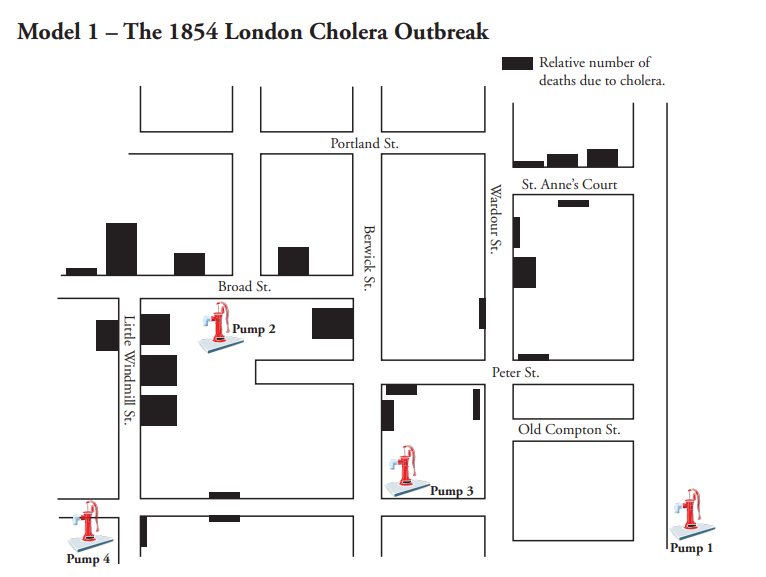
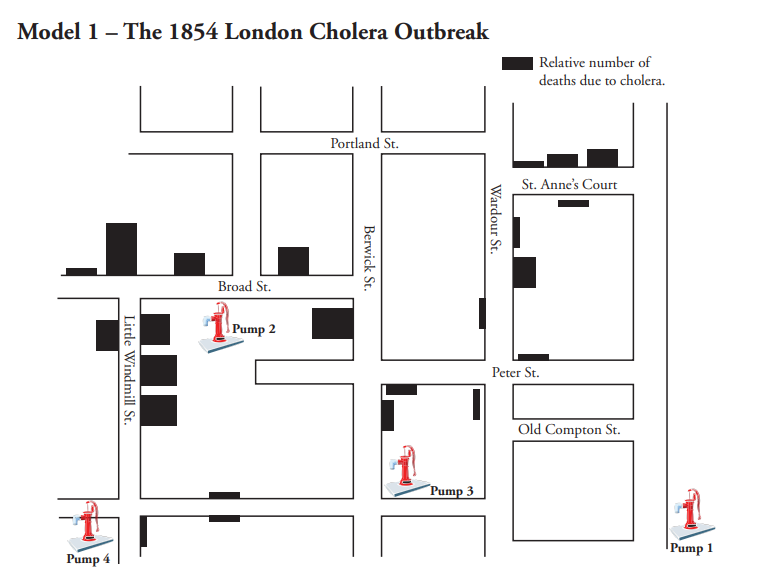
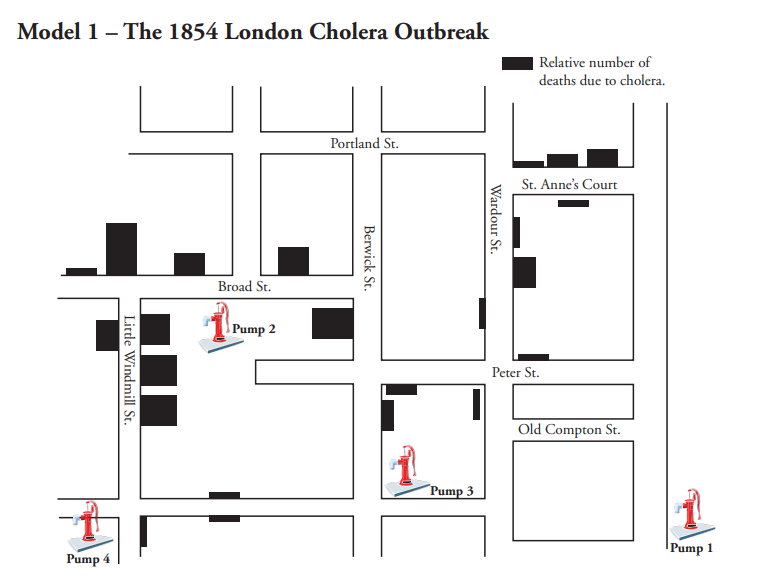
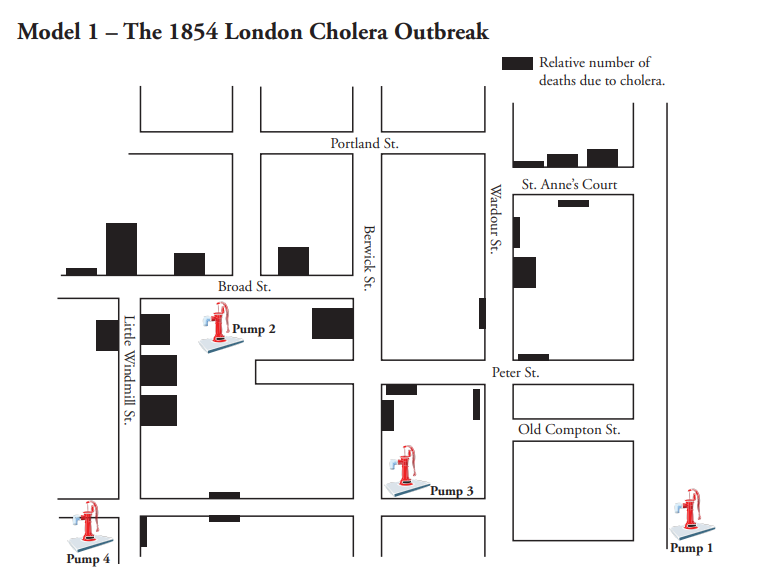
Where exactly on the map does the size and concentration of the boxes appear to be the highest? _______
Question 4
4.

Is there a relationship between the number of black boxes and any of the water pumps? Be specific and detailed in your answer.

Question 5
5.


Based on the information provided in the map, propose a way cholera may be transmitted.

Question 6
6.

Based on this information, what action would you have taken if you had been responsible for public health in London in 1854?

Read This!

Dr. John Snow is often referred to as the “father of epidemiology.” Epidemiology is the study of the causes and spread of infectious diseases. Dr. Snow’s study of the cholera outbreak of 1854 led to the discovery of the cause of this epidemic.
1
Question 7
7.
Question 8
8.


Considering all of the different ways disease may be transmitted, which modes are more likely to cause large numbers of individuals to get sick in the United States? Explain your reasoning.


1
Question 9
9.
1
Question 10
10.
Question 11
11.

Why might diseases transmitted by vectors be harder to control than those transmitted by other means?

Question 12
12.

In the 14th century in Europe, the bubonic plague killed approximately one third of the population. Bubonic plague is caused by the bacteria Yersinia pestis, which is spread by an insect vector carried by rats and other rodents. This disease can be spread to other animals besides humans. How is control of a disease such as bubonic plague complicated by the fact that it spreads across multiple animal species?

Model 1 is a map of an area in London where a large number of cases of cholera occurred in 1854.

a. How many water pumps are shown on the map? _______

b. What do the black boxes represent on the map? _______

c. What do the relative sizes of the boxes represent? _______

d. Is the concentration and size of boxes the same at all locations on the map? _______
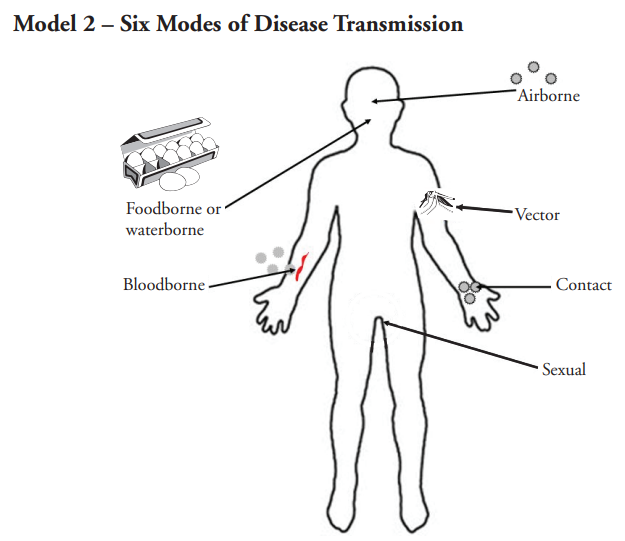
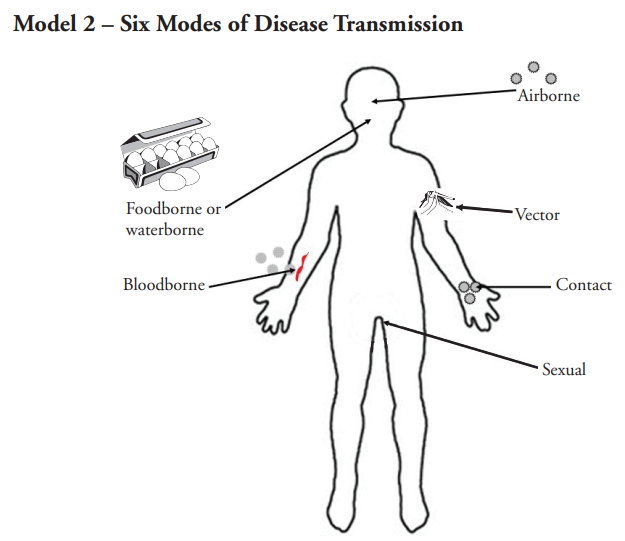
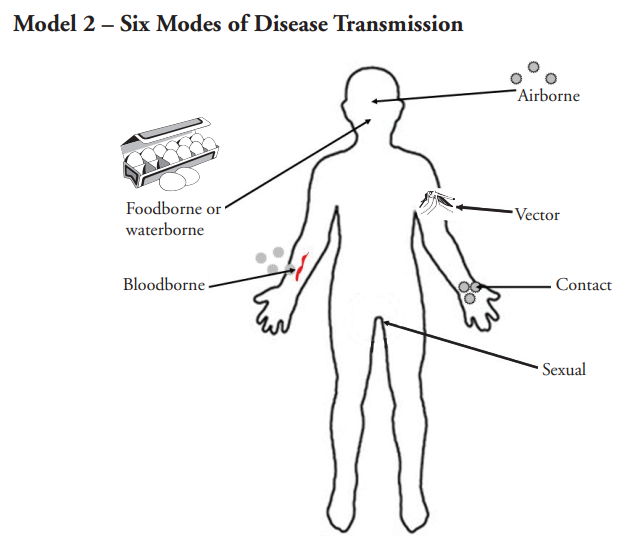
Model 2 illustrates several methods by which diseases may be transmitted.

a. List the six modes of disease transmission shown in Model 2.
_______, _______, _______, _______, _______, _______

b. Which of these modes of transmission require a bodily opening, either natural or artificial? _______

c. An organism that is used by a pathogen to move from one person to another is called a vector. What is the vector in Model 2? _______
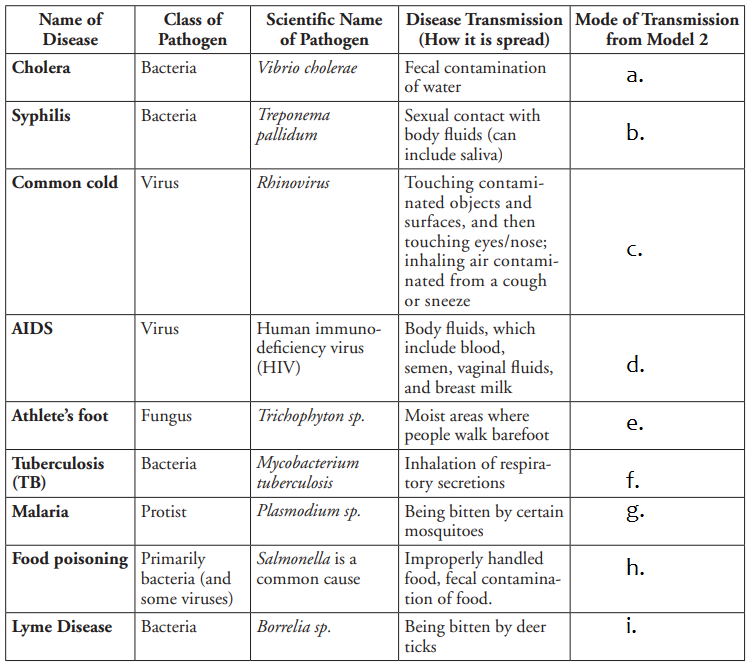
Consider the information given in the table to the bottom-left concerning several diseases. Identify the mode(s) of transmission from Model 2 that is most appropriate based on the description of each disease.

a. _______
b. _______
c. _______
d. _______
e. _______
f. _______
g. _______
h. _______
i. _______
Below are several methods used to control disease. Under each method of control, list the disease from the table to the left that could be prevented by it:

a. Preventing the contamination of food and water supplies._______

b. Hand washing and good personal hygiene. _______

c. Avoid contact with body fluids. _______

d. Controlling insect populations_______