Twa kɔ nsɛm atitiriw so
Log in
Sign up for FREE
arrow_back
Laabri

TEST Group 1

star
star
star
star
star
Last updated 20 days ago
70 Nsɛmmisa
1
Asemmisa {{asɛmmisaAhyɛnsode}}
1.

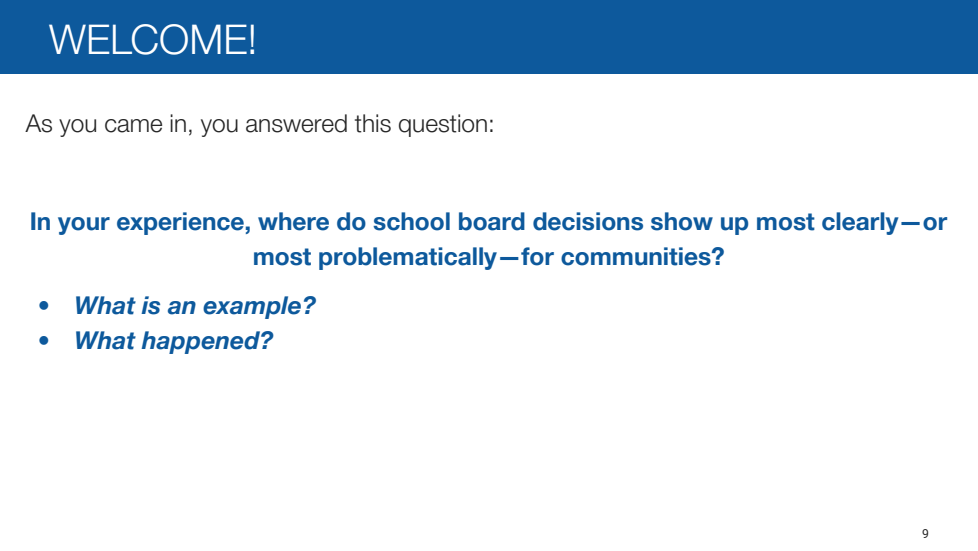
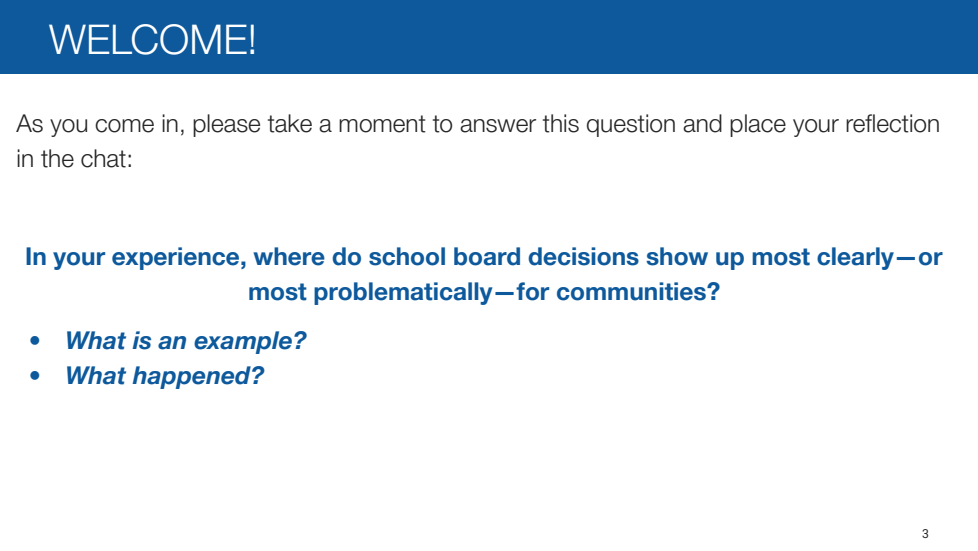
In your experience, where do school board decisions show up most clearly—or most problematically—for communities?

1
Asemmisa {{asɛmmisaAhyɛnsode}}
2.

What is an example? What happened?
1
Asemmisa {{asɛmmisaAhyɛnsode}}
3.

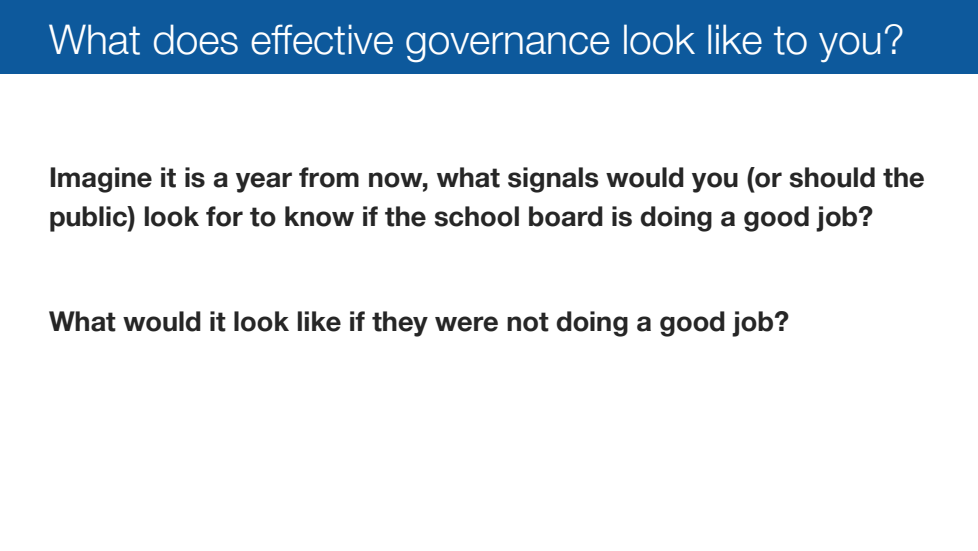
Imagine it is a year from now, what signals would you (or should the public) look for to know if the school board is doing a good job?

1
Asemmisa {{asɛmmisaAhyɛnsode}}
4.

What would it look like if they were not doing a good job?

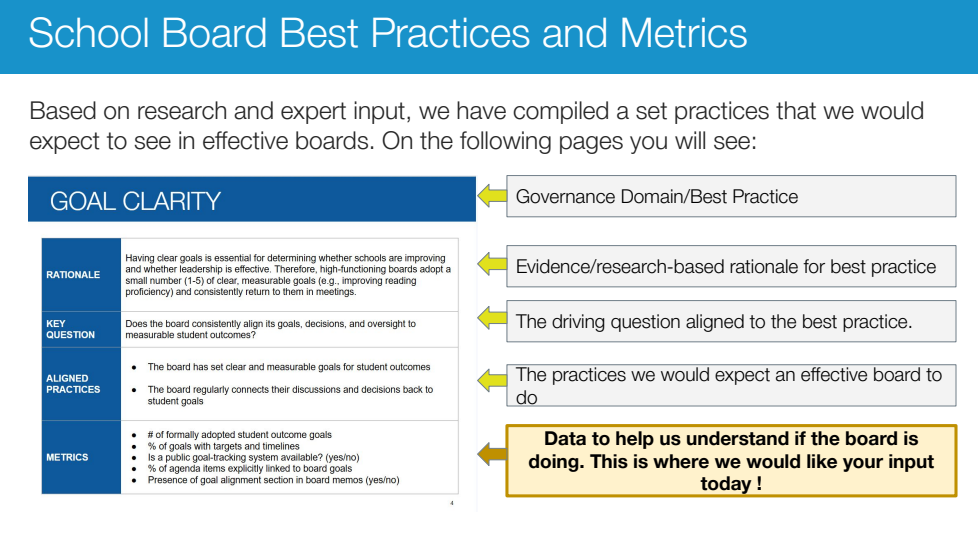
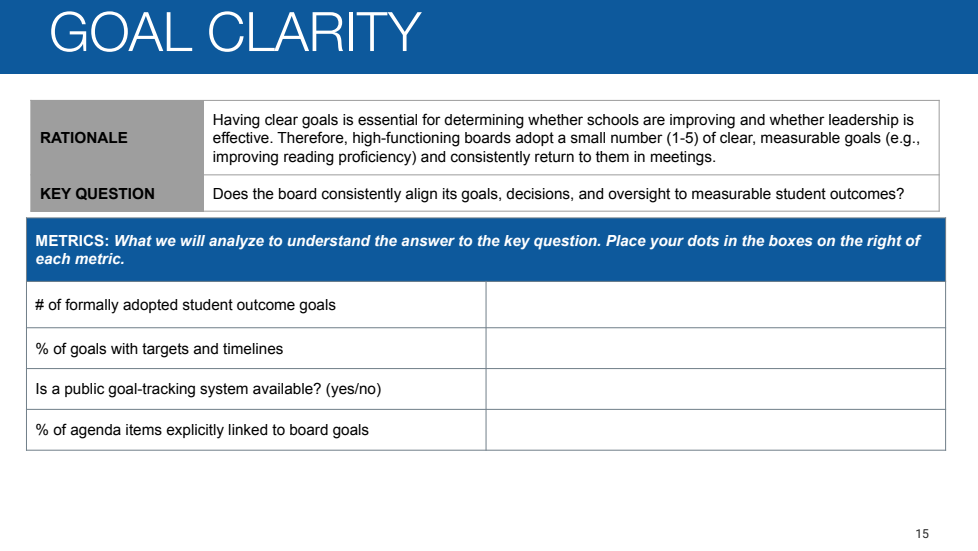
Rationale: Having clear goals is essential for determining whether schools are improving and whether leadership is effective. Therefore, high-functioning boards adopt a small number (1-5) of clear, measurable goals (e.g., improving reading proficiency) and consistently return to them in meetings. 


Key Question: Does the board consistently align its goals, decisions, and oversight to measurable student outcomes?

1
Asemmisa {{asɛmmisaAhyɛnsode}}
5.

# of formally adopted student outcome goals
1
1
1

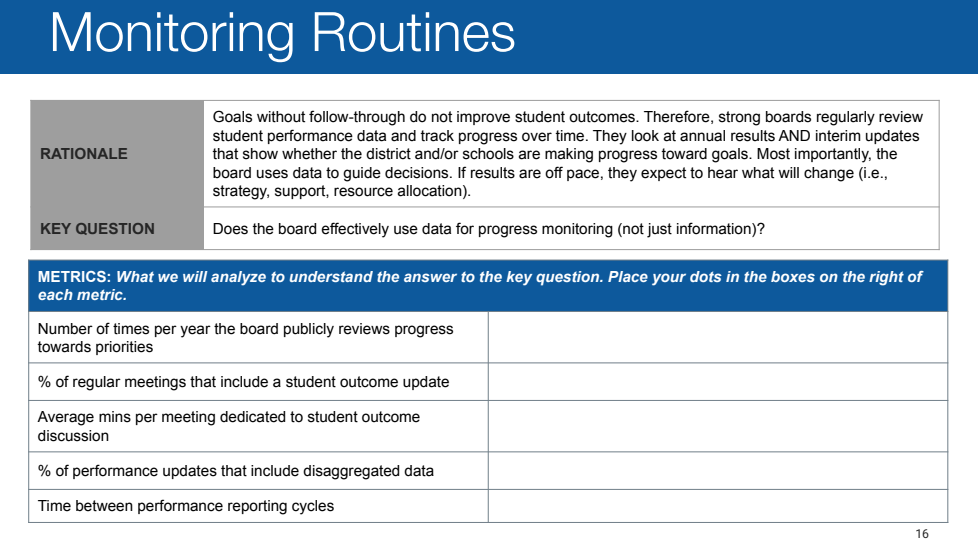
Rationale: Goals without follow-through do not improve student outcomes. Therefore, strong boards regularly review student performance data and track progress over time. They look at annual results AND interim updates that show whether the district and/or schools are making progress toward goals. Most importantly, the board uses data to guide decisions. If results are off pace, they expect to hear what will change (i.e., strategy, support, resource allocation).

Key Question: Does the board effectively use data for progress monitoring (not just information)?

1
1
1
1
1
1
1
1
1
1
1
1

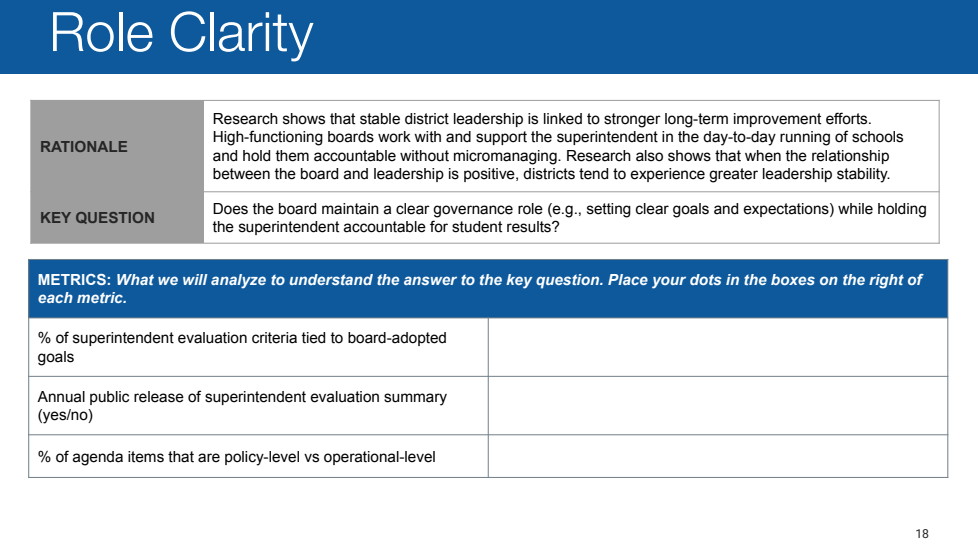
Rationale: Research shows that stable district leadership is linked to stronger long-term improvement efforts. High-functioning boards work with and support the superintendent in the day-to-day running of schools and hold them accountable without micromanaging. Research also shows that when the relationship between the board and leadership is positive, districts tend to experience greater leadership stability.

Key Question: Does the board maintain a clear governance role (e.g., setting clear goals and expectations) while holding the superintendent accountable for student results?

1
Asemmisa {{asɛmmisaAhyɛnsode}}
21.

% of superintendent evaluation criteria tied to board-adopted goals
1
1
1
1
1
1
1
1
1
1
1
1
1
1
1
1
1

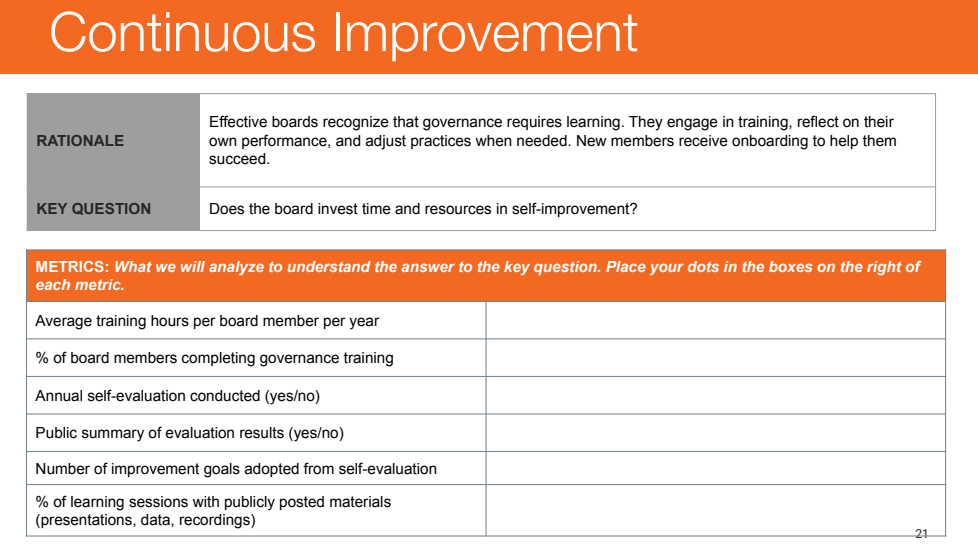
Rationale: Effective boards recognize that governance requires learning. They engage in training, reflect on their own performance, and adjust practices when needed. New members receive onboarding to help them succeed.

Key Question: Does the board invest time and resources in self-improvement?

1
1
1
1
1
1

Rationale: Research suggests that effective school boards do not require specific professional credentials, but they do require a mix of governance skills, financial literacy, data fluency, community knowledge, and the ability to work collectively toward clear student outcome goals. Training and role clarity are often more important than any single member’s technical expertise.

Key Question: Is the board comprised of members who have diverse perspectives, skills, and knowledge?

1
Asemmisa {{asɛmmisaAhyɛnsode}}
45.

Professional background aggregated by content area (not individual)
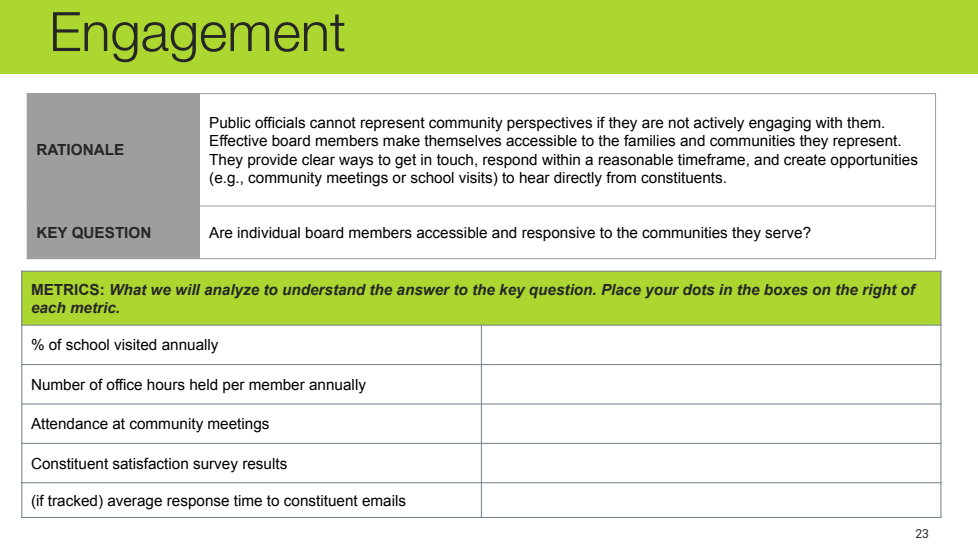
 

Rationale: Public officials cannot represent community perspectives if they are not actively engaging with them. Effective board members make themselves accessible to the families and communities they represent. They provide clear ways to get in touch, respond within a reasonable timeframe, and create opportunities (e.g., community meetings or school visits) to hear directly from constituents.

Key Question: Are individual board members accessible and responsive to the communities they serve?

1
1
1
1
1


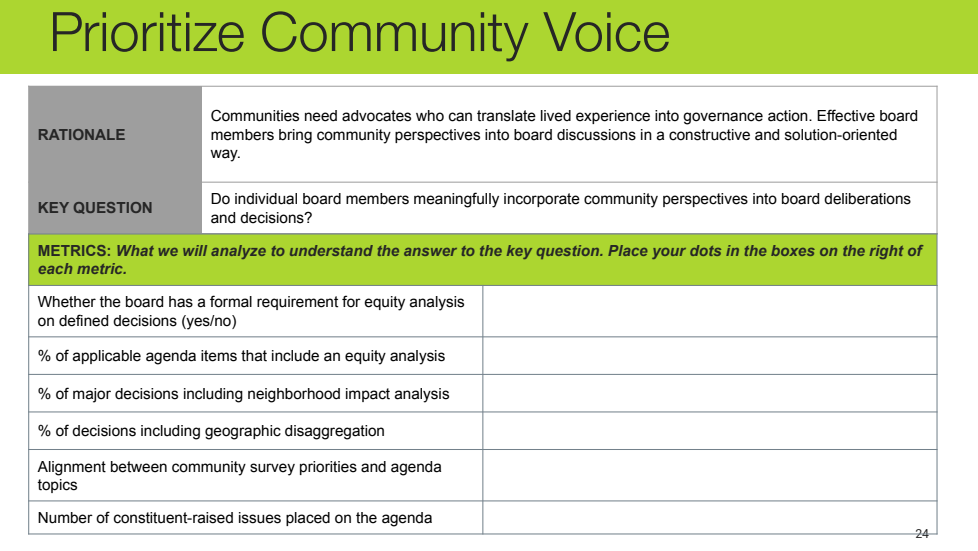
Rationale: Communities need advocates who can translate lived experience into governance action. Effective board members bring community perspectives into board discussions in a constructive and solution-oriented way.

Key Question: Do individual board members meaningfully incorporate community perspectives into board deliberations and decisions?

1
1
1
1
1
1


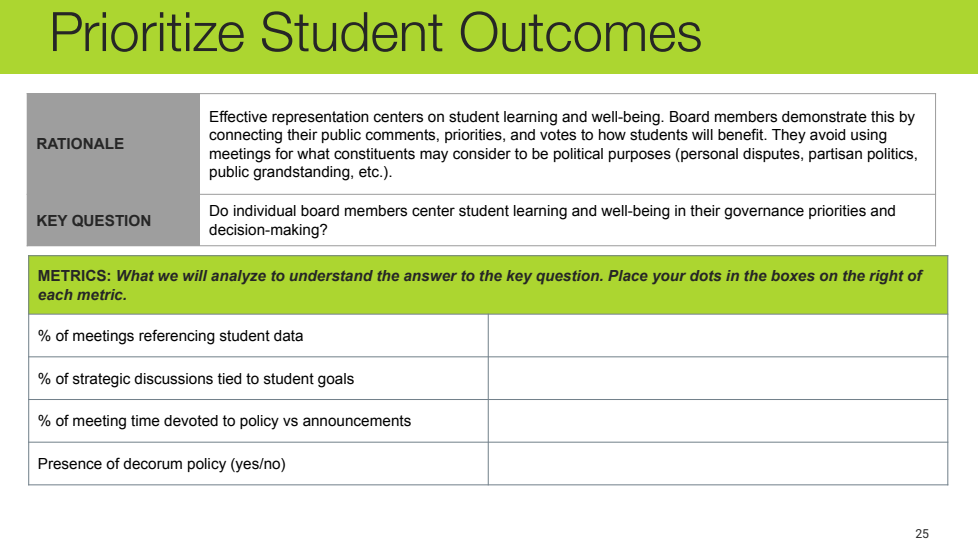
Rationale: Effective representation centers on student learning and well-being. Board members demonstrate this by connecting their public comments, priorities, and votes to how students will benefit. They avoid using meetings for what constituents may consider to be political purposes (personal disputes, partisan politics, public grandstanding, etc.).

Do individual board members center student learning and well-being in their governance priorities and decision-making?

1
Asemmisa {{asɛmmisaAhyɛnsode}}
57.

% of meetings referencing student data
1
1
1
1
1
1
1
1
1
1
1
1
1
Asemmisa {{asɛmmisaAhyɛnsode}}
70.

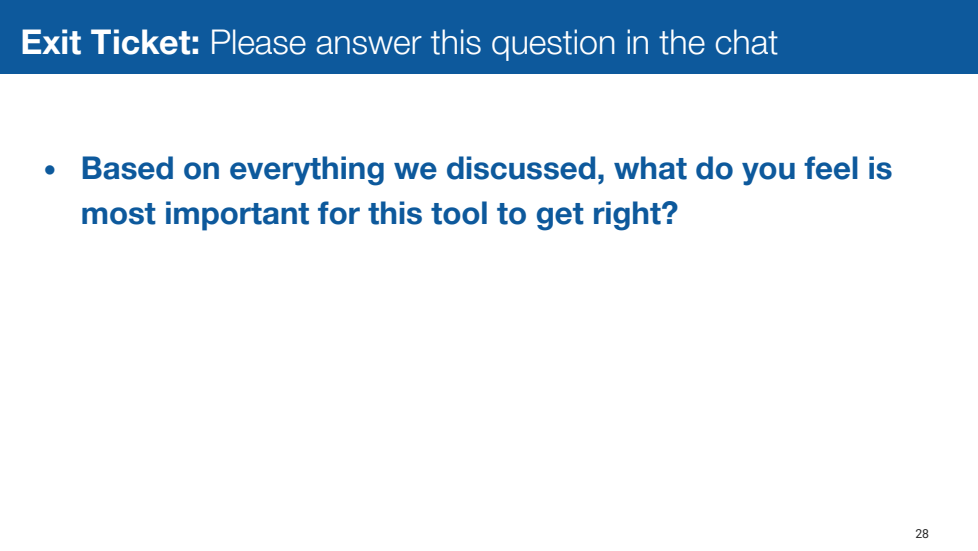
Based on everything we discussed, what do you feel is most important for this tool to get right?
Asemmisa {{asɛmmisaAhyɛnsode}}
6.

% of goals with targets and timelines

Asemmisa {{asɛmmisaAhyɛnsode}}
7.

Is a public goal-tracking system available? (yes/no)

Asemmisa {{asɛmmisaAhyɛnsode}}
8.

% of agenda items explicitly linked to board goals

Asemmisa {{asɛmmisaAhyɛnsode}}
9.

Number of times per year the board publicly reviews progress towards priorities

Asemmisa {{asɛmmisaAhyɛnsode}}
10.

% of regular meetings that include a student outcome update

Asemmisa {{asɛmmisaAhyɛnsode}}
11.

Average mins per meeting dedicated to student outcome discussion

Asemmisa {{asɛmmisaAhyɛnsode}}
12.

% of performance updates that include disaggregated data

Asemmisa {{asɛmmisaAhyɛnsode}}
13.

Time between performance reporting cycles

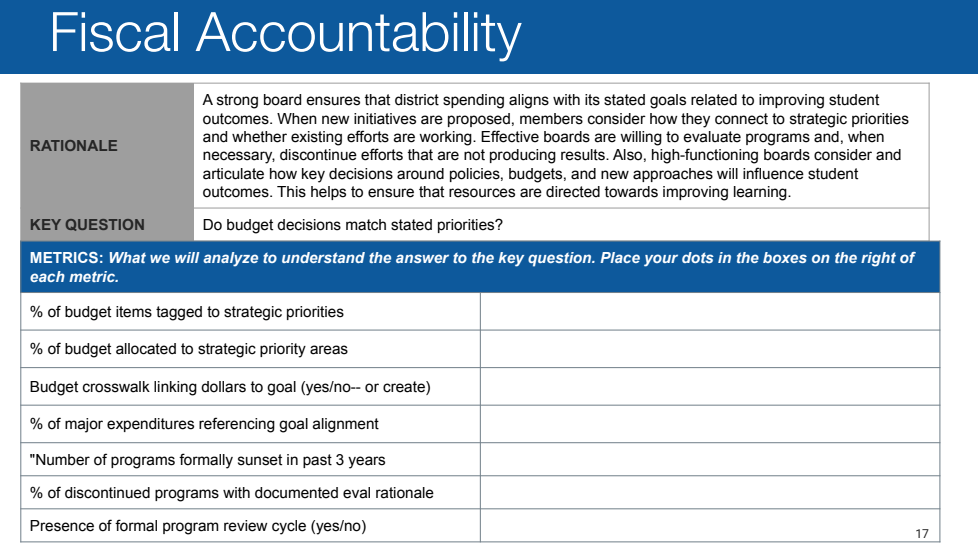
Rationale: A strong board ensures that district spending aligns with its stated goals related to improving student outcomes. When new initiatives are proposed, members consider how they connect to strategic priorities and whether existing efforts are working. Effective boards are willing to evaluate programs and, when necessary, discontinue efforts that are not producing results. Also, high-functioning boards consider and articulate how key decisions around policies, budgets, and new approaches will influence student outcomes. This helps to ensure that resources are directed towards improving learning.

Key Question: Do budget decisions match stated priorities?

Asemmisa {{asɛmmisaAhyɛnsode}}
14.

% of budget items tagged to strategic priorities

Asemmisa {{asɛmmisaAhyɛnsode}}
15.

% of budget allocated to strategic priority areas

Asemmisa {{asɛmmisaAhyɛnsode}}
16.

Budget crosswalk linking dollars to goal (yes/no-- or create)

Asemmisa {{asɛmmisaAhyɛnsode}}
17.

% of major expenditures referencing goal alignment

Asemmisa {{asɛmmisaAhyɛnsode}}
18.

Number of programs formally sunset in past 3 years

Asemmisa {{asɛmmisaAhyɛnsode}}
19.

% of discontinued programs with documented eval rationale

Asemmisa {{asɛmmisaAhyɛnsode}}
20.

Presence of formal program review cycle (yes/no)

Asemmisa {{asɛmmisaAhyɛnsode}}
22.

Annual public release of superintendent evaluation summary (yes/no)

Asemmisa {{asɛmmisaAhyɛnsode}}
23.

% of agenda items that are policy-level vs operational-level

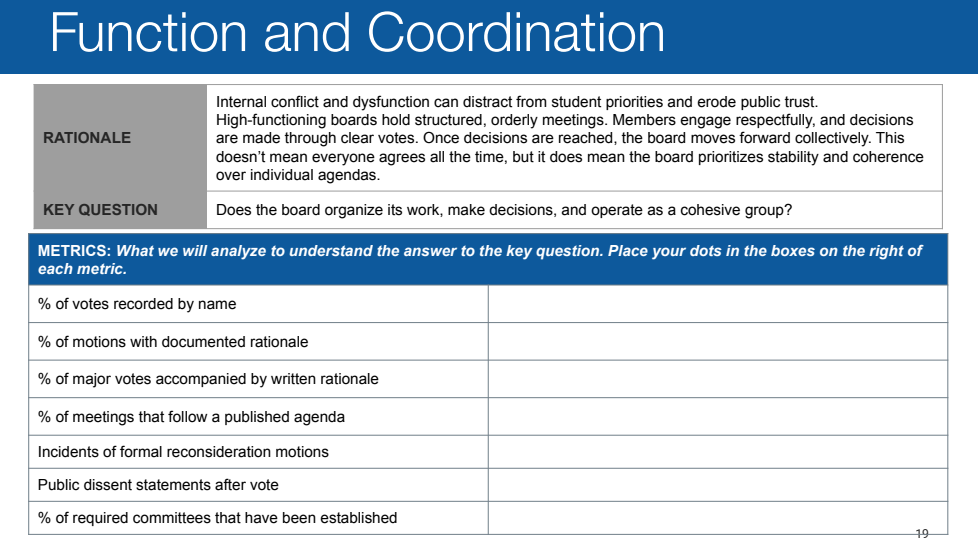
Rationale: Internal conflict and dysfunction can distract from student priorities and erode public trust. High-functioning boards hold structured, orderly meetings. Members engage respectfully, and decisions are made through clear votes. Once decisions are reached, the board moves forward collectively. This doesn’t mean everyone agrees all the time, but it does mean the board prioritizes stability and coherence over individual agendas.

Key Question: Does the board organize its work, make decisions, and operate as a cohesive group?

Asemmisa {{asɛmmisaAhyɛnsode}}
24.

% of votes recorded by name

Asemmisa {{asɛmmisaAhyɛnsode}}
25.

% of motions with documented rationale

Asemmisa {{asɛmmisaAhyɛnsode}}
26.

% of major votes accompanied by written rationale

Asemmisa {{asɛmmisaAhyɛnsode}}
27.

% of meetings that follow a published agenda

Asemmisa {{asɛmmisaAhyɛnsode}}
28.

Incidents of formal reconsideration motions

Asemmisa {{asɛmmisaAhyɛnsode}}
29.

Public dissent statements after vote

Asemmisa {{asɛmmisaAhyɛnsode}}
30.

% of required committees that have been established


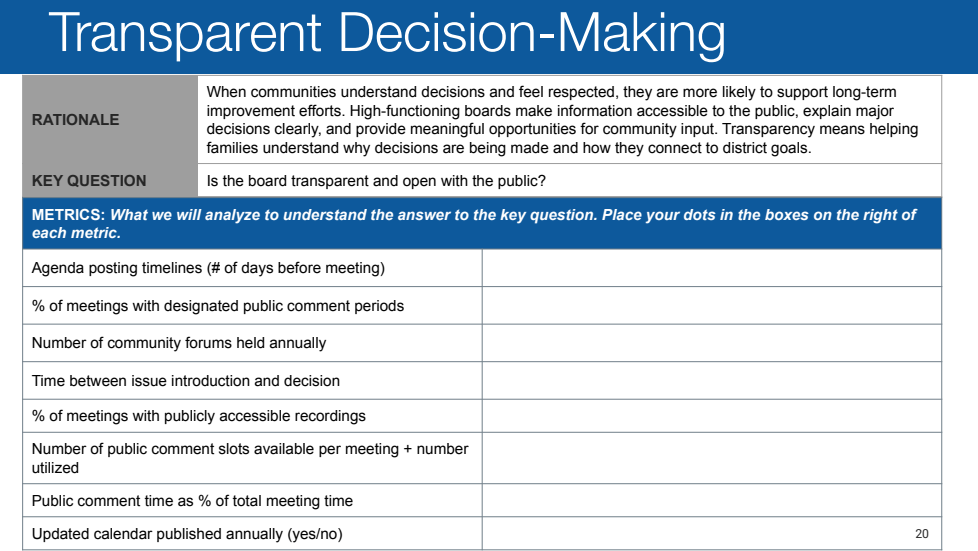
Rationale: When communities understand decisions and feel respected, they are more likely to support long-term improvement efforts. High-functioning boards make information accessible to the public, explain major decisions clearly, and provide meaningful opportunities for community input. Transparency means helping families understand why decisions are being made and how they connect to district goals.

Key Question: Is the board transparent and open with the public?

Asemmisa {{asɛmmisaAhyɛnsode}}
31.

Agenda posting timelines (# of days before meeting)

Asemmisa {{asɛmmisaAhyɛnsode}}
32.

% of meetings with designated public comment periods

Asemmisa {{asɛmmisaAhyɛnsode}}
33.

Number of community forums held annually

Asemmisa {{asɛmmisaAhyɛnsode}}
34.

Time between issue introduction and decision

Asemmisa {{asɛmmisaAhyɛnsode}}
35.

% of meetings with publicly accessible recordings

Asemmisa {{asɛmmisaAhyɛnsode}}
36.

Number of public comment slots available per meeting + number utilized

Asemmisa {{asɛmmisaAhyɛnsode}}
37.

Public comment time as % of total meeting time

Asemmisa {{asɛmmisaAhyɛnsode}}
38.

Updated calendar published annually (yes/no)

Asemmisa {{asɛmmisaAhyɛnsode}}
39.

Average training hours per board member per year

Asemmisa {{asɛmmisaAhyɛnsode}}
40.

% of board members completing governance training

Asemmisa {{asɛmmisaAhyɛnsode}}
41.

Annual self-evaluation conducted (yes/no)

Asemmisa {{asɛmmisaAhyɛnsode}}
42.

Public summary of evaluation results (yes/no)

Asemmisa {{asɛmmisaAhyɛnsode}}
43.

Number of improvement goals adopted from self-evaluation

Asemmisa {{asɛmmisaAhyɛnsode}}
44.

% of learning sessions with publicly posted materials (presentations, data, recordings)

Asemmisa {{asɛmmisaAhyɛnsode}}
46.

% of school visited annually

Asemmisa {{asɛmmisaAhyɛnsode}}
47.

Number of office hours held per member annually

Asemmisa {{asɛmmisaAhyɛnsode}}
48.

Attendance at community meetings

Asemmisa {{asɛmmisaAhyɛnsode}}
49.

Constituent satisfaction survey results

Asemmisa {{asɛmmisaAhyɛnsode}}
50.

(if tracked) average response time to constituent emails

Asemmisa {{asɛmmisaAhyɛnsode}}
51.

Whether the board has a formal requirement for equity analysis on defined decisions (yes/no)

Asemmisa {{asɛmmisaAhyɛnsode}}
52.

% of applicable agenda items that include an equity analysis

Asemmisa {{asɛmmisaAhyɛnsode}}
53.

% of major decisions including neighborhood impact analysis

Asemmisa {{asɛmmisaAhyɛnsode}}
54.

% of decisions including geographic disaggregation

Asemmisa {{asɛmmisaAhyɛnsode}}
55.

Alignment between community survey priorities and agenda topics

Asemmisa {{asɛmmisaAhyɛnsode}}
56.

Number of constituent-raised issues placed on the agenda

Asemmisa {{asɛmmisaAhyɛnsode}}
58.

% of strategic discussions tied to student goals

Asemmisa {{asɛmmisaAhyɛnsode}}
59.

% of meeting time devoted to policy vs announcements

Asemmisa {{asɛmmisaAhyɛnsode}}
60.

Presence of decorum policy (yes/no)


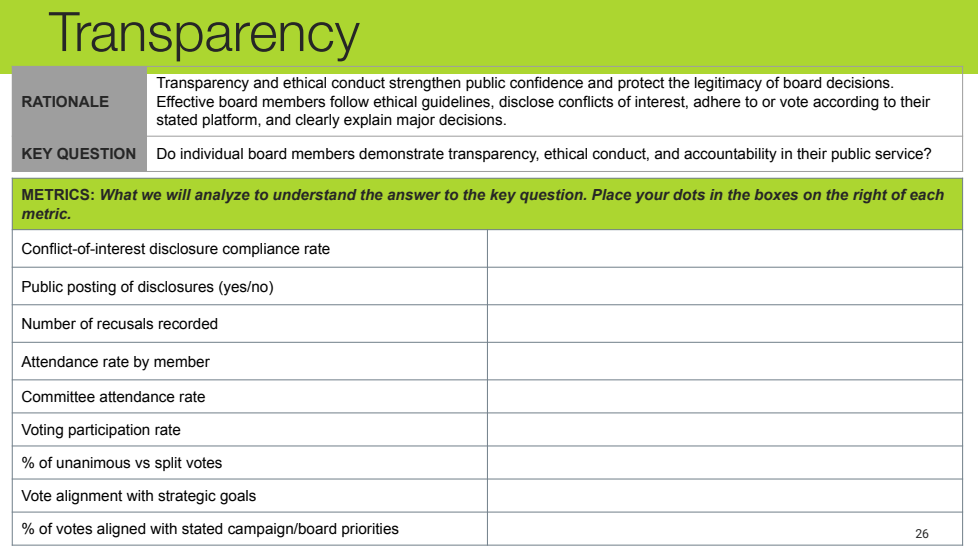
Rationale: Transparency and ethical conduct strengthen public confidence and protect the legitimacy of board decisions. Effective board members follow ethical guidelines, disclose conflicts of interest, adhere to or vote according to their stated platform, and clearly explain major decisions.

Key Question: Do individual board members demonstrate transparency, ethical conduct, and accountability in their public service?

Asemmisa {{asɛmmisaAhyɛnsode}}
61.

Conflict-of-interest disclosure compliance rate

Asemmisa {{asɛmmisaAhyɛnsode}}
62.

Public posting of disclosures (yes/no)

Asemmisa {{asɛmmisaAhyɛnsode}}
63.

Number of recusals recorded

Asemmisa {{asɛmmisaAhyɛnsode}}
64.

Attendance rate by member

Asemmisa {{asɛmmisaAhyɛnsode}}
65.

Committee attendance rate

Asemmisa {{asɛmmisaAhyɛnsode}}
66.

Voting participation rate

Asemmisa {{asɛmmisaAhyɛnsode}}
67.

% of unanimous vs split votes

Asemmisa {{asɛmmisaAhyɛnsode}}
68.

Vote alignment with strategic goals

Asemmisa {{asɛmmisaAhyɛnsode}}
69.

% of votes aligned with stated campaign/board priorities