Dinosaurs walked the earth millions of years ago. At the same time, thousands of creatures lived under the ocean’s surface. One of these marine creatures was the megalodon.
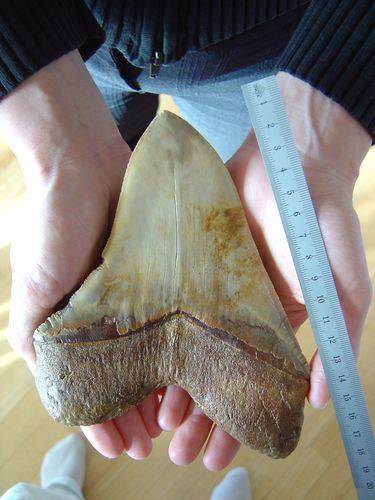
The megalodon was the largest shark in the world. It was over 50 feet long. That’s about three times longer than the length of a great white shark! How do scientists know about the megalodon? They have discovered thousands of large megalodon tooth fossils. The name megalodon actually means “big tooth.”
Megalodon teeth reveal a lot of information about the megalodon’s diet. The megalodon was a carnivore. In fact, it was at the top of the ocean food chain for more than 13 million years. The megalodon ate small sharks, fish, and even large whales. Scientists know megalodons ate whales because they have discovered megalodon teeth marks on whale bones. The megalodon would open its jaw very wide and chomp down on its prey. It would use its large teeth to tear the animal and eat it. Many scientists think this creature had the most powerful bite of any ocean predator.
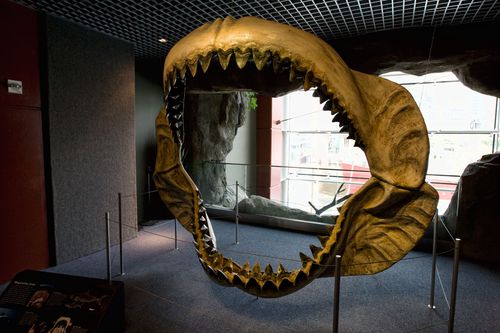
Like all sharks, the megalodon had rows of teeth. It would shed these teeth as it grew. These teeth would then be replaced by new ones. At any time, a megalodon had 276 teeth. The size of a megalodon tooth could reach up to 7 inches! Today, many people collect megalodon tooth fossils.
Although scientists know a lot about the megalodon diet based on tooth fossils, they do not know exactly what megalodons looked like. They think that megalodons had a short nose and a squashed jaw. Megalodons also likely had long fins on either side, similar to a modern-day blue shark’s fins.
Today, humans do not have to worry about finding a live megalodon in the ocean. They have been extinct for millions of years. Megalodons most likely went extinct when the sea waters began cooling down. At the time, many large sea animals had adapted to warm tropical waters, including the megalodon. Megalodons could not adapt to living in cold water. Their habitats began to shrink. During this time period, many large mammals also began going extinct. Megalodons found less and less prey to eat and eventually died out. The megalodon most likely went extinct about 3.6 million years ago.
Choose the answer that best completes the sentence below.
Orca-Showing-Off’s parents made their decision, they led him to a very large clamshell at the deepest part of the ocean.
Choose the answer that best completes the sentence.
Predators have adaptations that help them hunt., a shark’s powerful, torpedo-shaped tailfin and sharp teeth are two adaptations.
What does the name megalodon mean?
What does the text compare the length of a megalodon to?
Read the following sentences from the text.
“Megalodon teeth reveal a lot of information about the megalodon’s diet. The megalodon was a carnivore. In fact, it was at the top of the ocean food chain for more than 13 million years. The megalodon ate small sharks, fish, and even large whales. Scientists know megalodons ate whales because they have discovered megalodon teeth marks on whale bones.”
What conclusion can you draw from this evidence?
Scientists know a lot about megalodon teeth but are not sure what the animal looked like. According to the text, what might be the reason?
What is the main idea of this text?
According to the passage, why did megalodons most likely become extinct?
This tale is based on a Haida legend from my clan crest. Our people have a powerful connection to the orca (killer whale). As an ocean people, we've traveled and worked alongside these wise and majestic beings since time immemorial. We consider them family. —Sondra Segundo
Many years ago, a Haida girl named Orca Woman lived in a village near the sea. She loved everything about the ocean. She loved its sounds, its power, and its beauty. She yearned to be in the ocean all the time.
One day, she left the human world and moved in with her family in their large yet cozy longhouse in the place she loved the most—the bottom of the sea. Soon, Orca Woman no longer had legs.
Orca Woman’s many land relatives would often visit their ocean cousins, traveling in a special canoe that she and her chan (grandfather) had carved together. But the land people could never come to the longhouse at the ocean’s bottom because they could not breathe underwater.
During her many travels under the sea, Orca Woman fell in love and gave birth. From the first day, her son was smart, playful, and full of energy. His mother named him Orca-Showing-Off. He quickly learned to swim very fast, to jump out of the water, and to sing and speak in both the Haida and Orca languages.
Orca-Showing-Off’s favorite land cousin was Bear-Son. Although Bear-Son was a great swimmer, even he could not hold his breath long enough to visit the underwater longhouse. And of course, Orca-Showing Off could not walk on the land. Instead, the cousins swam together, sharing stories of their two worlds—land and sea.
One day, Orca-Showing-Off asked his mother, “May I go to the human world?”
Surprised, she answered, “No, my git [son]. I want you to stay here in the ocean with me!”
He respectfully replied, “You were once human and around my age you chose to become an orca. Now I want to learn the Haida ways of carving and art, and visit all of my cousins.”
Orca Woman thought for a bit, then said, “I will tell you our decision in three days.”
Orca-Showing-Off swam to the surface and nudged the special canoe where Bear-Son was napping. “Did skáan [auntie] say you can come live with us?” he sleepily asked.
“We will know in three days, tawíi [cousin],” Orca-Showing-Off replied.
Over those three days, Orca Woman and her husband thought deeply and sought wisdom from their elders. At the appointed time, they spoke to Orca-Showing-Off. “Our precious son, we are so proud of you,” they said. “Although we want you to stay with us, we support your decision. We know that you will always be a child of the ocean.”
His parents led Orca-Showing-Off to a very large clamshell at the deepest part of the ocean. It was the same clamshell that Raven had used to bring the first Haida people to the land. Orca-Showing-Off swam into the shell. His parents kissed him and closed the clamshell.
Inside, Orca-Showing-Off felt tingly and strange. Sitting there, he thought the clamshell looked beautiful, reflecting specks of light in different colors. He felt at peace.
Suddenly, Orca-Showing-Off felt himself being lifted into the air, shell and all. Next, he heard Thunderbird singing a mysterious song. Orca-Showing-Off felt weightless, and fell into a deep sleep.
For three days, while Orca-Showing-Off slept, Thunderbird flew him around in that clamshell. On the third day, Thunderbird flew to the Haida village and placed the shell before the Orca clan house.
The clamshell opened and Orca-Showing-Off awoke. He saw his chan and cousins smiling. Then he looked down and saw that he had legs! He jumped up and happily ran to his family members. Thunderbird closed the clamshell and flew away, returning the shell to the sea.
Orca-Showing-Off loved his new life as a boy. He tasted smoked salmon and berry jam and held a carving adze in his hands. He made a cozy cedar bed in the longhouse. He kissed his náan [grandmother] and ran through the village with his cousins. He felt so free.
Every day thereafter, Orca-Showing-Off climbed to the top of the tallest tree and stared out to sea. There, he watched for his mom, Orca Woman. He saw her leap with joy whenever she saw her boy.
That is how Orca Woman's family came to live on land and in the sea. Their love passes through two worlds… but wherever they are, they are always family!
Where did Orca Woman move to when she left the human world?
Orca-Showing-Off asked his mother to go to the human world. How are Orca-Showing-Off and his mother similar?
Read the following sentences from the text.
“One day, Orca-Showing-Off asked his mother, ‘May I go to the human world?’
Surprised, she answered, ‘No, my git [son]. I want you to stay here in the ocean with me!’
He respectfully replied, ‘You were once human and around my age you chose to become an orca. Now I want to learn the Haida ways of carving and art, and visit all of my cousins.’
Orca Woman thought for a bit, then said, ‘I will tell you our decision in three days….’
Over those three days, Orca Woman and her husband thought deeply and sought wisdom from their elders. At the appointed time, they spoke to Orca-Showing-Off. ‘Our precious son, we are so proud of you,’ they said. ‘Although we want you to stay with us, we support your decision. We know that you will always be a child of the ocean.’”
What conclusion can you draw from this evidence?
How did Orca-Showing-Off know that he made the right decision by going to the human world?
What is one main theme of this story?
Read the following sentences from the text.
“Orca-Showing-Off loved his new life as a boy. He tasted smoked salmon and berry jam and held a carving adze in his hands. He made a cozy cedar bed in the longhouse. He kissed his náan [grandmother] and ran through the village with his cousins. He felt so free.”
As used in this excerpt, what does the word “free” most closely mean?
This article is provided courtesy of the American Museum of Natural History.

A shark glides through the warm water, searching for its next meal. It spots an ordinary brown fish swimming slowly in the clear waters ahead.
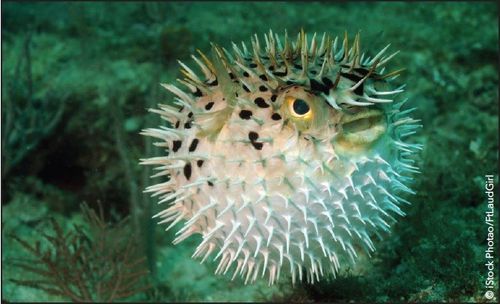
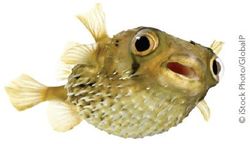
But as the shark approaches, PUFF-PUFF-PUFF! The fish puffs out into a round, spiny ball. The startled shark swims away. The pufferfish is safe for now — at least until the next shark or big fish swims by.

The ocean can be a dangerous place for small fish like the puffer. Its waters are full of predators like sharks, squid, and bigger fish that eat small fish. But pufferfish have adaptations that protect them from predators.
All animals have adaptations to stay alive. An adaptation is a body part or behavior that helps an animal live in its environment. Predators have adaptations that help them hunt. A shark’s powerful, torpedo-shaped tailfin and sharp teeth are two adaptations.
Other animals have adaptations that provide protection from predators. These animals may be fast enough to escape predators. Or they might use camouflage, special patterns or colors that help them hide in their environment.
But some animals don’t run or hide. They have bodies that are hard to eat. Just picture the sharp spines of a porcupine, hedgehog, or sea urchin. Few predators are large or tough enough to make a meal of those animals!
Some toads and snakes have their own way to discourage predators. They puff themselves up to look larger. The bigger an animal, the harder it is to catch and eat. Pufferfish combine both of these adaptations. They puff up AND they have long, sharp spines.

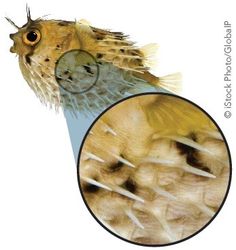
Swimming along, a pufferfish looks like any other fish. But when it is threatened, it swells up suddenly like a big balloon. When this happens, it’s easy to see why some people call it balloonfish. But this fish is no soft, squishy balloon. Its skin becomes rigid, with sharp spines sticking out in all directions. Usually these spines lie flat against the side of the fish. When the fish puffs up, the outer skin stretches out and pulls the spines up.
How does the pufferfish make this amazing transformation?
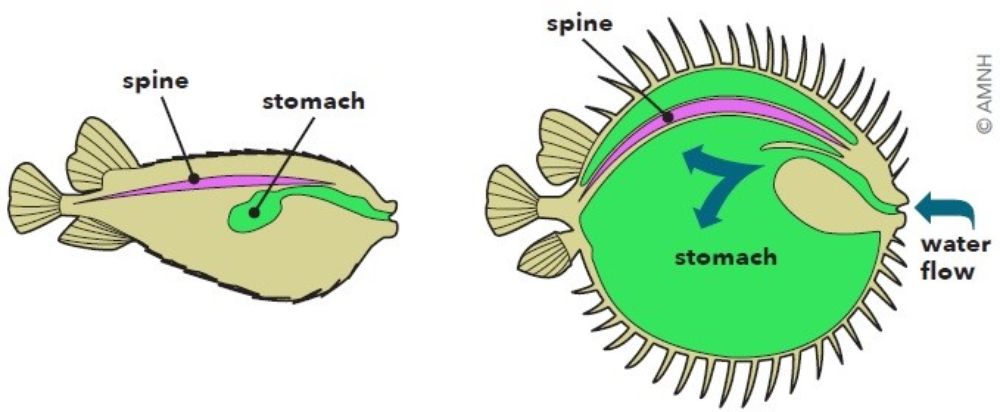
Despite its nickname, it doesn’t blow itself up with air like a balloon. Instead, it fills up with water. The fish pumps a huge amount of water through its mouth into its stomach. Filled with water, its stomach becomes almost one hundred times larger. The stomach can expand like this because it’s usually crumpled into many tiny folds. As water rushes in, the stomach unfolds. To make room for the swelling stomach, other organs like the liver and intestines are pushed to the side.

A spiny puffer can change from an ordinary-looking fish into a menacing spiny ball in a few seconds. Then only the biggest animals dare to eat it. The ocean may be full of dangers, but adaptations like sharp spines and puffing up help keep the puffer safe.
At the beginning of the text, what does the fish do when the shark approaches?
What does the author describe in this text?
Read these sentences from the text.
“Some toads and snakes have their own way to discourage predators. They puff themselves up to look larger. The bigger an animal, the harder it is to catch and eat. Pufferfish combine both of these adaptations. They puff up AND they have long, sharp
spines.”
Based on this evidence, why might a pufferfish puff itself up?
What is the main idea of this text?
Read these sentences from the text.
“Swimming along, a pufferfish looks like any other fish. But when it is threatened, it swells up suddenly like a big balloon.”
Why might the author have compared the pufferfish to a balloon with this simile?
What is an adaptation?