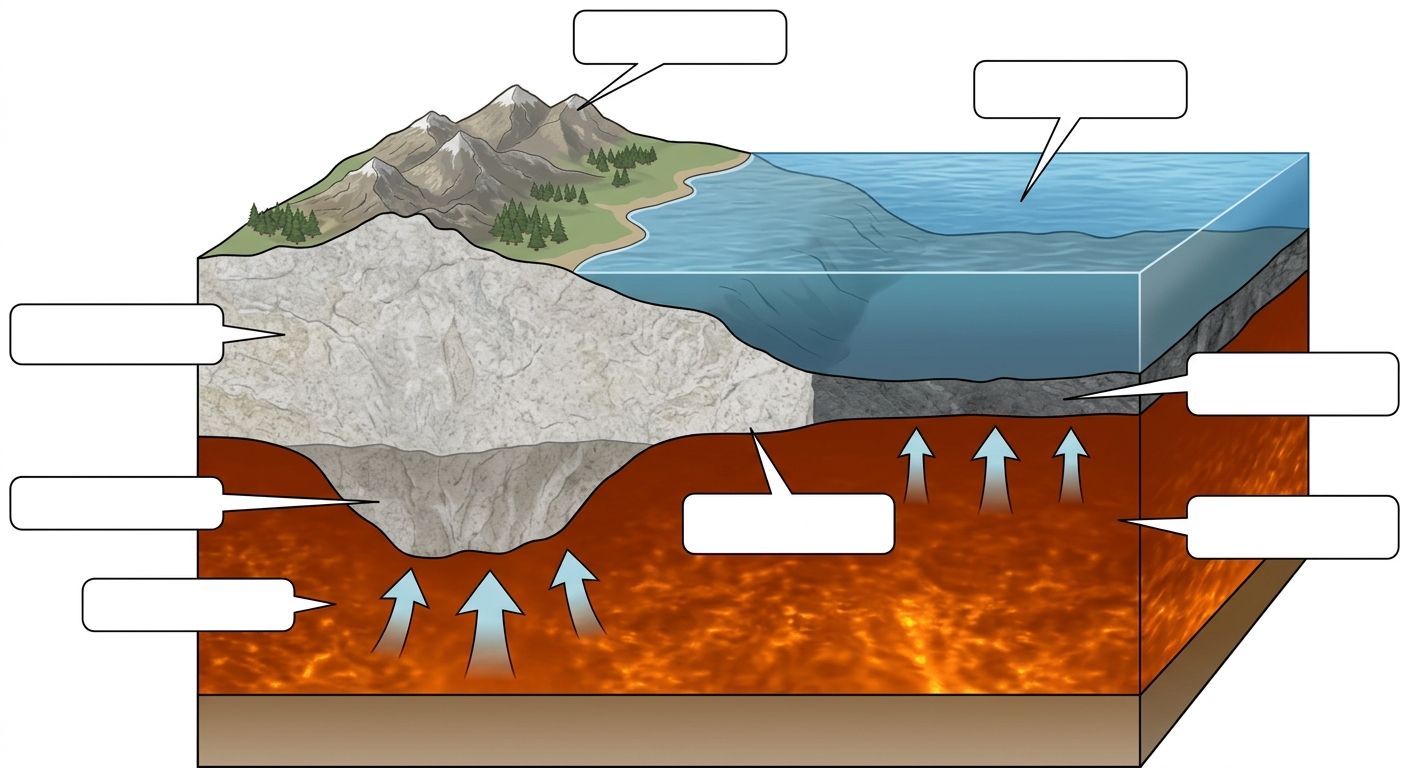
Label: continental crust, oceanic crust, mantle/asthenosphere.
Write 1 sentence: Why does thicker continental crust “float higher” even though both crust types sit on mantle rock?
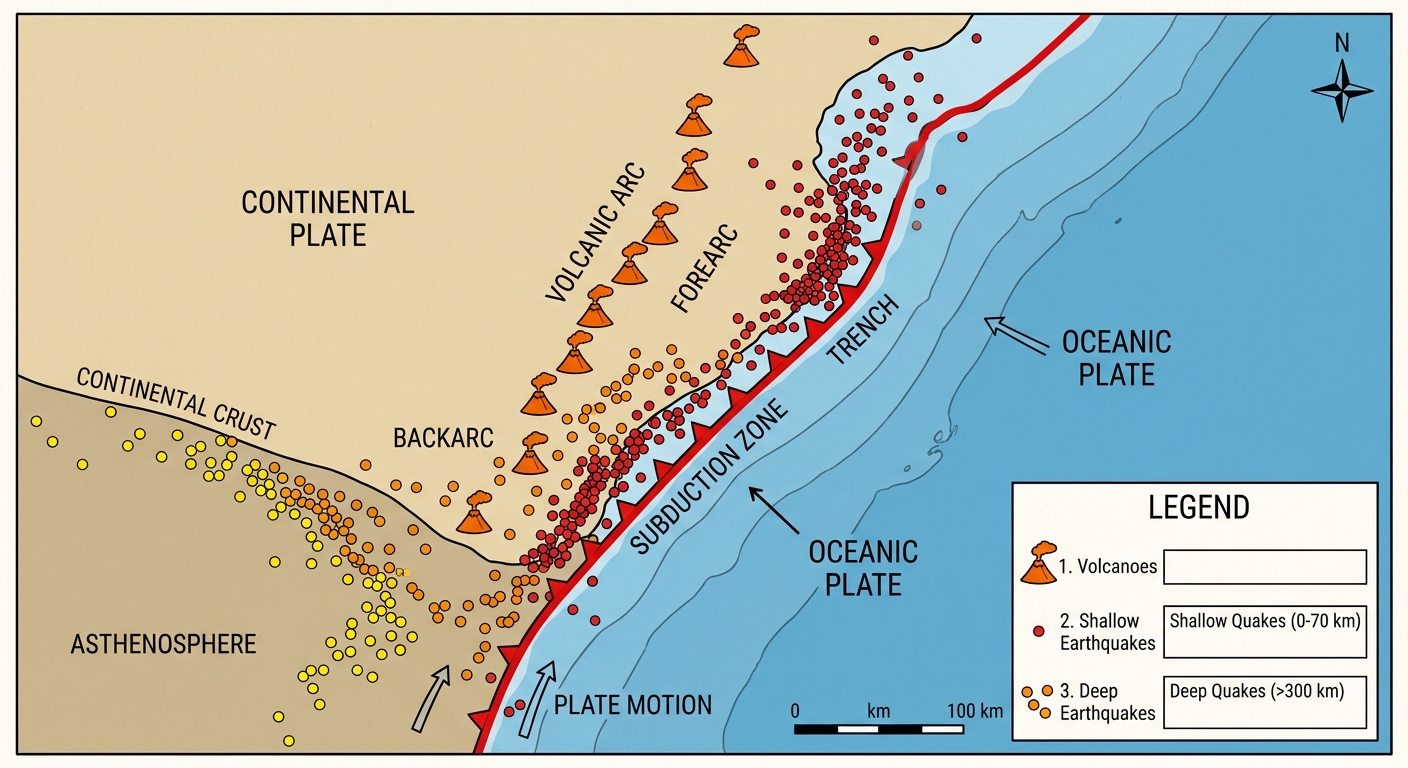
Write a claim: Which boundary type (divergent, convergent, transform) best fits this pattern? Use the distribution of quakes/volcanoes as evidence.

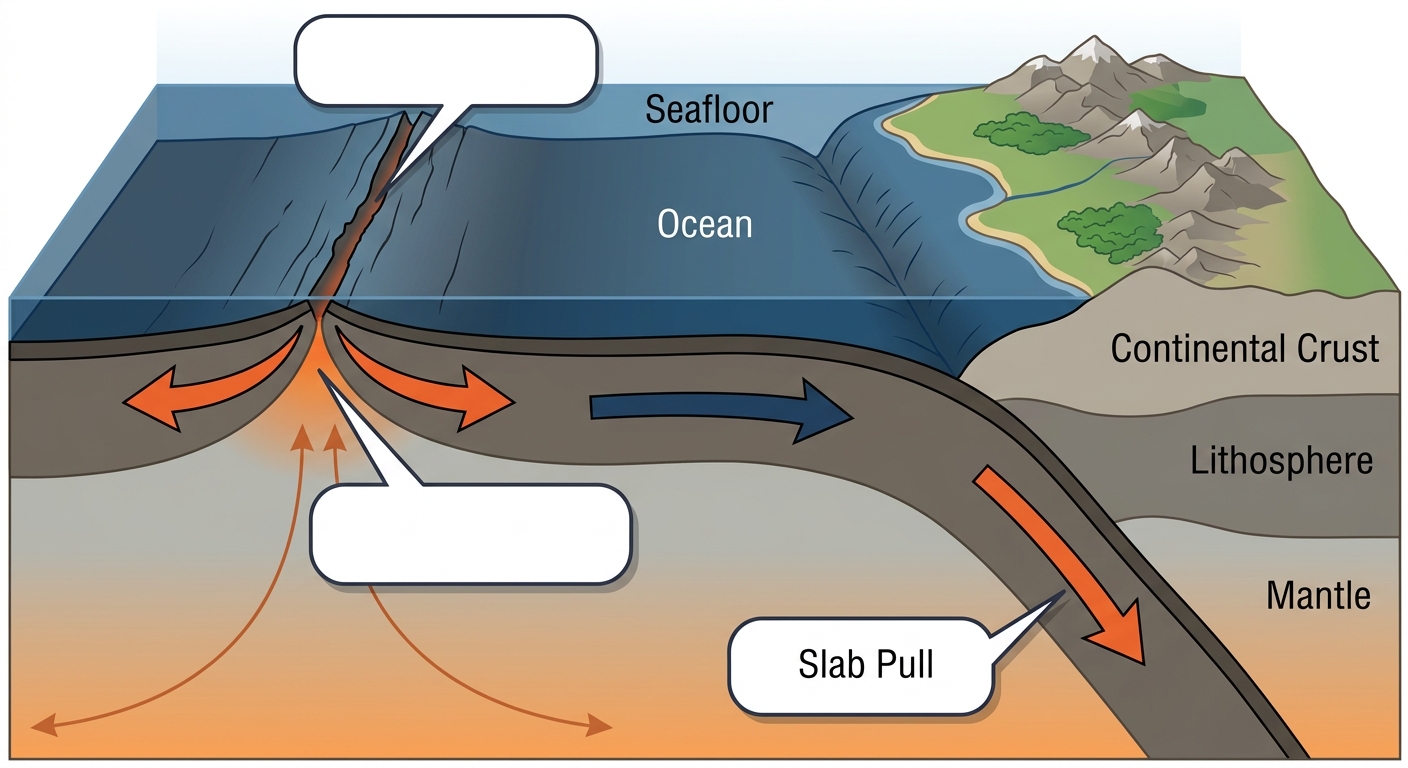
Label: mid-ocean ridge, trench, subducting slab.
Slab pull is labelled. Now label: ridge push
Annotate the diagram (labels + arrows).

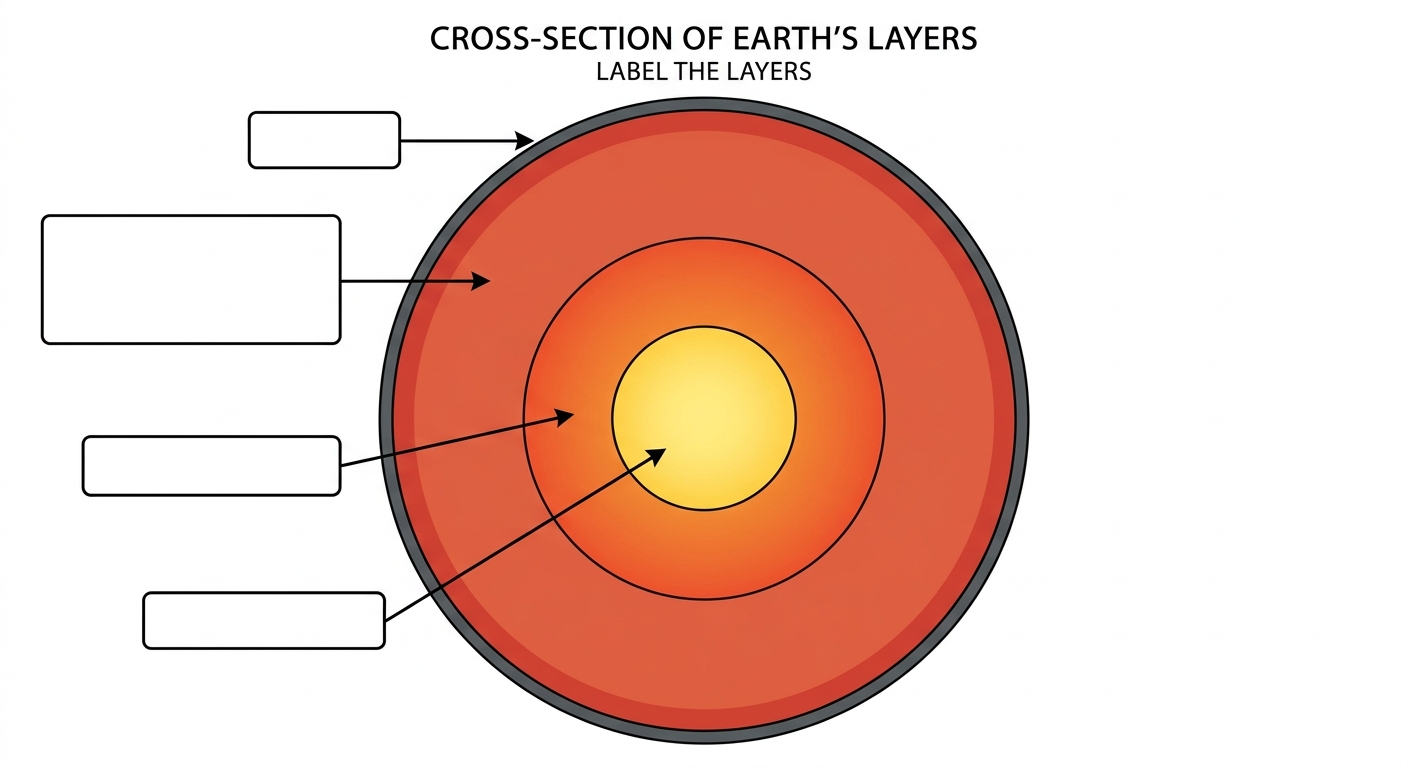
Label the crust, mantle, outer core, and inner core.
Draw one arrow from the crust to the core labeled “increasing temperature”.
Identify the layer where S-waves cannot travel.
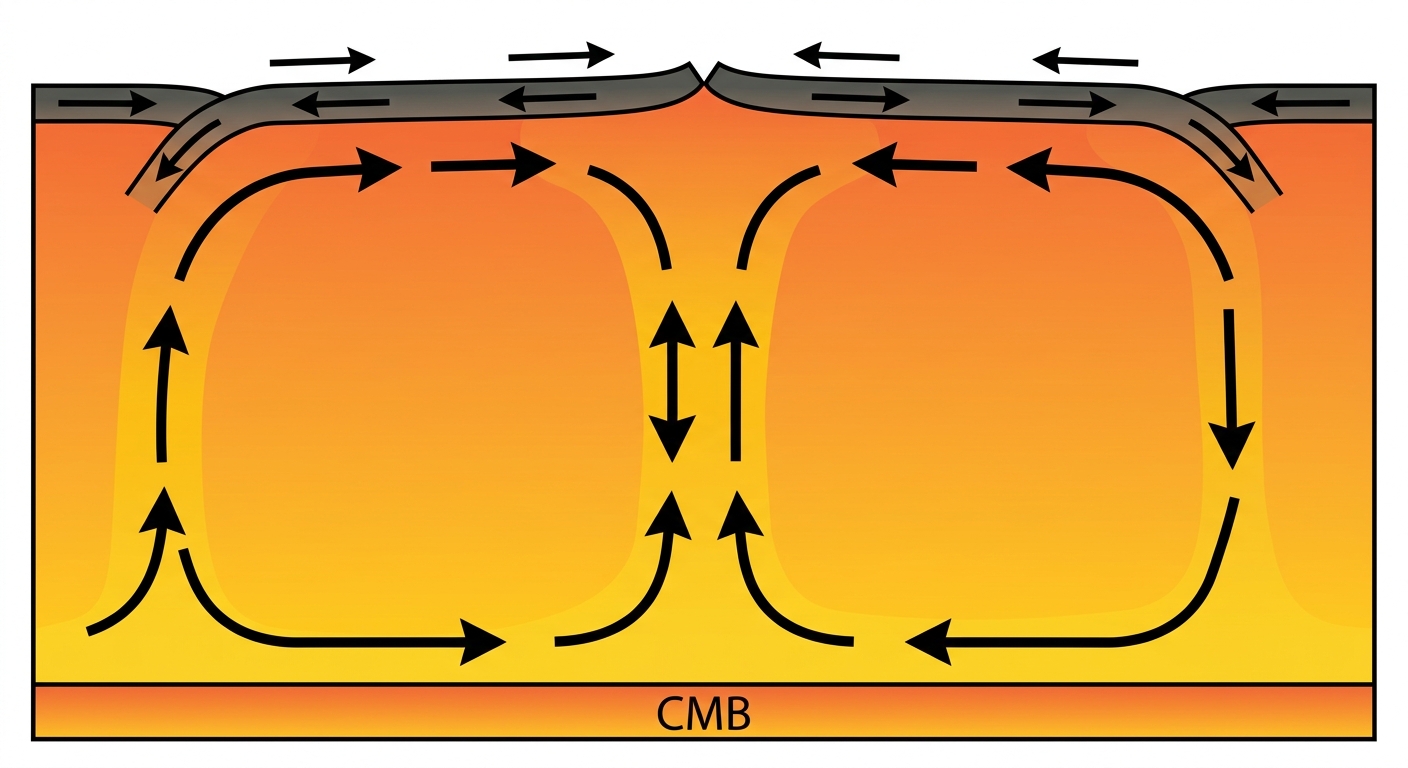
Annotate mantle convection (labels + arrows).

Label lithosphere and asthenosphere/mantle.
Add a red arrow and labels for hot, less dense (rising) and blue for cool, more dense (sinking) material.
In 1–2 sentences, explain how this motion drives plate movement.
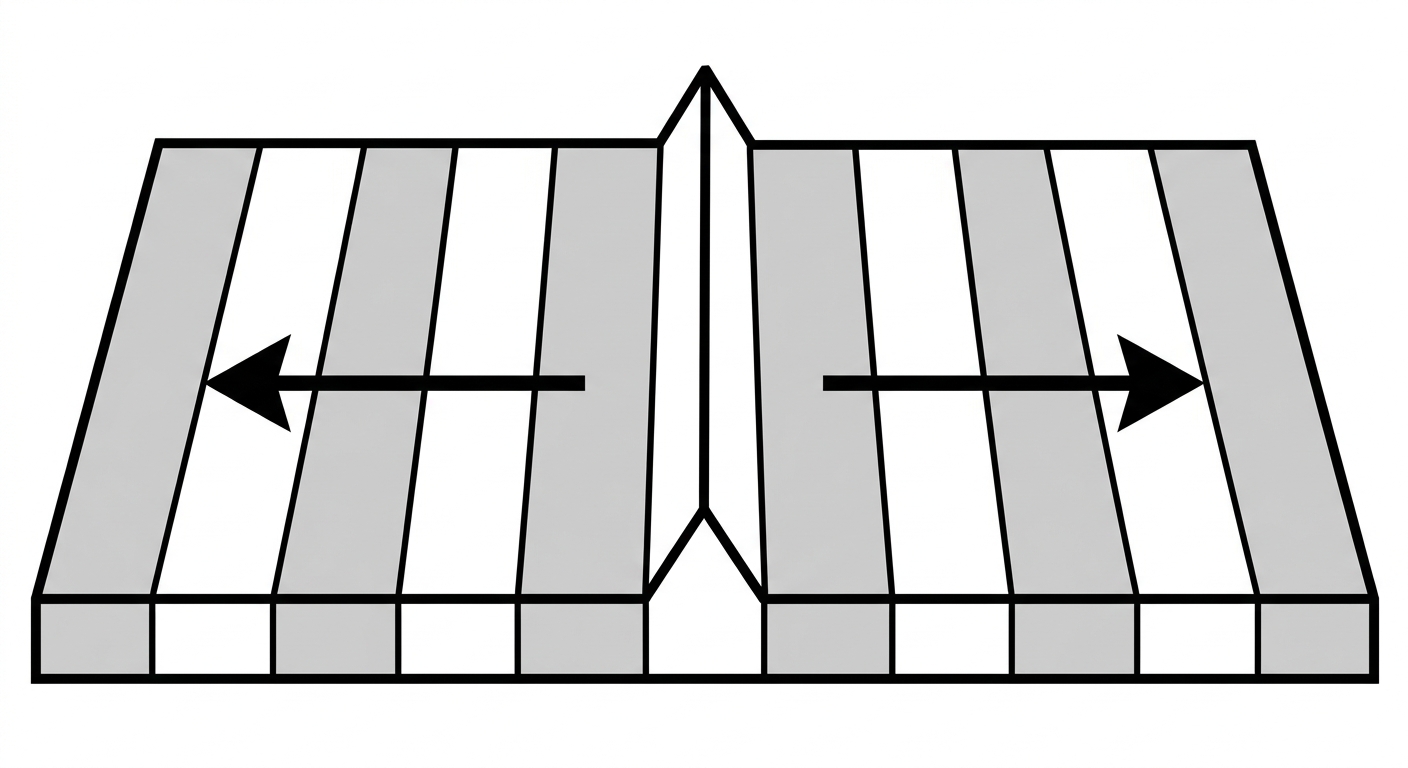
Seafloor spreading
-Label the youngest crust and oldest crust.
-In 1–2 sentences, explain why the magnetic stripes are symmetrical.
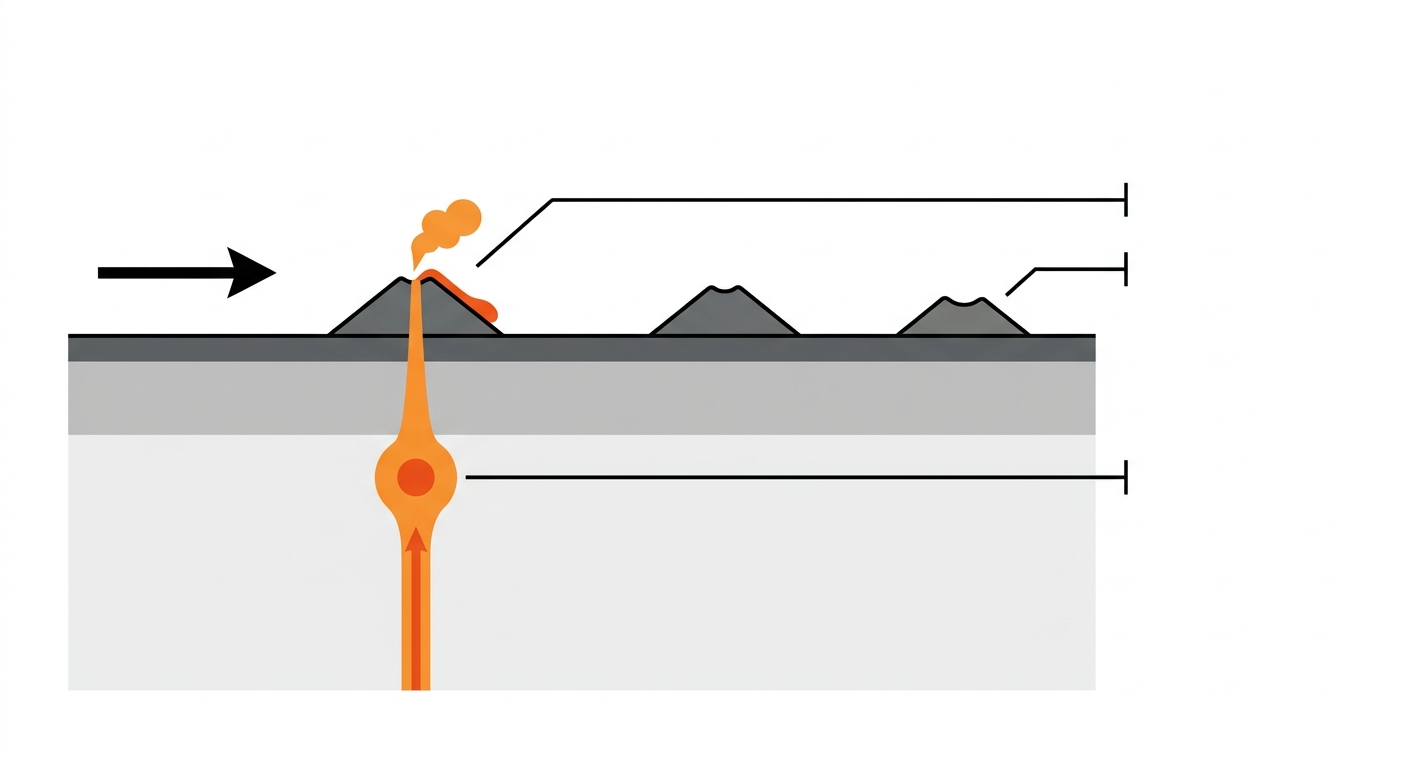
Hotspot volcanism

Label the hotspot/mantle plume.
Label youngest (active) volcano and oldest volcano.
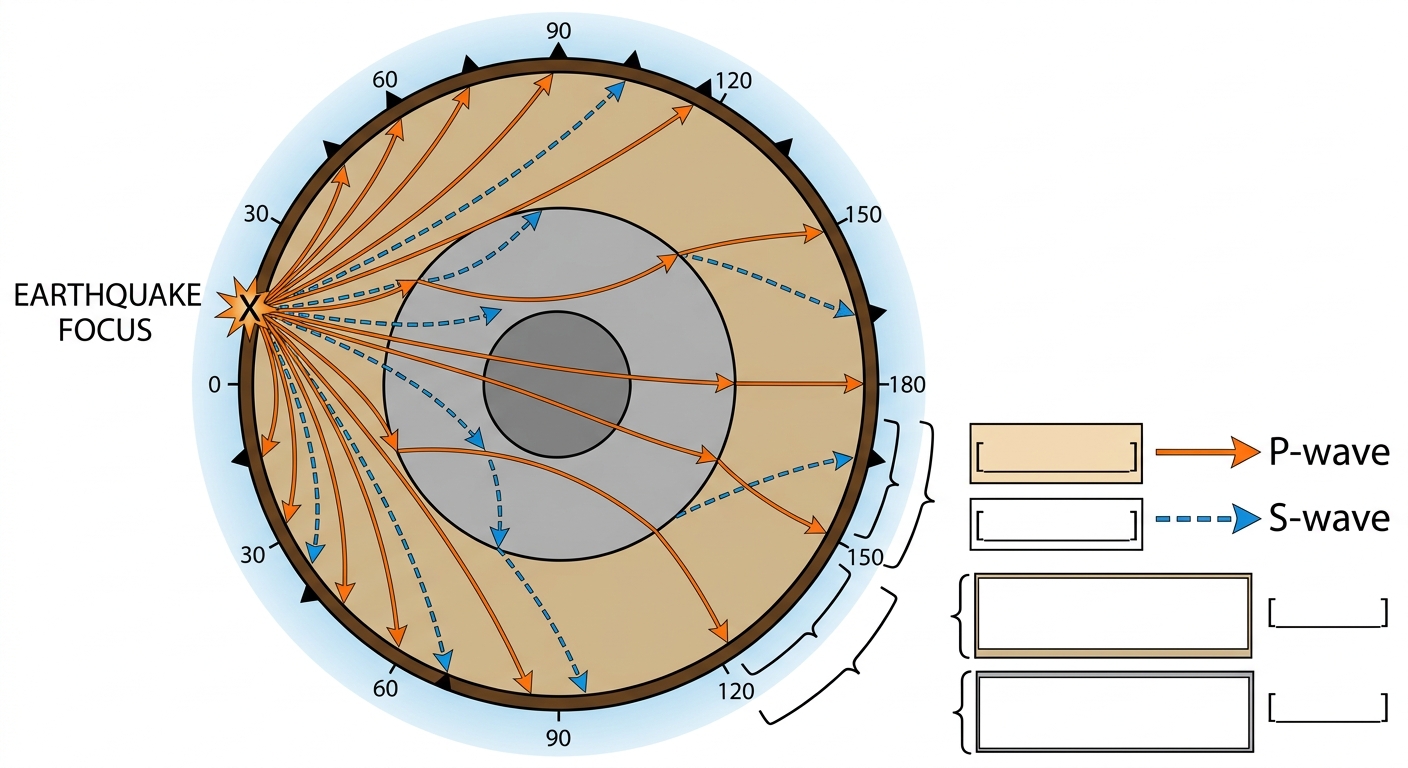
Annotate seismic wave evidence (labels + arrows).

Label which ray paths are P-waves and which are S-waves.
Write a short claim (1–2 sentences): What does this diagram suggest about the outer core (solid or liquid)?
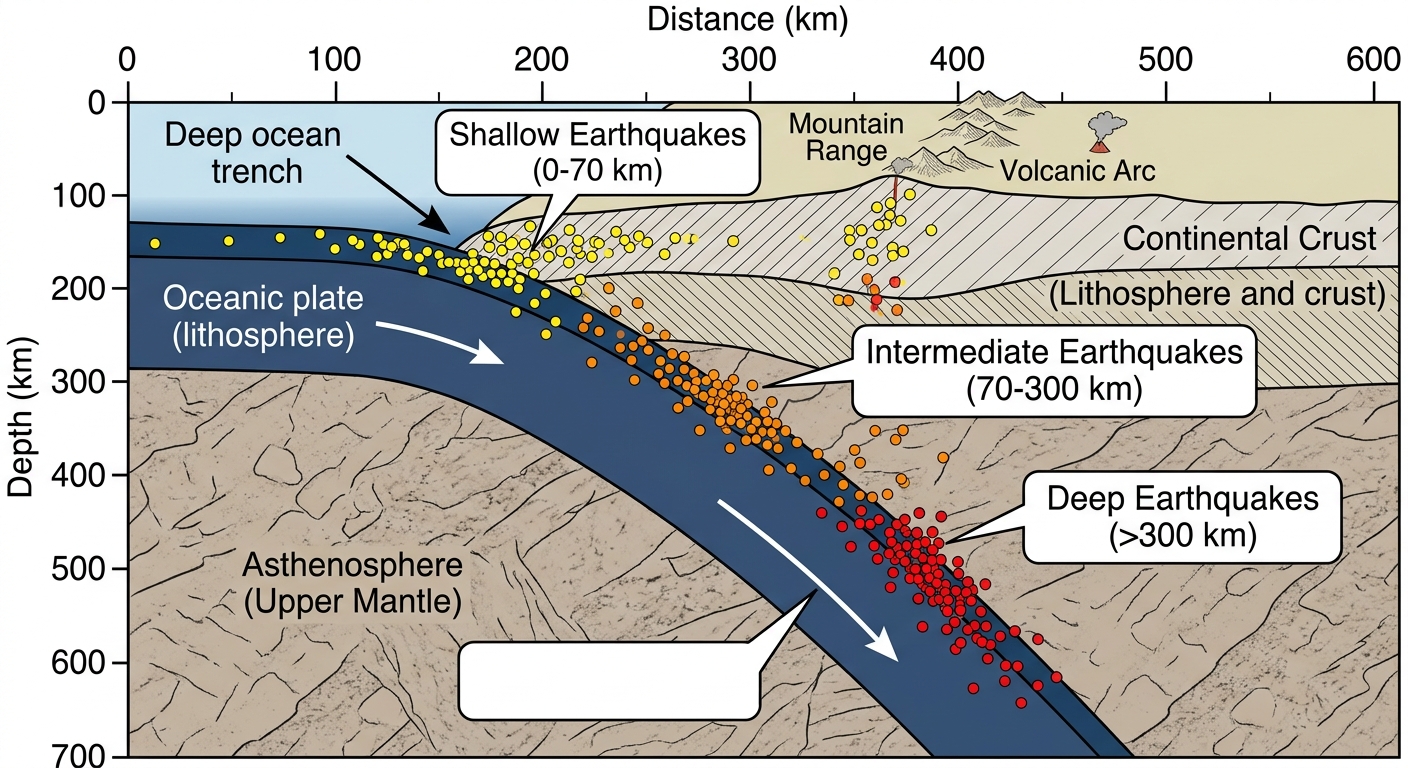
Annotate earthquake patterns at a subduction zone (labels + arrows).

Label shallow, intermediate, and deep earthquake regions.
In 1–2 sentences, explain what this pattern tells you about the subducting plate.
Convergent boundary: ocean–continent subduction (annotate).

Label: oceanic plate, continental plate, trench, subducting slab, mantle wedge.
Use arrows to show: plate motion, slab descent, and magma rise.
Circle the region where partial melting is most likely.
In 2–3 sentences, explain why volcanoes form on the continent even though the slab is sinking.
Convergent boundary: ocean–ocean subduction (annotate).

Label: trench, overriding plate, subducting plate, island arc, mantle wedge.
Add arrows showing direction of plate motion and magma movement.
Mark where you expect the deepest earthquakes.
In 2–3 sentences, compare one way this boundary differs from ocean–continent subduction.
Divergent boundary: mid-ocean ridge (annotate).

Label: ridge axis, new oceanic crust, upwelling mantle.
Add arrows for plate motion and mantle convection/upwelling.
Shade the area where rock is most likely partially molten.
In 2–3 sentences, explain how this setting creates symmetrical age patterns on the seafloor.
Transform boundary: strike-slip motion (annotate).

Label the fault and the two plates/blocks.
Use arrows to show relative motion.
Trace the offset feature and add a small note showing the direction of offset.
In 2–3 sentences, explain why transform boundaries have many earthquakes but little to no volcanism.
Mantle processes from “tomography” colors (annotate + claim).

In the legend, label red as “hotter/less dense” and blue as “cooler/more dense.”
Add arrows showing upwelling and downwelling.
Label which feature best matches a subducting slab and which matches a mantle plume.
Write a claim (2–3 sentences): How could these mantle movements connect to plate motion at the surface?
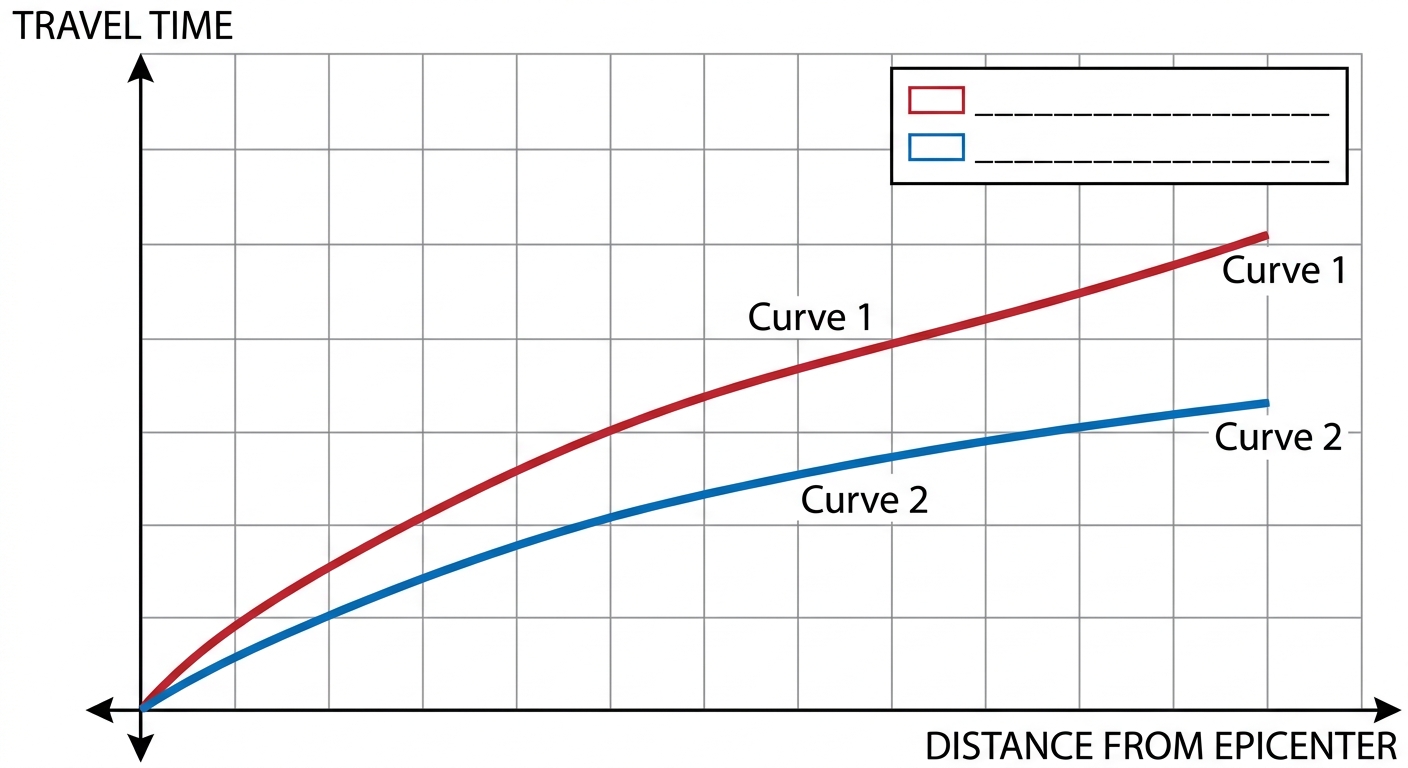
Seismic travel-time curves (annotate + interpret).

Label the faster curve P-wave and the slower curve S-wave (use the legend).
Draw one vertical line at a distance of your choice and label the P–S lag time.
Write 2–3 sentences: How can the P–S lag time be used to estimate distance to the epicenter?
Add one arrowed note identifying where the graph suggests S-waves are delayed the most and why.