Choose the answer that best completes the sentence below.
The plant on the windowsill has bright green leaves;, the plant in the dark corner has brown and yellow leaves.
Choose the answer that best completes the sentence below.
Most campers do not want to try Joey’s food experiments they are too gross to eat.
Choose the word that best completes the sentence.
Bello Nock keeps his center of gravity low, he can stay on the high wire without falling.
The next time you see storm clouds off in the distance, stop what you’re doing if you're able, and take a look outside.
Try to spot some dirt. If you’re in the city, look for a flower-bed along the sidewalk. If you’re in the suburbs, look out onto your backyard. If you’re in the countryside, just look out any-old-where.
You can see the flashes of lightning. You can hear the bursts of thunder. Pretty soon, it starts – the pitter-patter of the rain hitting the leaves, and the ground and the roof above your head. The storm cloud nears. The rain falls harder. Now look back at that dirt.
It’s turning into mud. Maybe you can’t see it so well if there’s grass on top, but wait till the rain stops, then go outside and stick your finger into it if you have any doubts. You’ll see. It’s wet, squishy, and it’s moving all around. It’s mud.
Before it rains, a flower bed or tree bed might be bumpy and craggy, with clumps of dry soil. But give it a few minutes in the rainstorm, let it turn into mud. It’ll even out. Your backyard might have a hole in the ground. If it rains hard enough, that hole might not be there too long. It might fill up with water and soil. And out in the country, out where there’s dirt everywhere, the whole landscape can change. Over a very long time, mountains can wear down and ravines can fill up with rocks and soil. And there’s a name for this process.
It’s called erosion. Erosion is when rocks and soil of the earth’s surface are moved to other locations after having been broken into smaller and smaller pieces by wind or water flow.
It is a good thing that it rains, even though it means we can’t play outside sometimes. Every living thing on the planet needs water to survive, and many animals rely on the rain for their drinking water.
Some birds rely on the rain to make puddles for their drinking water. But get this… Birds also rely on the rain for their food. Have you ever noticed that when it rains and the ground gets muddy, earthworms start to come out? Earthworms like being wet and stay deep down in the ground when it’s not raining because there is more moisture down there. In fact, they wouldn’t come up to the surface when it’s not raining because the soil near the surface is too dry for them. But when it rains, earthworms wiggle their way up, through the mud and water. They move around on the surface to another location. And that’s precisely when the birds swoop down to feast.
Rain benefits many animals, and it plays a role in changing the surface of the earth. Maybe during the next rainstorm, you can spot a bird swooping down to get some earthworms; or maybe after years of rainstorms, you can see a change in the landscape from the rain.
Miss Johnson, a second grade teacher, reached deep into her canvas bag and pulled out two plants. She placed the plants on a table at the front of the room. She asked her class to gather around the table to look at the plants and describe what they saw.
“They look the same,” Helena said.
“The leaves are green,” Aaron added.
“They’re standing straight up,” Lee noted.
Miss Johnson asked them to touch the soil and tell her about it.
“The soil is moist, and it’s dark brown,” Mia observed.
“The soil is getting stuck under my fingernails,” Teresa said.
Miss Johnson placed one plant in a sunny spot on the windowsill and the other on the floor in a dark corner of the classroom. She asked for four volunteers. Each volunteer was responsible for watering the plant on the windowsill once a week. Miss Johnson promised her class the plants would be part of an important lesson the following month.
* * *
Four weeks later, Miss Johnson brought the plants back to the table and invited the class to describe them again.
“They don’t look like each other anymore!” Helena said excitedly.
“One plant is green and has some new bright green leaves, and the other plant has more yellow and brown leaves than green leaves,” Nina explained.
“One plant is standing straight up, and the other one is bent over,” Lenny added.
Miss Johnson then asked the students to touch the soil and tell her about it.
“It’s moist and dark brown around this plant,” Grace said.
“It’s very dry and light brown around this plant,” Max described.
Miss Johnson explained, “Plants are alive. They respond to where they live. What are the differences between where I put the plants and how we cared for them?”
“You put one in a dark corner and the other one on the windowsill where there’s a lot of light,” Ellie replied.
“We watered the plant on the windowsill, but we didn’t water the plant in the corner of the room,” Aaron said.
“That’s right. Which plant is growing and healthy?” Miss Johnson asked. Several students replied that the plant on the windowsill they watered was the one which was growing and healthy.
“You’re right!” Miss Johnson exclaimed, proud of her students. Then she continued, “I wanted you to see for yourselves that plants depend on light and water to grow and to be healthy. Did you know that plants breathe? They have little openings on their leaves that look like tiny mouths, but they are too small to see without a microscope. When we breathe, we breathe in oxygen. Plants breathe in carbon dioxide.
“Plants take in carbon dioxide from the air and use it to build their leaves, stems and roots. Plants also take in water. This is why we need to water plants—so they will grow. They use their roots to suck water up into their bodies, and the little openings on their leaves to breathe in carbon dioxide.
“Once they have water and carbon dioxide, plants need light. Leaves are made up of a bunch of tiny cells. Inside the cells are very little things called chloroplasts. Chloroplasts are what make leaves green, and they are also what turn the carbon dioxide, water, and light into sugar and oxygen. The sugar is food for the plants. The plants release the oxygen into the air, which humans and many animals breathe in.”
“What do plants need to grow and be healthy?” Miss Johnson asked her class.
“They need light and water!” the class replied.
“Let’s place both plants on the windowsill where they will get lots of light and grow. Who would like to volunteer to water the plants?”
All of Miss Johnson’s students raised their hands.
What does Miss Johnson ask her class to look at and describe?
What is compared and contrasted with the plant on the windowsill?
Plants need light and water to be healthy.
What evidence from the story supports this statement?
What happens to the plant in the dark corner?
What is this passage mainly about?
Read the following sentences:
“Miss Johnson then asked the students to touch the soil and tell her about it.
Grace: It’s moist and dark brown around this plant.
Max: It’s very dry and light brown around this plant.”
What is the meaning of the word “soil” above?
Read the following paragraphs:
“That’s right. Which plant is growing and healthy?” Miss Johnson asked. Several students replied that the plant on the windowsill they watered was the one which was growing and healthy.
“You’re right!” Miss Johnson exclaimed, proud of her students. Then she continued, “I wanted you to see for yourselves that plants depend on light and water to grow and to be healthy. Did you know that plants breathe? They have little openings on their leaves that look like tiny mouths, but they are too small to see without a microscope. When we breathe, we breathe in oxygen. Plants breathe in carbon dioxide.
How does the author connect the sentences in this paragraph?
“Eew, gross, Joey,” said Kayla.
Joey, once again, had taken his entire lunch plate and mixed all the food together. It was his favorite thing to do at camp. Today they had spaghetti and meatballs, green beans, cornbread, and chocolate cake for dessert. Joey had started by mashing the cornbread and chocolate cake together. Then he stirred the green beans into the spaghetti. Finally, he took the mashed-up chocolate corn-cake combination and sprinkled it on top of the spaghetti and meatballs and green beans. Joey now had one dish: chocolate corn-cake-flavored spaghetti and green-bean meatballs.
Joey did something like this pretty much every day. “It’s an experiment,” he told the table. “Like what we do in class. It’s fun.” Joey was into experiments, which usually consisted of taking one or more things, and combining them somehow—mixing together dirt and sand, stirring glue into a glass of water, combining the different kinds of paint in the art room (which usually resulted in brown), and mixing all his food together. This wasn't even the grossest experiment Joey did at lunch. The worst was when he took the mashed-up food and dunked it in his milk. Sometimes the milk would turn different colors. Sometimes the mashed-up food would float, sometimes it would sink and sometimes it would dissolve. Sometimes part of it would dissolve and part wouldn’t, like the time he shoved a mashed-up blueberry cake into his glass of milk. The cake part had gotten soggy and dissolved, but the blueberries had stayed together and just floated around in the milk. The only way Joey knew this is because he’d tried a sip and gotten a couple blueberries. He couldn’t actually see them in the milk because it had turned a brownish-blue. Joey would usually take a sip as part of the experiment, and would try to get the other kids at the table to try it too. Joey sometimes offered a dollar to anyone who could drink three sips, but nobody ever could. Joey's experiments almost always tasted absolutely horrible.
Joey offered a bite of the chocolate corn-cake flavored spaghetti and green-bean meatballs to the other kids at his table. Jeanette took him up on it. She was the only one who sometimes liked Joey's experiments. But even she couldn't eat more than a bite. Which meant the table would lose their “wasted food challenge”—again.
As part of camp lunch, all the tables weighed their leftovers at the end of the meal. One by one the tables would line up, scrape their plates into a garbage can, and then the garbage can would be weighed. The garbage can itself weighed three pounds exactly, so that was deducted from the total. Whichever table had the least amount of wasted food got to be first in line the next day at lunch. Whoever had the most amount of wasted food had to stay and help with the dishes. Each table had the same amount of campers, to be fair. The tables were each named after a different kind of tree that was found at the camp. Joey's table was the Scrub Pine table. Scrub Pine table had lost so many times that everyone called them the Scrub all-the-time table.
Everyone blamed Joey. He was always the one with all the leftover food. But Joey insisted it wasn't his fault. He had a trick. Before each weighing, he always mashed up his concoction into the smallest ball possible. Almost everyone else's plate was strewn with uneaten food. Joey just had a ball in the corner of the plate.
Scrub Pine table had already done dishes four days in a row, and it looked like it was about to be five. So DeSean decided to conduct an experiment of his own. "Hey, I'm going to ask the kitchen staff if we can weigh each plate separately this time," he said. “Then we’ll know whose fault this is.” This was fine with Joey. He was sure he wasn’t the problem. “And whoever leaves the most food has to clean the sinks at the end.” This was the worst job, the one all the kids tried to get out of. After the dishes, the sinks were always lined with a wet, grimy mess of food scum.
One by one they weighed their plates. DeSean’s weighed ¼ pound. So did Jeanette’s. Kayla’s didn’t weigh anything. Everyone else’s plate weighed ½ pound or less. Except Joey’s. Joey’s weighed one and ¾ pounds.
The whole table looked at Joey. “But how?” he said. “I made the ball so small!”
“It doesn’t work like that” said DeSean. “It doesn’t matter how small you make the ball. You’re just shifting it around. It’s still the same amount of food, and weighs the same.”
Joey hated cleaning the sink scum. So he tried one more thing. “But, c’mon. You guys never help me eat my experiments” he said. “I help you with your plates.” This was true. Joey was usually so hungry after he had ruined his own lunch that the others at the table took pity on him and let him have some of theirs. “So we should all do the sinks.”
Nobody was impressed by this argument. Everyone rolled their eyes at Joey. “You’re doing the sinks,” said Kayla. “And we’re all tired of doing dishes. From now on, no more experiments that are too gross to eat.”
What does Joey do with the food on his lunch plate?
In this story, staying after lunch to help with the dishes is an effect. What is the cause?
Mashing his food up into the smallest ball possible does not make Joey’s plate weigh less.
What evidence from the passage supports this statement?
What could be a reason that Joey’s table keeps losing the wasted food challenge?
What is this story mainly about?
Read the following sentences:
“So DeSean decided to conduct an experiment of his own. ‘Hey, I’m going to ask the kitchen staff if we can weigh each plate separately this time,’ he said. ‘Then we’ll know whose fault this is.’”
What does the word experiment mean?
How would you classify this passage?

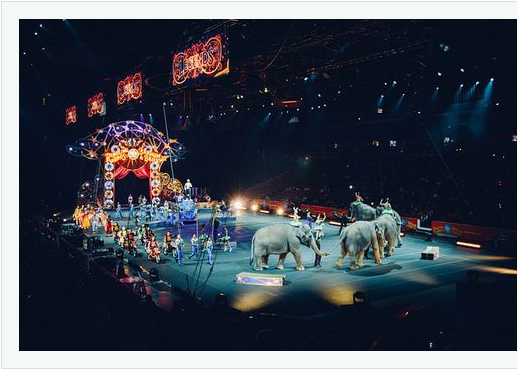
Bello Nock raced up a thin wire on a motorcycle. He drove the motorcycle high over thousands of spectators' heads. He's a clown with the Ringling Bros. and Barnum & Bailey circus.
To the spectators below, Bello's stunt looked dangerous - and it was. But Bello knew a secret. He was using science to help keep himself safe.
Bello began performing circus stunts when he was nine years old. He walked on a thin wire that was stretched nine feet off the ground.
To stay on a wire without falling, Bello needs to keep his center of gravity low. An object’s center of gravity is the spot where it balances. If the object is even all around, this spot is usually near the middle. That is where most of the object's weight is centered. When standing, a person’s center of gravity is usually in their torso or hips.
By crouching and keeping low, Bello keeps his center of gravity low. The lower his center of gravity, the easier it is for him to stay balanced and not fall.
Bello often carries a heavy metal stick when he performs. The stick bends downward, lowering his center of gravity.
Bello also uses Newton's first law of motion when he performs. That law is named for Isaac Newton. He was a scientist who lived about 300 years ago.
Newton's first law of motion says that a moving object will keep moving unless an outside force acts on it. (The law also says that an object at rest will stay that way unless an outside force acts on it.) Bello uses that law, and especially the idea of applying outside force, when he rides his tiny bike.
As Bello speeds along on his tiny bike, he pushes the bike forward with pedals. The force he applies to the pedals helps turn the bike tires and move the bike. This force is greater than the outside forces that are working to stop the bike, so the bike keeps moving. One of those outside forces is the friction between the bike tires and the floor. Friction is a force that slows down or stops objects when two surfaces rub against each other.
Bello sometimes has to stop quickly before slamming into a wall. To stop quickly, Bello uses the bike's brakes. The brakes create so much friction that the tires stop moving and the bike comes to a stop. If Bello did not use the brakes but stopped pedalling, the bike would keep moving forward for a little, like Newton’s first law of motion describes. But the bike would eventually come to a stop partly because of friction between the tires and the ground.
Friction also changes the bike's motion into heat energy. You could say that Bello's act is really hot!
To see how friction works, rub your hands together as fast as you can. When you rub your hands together, they should start to feel warm. Friction between your hands changes into heat energy.
Bello always puts on a high-energy show. "I always want to capture the attention of children," he said. He captures their attention with science.
What is one part of Newton’s first law of motion?
How does the text describe friction?
Read these sentences from the text.
"To stay on a wire without falling, Bello needs to keep his center of gravity low. An object’s center of gravity is the spot where it balances. If the object is even all around, this spot is usually near the middle. That is where most of the object's weight is centered. When standing, a person’s center of gravity is usually in their torso or hips.
By crouching and keeping low, Bello keeps his center of gravity low. The lower his center of gravity, the easier it is for him to stay balanced and not fall."
Based on this information from the text, what is one way you could keep your center of gravity low?
What role does friction play in Bellos' performance?
What is the main idea of this text?
Read these sentences from the text.
Bello Nock raced up a thin wire on a motorcycle. He drove the motorcycle high over thousands of spectators' heads…
To the spectators below, Bello's stunt looked dangerous - and it was. But Bello knew a secret. He was using science to help keep himself safe.
In these sentences, what does the word "stunt" mean?
What happens if he stops pedaling?
What does every living thing on the planet need to survive?
The writer explains different effects of rain. How does rain help cause erosion of the ground?
Rain is important to birds, earthworms, and humans.
What evidence from the text best supports this conclusion?
What would happen to birds if it didn’t rain for a long time?
What is this passage mostly about?
Read the following sentence:
“Before it rains, a flower bed or tree bed might be bumpy and craggy, with clumps of dry soil.”
The word “craggy” most nearly means
Choose the answer that best completes the sentence below.
we might not be able to play outside when it rains, rain is a good thing.
What is erosion?