Learning Objectives
By the end of this lesson, you will be able to:
Describe the early stages of neurulation in the embryo.
Name the gross anatomical divisions of the nervous system over the course of development.
Discuss the possible defects that may occur during the neurulation process and associated clinical conditions.
Pulse Check: On a scale of 1-5, how familiar are you with today's lesson focus? (1 = unfamiliar, 5 = extremely familiar)
Begin by watching the following 2-Minute Neuroscience video about early neural development. Then, proceed through the more detailed images, explanations, and clinical examples.
Questions are embedded in the lesson to reinforce key concepts. These are designed to help you check your understanding and are not graded. I suggest that you respond to questions without looking back at the lesson, then review the material related to any questions that you miss. You can also return to these questions at any time when studying for future exams.

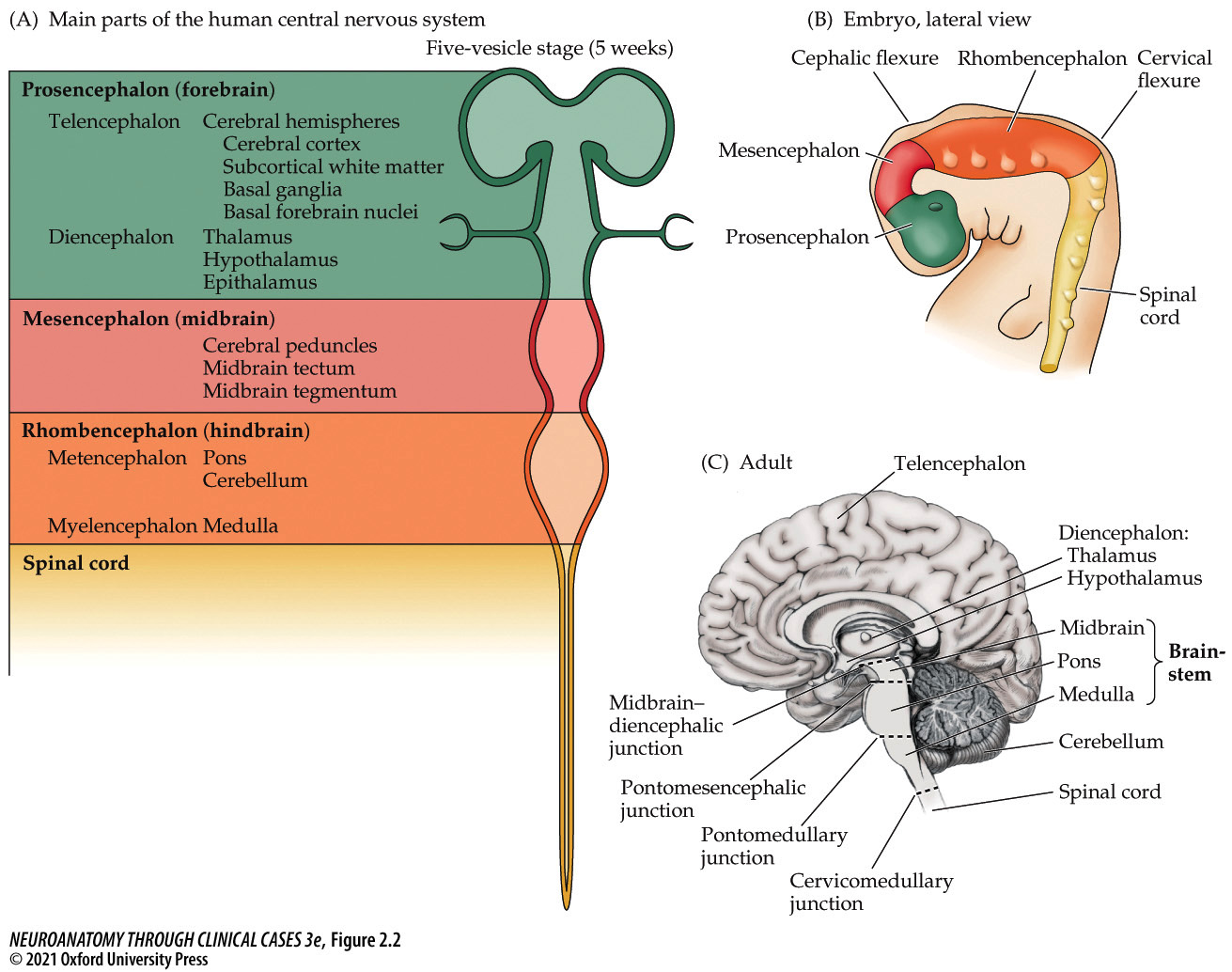
This image summarizes the gross anatomical divisions of the nervous system over the course of development: from the three-vesicle stage, to the five-vesicle stage, to the adult brain.
Week 4 of gestation: The neural tube has differentiated into the prosencephalon (forebrain), mesencephalon (midbrain), and rhombencephalon (hindbrain). The neural tube is closing as these three primary vesicles are forming.
Week 5 of gestation: The prosencephalon has differentiated further into the telencephalon and diencephalon. The rhombencephalon has also differentiated further into the metencephalon and myelencephalon.
Further development: The telencephalon ultimately develops into the cerebral cortex and subcortical gray and white matter structures. The diencephalon develops into the thalamus, hypothalamus, and epithalamus. The mesencephalon develops into the midbrain, the metencephalon develops into the pons and cerebellum, and the myelencephalon develops into the medulla.
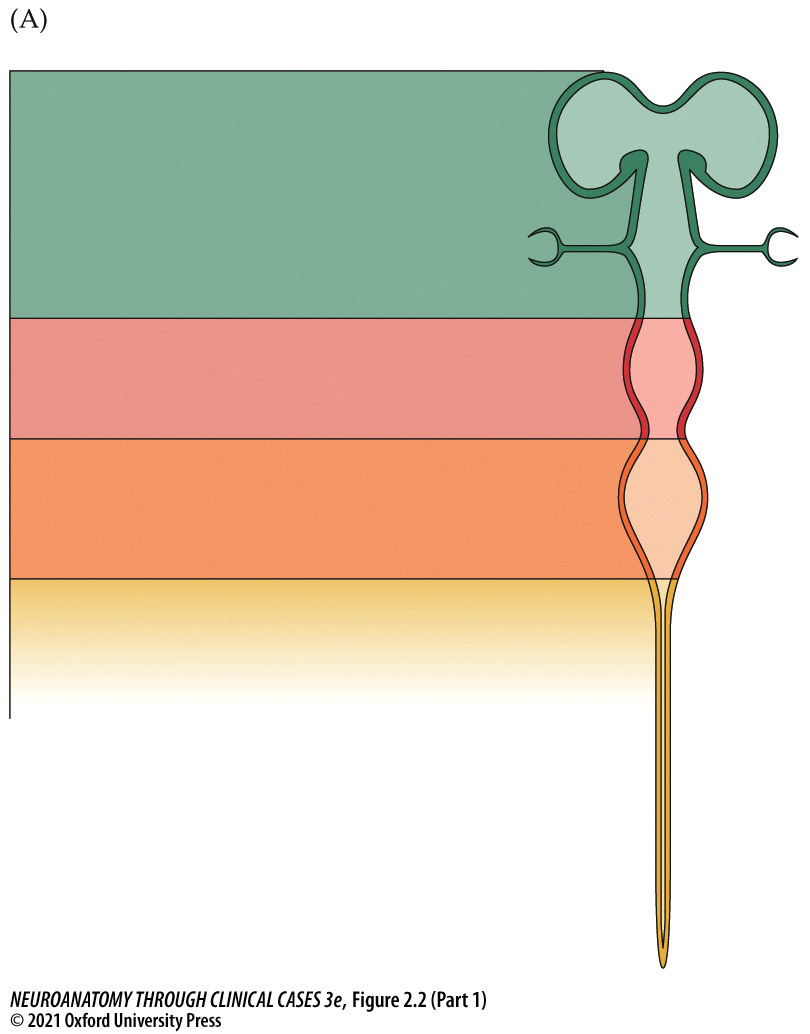
Which of the five vesicles later develops into the medulla?
Label the three primary vesicles of the neural tube that emerge during the 4th week of embryonic development.

Exit Ticket:
How is the material from this lesson relevant to the field of communication sciences and disorders?
Poll: How confident do you feel about the material covered in today's lesson?