Propanone can be reduced to form an alcohol. A functional group isomer of the alcohol formed is
Which one of the following conversions does not represent a reduction?
CH2O is the empirical formula of
Which one of the following does not represent an oxidation?
Which one of the following reactions involves nucleophilic addition?
Which one of the following isomers is not oxidised under mild reaction conditions?
Which one of the following is not a suitable method for the preparation of ethanol?
How many structural isomers, which are aldehydes, have the molecular formula C5H10O?
Which one of the following will undergo nucleophilic addition?
Which alcohol could not be produced by the reduction of an aldehyde or a ketone?
On reduction, a racemate can be formed by
Which one of the following statements about but-2-enal, CH3CH=CHCHO, is not true?
Which one of the following reactions will produce an organic compound that has optical isomers?
In which one of the following mixtures does a redox reaction occur?
Which one of the following would not reduce an acidified aqueous solution of potassium dichromate(VI)?
Which one of the following can act as an oxidising agent but not as a reducing agent?
Part a: Butanone is reduced in a two-step reaction using NaBH4 followed by dilute hydrochloric acid.
Write an overall equation for the reduction of butanone using [H] to represent the reductant.
Part B: By considering the mechanism of the reaction, explain why the product has no effect on plane polarised light.
Give a suitable reagent and state the necessary conditions for the conversion of propan-2-ol into propanone. Name the type of reaction.
Reagent:
Conditions:
Type of reaction:
Propanal is an isomer of propanone. Draw the structure of propanal
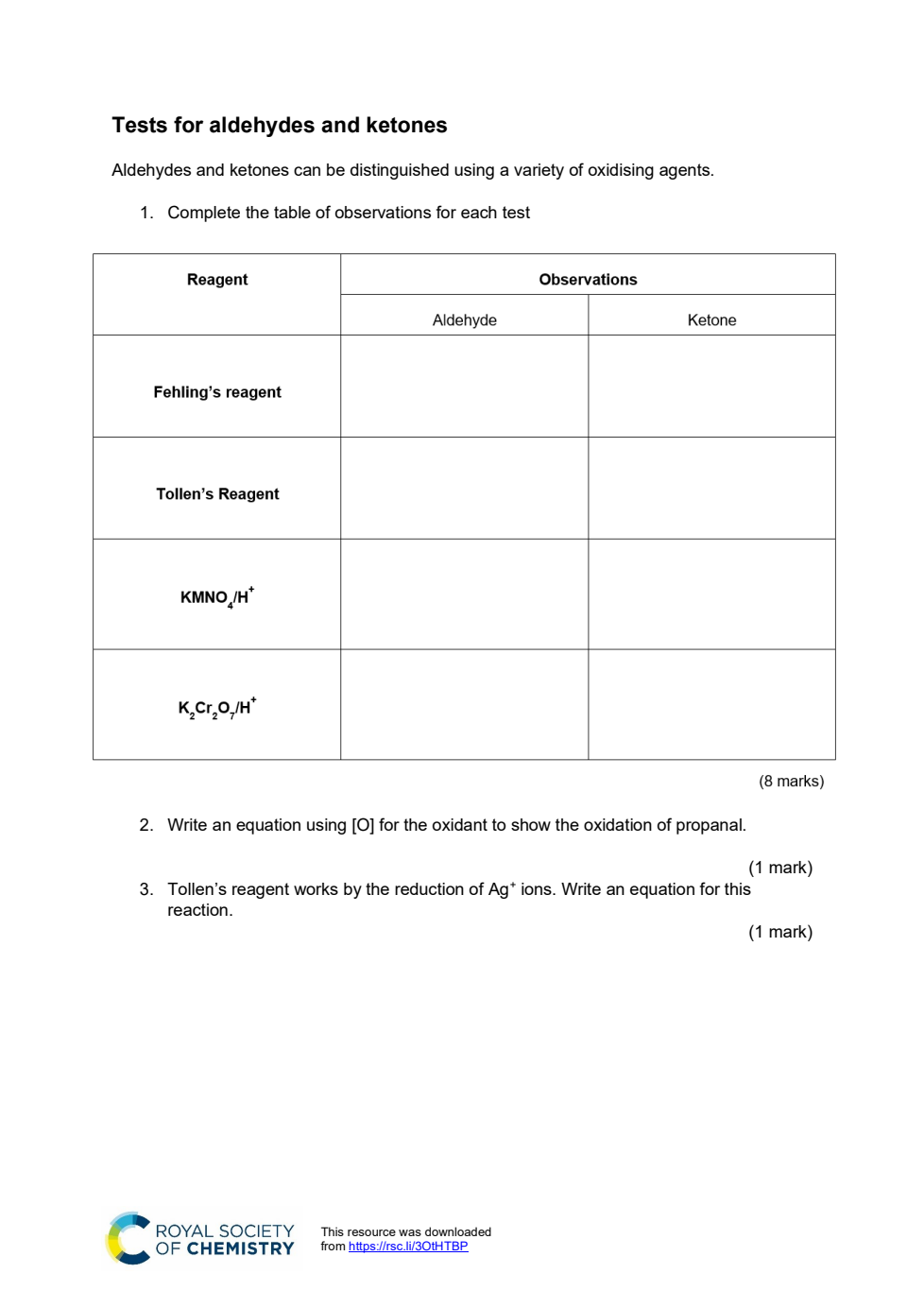
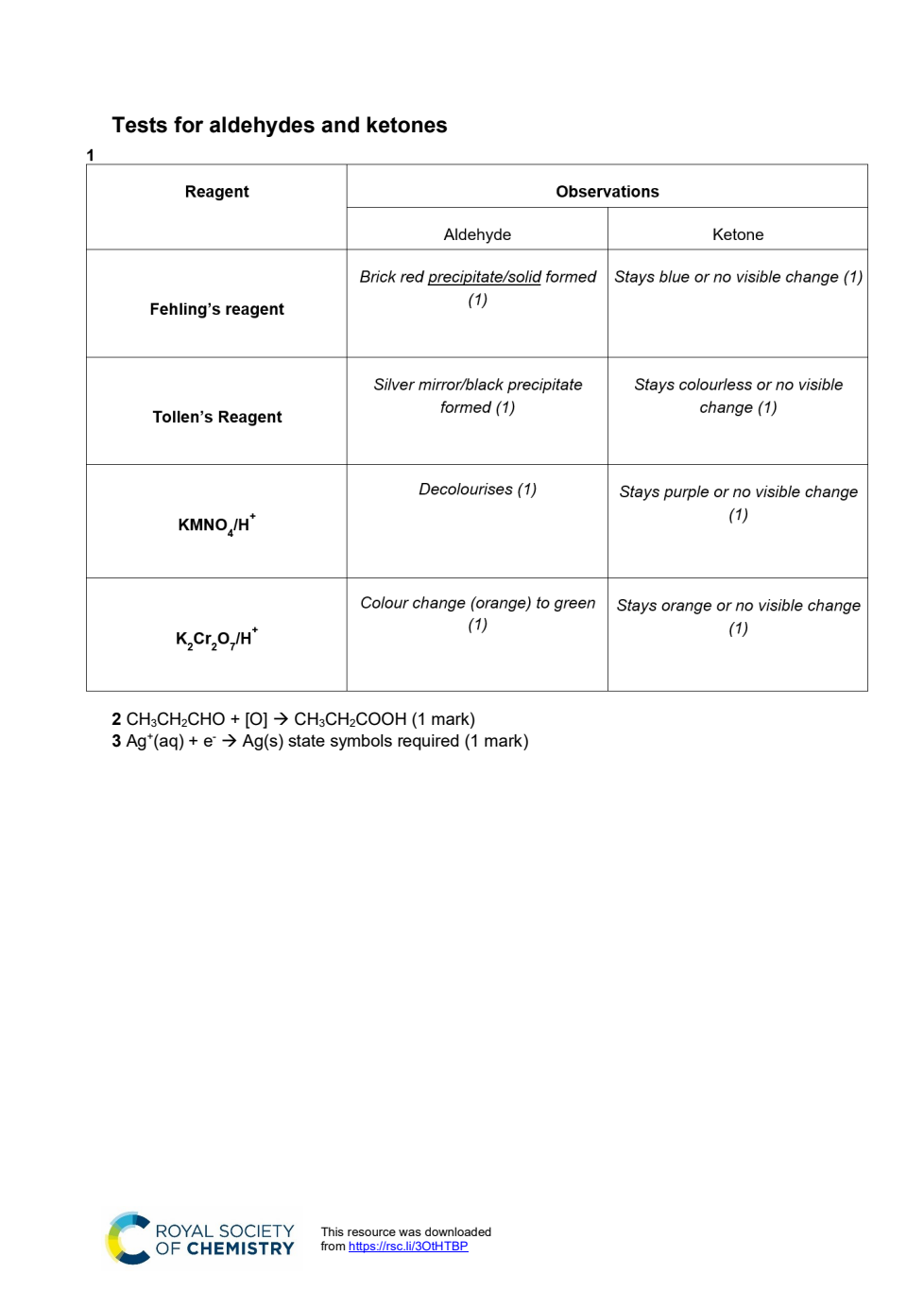
A chemical test can be used to distinguish between separate samples of propanone and propanal. Give a suitable reagent for the test and describe what you would observe with propanone and with propanal.
Test reagent ___________________________________________________
Observation with propanone _______________________________________
Observation with propanone _______________________________________
Draw the structural formula and name the organic product. If no reaction, write no reaction!
propanal + NaBH4 -->
Draw the structural formula and name the organic product. If no reaction, write no reaction!
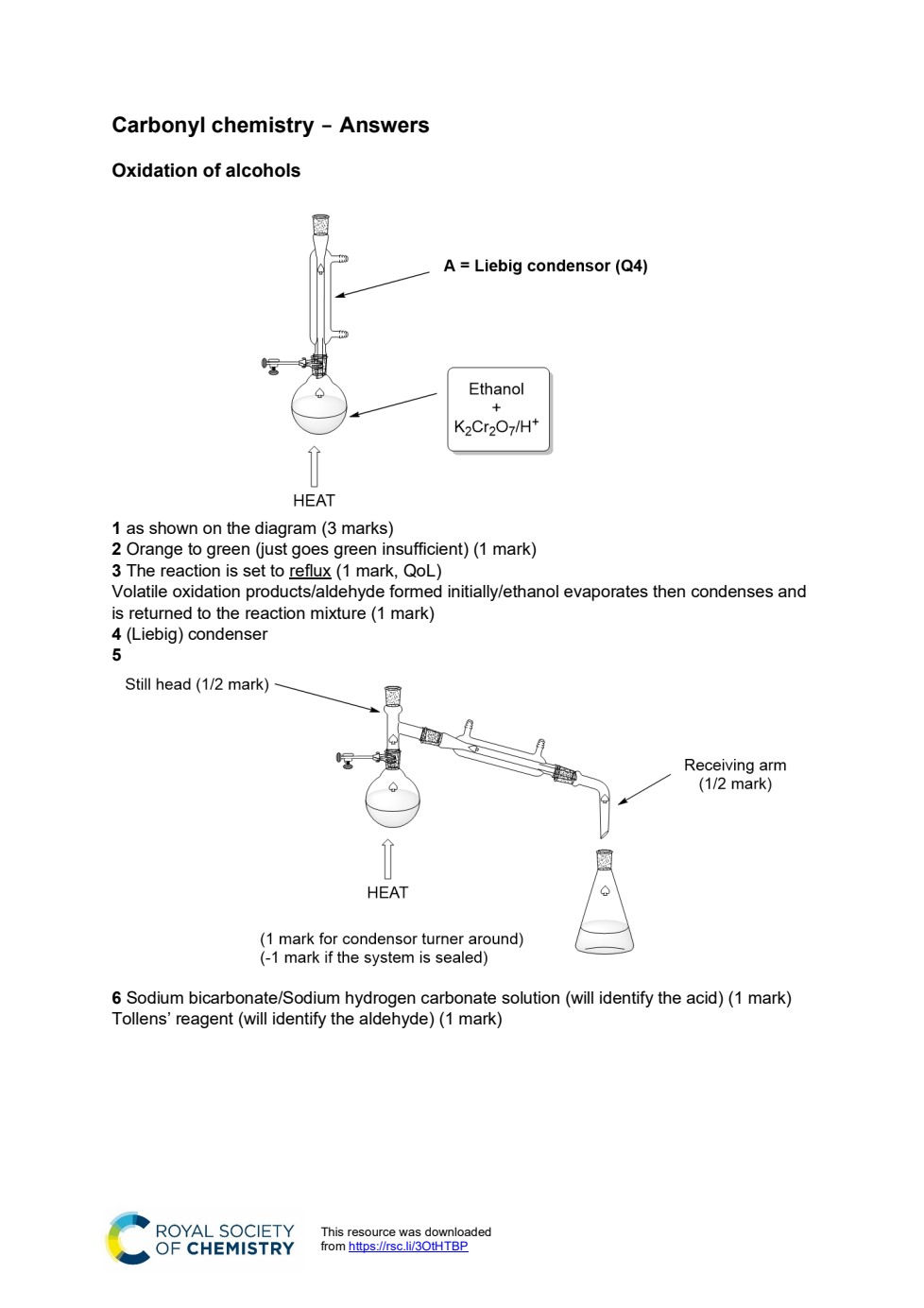
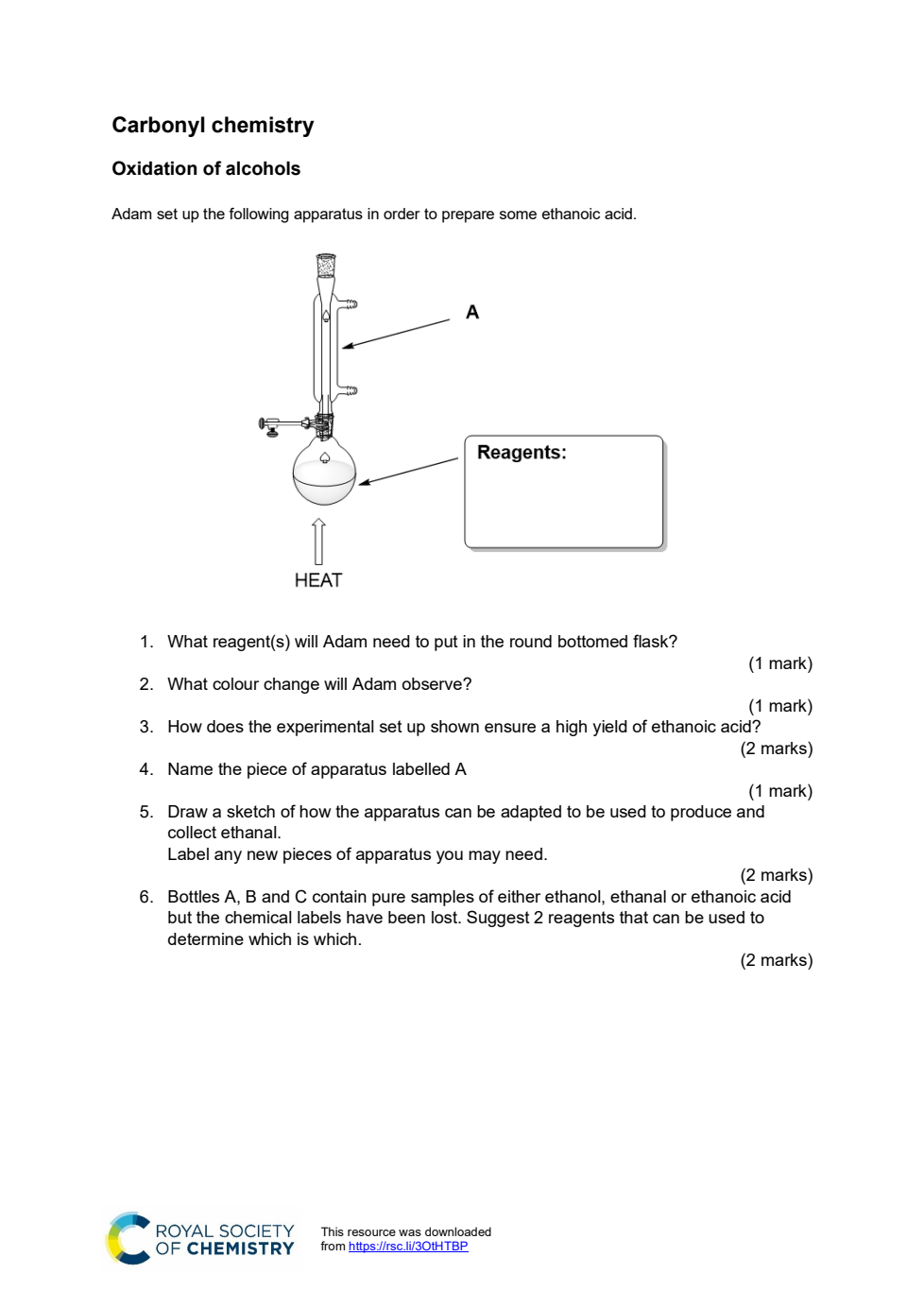
propan-1-ol + H2SO4 / K2Cr2O7 distilling off the product
Draw the structural formula and name the organic product. If no reaction, write no reaction!
butanal + Tollen’s reagent with heating
Draw the structural formula and name the organic product. If no reaction, write no reaction!
butanone + NaBH4
Outline the mechanism for the reaction between propanone and NaBH4
Outline the mechanism for the reaction between propanal + KCN then acid
Which of the following is the correct general equation for the reaction between hydrogen cyanide and an aldehyde?
Which of the following statements, about working with potassium cyanide, is FALSE?
Outline the mechanism between acidified potassium cyanide and methanal
Draw both enantiomers for the reaction between KCN and Butanone