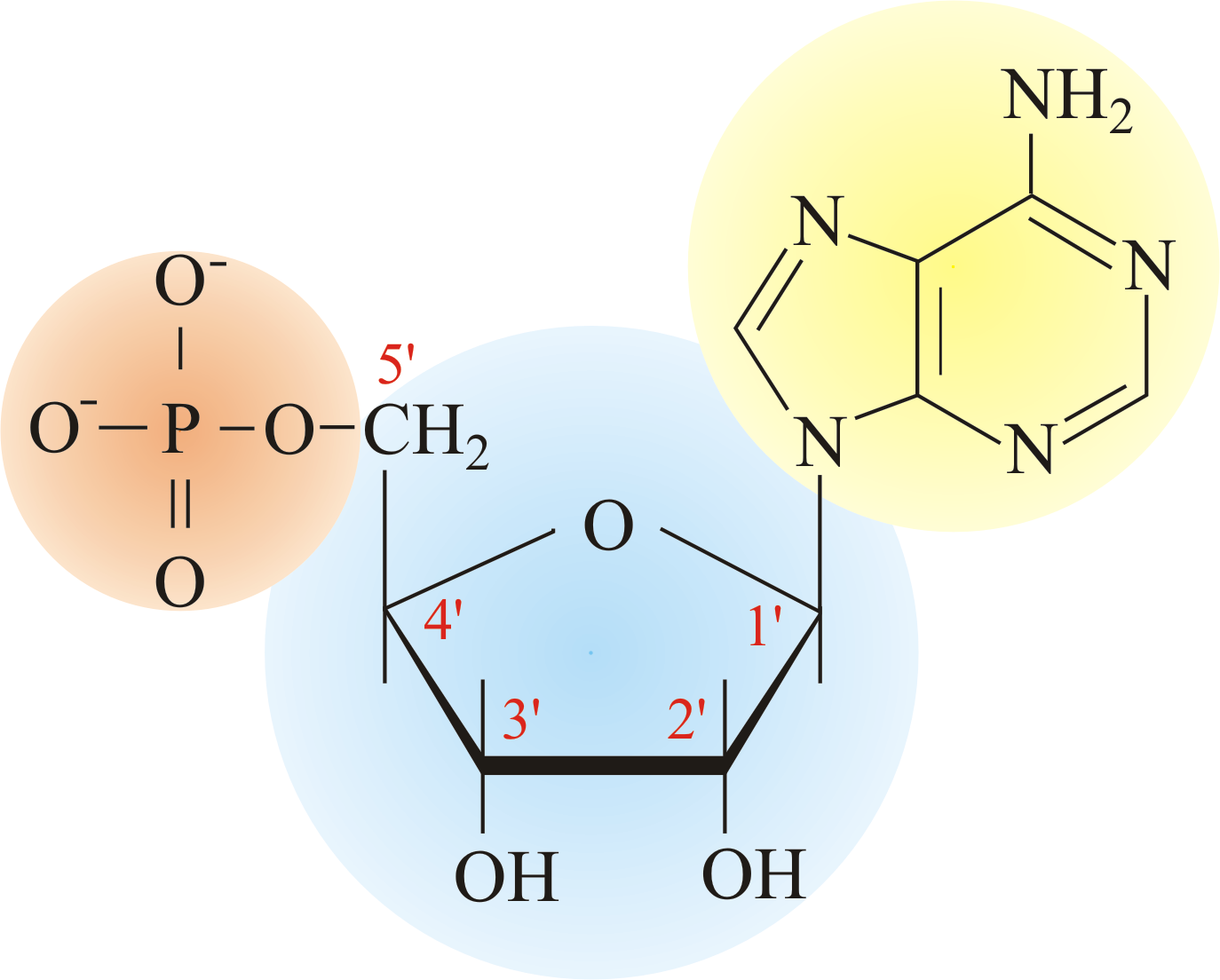
Four biological processes are shown below. Which process explains the variation seen in gametes due to crossing over?
Four biological processes are shown below. Which process explains the variation seen in gametes due to crossing over?
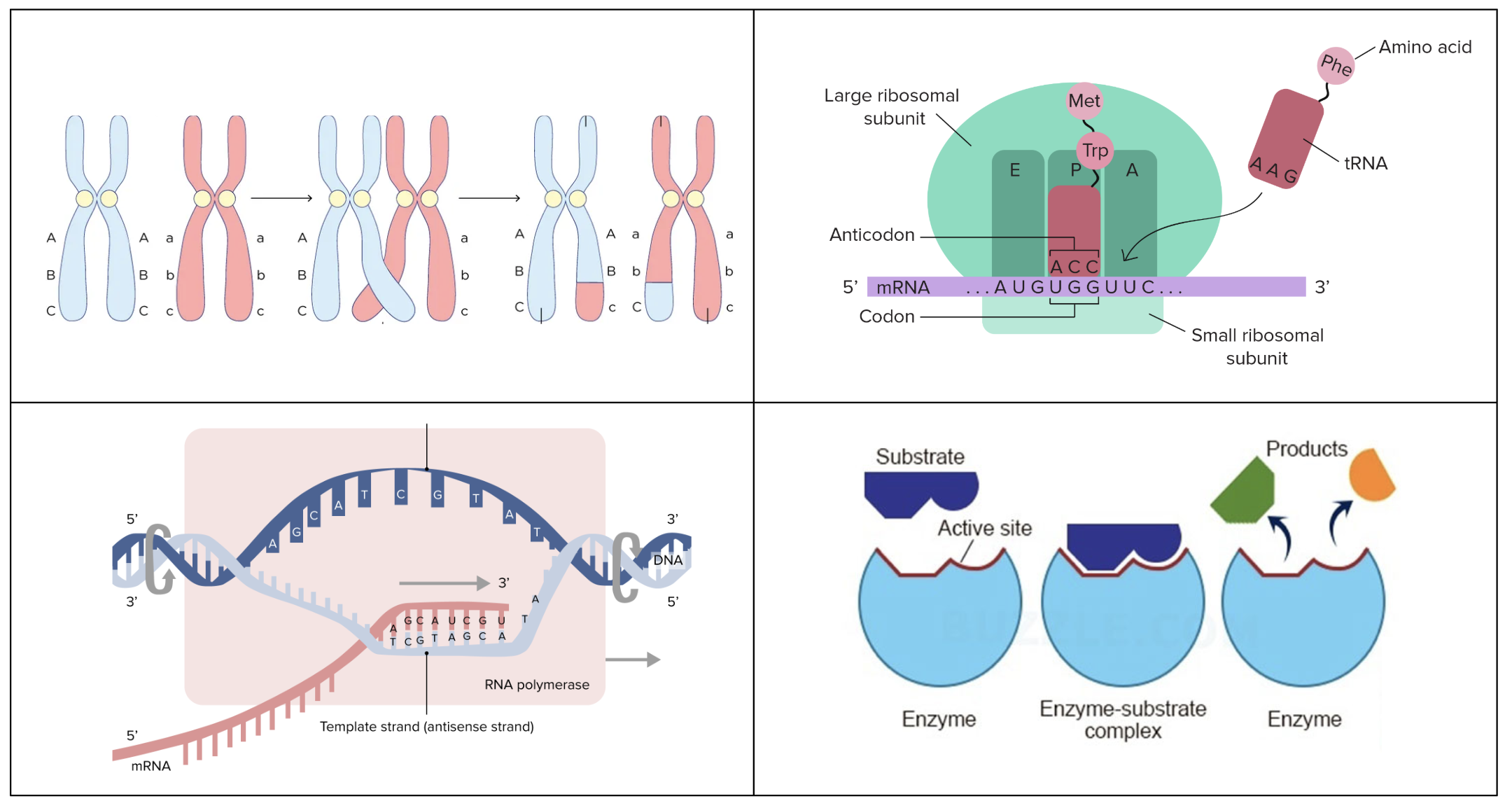
Mitosis results in daughter cells with as the parent cell. These cells are considered .
Meiosis results in daughter cells with as the parent cell. These cells are considered .
During meiosis I, the process of which exchanges genes between homologous chromosomes is significant because it leads to .
What is the primary significance of chromosome reduction in sexual reproduction?
The following processes play a crucial role in increasing genetic diversity within a species -
(Select THREE correct answers)
What is the importance of recombination and independent assortment during Meiosis I?
Four biological processes are shown below. Which process explains the variation seen in gametes due to crossing over?
Which part of DNA molecule is responsible for the direct coding of specific traits in an organism?
A segment of a DNA strand is show below.
Which of these is the correct complementary DNA strand for the segment shown?
Match the steps of DNA replication in the order in which it occurs.
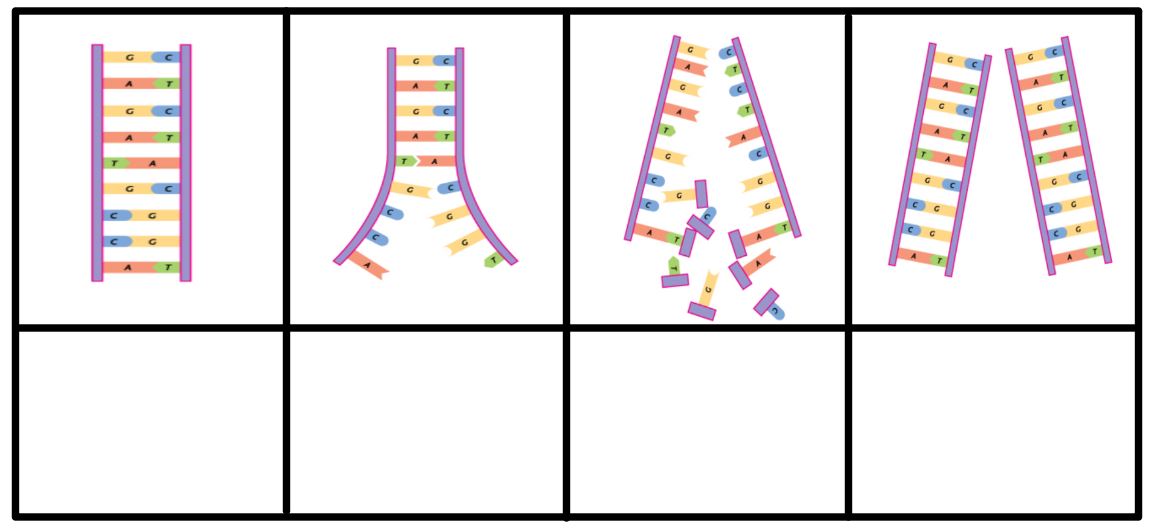
Which of the following is TRUE about DNA Replication?
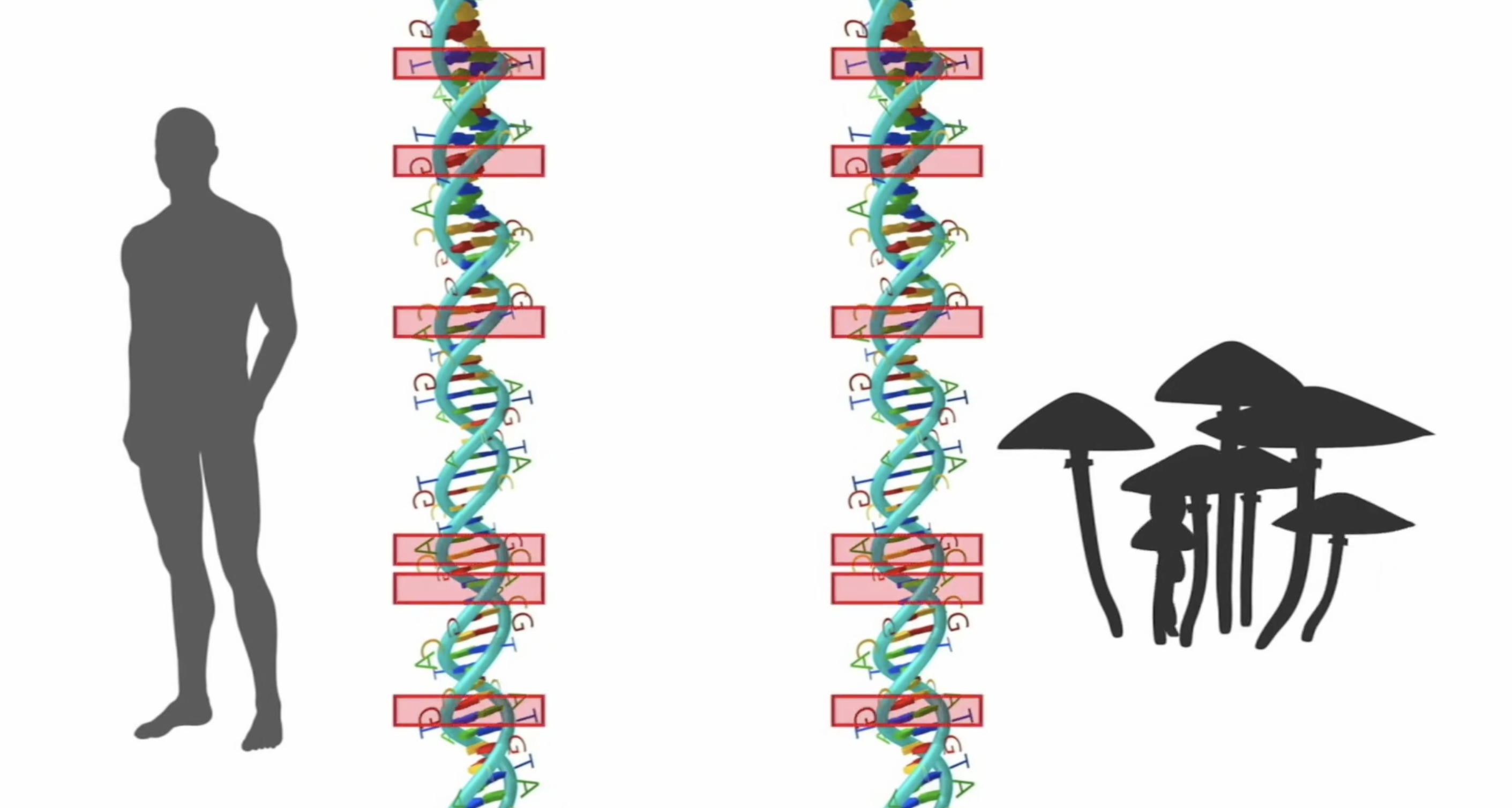
The order and sequence of the ______________ is what makes the difference between one gene and another.
The image below depicts a nucleotide:
The orange portion represents , the middle blue portion is and the yellow portion represents .
Which of these best summarizes the origin of DNA?
Match the correct description to what is occurring at the four different stages of the cell cycle?
| Draggable emne | arrow_right_alt | Korresponderende emne |
|---|---|---|
M | arrow_right_alt | Cell grows for the first time and it prepares for DNA replication. |
G2 | arrow_right_alt | DNA replication. Mutations can occur here. |
G1 | arrow_right_alt | The cell is inspected and verified that no mutations are present. It is now ready for cell division. |
S | arrow_right_alt | Division of the nucleus into two nuclei, and eventually into two daughter cells. |
Match the following vocabulary to their definitions
| Draggable emne | arrow_right_alt | Korresponderende emne |
|---|---|---|
Anaphase | arrow_right_alt | When the chromosomes become packed/condensed. The nuclear membrane (nucleus) disappears. |
Telophase | arrow_right_alt | The spindle fibers align the chromosomes in the middle. |
Cytokinesis | arrow_right_alt | When the spindle fibers pull the 2 sets of chromosomes apart/away to opposite ends of the cell. |
Prophase | arrow_right_alt | Two nuclear membranes (nuclei) begin to form inside of the cell. |
Metaphase | arrow_right_alt | When the cell actually splits into two identical daughter cells. |
A student is examining onion root tip cells under a microscope and notes the following:
Chromosomes are lined up across the center of the cell
Spindle fibers are attached to the centromeres
The nuclear membrane is completely gone
Each chromosome is clearly visible and organized in a straight line
Which phase of the cell cycle is the student MOST LIKELY observing?
In order to prevent cells from becoming cancerous, many cells with go through a regulated process resulting in cell death called apoptosis.
What would trigger apoptosis to occur? Select THREE correct answers.
Cells move through a critical G1 checkpoint before entering the S phase of the cell cycle. If the cell’s DNA is damaged or not ready for replication, the checkpoint can delay progression or trigger apoptosis to prevent faulty DNA from being copied.
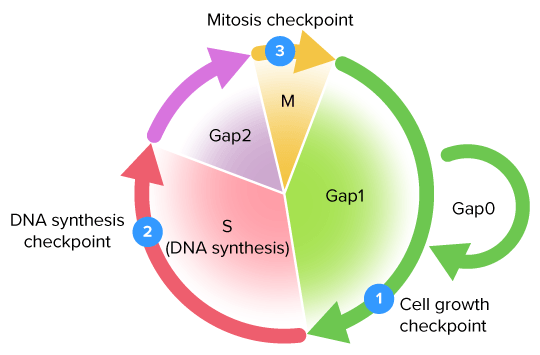
Which of the following best explains what would happen if mitosis began occurring at an abnormally high and uncontrolled rate?
Exposure to can cause cells lose their ability to regulate the cell cycle. This can cause the cells to divide at an accelerated rate and puts an individual at risk for .
The main function of meiosis is to produce cells. Humans have 46 chromosomes in their DNA, after meiosis the gametes will have chromosomes.
The difference in chromosome number between a parent cell and its daughter cells in meiosis is that the daughter cells will have of chromosomes.
Which of these explains a key difference between Meiosis I and Meiosis II?