SUCCESSION REVIEW
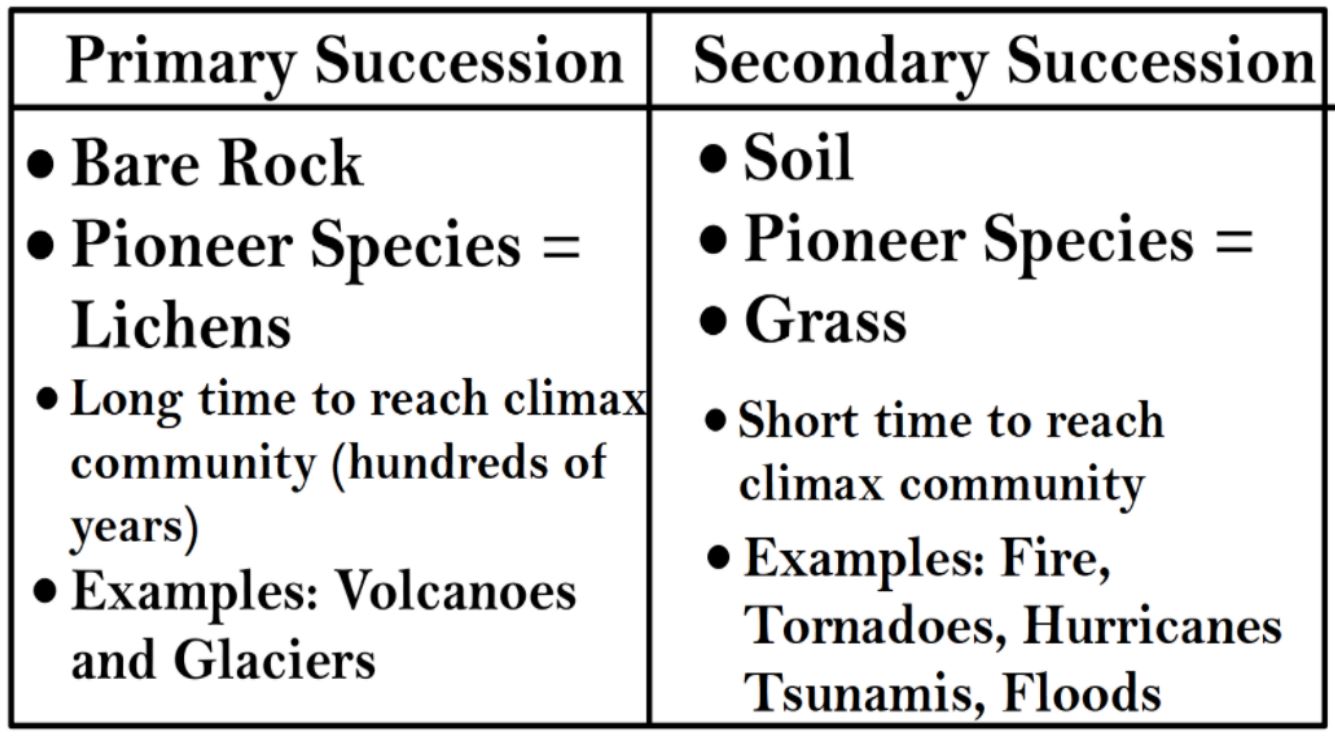
Primary and secondary succession are different because primary succession has what at the start?
Primary and secondary succession are different because secondary succession has what at the start?
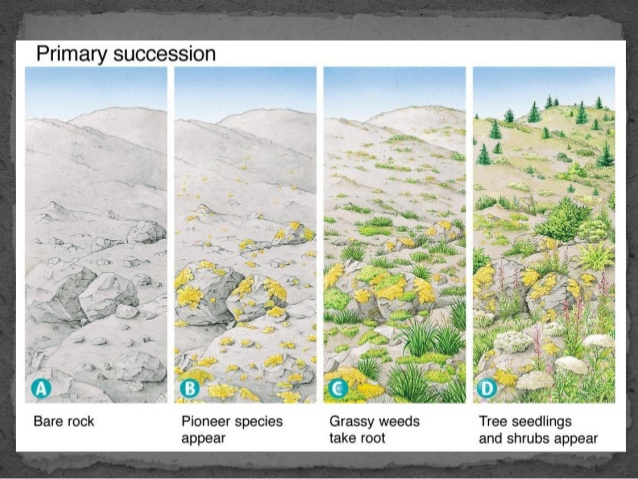
What is the pioneer species for a primary succession?
What is the pioneer species for secondary succession?
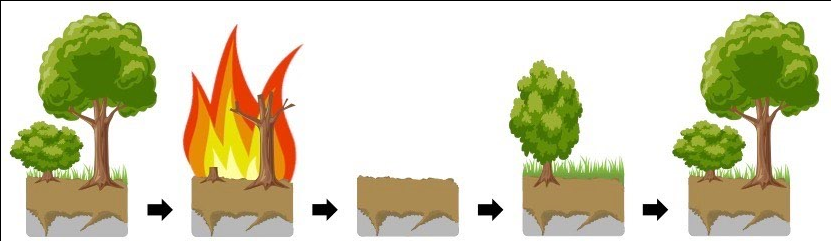
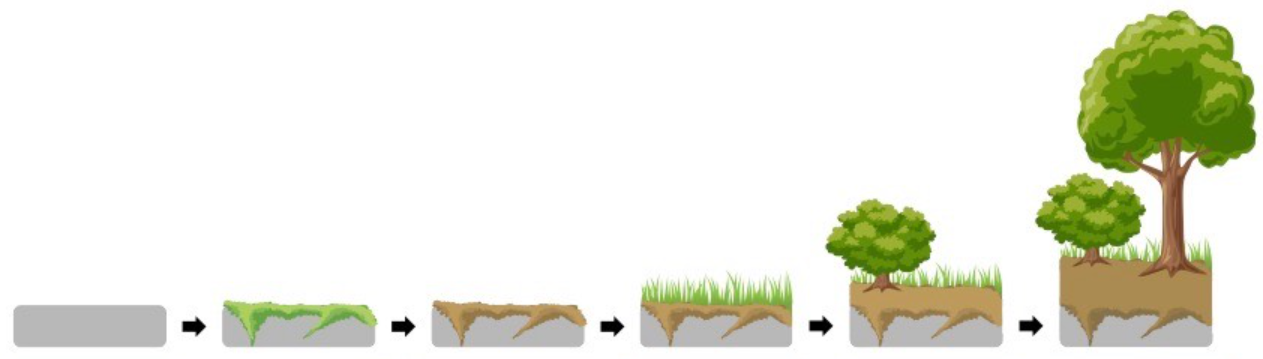
The picture below is an example of:
The picture below is an example of:
Sort each statement into the correct box.
Volcano Eruption
Hurricane
Glacier Migration
Forest Fire
No soil present
Has soil present
Primary Succession (3 items)
Secondary Succession (3 items)
What organisms are in the climax community in this example?
What is the climax community in the example of succession below?
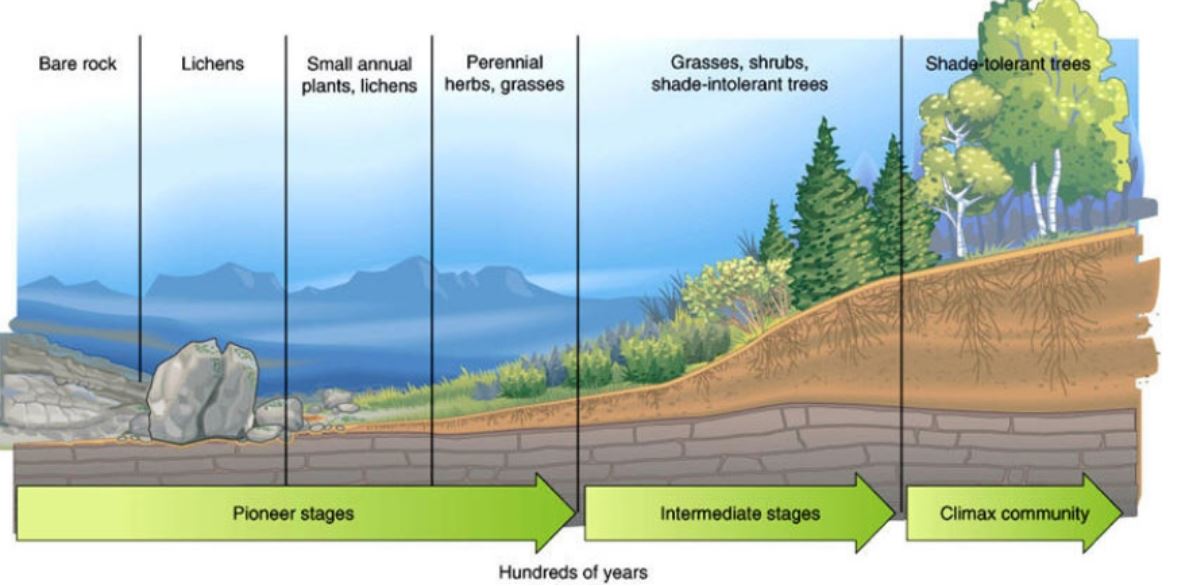
Which type of succession takes longer and why?
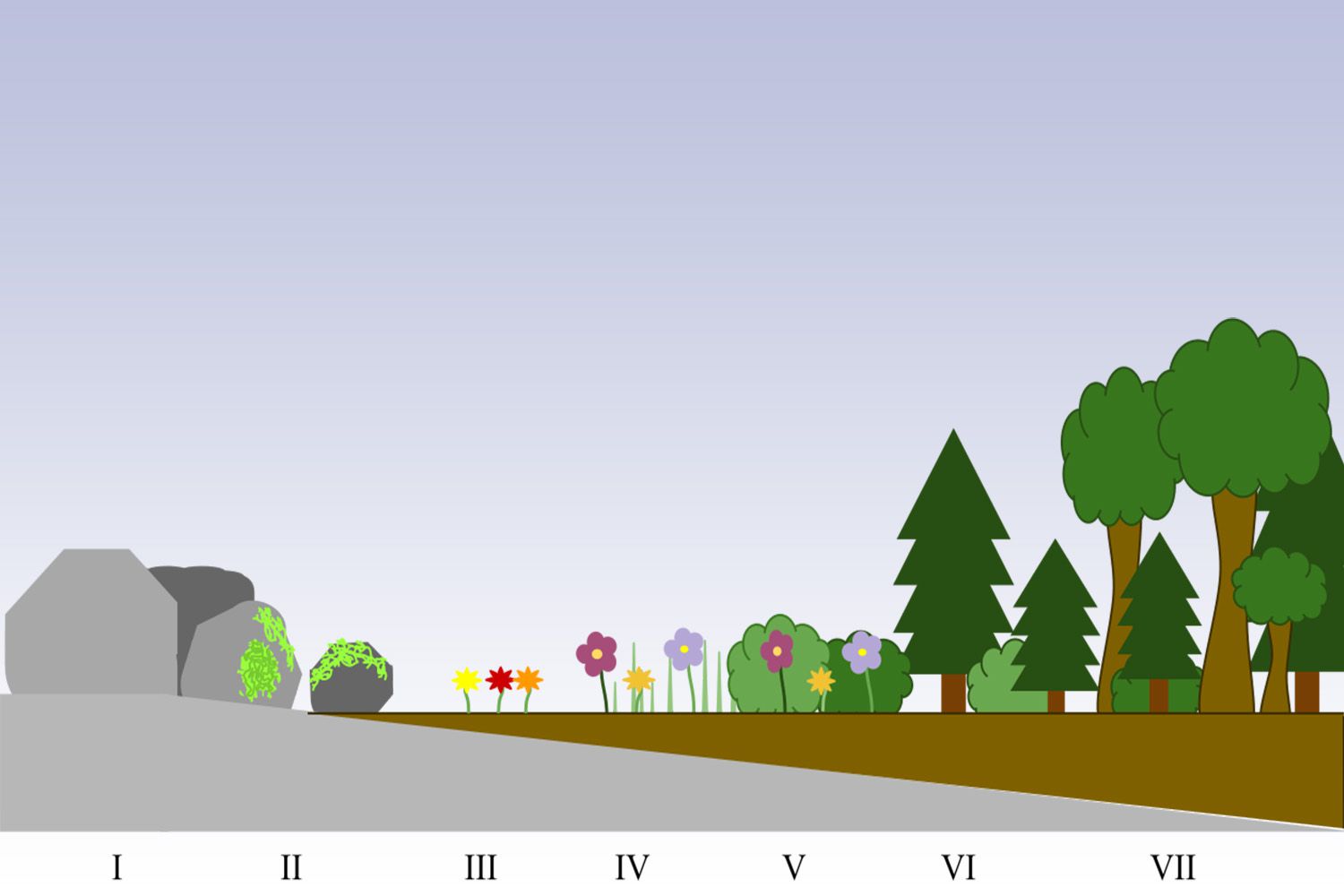
Based on the picture above, what would the pioneer species be?
Sort these steps in the order they occur.
| Draggable emne | arrow_right_alt | Korresponderende emne |
|---|---|---|
Small plants such as grass and flower begin to grow | arrow_right_alt | Step 1 |
Formation of Rock | arrow_right_alt | Step 2 |
Large Plants such as shrubs, Trees, rodents, trees, and other animal species move in | arrow_right_alt | Step 3 |
Lichens move in along with mosses and start forming soil | arrow_right_alt | Step 4 |
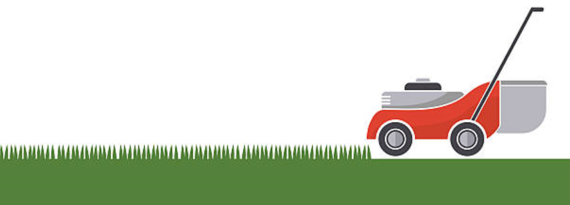
A small town in the piney woods of East Texas has a soccer field composed of native grasses. The soccer field mowed once a week.
What effect does continual mowing have on ecology of the field?
The rocky material left behind by a retreating glacier forms what is called a moraine.
When primary succession occurs on a moraine, which life-forms will help create the soil by breaking down bare rock?
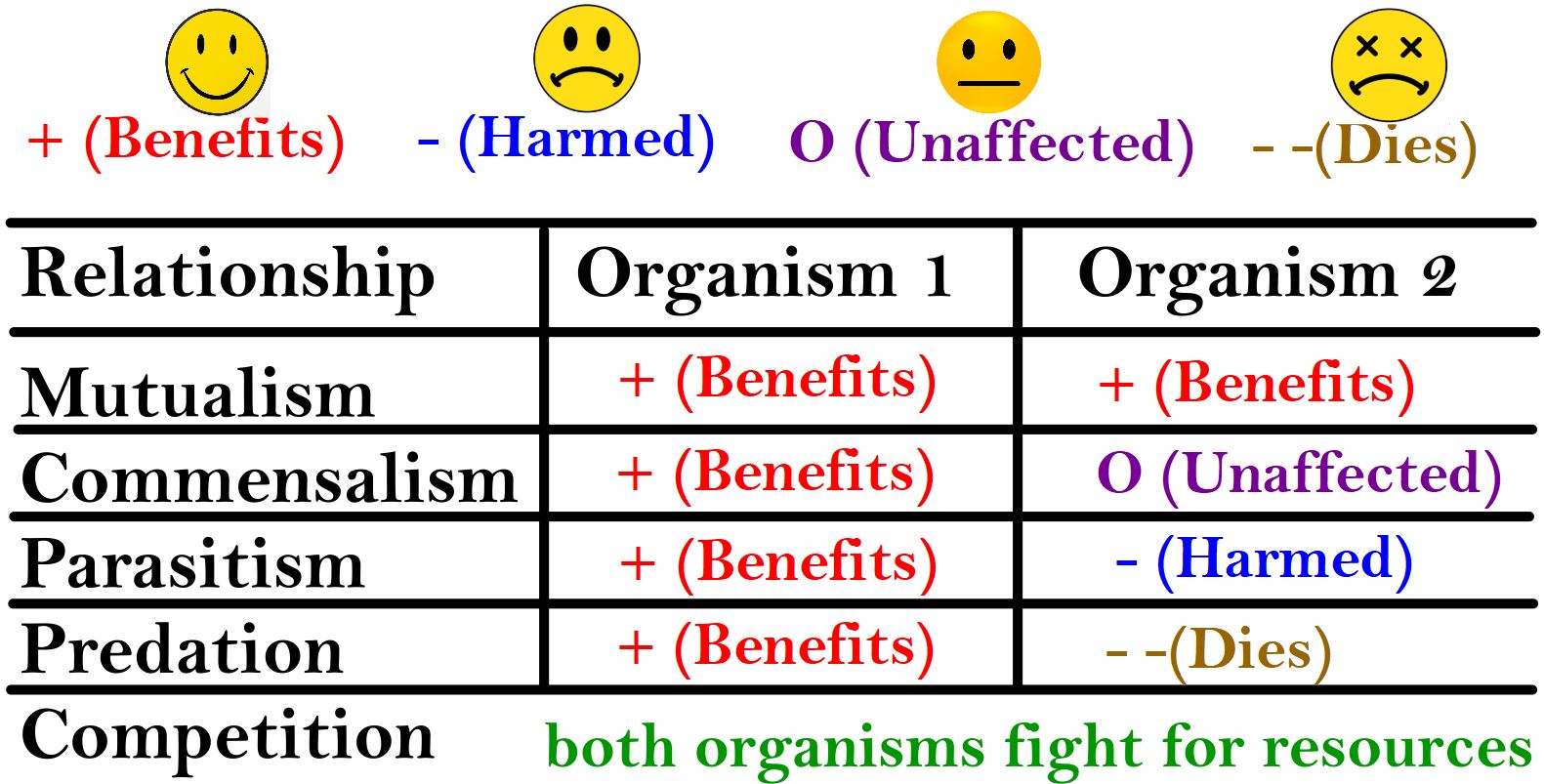
Match the type of Symbiotic Relationship to its definition.
| Draggable emne | arrow_right_alt | Korresponderende emne |
|---|---|---|
Competition | arrow_right_alt | One species benefits, the other is harmed by the relationship (+,-). |
Commensalism | arrow_right_alt | Both species benefit (+,+). |
Parasitism | arrow_right_alt | One species benefits, the other is neither helped nor harmed (+,0). |
Mutualism | arrow_right_alt | One species kills and consumes (eats) the other (+,-). |
Predation | arrow_right_alt | Two species fight over limited resources (-,-). |
a.) Annotate the following on the diagram below:
+ = Benefits
- = Harmed
0 = Neither benefits nor harmed
- - = Dies
b.) State they type of symbiotic relationship whether it is:
Mutualism
Commensalism
Parasitism
Predation
Question: The Cattle Egret (bird) is often seen in the company of cows. The cows walks in the grass and stirs up insects, which the egret then eats. There is no apparent benefit to the cattle.
(Show your work below)
a.) Annotate the following on the diagram below
+ = Benefits
- = Harmed
0 = Neither benefits nor harmed
- - = Dies
b.) State they type of symbiotic relationship whether it is:
Mutualism
Commensalism
Parasitism
Predation
Question: The oxpecker bird rides around on the backs of hippopotamus. The oxpecker feeds on parasites of the hippo such as ticks and warns the animals of approaching predators.
(Show your work below)
a.) Annotate the following on the diagram below
+ = Benefits
- = Harmed
0 = Neither benefits nor harmed
- - = Dies
b.) State they type of symbiotic relationship whether it is:
Mutualism
Commensalism
Parasitism
Predation
Question: Treehoppers chew a hole and sucks sugar rich juices from the phloem of an Oak Tree. The Oak Tree needs the rich juices for its own wellbeing.
(Show your work below)
a.) Annotate the following on the diagram below
+ = Benefits
- = Harmed
0 = Neither benefits nor harmed
- - = Dies
b.) State they type of symbiotic relationship whether it is:
Mutualism
Commensalism
Parasitism
Predation
Question: A flicker bird has gone through some living tissue to make its nest in a cactus, but this does not affect the wellbeing of the cactus. The bird will pick cactus-eating insects off of the cactus.
(Show your work below)
a.) Annotate the following on the diagram below
+ = Benefits
- = Harmed
0 = Neither benefits nor harmed
- - = Dies
b.) State they type of symbiotic relationship whether it is:
Mutualism
Commensalism
Parasitism
Predation
Question: Mosquitoes sucks blood from a person (only the female mosquitoes’; they need the protein to make eggs).
(Show your work below)
a.) Annotate the following on the diagram below
+ = Benefits
- = Harmed
0 = Neither benefits nor harmed
- - = Dies
b.) State they type of symbiotic relationship whether it is:
Mutualism
Commensalism
Parasitism
Predation
Question: Nitrogen-fixing bacteria are found on the roots of some plants. These bacteria are provided energy and a home by the plants while the bacteria convert nitrogen for the plant to be able to use.
(Show your work below)
Although termites can physically chew and ingest wood, they are incapable of chemically digesting wood. Inside of the termite is an intestinal protist that secretes enzymes necessary for the termite to digest wood while having a protected home.
Barnacles create home sites by attaching themselves to a whale. The relationship neither harms nor benefits the whale.
Tapeworms live inside the intestines of humans and farm animals. They obtain digested food and shelter from their hosts. Hence the host tend to get sick or suffer from malnutrition.
Two students fight over the last plate of frenchfries in the cafeteria.
Which of these best demonstrates mutualism between certain types of bacteria and humans.
In North American forests, two species of birds, blue jacks and brown creepers, forage (look for food) on the same trees for insects. Brown creepers feed on insects found near the bottom of the tree trunk, while Blue Jacks feed on insects in the top part of the tree.
The difference in foraging (looking for food) behavior most likely affects the blue jacks and brown creepers by...
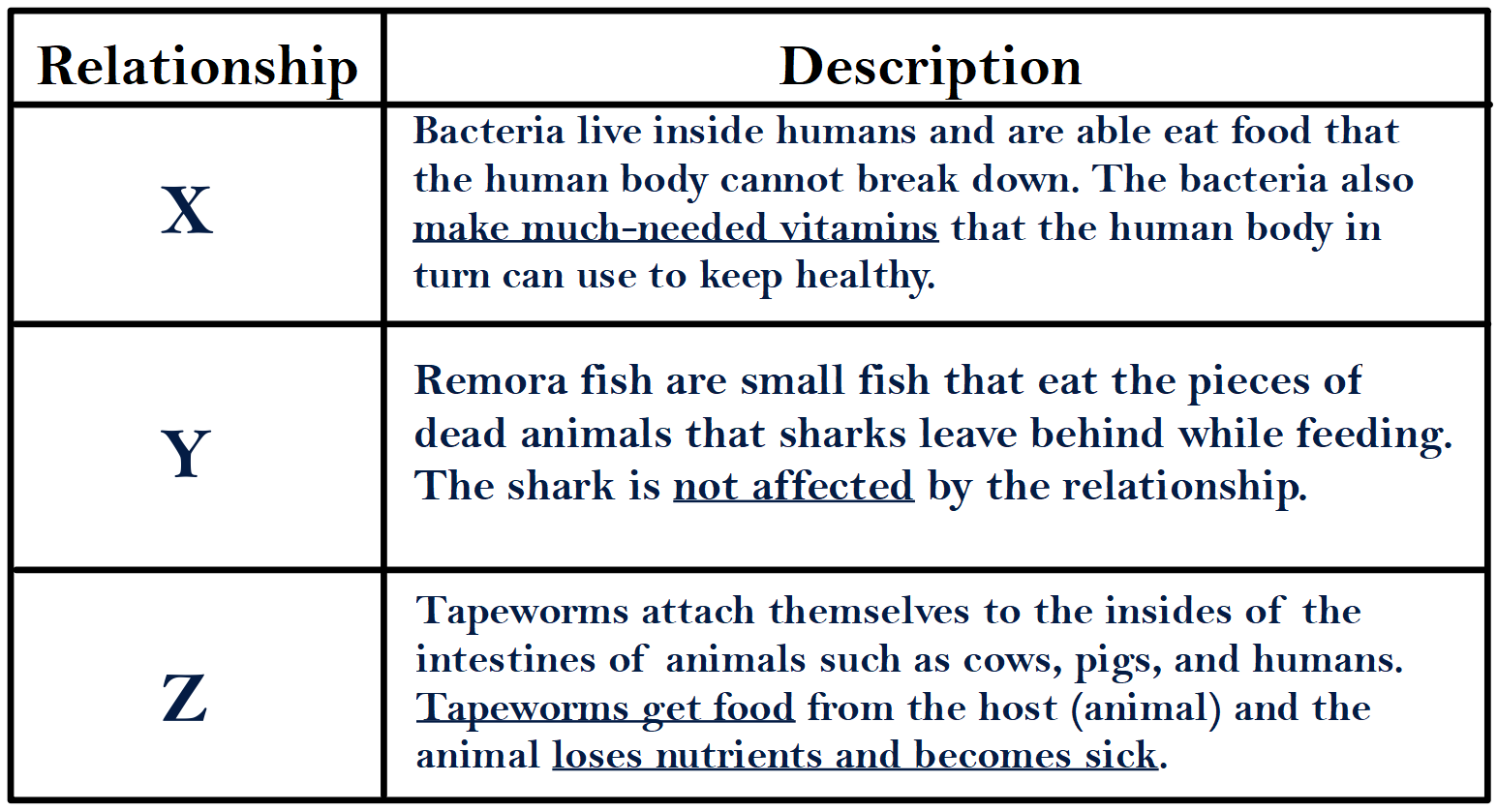
Bacteria live in the colon of humans and are able to feed off the indigestible food that humans body cannot break down (cellulose from plants). In the process of breaking down the food, the bacteria also make much needed vitamins that the body uses to keep healthy.
Some relationships between different organisms are shown in the table (below).
Annotate each of the 4 relationships with +'s, -'s, and 0's. Then, use that information to determine whether each relationship represents mutualism, commensalism, parasitism, predation, or competition.
Below is a table showing three types of symbiotic relationships in an ecosystem.
Which of these correctly describes the relationships between the organisms?