B.5A - Relate the functions of different types of biomolecules including C/L/P/NA to the structure and function of a cell
B.5D - compare the structures of viruses to cells and explain how viruses spread and cause disease
B.5B - compare and contrast prok and euk cells, including their complexity, and compare and contrast scientific explanations for cellular complexity
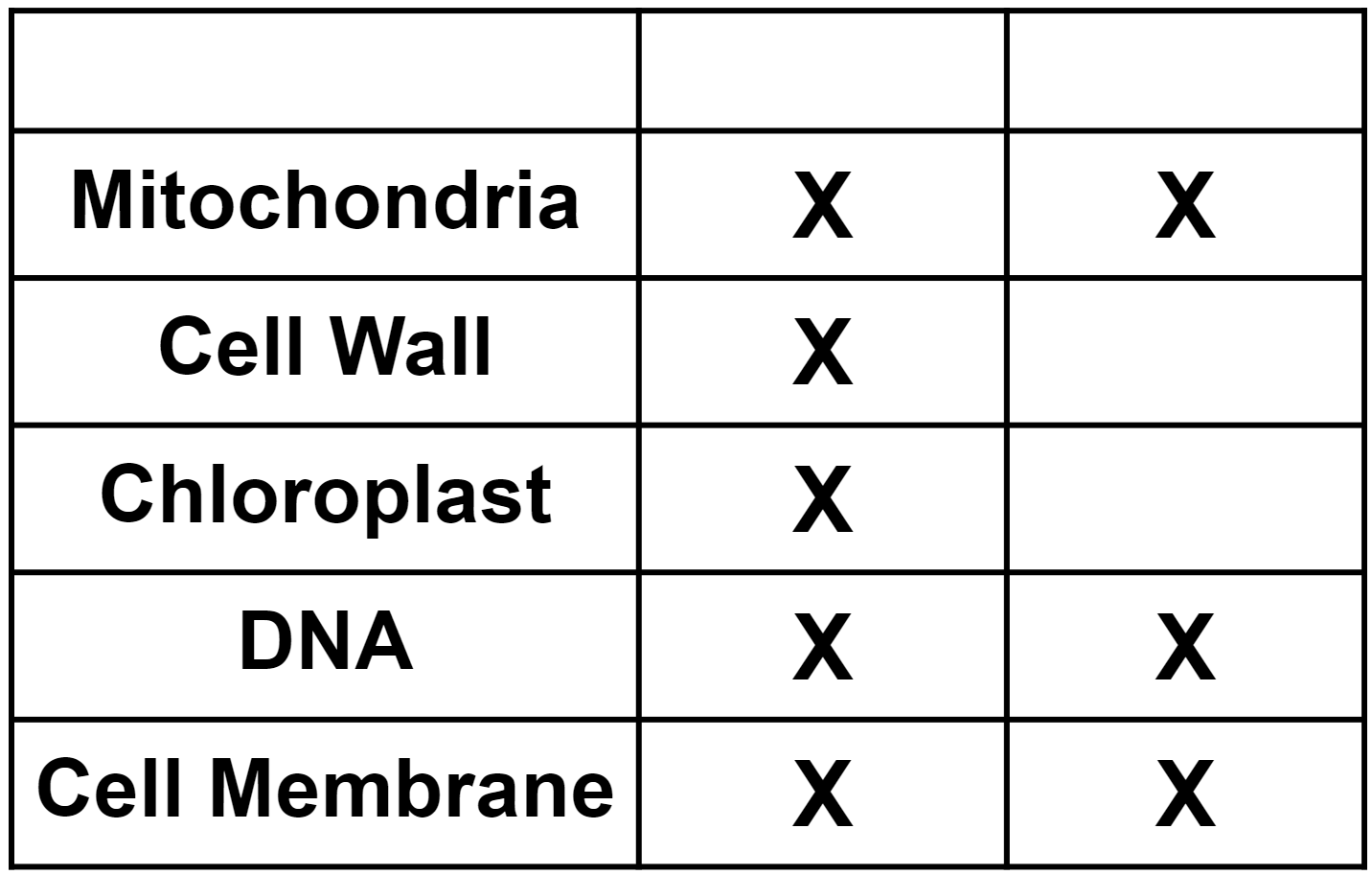
Students created note cards comparing characteristics of eukaryotic and prokaryotic cells.
Which set of note cards most accurately compares these cells?
Build as a D&D - 3 blanks for prokaryotic / euk. plant / euk. animal
Modified from 2019 Q6
(Does not align)
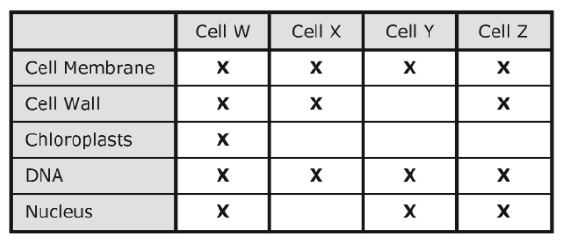
Student use a microscope to look for structures present in four different cells. The students placed an X for each structure that was viewed for each cell on the table shown.
Which cell that was viewed is more likely a prokaryote?
Below is a table demonstrating the difference between a plant cell and an animal cell.
Move ONE correct answer to each box.

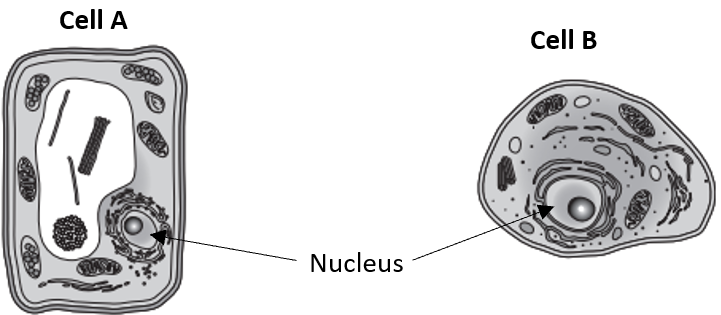
Below are two cells observed under a microscope.
What do Cell A and Cell B have in common? (What similarities do they share?)
Which if these describes a difference between viruses and cells?
Determine if the following characteristics belong to a cell or virus.
Virus | Cell | |
|---|---|---|
Contains genetic material in nucleus | ||
Glycoproteins | ||
Cell Membrane | ||
Capsid | ||
Requires a host cell |
Which if these describes a difference between viruses and cells?