5b - EXIT TICKET - FIND NEW IMAGES
A student groups different types of cells as shown below.
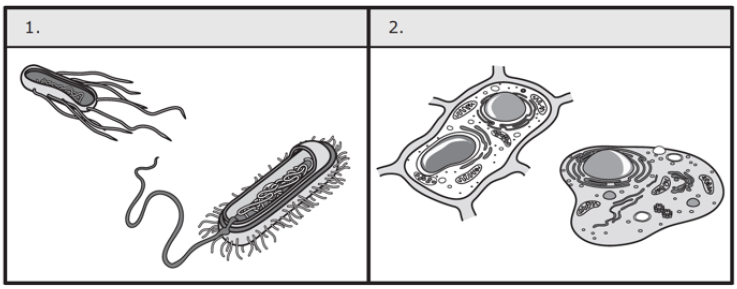
Which table headings (titles) should the student use for the two groups?
The student should label the table heading (title) for Section 1 as while Section 2 should be labeled .
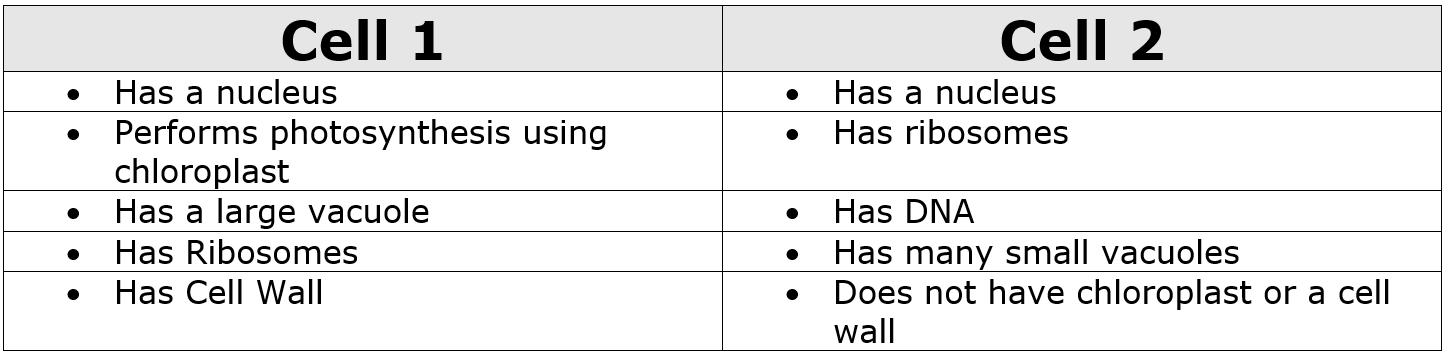
Some students used information they gathered from lab investigations to prepare a table. They entered the table in their lab notebooks.
Which of these correctly identifies the two cells described in the table above?
Due to a recent infection, the cells in your body need to synthesize (make) more enzymes, which are made of proteins, to break down the bacteria that your immune system has been killing off.
Which cell organelle will MAKE these new enzymes?
Eukaryotic cells have DNA surrounded by a
Write your response in the box provided.
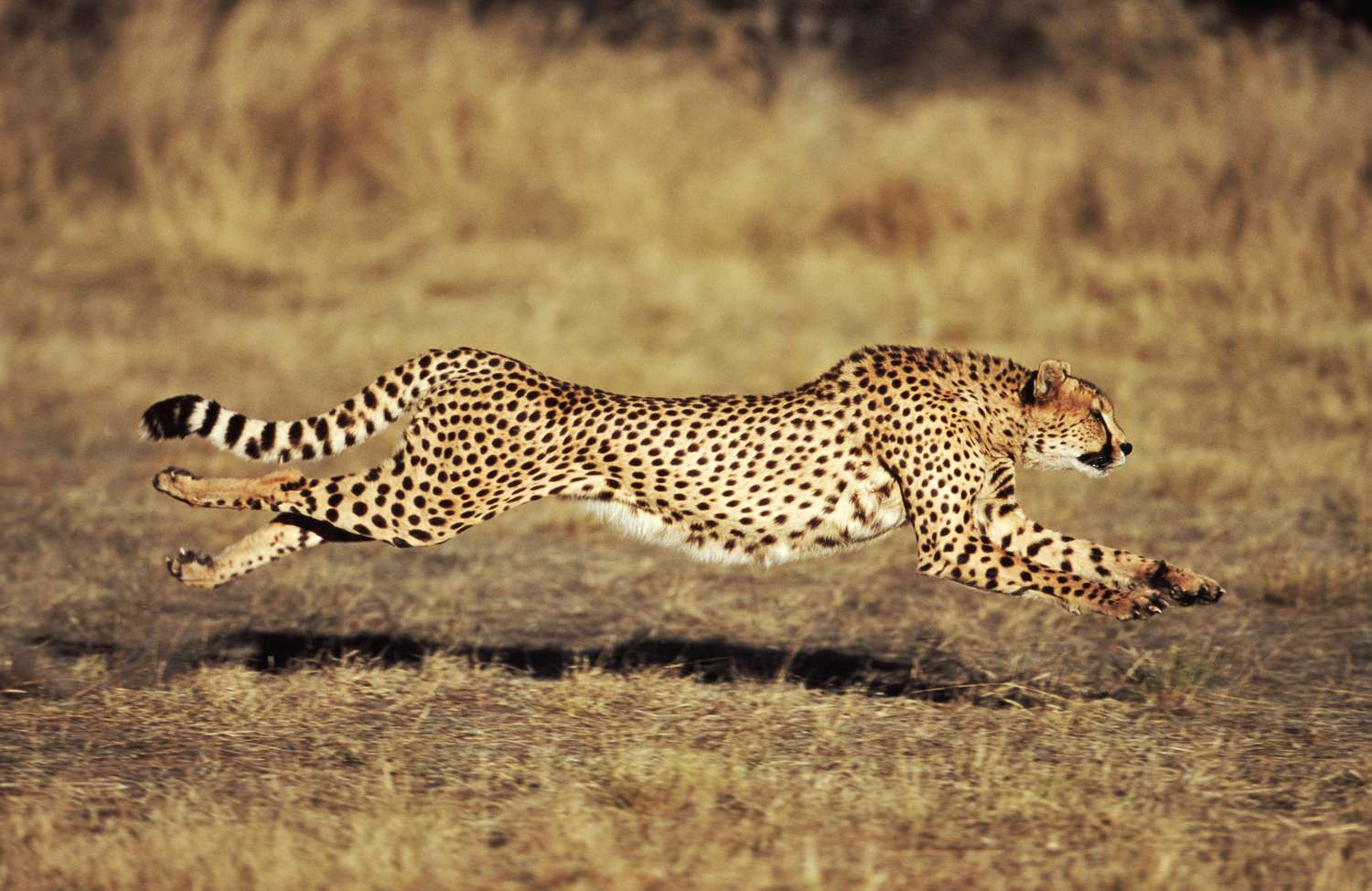
Cheetahs run at speeds up to 70 miles per hour! These consumers eat to provide their bodies with high amounts of energy needed to run at these high speeds.
The leg muscles of cheetahs must have a large number of which organelle to provide them with the energy they need?
19 and 20 with shared passage in red. Multi-part? Part A and B? What about randomization?
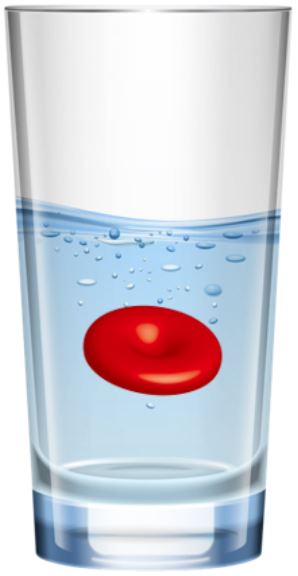
A student dropped a red blood cell sample (75% water) into a glass of salt water (40% water).
Label the diagram below with percentage of water. Move ONE correct answer to each box. Not all answer choices will be used.
A student dropped a red blood cell sample (75% water) into a glass of salt water (40% water).
Label the concentration of water molecules and use the arrow to indicate which way the molecules will move.
Move ONE correct answer to each box. Not all answer choices will be used.
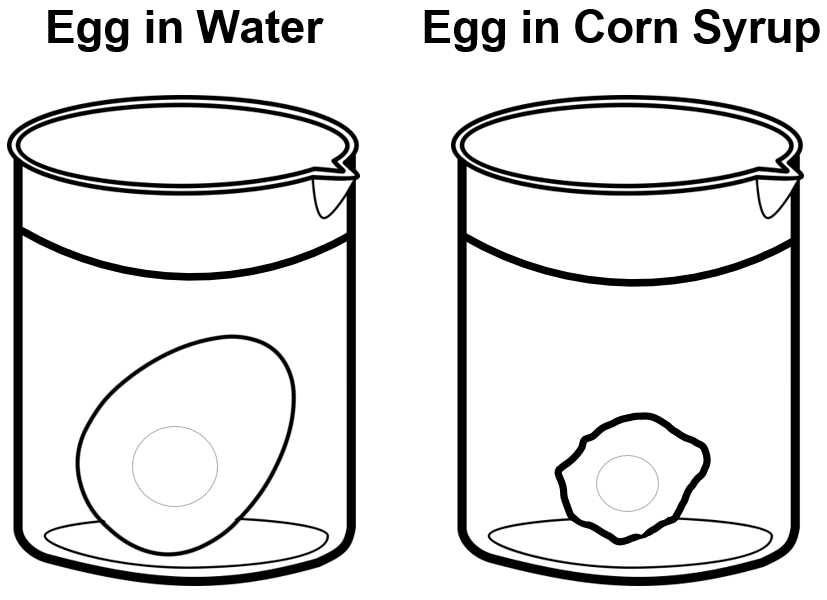
Students used vinegar in order to dissolve away the shells of eggs and used the eggs as a model of human red blood cells. The students observed the changes in the eggs when they were placed in different solutions.
Which statement best explains why the egg in corn syrup got smaller?
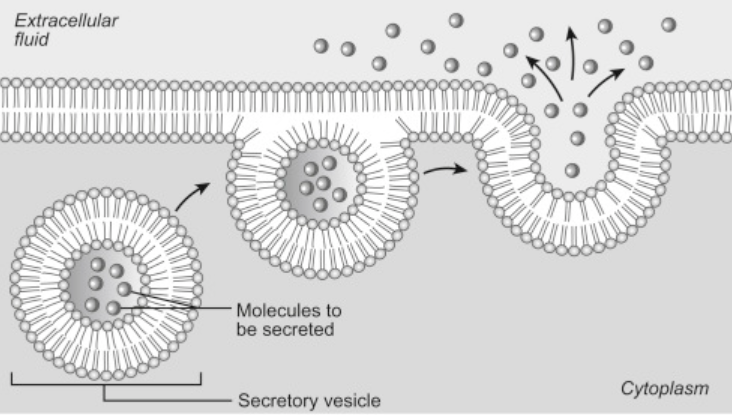
After an animal cell breaks down food for energy, it is left with waste. Waste can become toxic to the cell and is held in storage bubbles, known as vacuoles. When a storage bubble is full, the cell will send the bubble to the cell membrane, where the bubble fuses with the cell membrane so that the waste can exit the cell.
What type of cell transport is taking place?