mRNA Research and COVID Vaccine Reading
star
star
star
star
star
Last updated 21 days ago
8 Nsɛmmisa
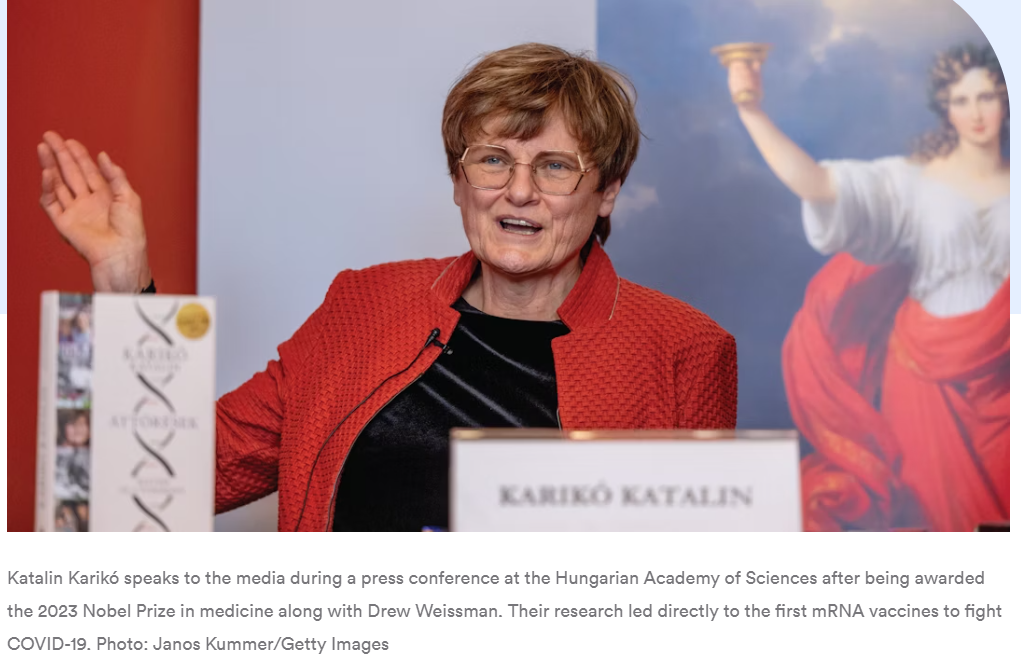
COVID-19 shots have saved millions of lives. Katalin Karikó and Drew Weissman helped develop the vaccines. They won the 2023 Nobel Prize in physiology or medicine.
The pair figured out how to modify messenger RNA, or mRNA. The modification makes it useful in medicine. mRNA is a type of genetic material that is copied from DNA. It tells cells which proteins to make.
Proteins are long molecules that are an essential part of all living things. They form the basis of living cells, muscles and tissues; they also do the work inside of cells. Medicines frequently work by latching onto proteins. Karikó and Weissman work at the University of Pennsylvania in Philadelphia. Karikó also works at the University of Szeged in Hungary. The pair’s work could lead to other vaccines and treatments.
A vaccine is a biological mixture, often given as a shot. It helps the body create immunity to a particular disease. Vaccines are often used for viruses, which are tiny particles that can cause illness. They are made up of RNA or DNA surrounded by protein. Viruses reproduce by injecting their genetic material into the cells of living creatures. COVID-19 is one example of a disease caused by a virus. COVID-19 vaccines first rolled out in December 2020. That was less than a year after COVID-19 emerged. Within one year of their release, the vaccines appeared to have saved nearly 20 million lives.
Most vaccines work by injecting something into the body. This could be a dead or weakened virus. It could also be a protein that a virus makes. The injection encourages the immune system to stock up. The immune system is the body’s defense against infections and invaders. The injection prompts the immune system to make antibodies. These are proteins that lock onto, and counteract, particular germs.
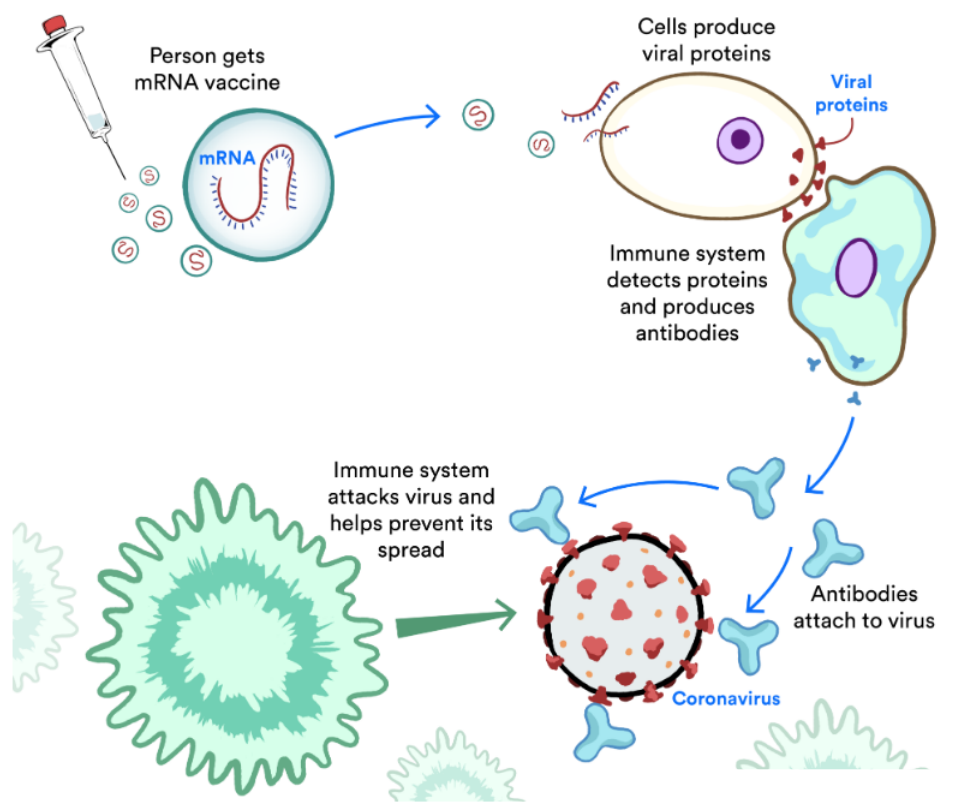
The mRNA vaccines are different. They don’t contain a virus or part of a virus. Instead, they inject mRNA that carries the instructions to make a protein from the target virus.
When someone gets this shot, the mRNA gets into their cells. This triggers those cells to make the viral protein. That lets scientists skip a step. Otherwise, they would have to make proteins in the lab. Then the proteins would be given in a vaccine. But with mRNA vaccines, a person gets a shot of mRNA and the body makes the needed protein itself.
After the injection, the immune system comes across this protein. So it builds defenses. If that person later gets infected with COVID-19, those defenses will attack the virus.
Pfizer/BioNTech and Moderna made the first approved mRNA vaccines against COVID-19. mRNA vaccines may one day be unleashed against other diseases. Human trials are underway.
Who won the 2023 Nobel Prize in physiology or medicine for developing the COVID-19 vaccines?
What is the role of mRNA in cell functioning?
What forms the basis of living cells, muscles, and tissues?
How do vaccines work?
What is the primary component of an mRNA vaccine?
How does an mRNA vaccine differ from traditional vaccines?
What happens after mRNA gets into the cells?
Which companies made the first approved mRNA vaccines against COVID-19?