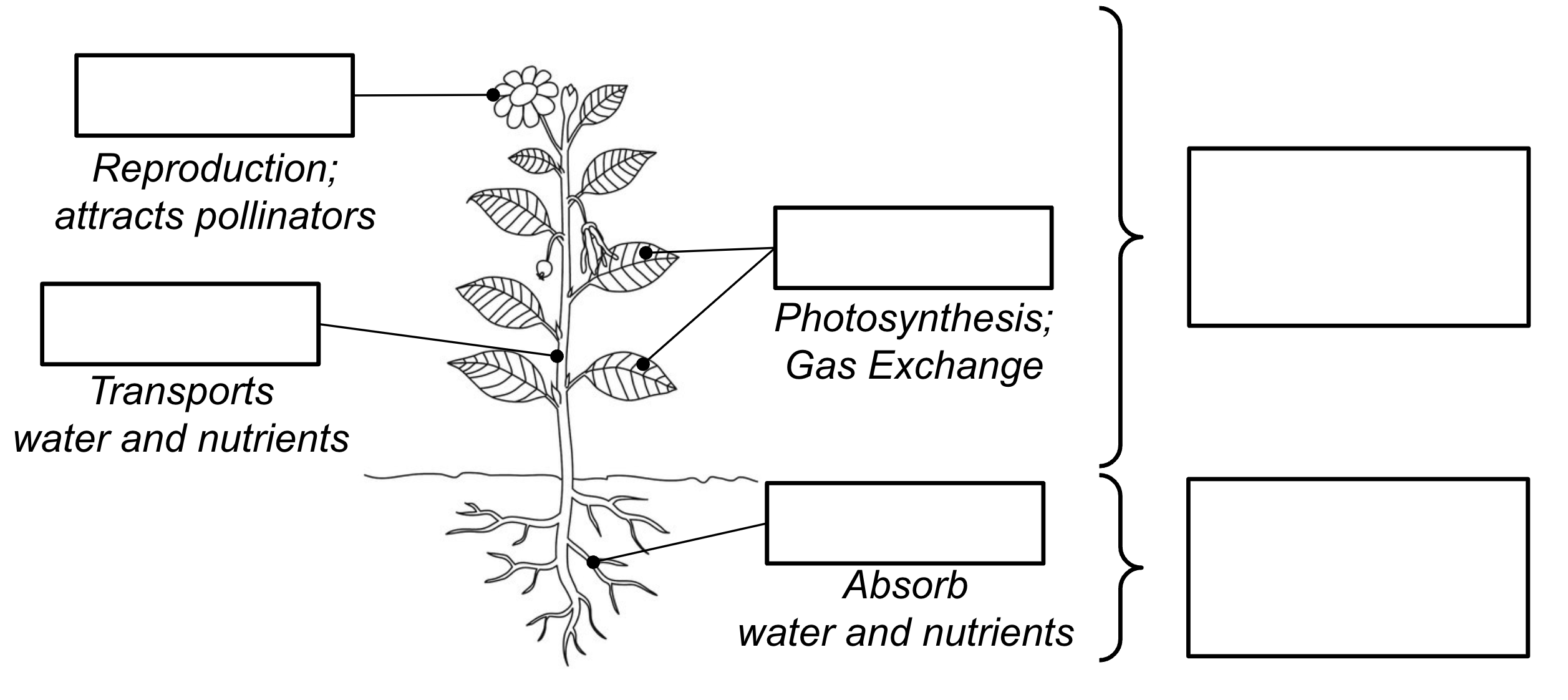
Label the diagram of a plant below.
Andre svarmuligheder:
Root System
Stem
Leaves
Flower
Shoot System
Roots
Label the diagram of a plant below.
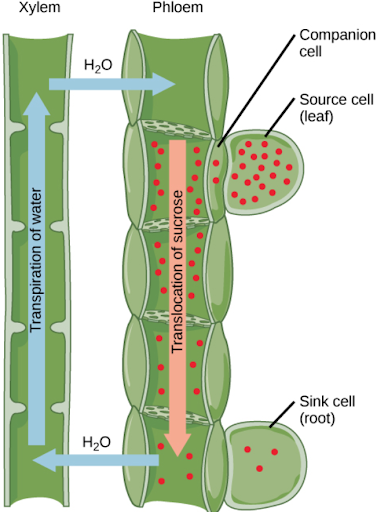
The function of the xylem is to from .
The function of the phloem is to .
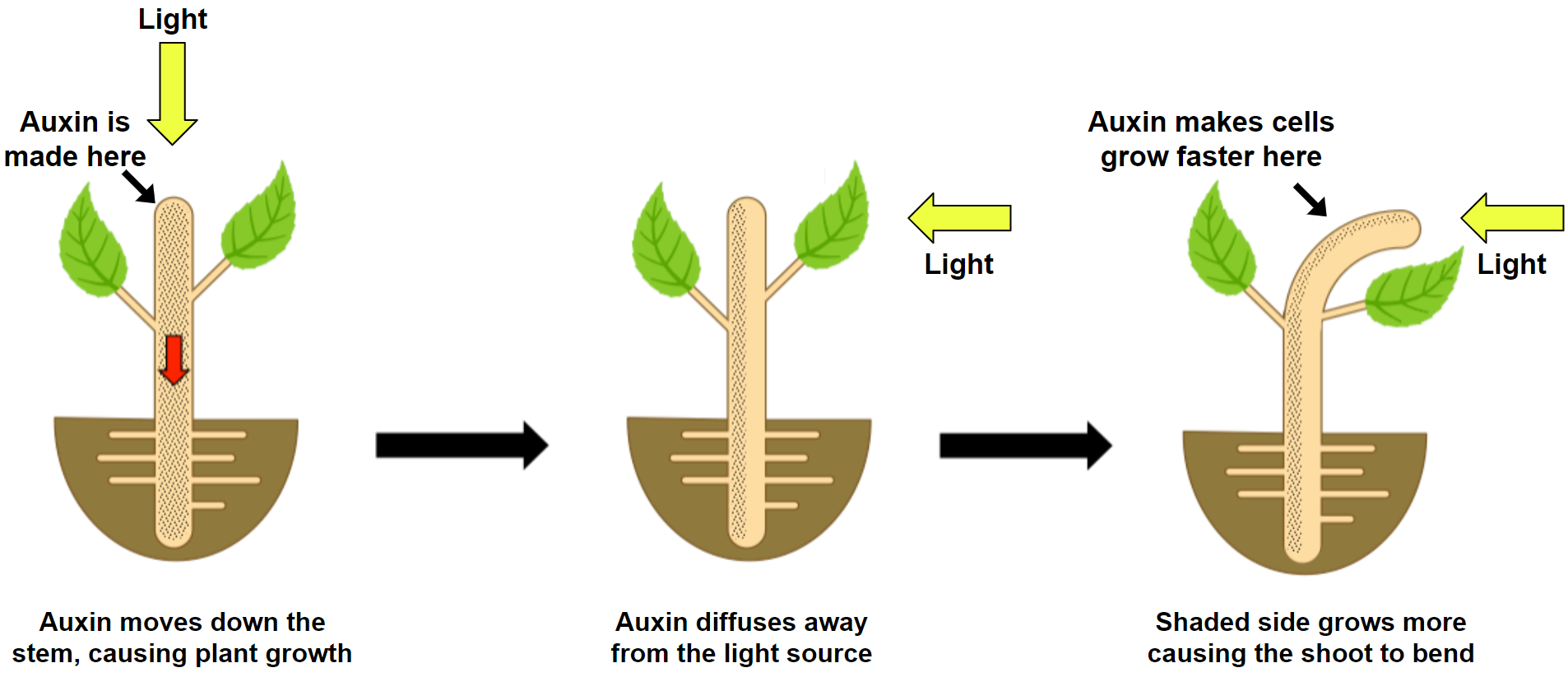
Plant hormones play a crucial role in growth and development by being transported through vascular tissues. Which of the following correctly describes how hormones move through a plant?
Match the description to the type of tropism below.
| Draggable emne | arrow_right_alt | Korresponderende emne |
|---|---|---|
Response to Earth's gravity | arrow_right_alt | Thigmotropism |
Response to light | arrow_right_alt | Geotropism |
Response to touch | arrow_right_alt | Hydrotropism |
Response to H2O | arrow_right_alt | Phototropism |
Select which phrases complete the diagram describing how plants respond to their environments.
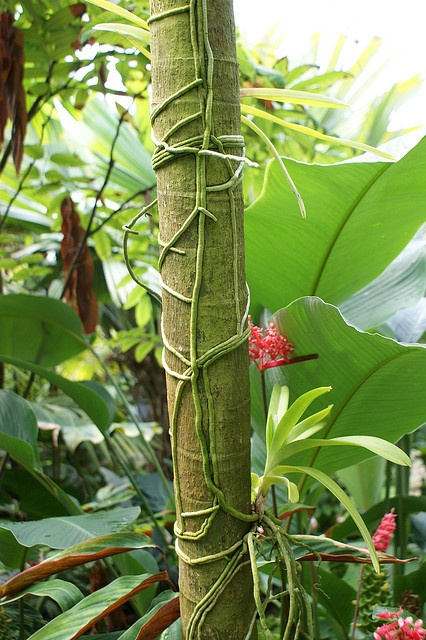
Which tropism is this an example of?
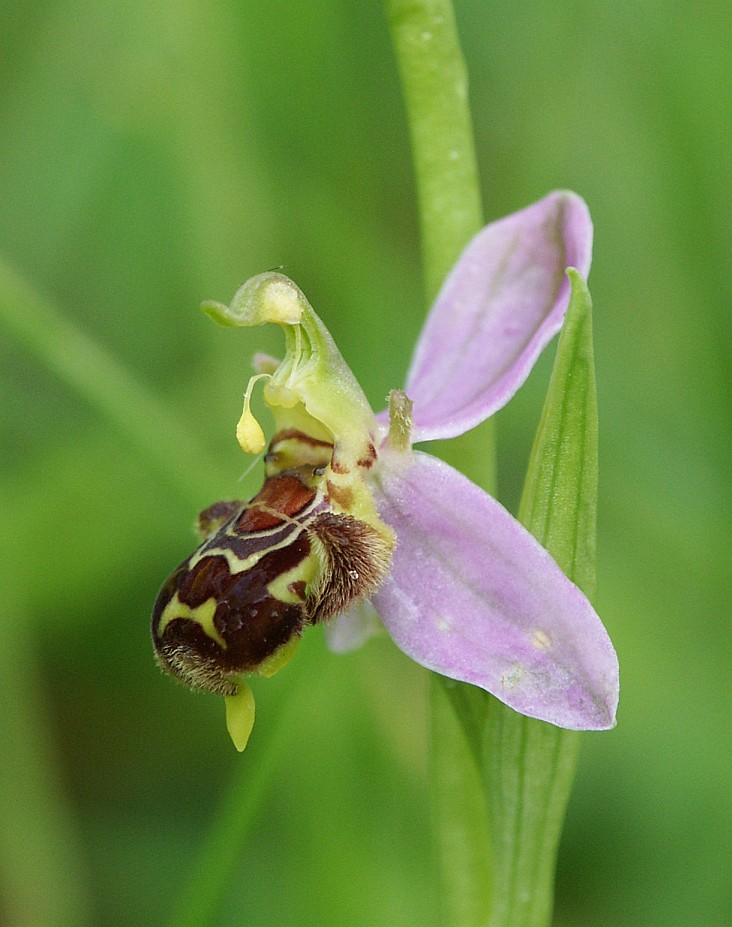
Orchids grow on the branches of mango trees in order to reach sunlight. The orchid does not get nutrition from the mango tree and the tree is neither harmed nor helped in this interaction.
In this example of commensalism, how does the orchid benefit?
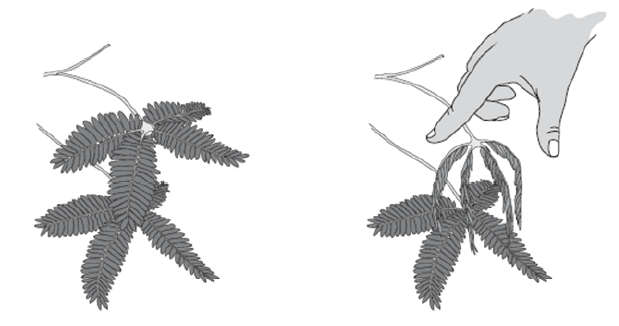
The mimosa plant displays thigmotropism by collapsing its leaves in response to touch, as shown in the pictures below. The plant on the left is undisturbed. The upper stem of the plant on the right has been touched.
Which of the following best describes how mimosa plants respond to stress from their environment?
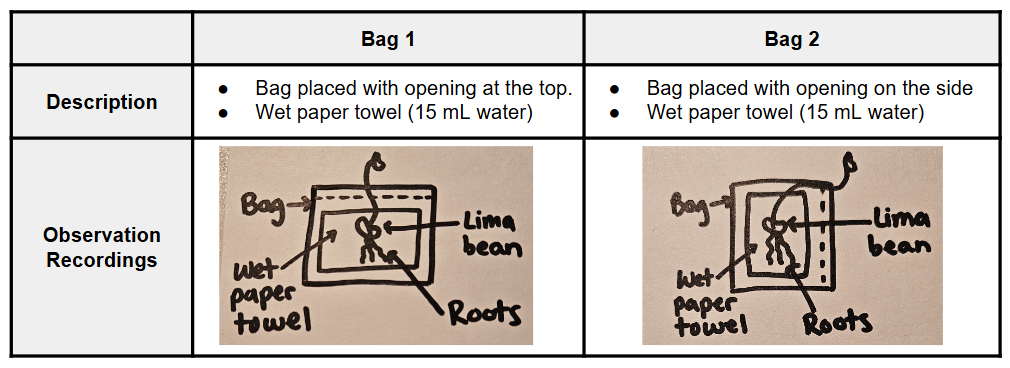
A student sets up a controlled experiment by growing lima beans in two different conditions. After one week, the students recorded their observations in their notebook as shown below.
Which of the following describes what caused the roots of the plant to grow as shown in the observation recordings?
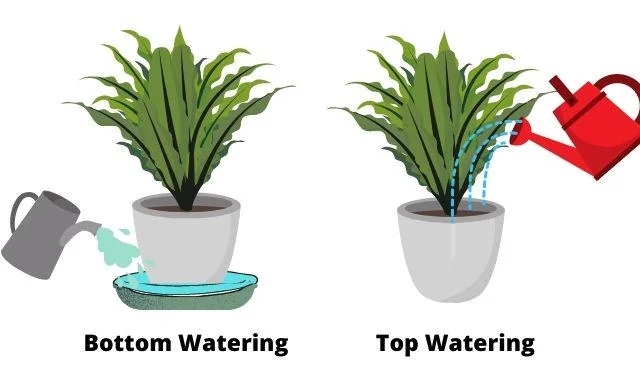
Observe the diagrams below of plant watering methods. The ceramic pots are opaque (cannot see through them), however predictions can be made as to how the roots of the plant will grow.
Which of the following conclusions can be made considering hydrotropism and the watering methods shown?
Select TWO correct answer choices.
What is self-pollination?
What is cross-pollination?
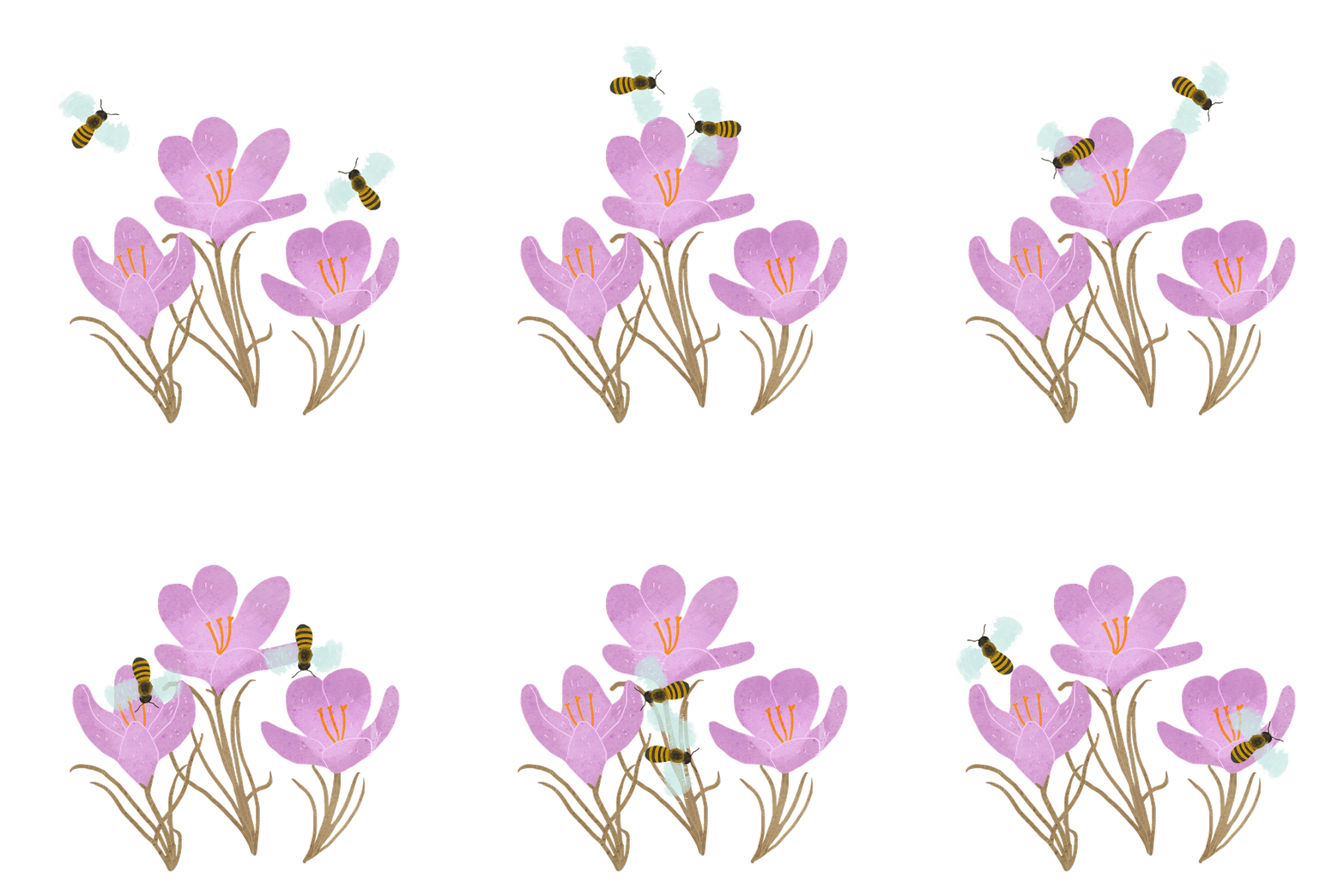
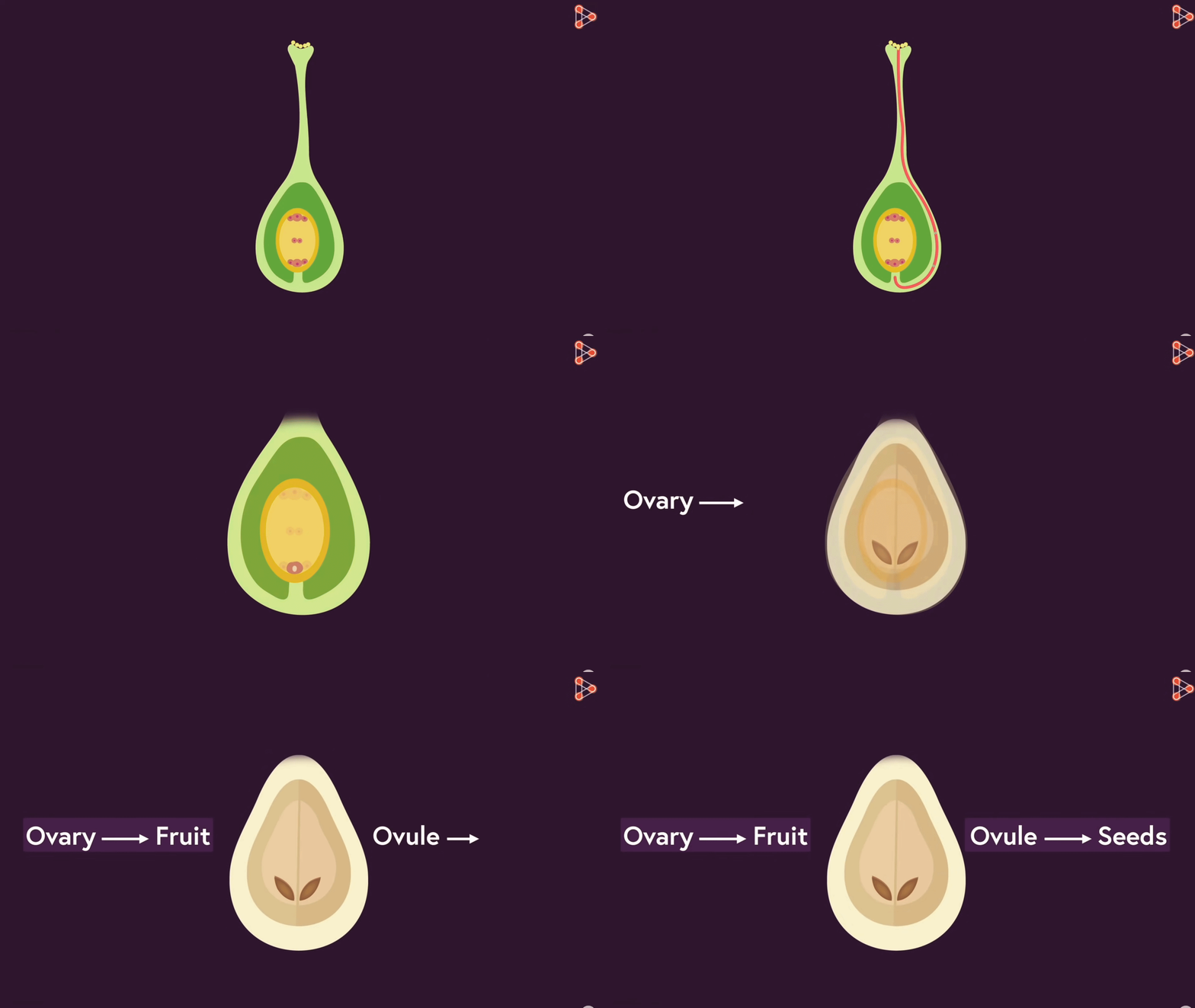
For a plant to be fertilized, from the anther must be transferred to the "sticky". The pollen then travels down the into the ovary.

When cross-pollination has occurred, from the anther of will fuse with inside the ovary.
In flowering plants, fertilization leads to the development of fruit. Which of the following best describes this process?
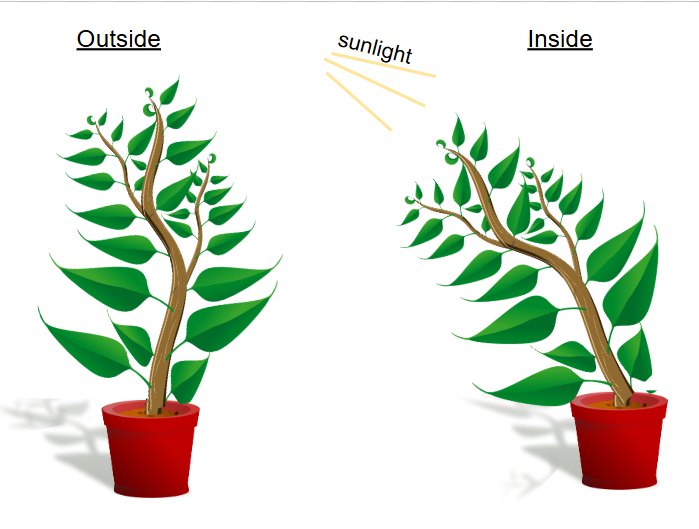
A student was growing a plant in a pot outside in their yard, they noticed that the plant was growing straight up. They brought their plant inside and noticed that the plant had changed the way it was growing.
They drew what they noticed below.
What best explains what they noticed?
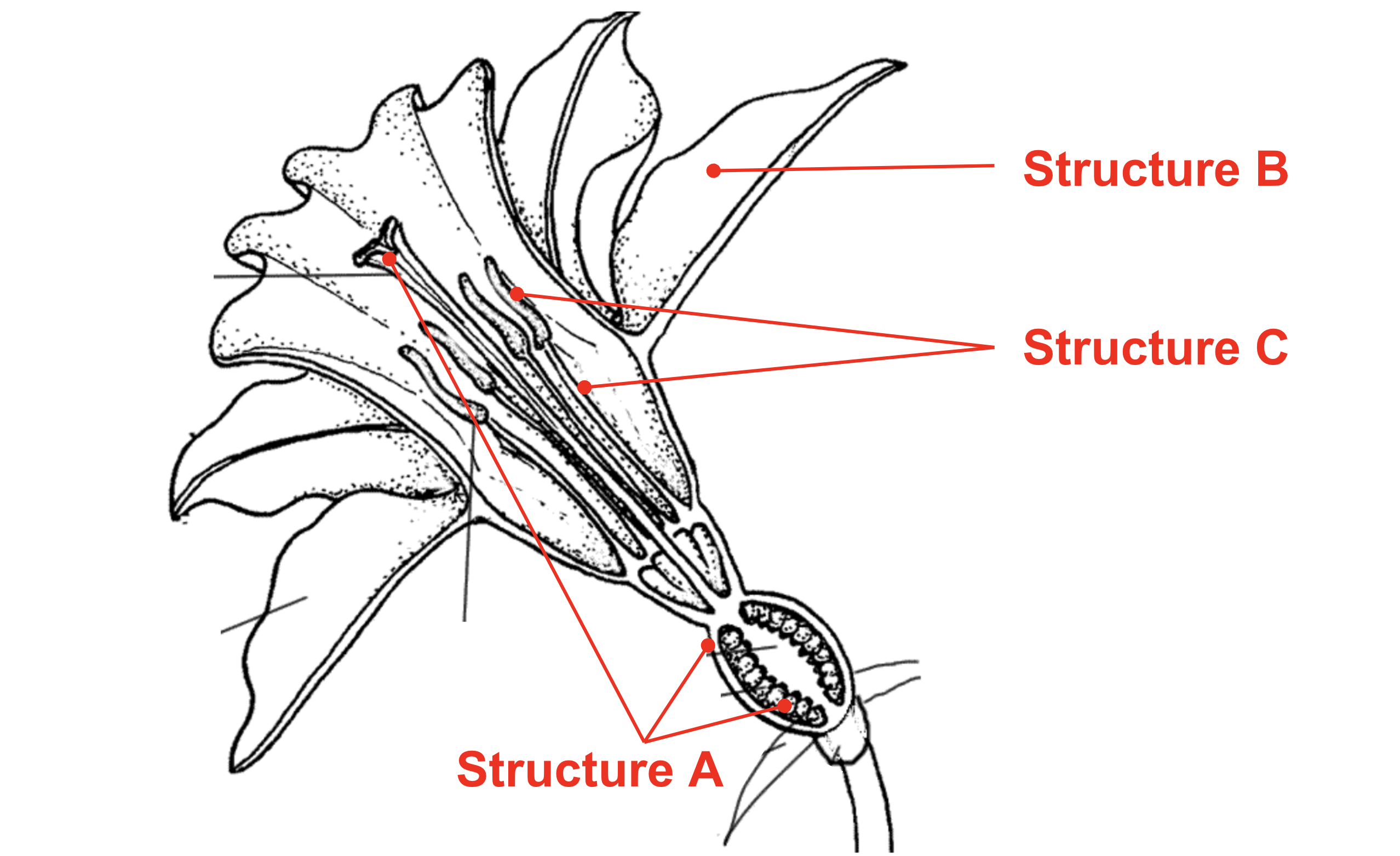
What portions of the flower are included under Structure A?
What portions of the flower are included under Structure B?
What portions of the flower are included under Structure C?
Which of these best describes the functions of Structures A, B, and C?