Twa kɔ nsɛm atitiriw so
Log in
Sign up for FREE
arrow_back
Laabri

Exploring the Nitrogen Cycle

star
star
star
star
star
Last updated about 3 hours ago
16 Nsɛmmisa
What is the nitrogen cycle?
Ɛhia
1
Ɛhia
1
Nitrogen Cycle Descriptions
Nitrogen Cycle Human Impact
What are nitroplast?
Fertilizer Impacts on the Global Economy? Share your thoughts!

The Nitrogen Cycle: Nature’s Recycling System

Nitrogen is an essential element for life. It’s a key ingredient in proteins and DNA, and all living things need it to grow and function.
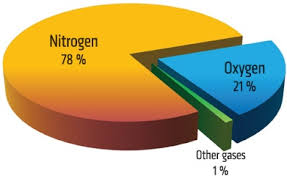
But did you know that even though nitrogen makes up about 78% of the air we breathe, most organisms can’t use it in that form? Instead, nitrogen has to be converted into different chemical forms through a natural process called the nitrogen cycle in order to make usable nitrogen nutrients.
Asemmisa {{asɛmmisaAhyɛnsode}}
1.

What percentage of Earth’s atmosphere is nitrogen?

Asemmisa {{asɛmmisaAhyɛnsode}}
2.

Why can’t most organisms use nitrogen directly from the air?

Ɛhia
1
Ɛhia
1
Ɛhia
1
Ɛhia
1
Ɛhia
1
Ɛhia
1
Ɛhia
1

Human Impact on the Nitrogen Cycle

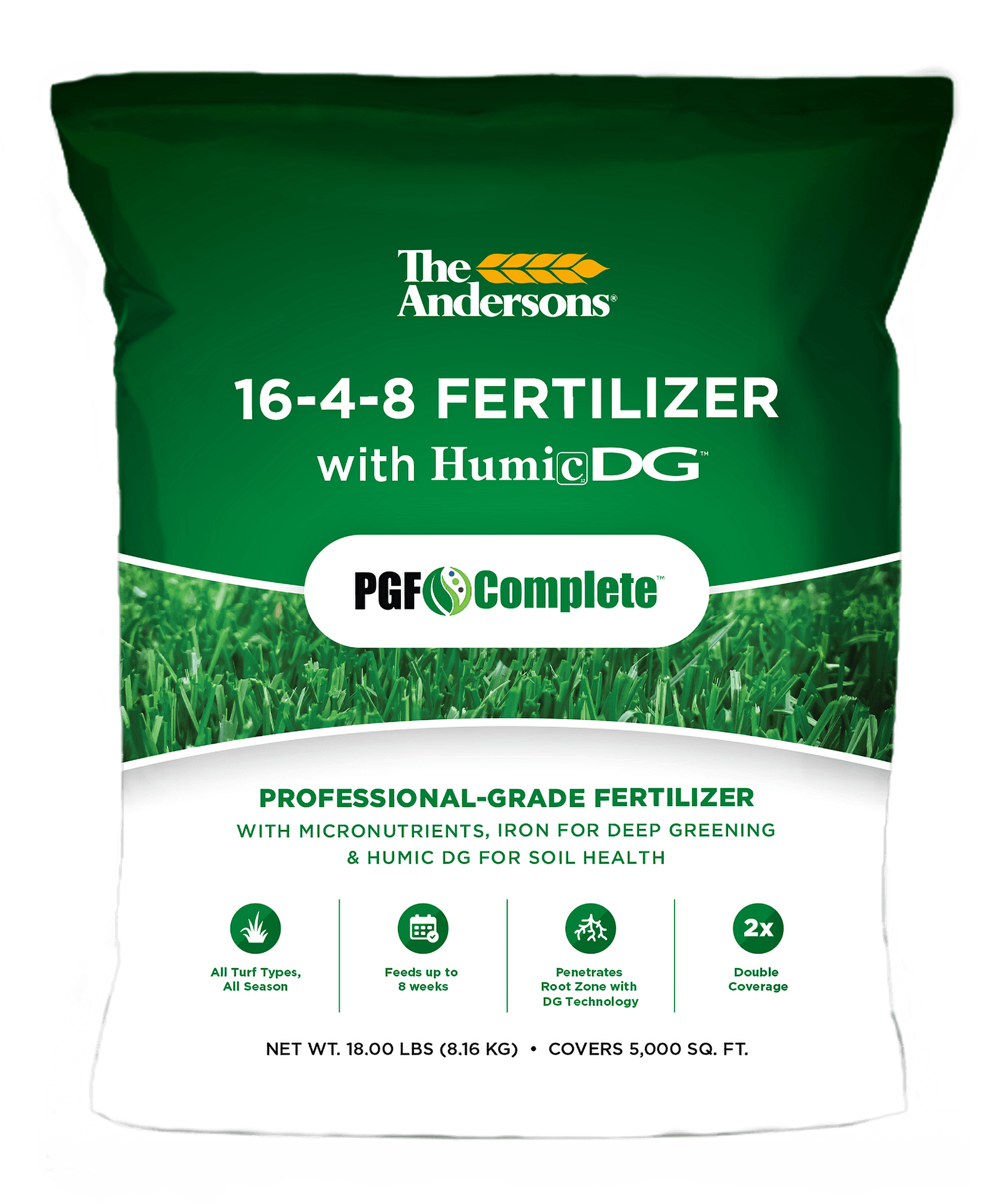
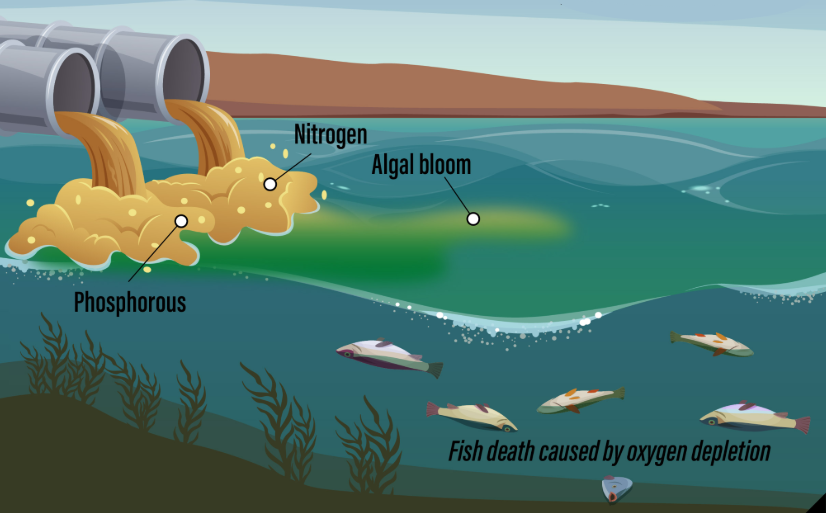
Humans have dramatically altered the nitrogen cycle, especially through the use of synthetic fertilizers. Fertilizers contain nitrogen compounds that help crops grow, but excess nitrogen from agricultural runoff can lead to serious environmental problems.

One major issue is eutrophication, where too much nitrogen in water bodies fuels rapid growth of algae. This can cause algal blooms, which deplete oxygen levels in the water, harming fish and other aquatic life.

Some of these blooms are made up of bioluminescent dinoflagellates, tiny organisms that glow in the dark, creating an eerie blue light in the ocean.

Ɛhia
1
Ɛhia
1
Ɛhia
1

The Discovery of the Nitroplast Organelle

Exciting new research has revealed a possible way to reduce our dependence on artificial fertilizers!

Scientists recently discovered a unique organelle called the nitroplast in a species of marine algae. This organelle appears to help algae capture and process nitrogen efficiently. If researchers can harness the power of the nitroplast, it could revolutionize agriculture by reducing the need for synthetic fertilizers, making farming more sustainable and eco-friendly.

Ɛhia
1
Asemmisa {{asɛmmisaAhyɛnsode}}
13.

How does the nitroplast organelle benefit marine algae?

Ɛhia
1

Fertilizers have the potential to both negatively and positively impact the global economy. The global economy consists of economic/financial (money) activities both within and between countries for purposes of trade, markets, labor, and industry production.

Pros: (good things)

  • Farming Industry: Fertilizers help plants grow larger and faster which increase crop yields. Farmers can supply more crops to buyers in the global economy. The more food that is available in the market place makes it easier for prices to be lowered, saving money for buyers!

  • Soil Structure: In areas with poor soil, the use of fertilizers can help improve the structure of the soil. If soil is too loose, roots cannot grasp on and anchor down in order for plants to grow. By using fertilizer, soil density can be improved giving more surface area for plants to take root to grow tall, strong, and healthy. By improving more areas of soil, more crops can be grown which contributes to the over all sale of produce.

  • Traveling: Runnoff contributes to algal blooms made up of bioluminescent dinoflagellates that glow in the dark! Many people want to see these in real life, so they spend money traveling which contributes to the global economy. On their travels, they pay for food, housing, and transportation in as many states/countries they tour through.

Cons: (bad things)

  • Food and Nutrition: While crops grow larger and faster, their root systems may not be able to support this rate and the food produced contains less nutrients

  • Fishing Industry: Environmental pollution such as runoff kills many aquatic animals due to nitrogen contaminating water supplies and depleting oxygen. This negatively impacts the fishing industry by reducing their supply. With limited supply, cost of seafood increases.

  • Global Warming: Runnoff contributes to algal blooms made up of bioluminescent dinoflagellates that glow in the dark! Many people want to see these in real life, so they travel which contributes to air pollution from vehicles, increased greenhouse gasses, and global warming.

With both benefits and drawbacks, fertilizers present a challenge in the balance of the global economy. Which do you think is the greater impact? Do fertilizers do more harm than good? Should we completely ban the use of fertilizers? Read the writing prompt and share your thoughts!

Ɛhia
1
Ɛhia
1
Asemmisa {{asɛmmisaAhyɛnsode}}
16.

Writing Prompt: Do fertilizers do more harm or good for the global economy?

In a short paragraph, explain your opinion on whether YOU THINK the use of fertilizers has more of a negative or positive impact on the global economy. Use evidence from the reading to support your argument.

The Main Driving Forces of the Nitrogen Cycle

The nitrogen cycle is powered by tiny but powerful organisms: bacteria, protists, and fungi. These decomposers break down organic material, recycle nitrogen, and help it move through different forms.

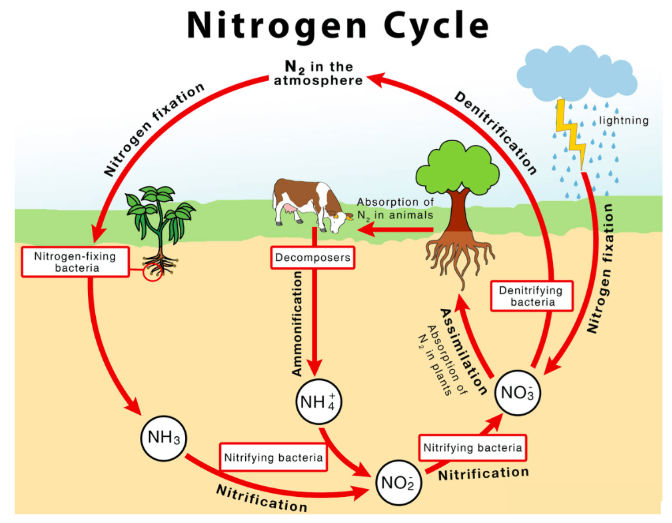
The major steps of the nitrogen cycle include:

  1. Nitrogen Fixation: Certain bacteria, like Rhizobium, live in the roots of legumes (such as beans and peas) and convert nitrogen gas (N₂) from the air into ammonia (NH₃), which plants can use.

  2. Nitrification: Other bacteria convert ammonia into nitrites (NO₂⁻) and then into nitrates (NO₃⁻), a form that plants absorb from the soil.

  3. Assimilation: Plants take in nitrates and use them to build proteins. Animals then obtain nitrogen by eating plants or other animals.

  4. Decomposition and Ammonification: When plants and animals die, decomposers like fungi and bacteria break down their bodies, returning nitrogen to the soil in the form of ammonia.

  5. Denitrification: Some bacteria convert nitrates back into nitrogen gas, releasing it into the atmosphere and completing the cycle.

Asemmisa {{asɛmmisaAhyɛnsode}}
3.

What kind of organisms are responsible for decomposing organic material in the nitrogen cycle?

Asemmisa {{asɛmmisaAhyɛnsode}}
4.

What organism helps "fix" nitrogen into a usable form for plants?

Asemmisa {{asɛmmisaAhyɛnsode}}
5.

What is the primary role of nitrification?

Asemmisa {{asɛmmisaAhyɛnsode}}
6.

In which step of the nitrogen cycle do plants absorb nitrogen?

Asemmisa {{asɛmmisaAhyɛnsode}}
7.

How do animals obtain nitrogen?

Asemmisa {{asɛmmisaAhyɛnsode}}
8.

Which of the following processes returns nitrogen to the atmosphere?

Asemmisa {{asɛmmisaAhyɛnsode}}
9.

Which of the following is NOT part of the nitrogen cycle?

Asemmisa {{asɛmmisaAhyɛnsode}}
10.

What is a major consequence of excessive fertilizer use?

Asemmisa {{asɛmmisaAhyɛnsode}}
11.

What is eutrophication?

Asemmisa {{asɛmmisaAhyɛnsode}}
12.

What is a unique feature of bioluminescent dinoflagellates?

Asemmisa {{asɛmmisaAhyɛnsode}}
14.

How might nitroplast research help reduce artificial fertilizer use?

Asemmisa {{asɛmmisaAhyɛnsode}}
15.

What does the "global economy" consist of?