Twa kɔ nsɛm atitiriw so
Log in
Sign up for FREE
arrow_back
Laabri

Unit 4: Protein Synthesis, Gene Expression & Mutations Exit Ticket

star
star
star
star
star
Last updated about 3 hours ago
6 Nsɛmmisa
Ɛhia
1
Ɛhia
1
B.C.6C
Ɛhia
2
Ɛhia
1
Ɛhia
1
Ɛhia
1
Asemmisa {{asɛmmisaAhyɛnsode}}
1.

A diagram of the steps in the production of a protein is shown.
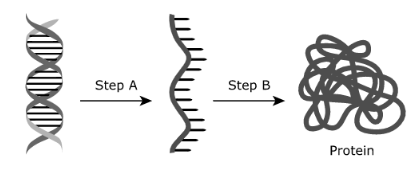
Which description identifies the purpose of Step A in this process?
Asemmisa {{asɛmmisaAhyɛnsode}}
2.

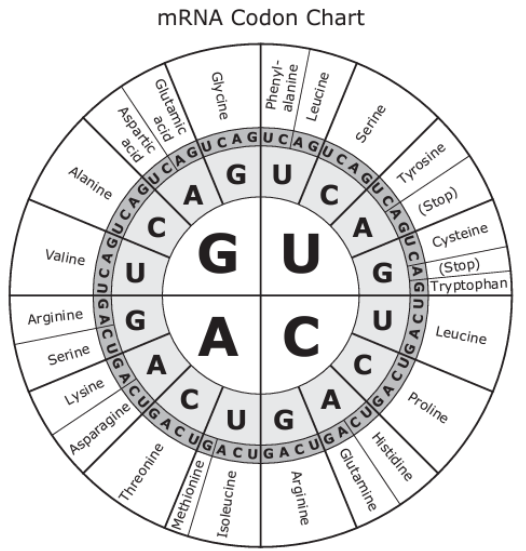
An mRNA sequence and an mRNA codon chart are shown.

5' UGC UAC AGA ACC'3

What is the amino acid sequence that will be translated from the mRNA sequence?

Asemmisa {{asɛmmisaAhyɛnsode}}
3.

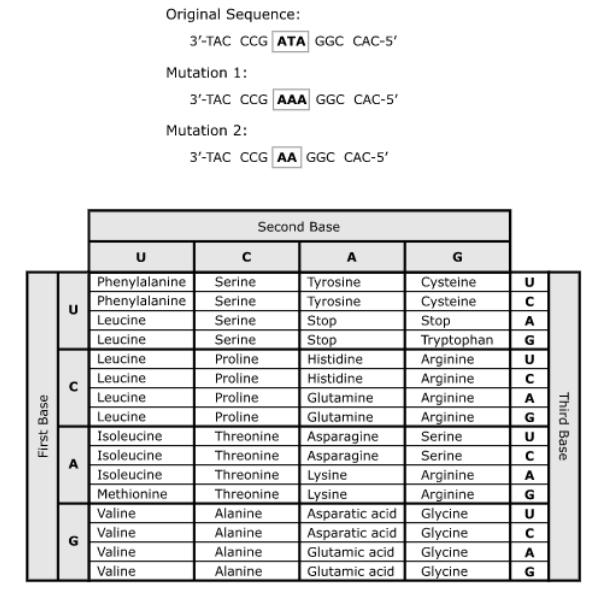
Two mutations of a genetic sequence are shown. A DNA codon chart is also shown.

  • Which mutation would have the MOST significant impact on the gene product?

  • Why would the impact be so significant?

Review the diagram carefully. Then enter your answer and your explanation below.

Asemmisa {{asɛmmisaAhyɛnsode}}
4.

A DNA mutation results in a protein that is the same as the initial protein synthesized before the mutation. Which statement BEST explains this outcome?

Asemmisa {{asɛmmisaAhyɛnsode}}
5.

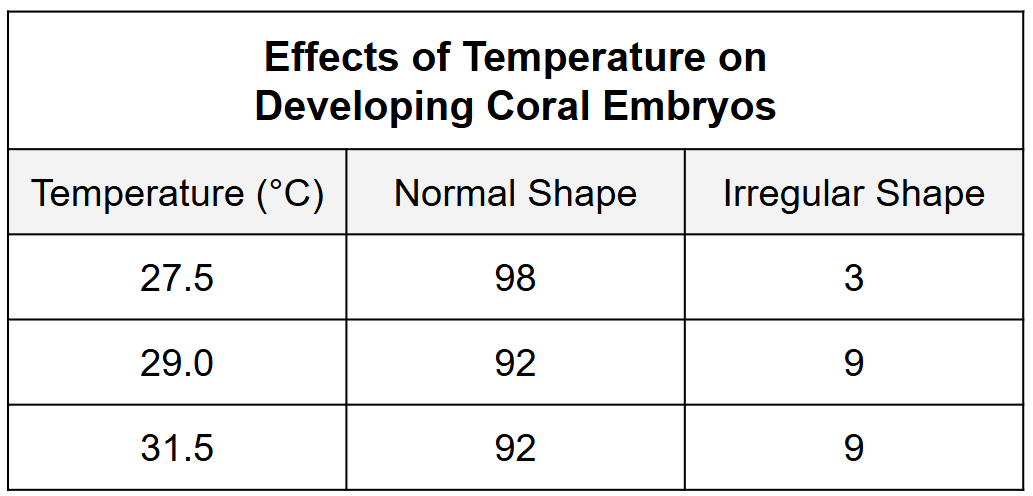
A recent study examined the effects of temperature change on developing coral embryos. Normal temperature in the Caribbean Sea during the spawning season is 27.5°C. The data table shows the development 16 hours after fertilization of three groups of embryos at different temperatures.

Which statement explains the relationship between temperature and the growth and development of coral embryos?

Asemmisa {{asɛmmisaAhyɛnsode}}
6.

Insulin is a hormone that is produced in the pancreas. Insulin functions as a key to allow glucose (sugar) from the bloodstream to enter the cells. Glucose provides the body with the energy needed to function properly. Without insulin, glucose in the blood stream will build up in the blood leading to high blood sugar levels. People with diabetes do not produce their own insulin.

What factor is most responsible for the lack of insulin in people with diabetes?