Twa kɔ nsɛm atitiriw so
Log in
Sign up for FREE
arrow_back
Laabri

Copy of Day 1 - How do organisms interact with eachother and the environment? (5/2/2026)

star
star
star
star
star
Last updated about 3 hours ago
5 Nsɛmmisa
1
BIO.13.A
1
B.C.12C
B.C.2H
1
B.C.12C
B.C.2H
1
B.C.12A
1
Asemmisa {{asɛmmisaAhyɛnsode}}
1.

A shark picks up parasites from a remora fish. What type of symbiosis is this?

Asemmisa {{asɛmmisaAhyɛnsode}}
2.

A partial Texas food web is shown
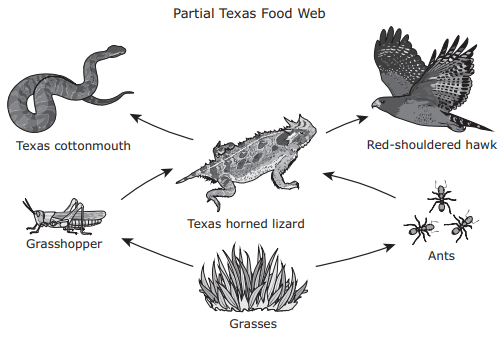
The populations of which organisms will most likely increase as a result of a disease that suddenly reduced the population of Texas horned lizards?

Asemmisa {{asɛmmisaAhyɛnsode}}
3.

A biomass pyramid of an ecosystem is shown.

Which statement provides the best explanation for the difference in biomass of organisms found at each trophic level?

Asemmisa {{asɛmmisaAhyɛnsode}}
4.

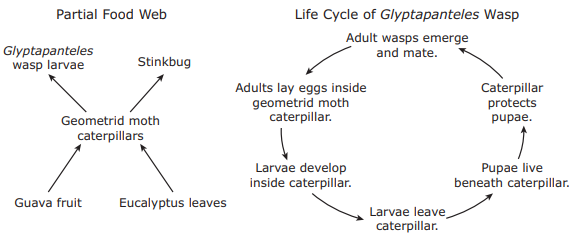
The diagrams show a partial food web containing the Glyptapanteles wasp and the life cycle of this wasp.

Based on the two diagrams, which list correctly identifies the relationships Glyptapanteles wasp larvae have with other organisms?

Asemmisa {{asɛmmisaAhyɛnsode}}
5.

Corals, and the zooxanthellae algae they contain, form the base of a coral reef ecosystem. Organisms like sea urchins feed on microorganisms that grow on the corals. Organisms including seahorses feed on plankton and fish that also inhabit the reef. Larger animals like sea turtles frequently enter the reef to forage. Seaweeds, which are competitors of corals, may grow along the reef bottom.

The biodiversity in a coral reef ecosystem can be changed by both natural and human activities. What is a natural factor that would have the greatest negative impact on the ecosystem's biodiversity?