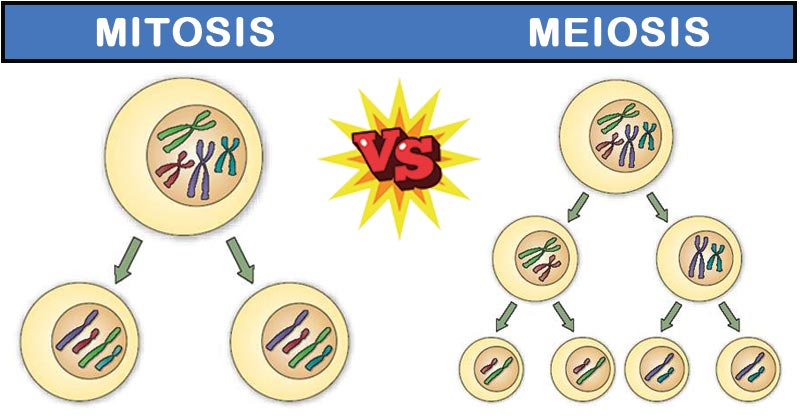
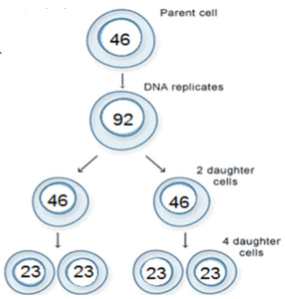
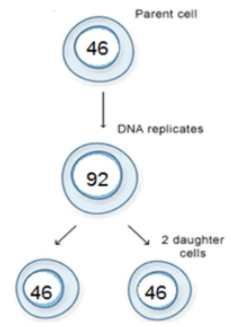
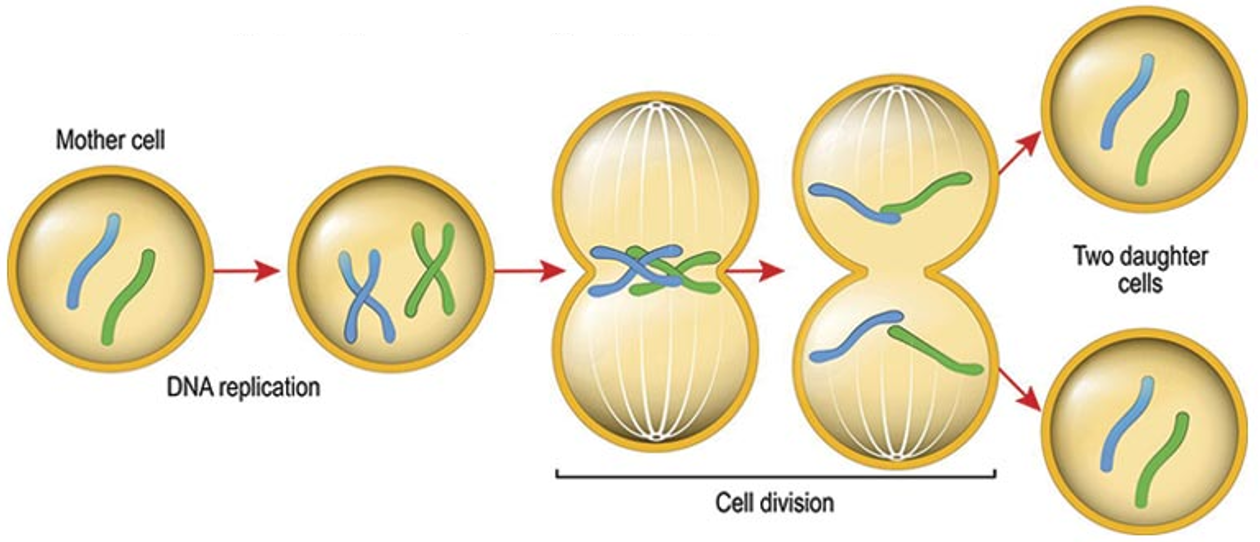
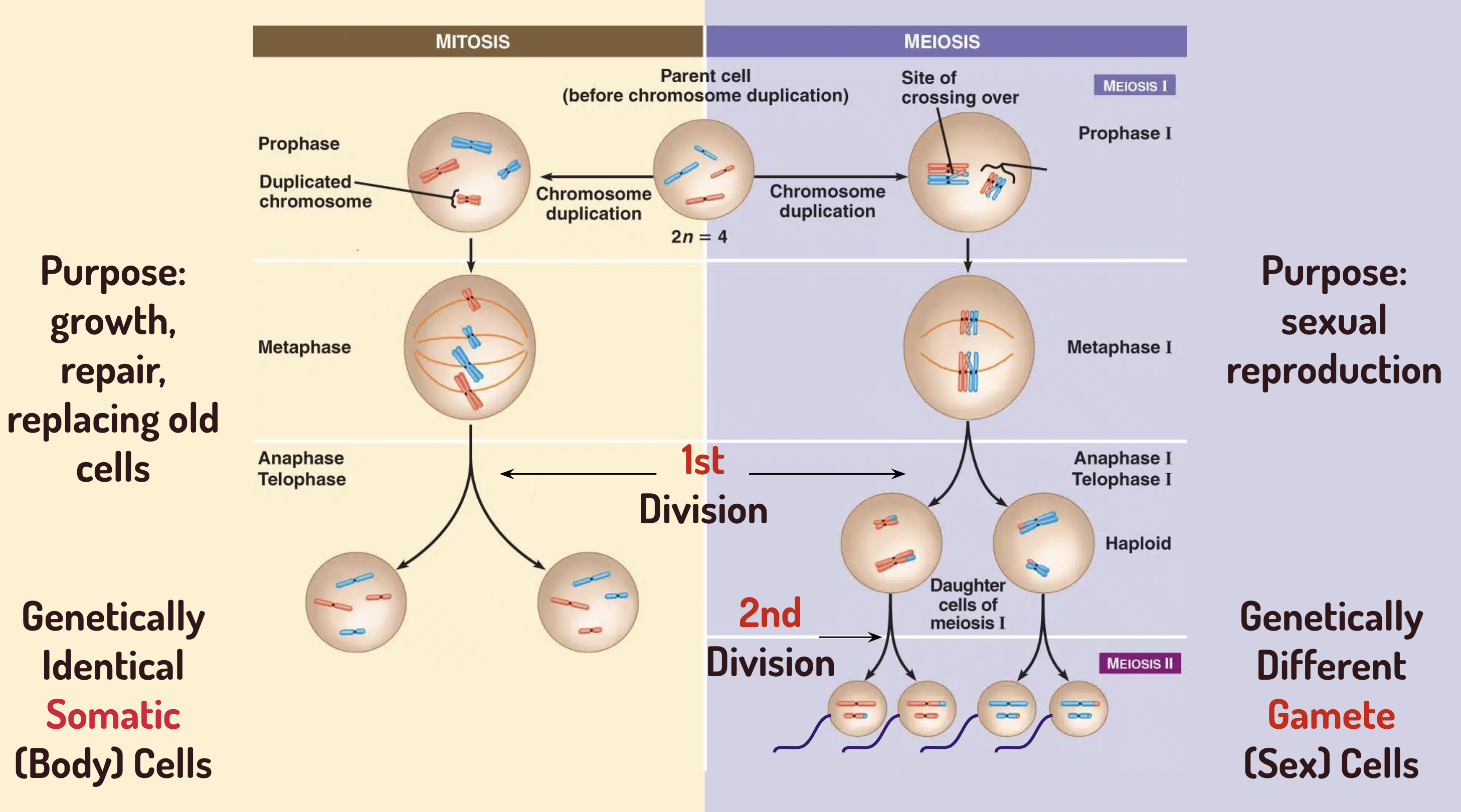
Use the diagram below to answer the following questions comparing Mitosis to Meiosis.
1
1
1
1
1
1
1
1
1
Use the diagram below to answer the following questions comparing Mitosis to Meiosis.
Occurs so that organisms can grow, develop, and repair.
Produces cells used for sexual reproduction.
Complete the table below by identifying which statements apply to meiosis or mitosis.
Meiosis | Mitosis | |
|---|---|---|
Somatic Cells | ||
Gametes/Sex Cells | ||
Identical Daughter Cells | ||
Different Daughter Cells |
Categorize the following as describing Mitosis or Meiosis:
Use each item only ONE time.
Sex Cells
Body Cells
Haploid (Half Set of Chromosomes)
Diploid (Full Set of Chromosomes)
Somatic Cells
Gametes
Mitosis (3 items)
Meiosis (3 items)
Categorize the following as Mitosis or Meiosis:
Creates genetically IDENTICAL cells
Creates genetically DIFFERENT cells
4 daughter cells
2 daughter cells
Mitosis (2 items)
Meiosis
Mitosis is a type of cell division that creates daughter cells. These daughter cells are .
Meiosis is a type of cell division that creates daughter cells. These daughter cells are .
Using a microscope, Brad was looking at a slide and watching the process of meiosis. What kind of cell was Brad probably looking at?
At the end of MEIOSIS, the cells contain of the genetic information because .
The daughter cells at the end of meiosis are .
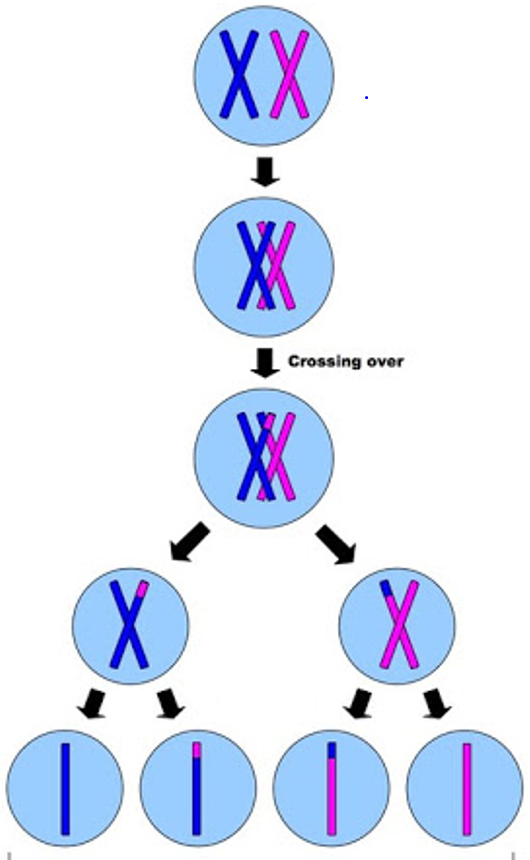
The image above is an example of ______________.
The image above is an example of ______________.
Why do cells go through MITOSIS?
Why do cells go through MEIOSIS?
Produces cells with half the number of chromosomes... (23 chromosomes in humans).
Produces cells with a full set of chromosomes... (46 chromosomes in humans).
Mitosis and meiosis are both processes involved in cell division. Unlike mitosis, meiosis involves --
Which type of cell division ends with two genetically identical daughter cells?
Which type of cell division ends with four genetically different daughter cells?
Somatic cells come from...
Gametes come from...
Parent cell divides twice
Parent cell divides once
Daughter cells have a full set of chromosomes (identical to parent cell)
Daughter cells have a half set of chromosomes (different from parent cell)
Crossing over occurs
Both Mitosis and Meiosis are involved in making new cells.
| Draggable emne | arrow_right_alt | Korresponderende emne |
|---|---|---|
Meiosis | arrow_right_alt | Body Cells |
Mitosis | arrow_right_alt | Gametes |
How many sets of chromosomes do diploid cells have?
Where does each set of chromosomes come from?
Interphase is an important stage of the cell cycle because it duplicates the chromosomes before mitosis starts.
What does PMAT stand for?
Which of the following is true about homologous pairs of chromosomes? (three correct answers)
What type of cells are created at the end of Mitosis?
Which of the following is true about the cells resulting from Meiosis?
Males make , and females make in meiosis. These sex cells (gametes) are haploid which means they have of chromosomes as the original.