Match the term to the correct description
| Draggable item | arrow_right_alt | Corresponding Item |
|---|---|---|
Resources | arrow_right_alt | Differences of traits within a population |
Fitness | arrow_right_alt | A physical trait that helps an organism survive and reproduce in a particular environment |
Variation | arrow_right_alt | Surviving long enough to produce offspring |
Adaptation | arrow_right_alt | Elements needed for survival (such as food, water, and shelter) |
Which organisms are most likely to survive?
Natural selection is based on the idea that adaptations will increase the fitness of an organism.
Which of the following terms would BEST describes what it means to be “fit”?
Select TWO correct answers:
Adaptations that result from Natural Selection are expected to increase the fitness of an organism. In terms of Natural Selection, which of the following best describes fitness?
The green frog (Lithobates clamitans clamitans) is found in many parts of the United States. The table below contains some information about this frog.
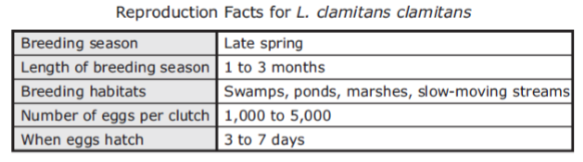
Why does the ability to lay 1,000 to 5,000 eggs increase the fitness of the species of L. clamitans clamitans?
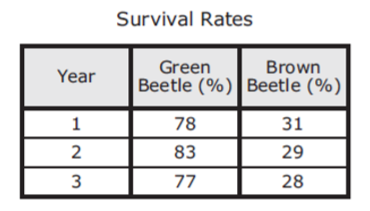
The table (below) shows the survival rate of two types of beetles in the same environment over a period of three years.
Which statement about the beetles in this environment is best supported by the data?
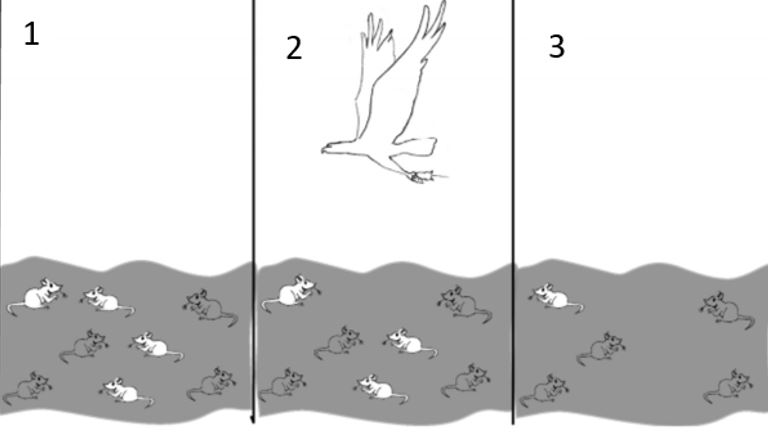
The diagram above shows the change in a mouse population over time.
Complete the sentence by selecting the correct answers from the drop down menus:
Based on the diagram, the are most fit for the environment because they have a trait allows them to .
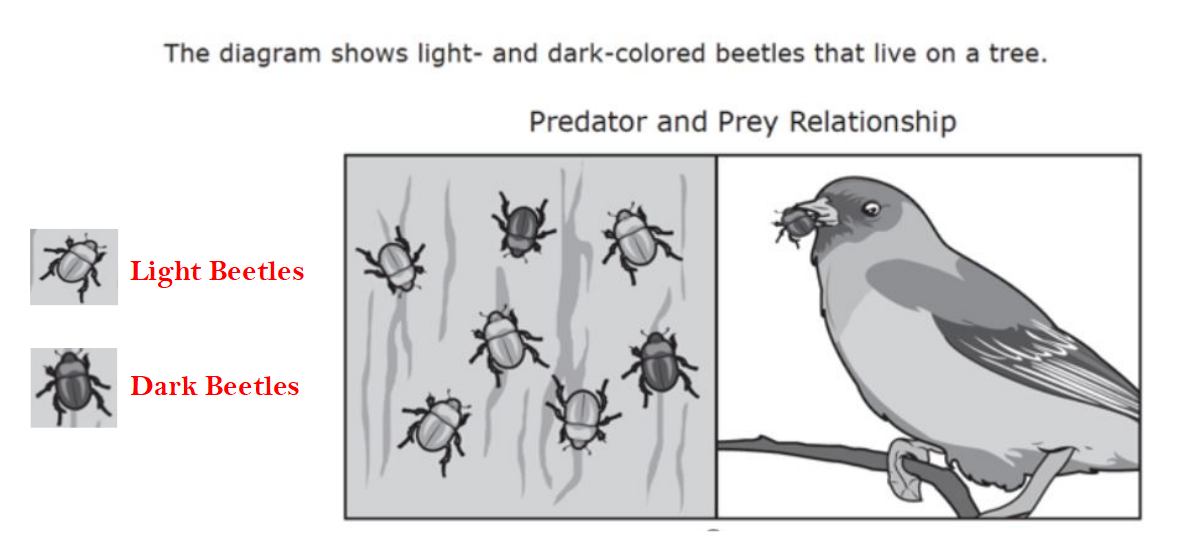
Which result is most likely to occur to the beetle population due to predation over time?
The Mexican long-nosed bat roosts in Big Bend National Park in West Texas. The bat feeds on nectar and pollen and hovers while it feeds. Additionally, its tongue can extend up to eight centimeters.
The features of Mexican long-nosed bats are evidence of natural selection because the features are adaptations that -
(2021)
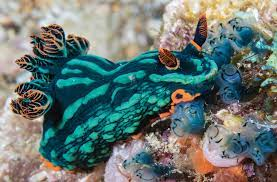
Nudibranchs are marine worms that do not have shells. Many of these worms release a foul-tasting poison when threatened. The bright coloration of the nudibranchs warns predators to avoid them.
Based on this information, how has adaptation through natural selection allowed nudibranchs to be successful without a shell?