A recent study examined the effects of temperature change on developing coral embryos. Normal temperature in the Caribbean Sea during the spawning season is 27.5°C. The data table shows the development 16 hours after fertilization of three groups of embryos at different temperatures.
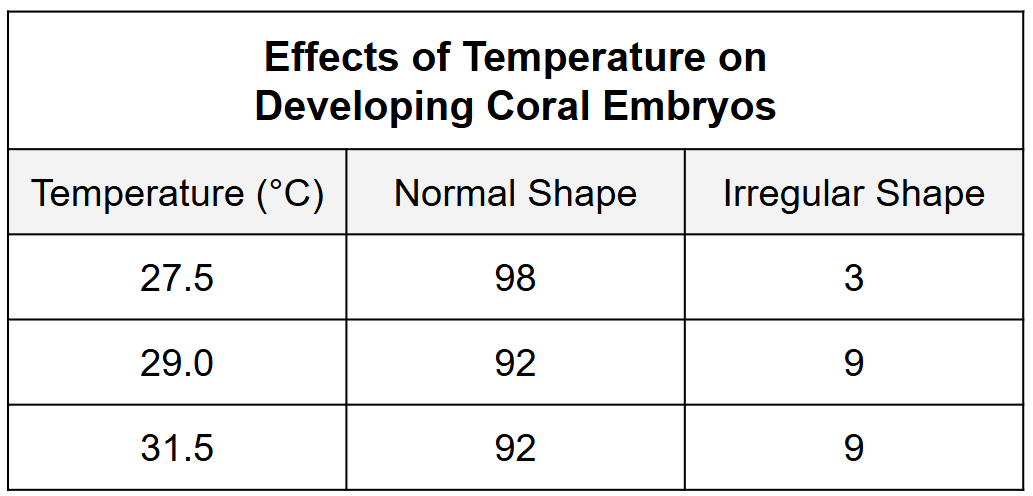
Which statement explains the relationship between temperature and the growth and development of coral embryos?

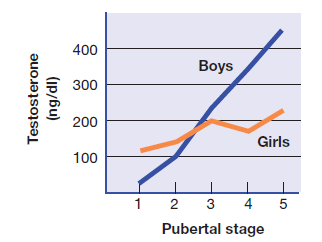
Testosterone is a hormone found in both males and females. Testosterone levels change over time. During puberty, certain hormones testosterone trigger changes in the body. For example, many boys experience voice cracking as their voice deepens or start to produce more body odor as they sweat.
What factor best explains the variation in testosterone levels in males and females?
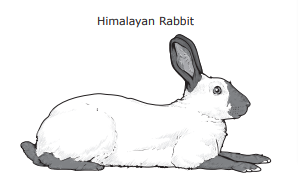
The Himalayan rabbit’s habitat has cold, snowy winters and mild summers. The body is typically covered in white fur except for the nose, feet, tail, and ears, which are covered in black fur.
A scientist shaved an area of white fur on the back of a Himalayan rabbit and placed an ice pack over the shaved area. The shaved area grew black fur.
Which of these best explains why the hair that grew back where the ice pack was placed was black and not white?
Insulin is a hormone that is produced in the pancreas. Insulin functions as a key to allow glucose (sugar) from the bloodstream to enter the cells. Glucose provides the body with the energy needed to function properly. Without insulin, glucose in the blood stream will build up in the blood leading to high blood sugar levels. People with diabetes do not produce their own insulin.
What factor is most responsible for the lack of insulin in people with diabetes?
Gene expression is -
As unspecialized cells mature, what controls their development into specific cell types?
Environmental factors typically activate genes in a cell by causing the cells to -
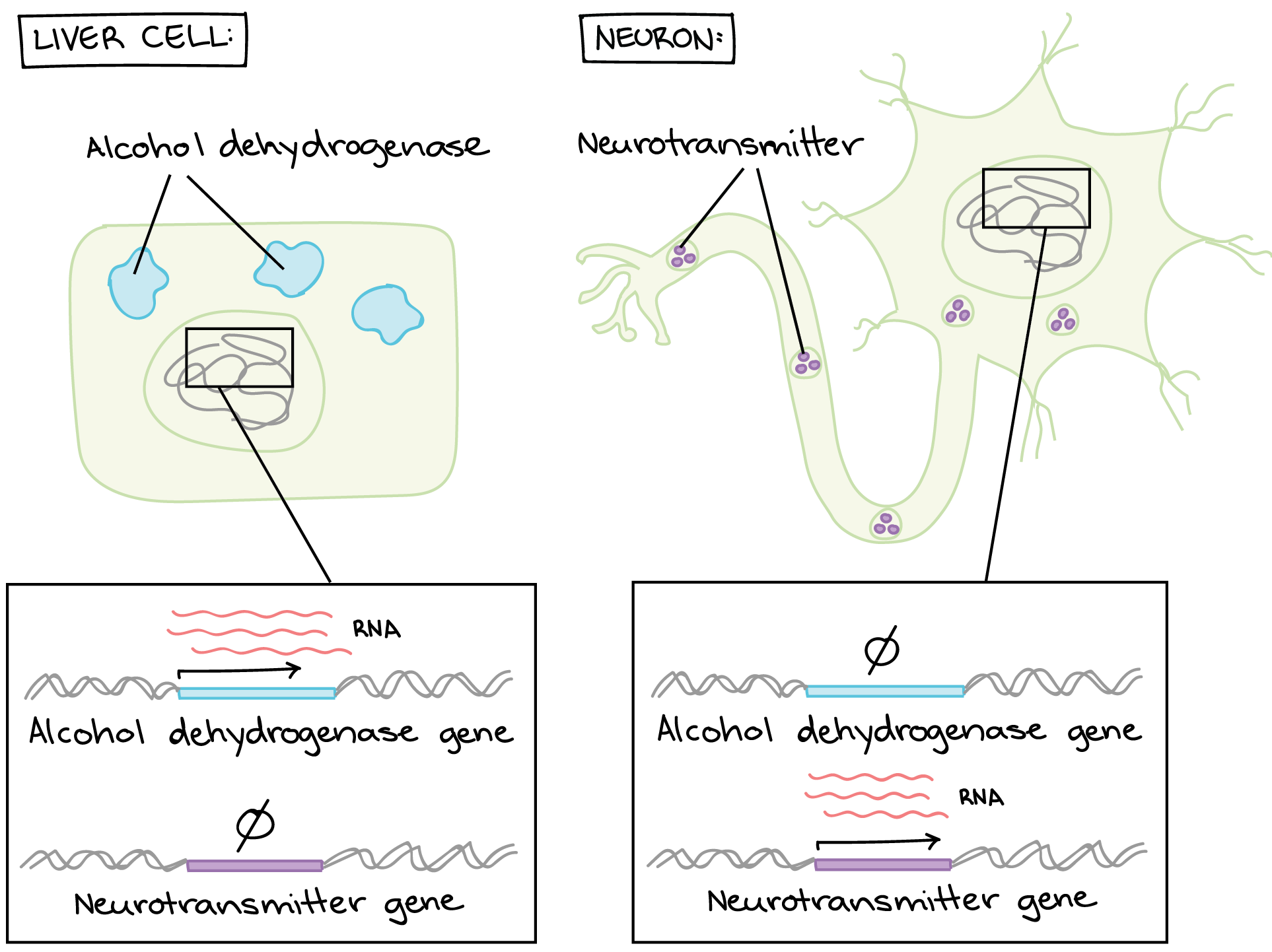
Liver cells and neurons are two cells found in the human body with highly specialized functions.
Which is the best explanation for why these cells perform different functions if their nucleus contains the same DNA?
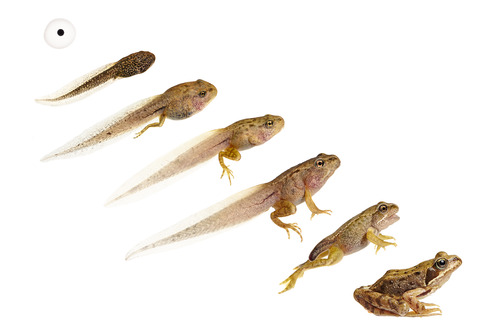
Amphibians such as frogs undergo various developmental and structural changes throughout their life cycle. Many frogs start in the water, but eventually grow legs to walk on the earth.
What drives these developmental changes during the frog's life cycle?