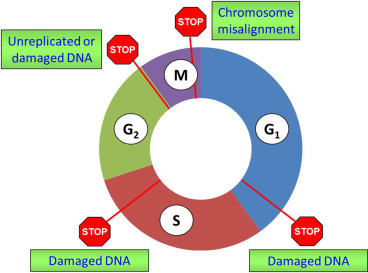
Label the cell cycle diagram with the titles provided below:
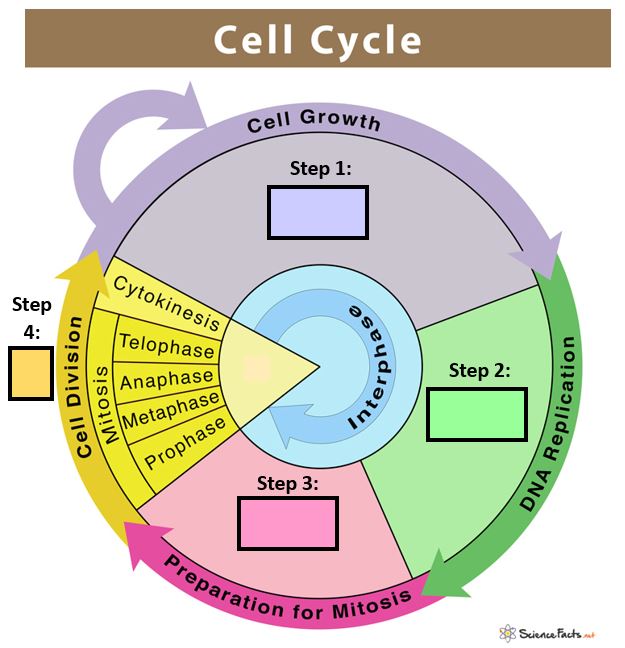
Andre svarmuligheder:
M
G1
G2
S
Label the cell cycle diagram with the titles provided below:
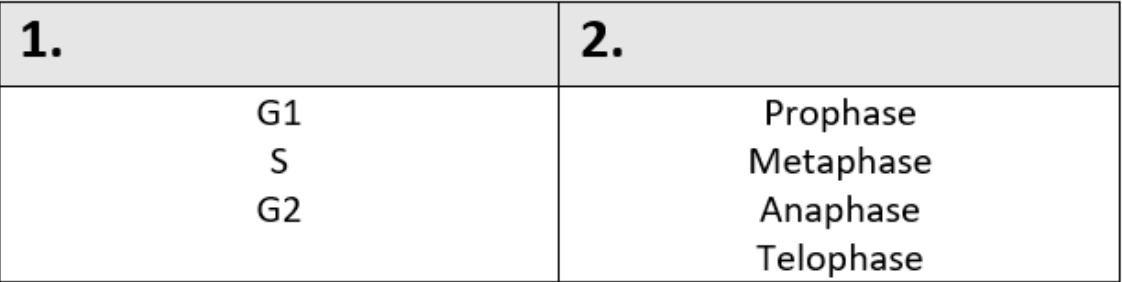
A student set up a table to organize the steps of the cell cycle. What should the titles of the 2 columns be? Drag one correct answer to each box. Some answers will not be used.
Match the correct description to what is occurring at the four different stages of the cell cycle?
| Draggable emne | arrow_right_alt | Korresponderende emne |
|---|---|---|
S | arrow_right_alt | Cell grows for the first time and it prepares for DNA replication |
M | arrow_right_alt | DNA replication. Mutations can occur here. |
G1 | arrow_right_alt | The cell is verified in preparation for division |
G2 | arrow_right_alt | Division of the nucleus into two nuclei, and eventually into two daughter cells |
When does each occur during the cell cycle?
Interphase | Mitosis | Cytokinesis | |
|---|---|---|---|
DNA replicates | |||
Cell division: Cell splits into 2 identical daughter cells. | |||
Prophase: Chromosomes are visible | |||
Gap 1: Organelles duplicate | |||
Gap 2: Final growth and checkpoint | |||
Metaphase: Chromosomes align in the center of the cell | |||
Telophase: Two nuclei form | |||
Anaphase: Chromosomes are separated by spindle fibers |
Checkpoints are part of the cell cycle's regulatory process which . The primary role of checkpoints in a cell cycle is to .
What is the essence of the G2 checkpoint in a cell cycle?
Cells pass through a G2 checkpoint before entering mitosis. Ideally, if DNA damage is detected, the cells do not enter mitosis until the damage is repaired.
Why is DNA damage repaired before cells enter mitosis?
Exposure to carcinogens, x-rays an UV rays can cause cells lose their ability to regulate the cell cycle. This can cause the cells to divide at an accelerated rate and form a mass of cells called a . This unregulated increase in the rate of cell division can cause .
Oncogenes are mutated forms of genes. Oncogenes can transform a cell into a tumor cell. Some tumor cells are benign, while others are malignant. How does the presence of an oncogene lead to the formation of a tumor?
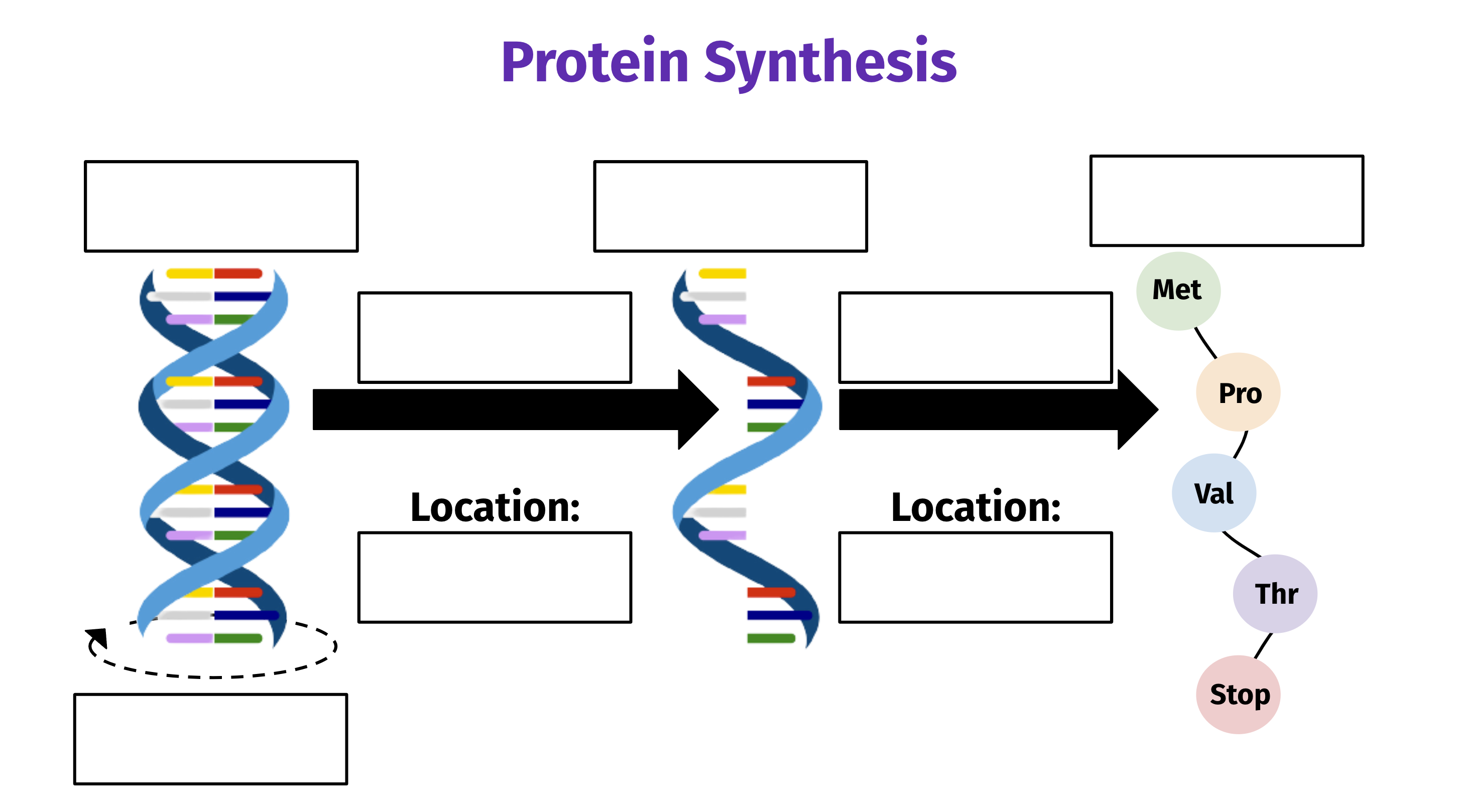
Label diagram of Protein Synthesis below.
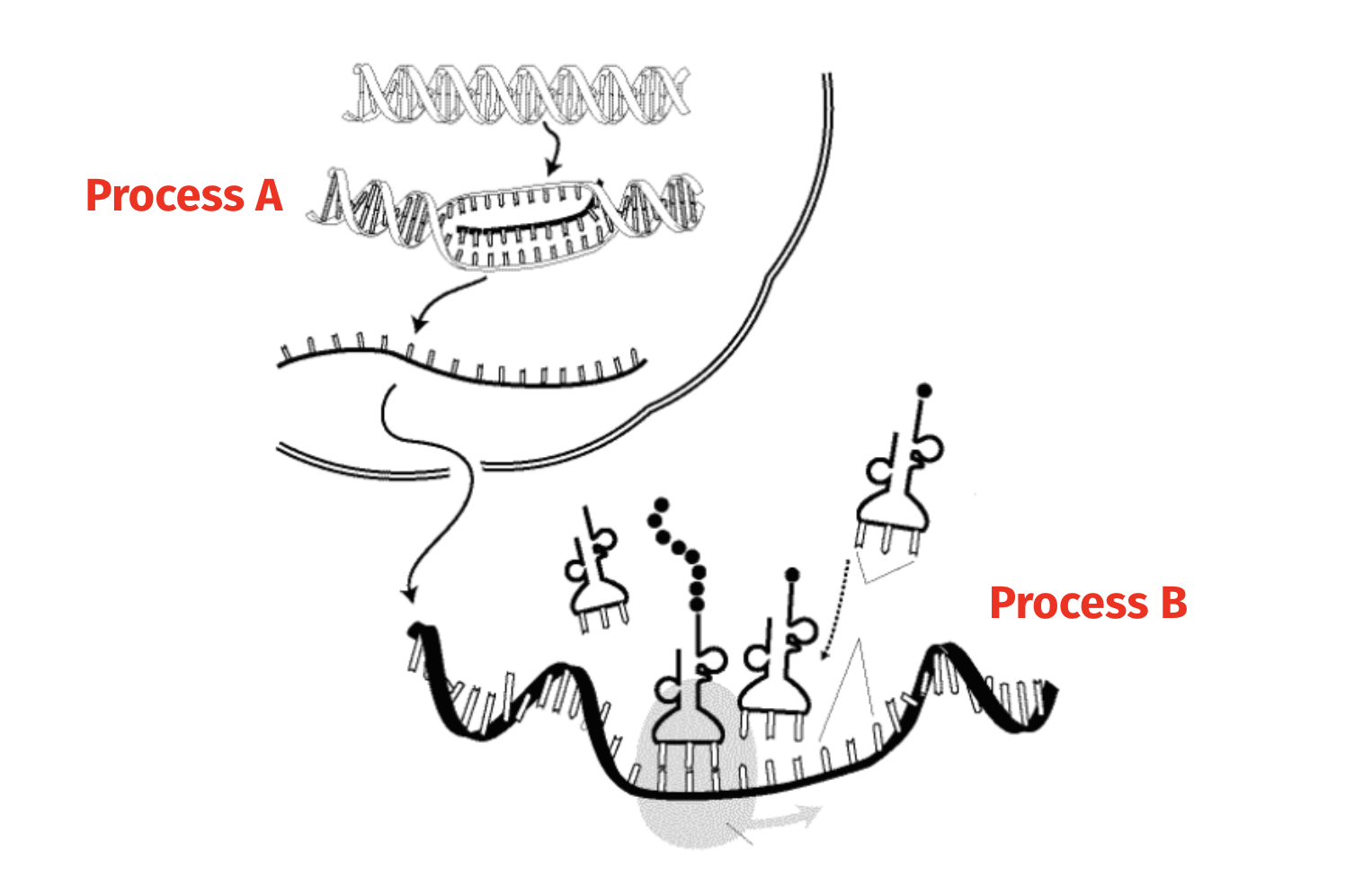
In the diagram above, Process A represents . It occurs in the and produces which leaves and goes to the .
Process B represents . It occurs at the and produces .
Determine if the statement applies to either Mitosis or Meiosis.
Select the correct answer in each row.
Mitosis | Meiosis | |
|---|---|---|
Creates genetically IDENTICAL cells | ||
Creates genetically DIFFERENT cells | ||
4 daughter cells | ||
2 daughter cells | ||
Crossing over occurs | ||
Crossing over does NOT occur |
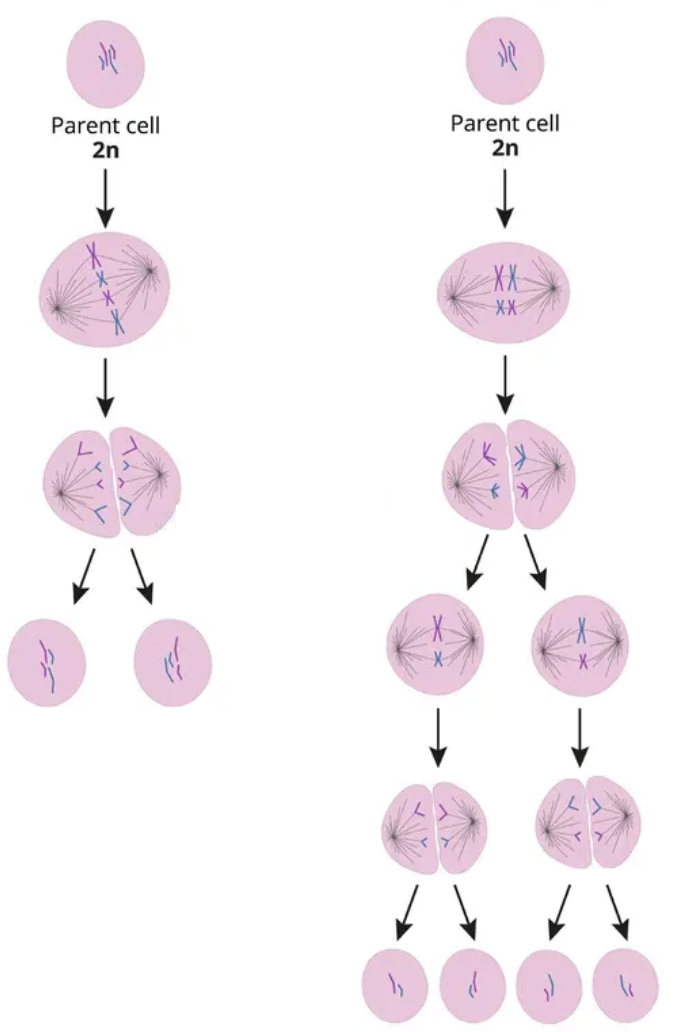
The model below shows the processes of mitosis and meiosis.
Which of the following explains a key difference between these two cellular processes?
Complete the diagram below.
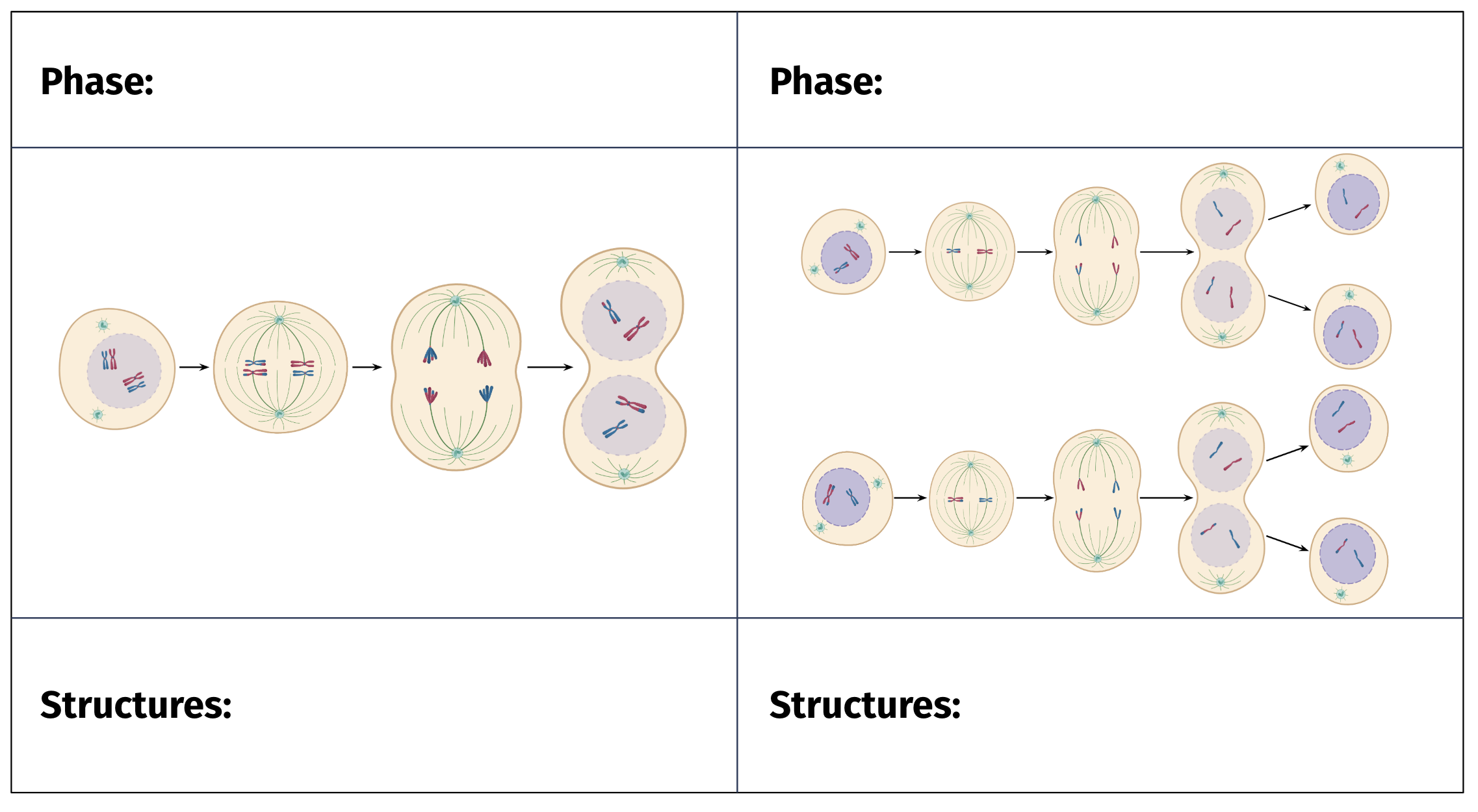
Which of these explains a key difference between Meiosis I and Meiosis II?
The main function of meiosis is to produce cells. Humans have 46 chromosomes in their DNA, after meiosis the gametes will have chromosomes.
The difference in chromosome number between a parent cell and its daughter cells in meiosis is that the daughter cells will have a the amount of chromosomes.
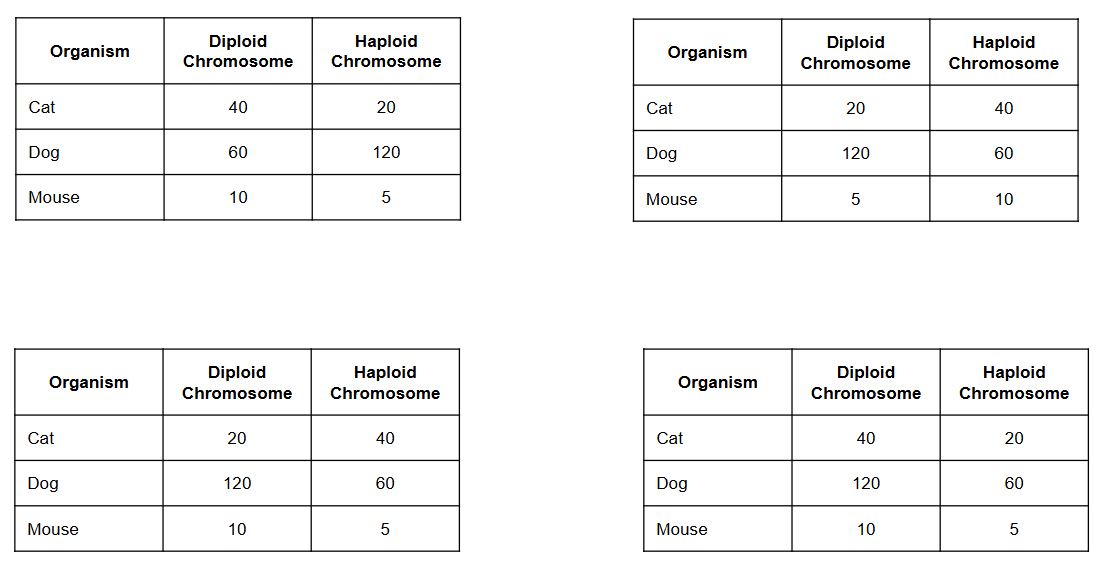
Which of the following tables correctly lists the organisms' diploid and haploid chromosome number?
In meiosis I separate independently of each other, creating random distribution resulting in combinations of chromosomes.
The following processes play a crucial role in generating genetic diversity within a species -
(Select all that apply)
Which descriptions align to viruses and cells?
Viruses | Cells | Both | |
|---|---|---|---|
DNA is surrounded by a capsid | |||
Has genetic material (DNA) | |||
DNA surrounded by a nucleus | |||
Can cause an infection | |||
Needs a host to reproduce | |||
Reproduce through cell division (mitosis) |
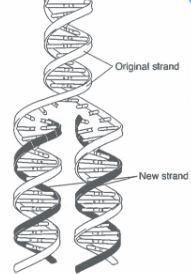
What process is being shown in the figure below?