(Fossils, Embryology, Comparative Anatomy, and Biochemical Similarities)
This cladogram shows the evolutionary relationships among some mammals based on homologous structures.
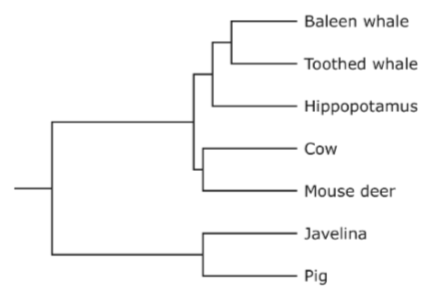
Which statement is supported by this cladogram?
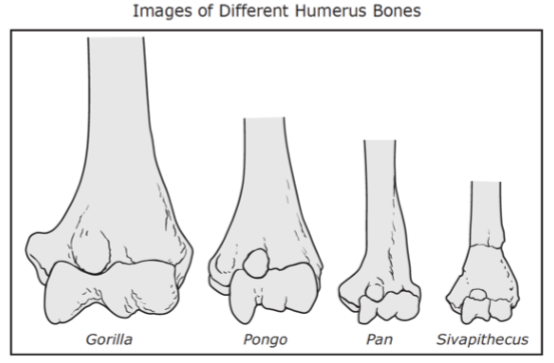
The image below shows part of the humerus bone (arm bone) in different genera of primates.
Which statement is best supported by the observable structures of the different humerus bones?
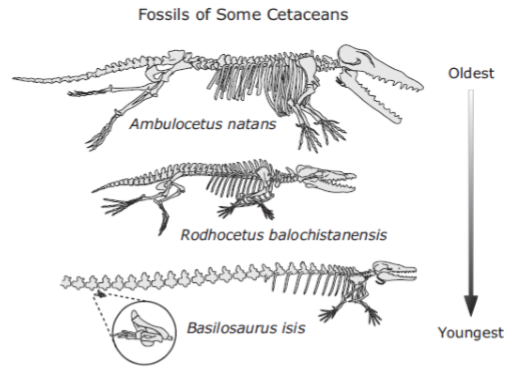
"Cetaceans" are whales and their relatives. The diagram below shows some fossils of cetaceans.
Which statement provides the best evidence that "Ambulocetus natans" is an ancestor of "Basilosaurus isis"?
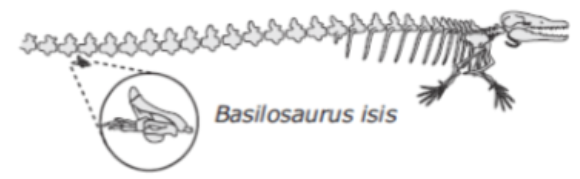
"Basilosaurus isis" is a relative to modern-day whales that went extinct approximately 34 million years ago. This organism grew up to 50 feet in length and had the remnents (remains) of a pelvic (hip) bone and hind (rear) leg bones, as shown in the image below.
Structures that no longer serve the purpose that they were meant to serve are known as...
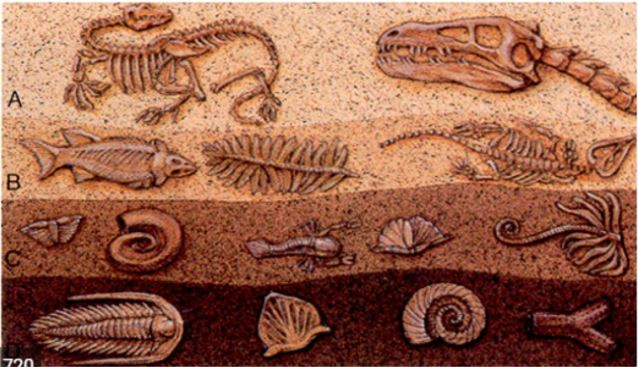
Which of the following statements about fossils is NOT TRUE?
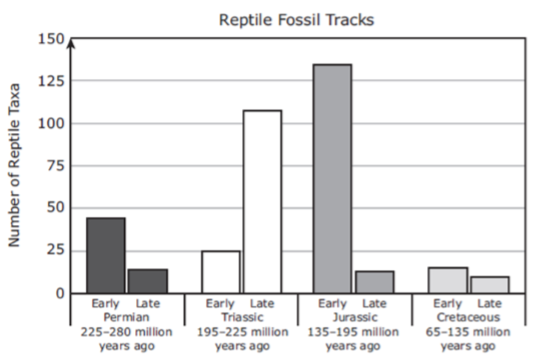
The graph below shows the number of taxa (species) of reptiles whose fossilized tracks have been found.
Which statement is best supported by these data?
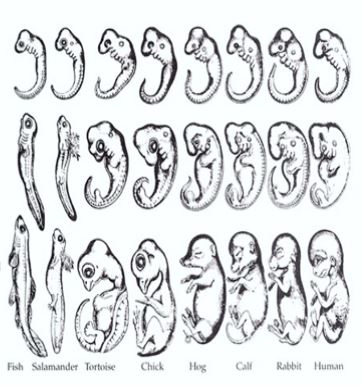
If two organisms look similar through embryological development, then which of the following must be TRUE?
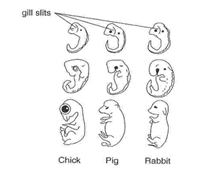
The fact that the pig and rabbit look more similar as they develop would lead scientists to conclude that…
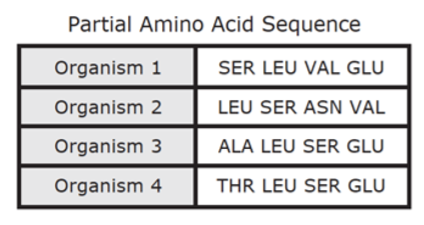
Scientists can determine relatedness among organisms by comparing partial amino acid sequences. The table (below) shows four partial amino acid sequences from four different organisms.
Which two organisms are most closely related?
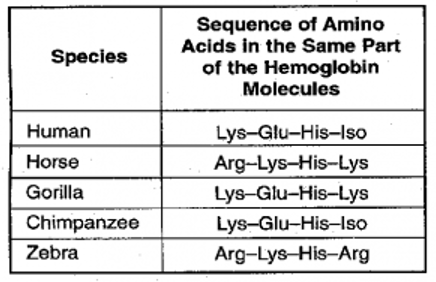
Scientists can determine relatedness among organisms by comparing partial amino acid sequences. The table (below) shows five partial amino acid sequences from five different organisms.
Which organism is most closely related to the horse?