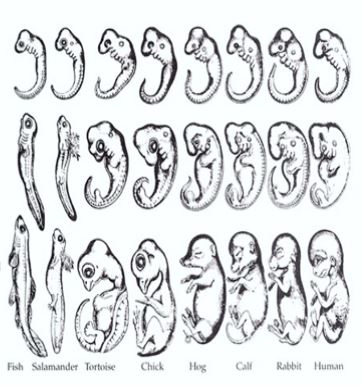
If two organisms look similar through embryological development, then which of the following must be TRUE?
If two organisms look similar through embryological development, then which of the following must be TRUE?
If two organisms look similar through embryological development, then which of the following must be TRUE?
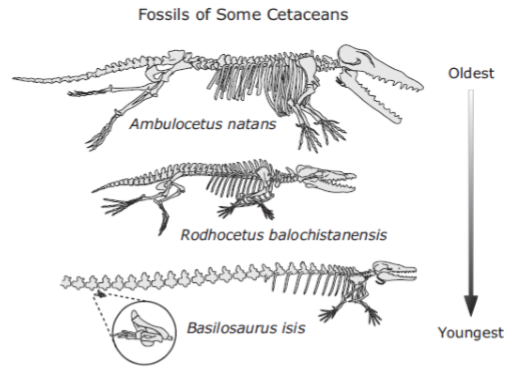
"Cetaceans" are whales and their relatives. The diagram below shows some fossils of cetaceans.
Which statement provides the best evidence that "Ambulocetus natans" is an ancestor of "Basilosaurus isis"?
During early stages of development, dolphin embryos begin to develop hind limbs. By the time dolphin fetuses are fully developed, the hind limbs have disappeared.
Which statement best describes the early development and then disappearance of the hind limbs in dolphins?
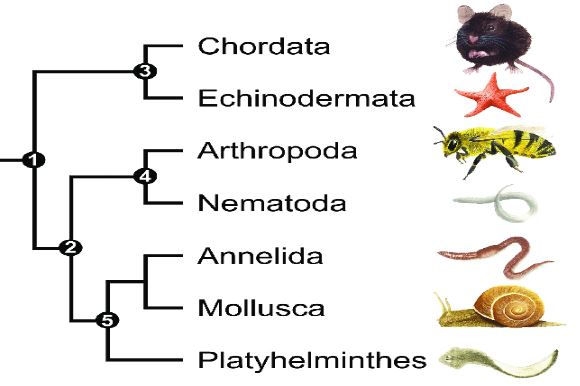
Select the common ancestor for Arthropoda and Platyhelminthes on the diagram below:
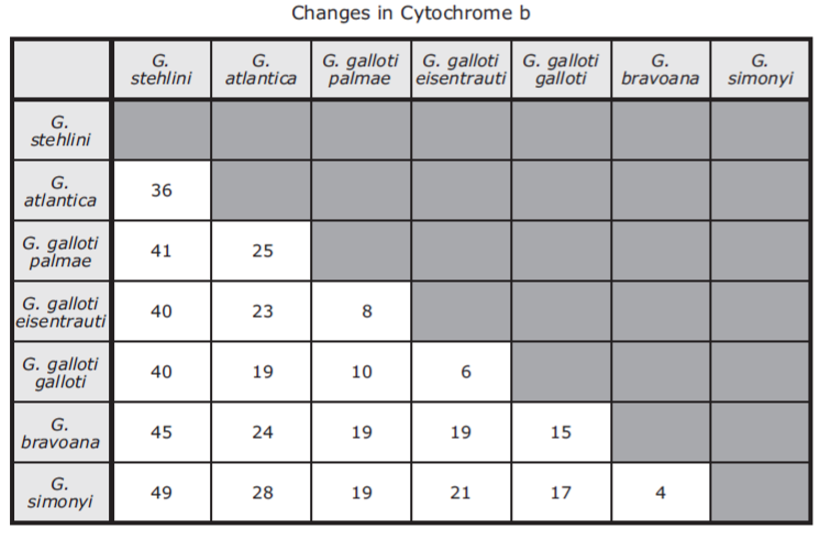
READ THIS: Researchers studying populations of lizards from the genus Gallotia on the Canary Islands compared the protein "cytochrome b" (a really important protein that you need to survive) in different populations.
The table (below) shows the number of similarities in the cytochrome b protein between different populations.
Which conclusion about the relatedness of the lizards is supported by this data?
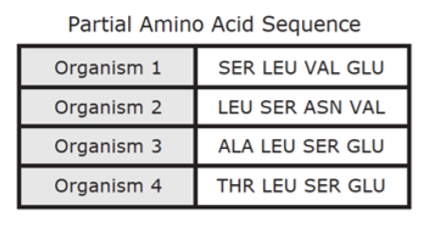
Scientists can determine relatedness among organisms by comparing partial amino acid sequences. The table (below) shows four partial amino acid sequences from four different organisms.
Which organism is the LEAST related to the other three organisms?
Select your answer on the diagram below:
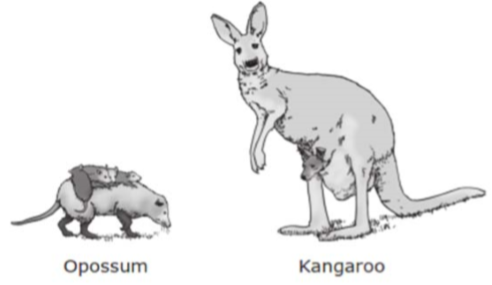
The opossum, which is native to North America, and the kangaroo, which is native to Australia, are marsupials.
The fact that both of these mammals incubate (keep warm) their immature offspring in a pouch provides evidence that they...
In 2010, scientists excavated (to dig with a shovel) a skull fossil that provides evidence of a newly discovered species of big cat.
Based on the evidence, scientists hypothesized that big cats branched off from smaller wild cats about 6 million years ago.
Which evidence best supports the hypothesis that big cats and smaller wild cats share a common ancestor?
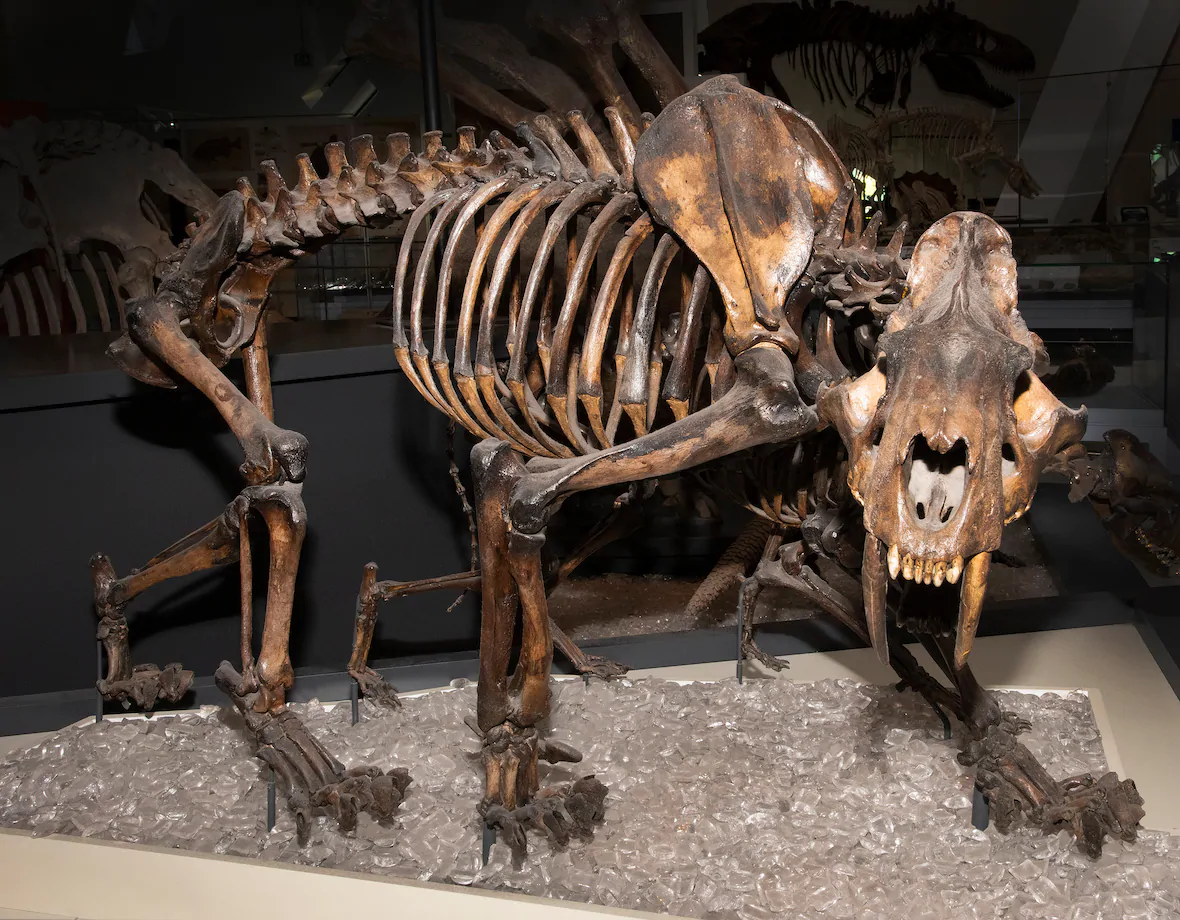
A paleontologist was studying how different environmental factors affected evolution by examining the fossil record. One of his samples is shown below.
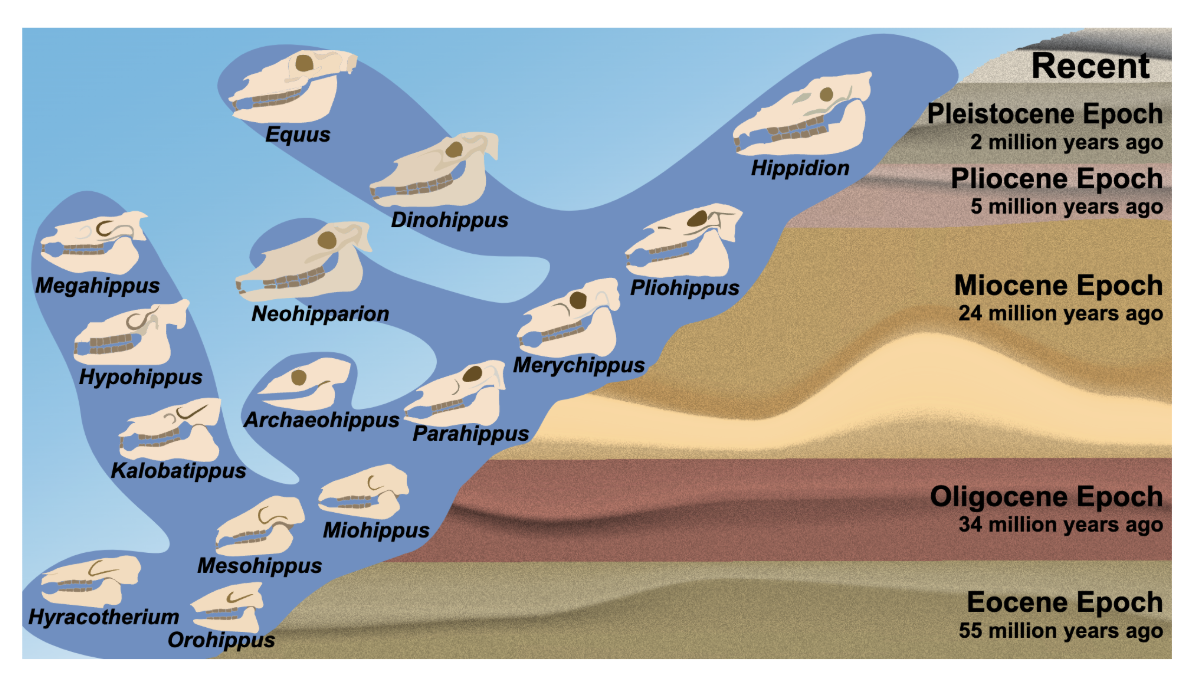
This is an example of because .
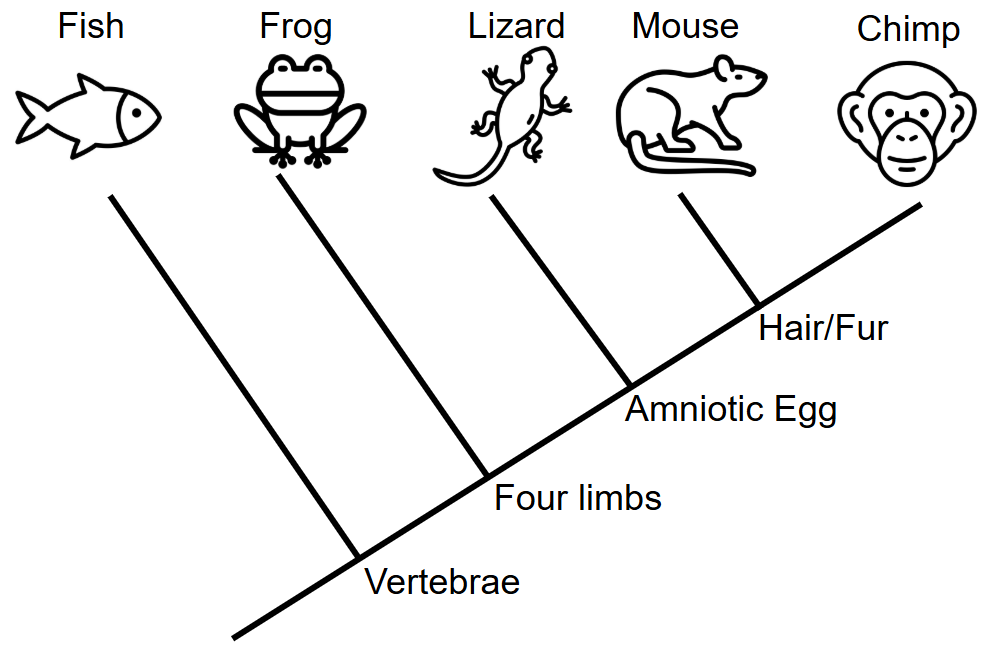
A cladogram of five species is shown.
Based on the cladogram, the frog has which physical characteristics?
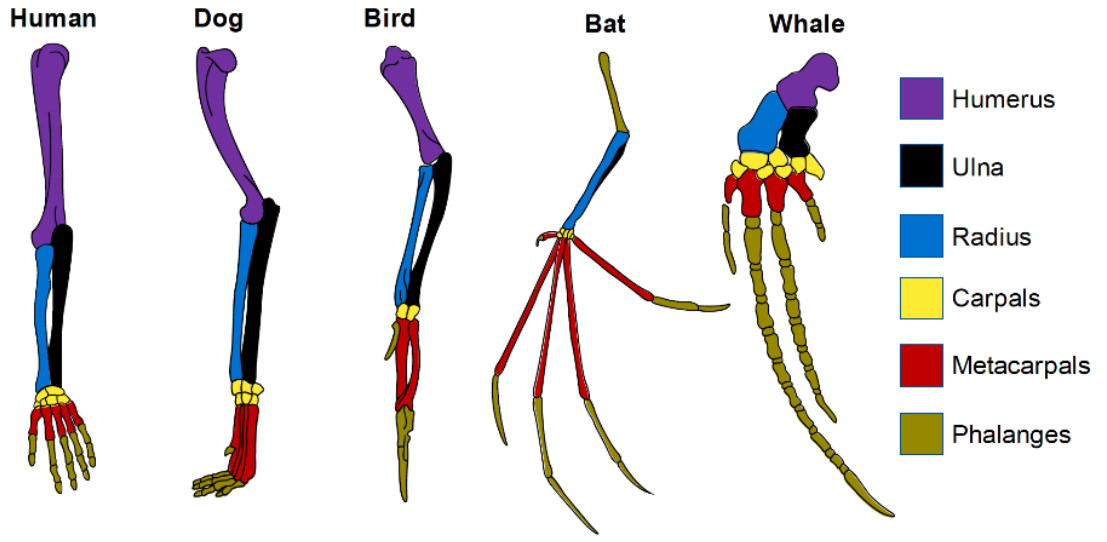
The limbs of several different organisms are shown in the illustration below. Scientists sometimes compare the limbs of these organisms to look for evidence of common ancestry.
These limbs provide evidence of common ancestry, because they...
Certain species of the coral-like sea organisms called bryozoans first appeared about 140 million years ago. They remained unchanged for the first 40 million years and then suddenly experienced rapid genetic change.
Which process would BEST account for the pattern of evolution of bryozoans?
Two scientists studied patterns of evolution in the fossil record. Many species they analyzed showed periods of slow changes interrupted by a period of rapid change.
This pattern of periods of slow change interrupted by periods of rapid change with few, if any transitional fossils, best describes the theory of-
Scientists were constructing an evolutionary timeline of scorpions. The oldest species is Parioscorpio venator, which lived 437 million years ago and had a body length of 2.0 m (about 6.5 ft). Modern-day scorpions, such as Serradigitus wupatkiensis, are much small than their ancestors and are only 2.0 - 2.5 cm long. However, scientists have noted that the overall body structure of scorpions has remained about the same for the past 430 million years.
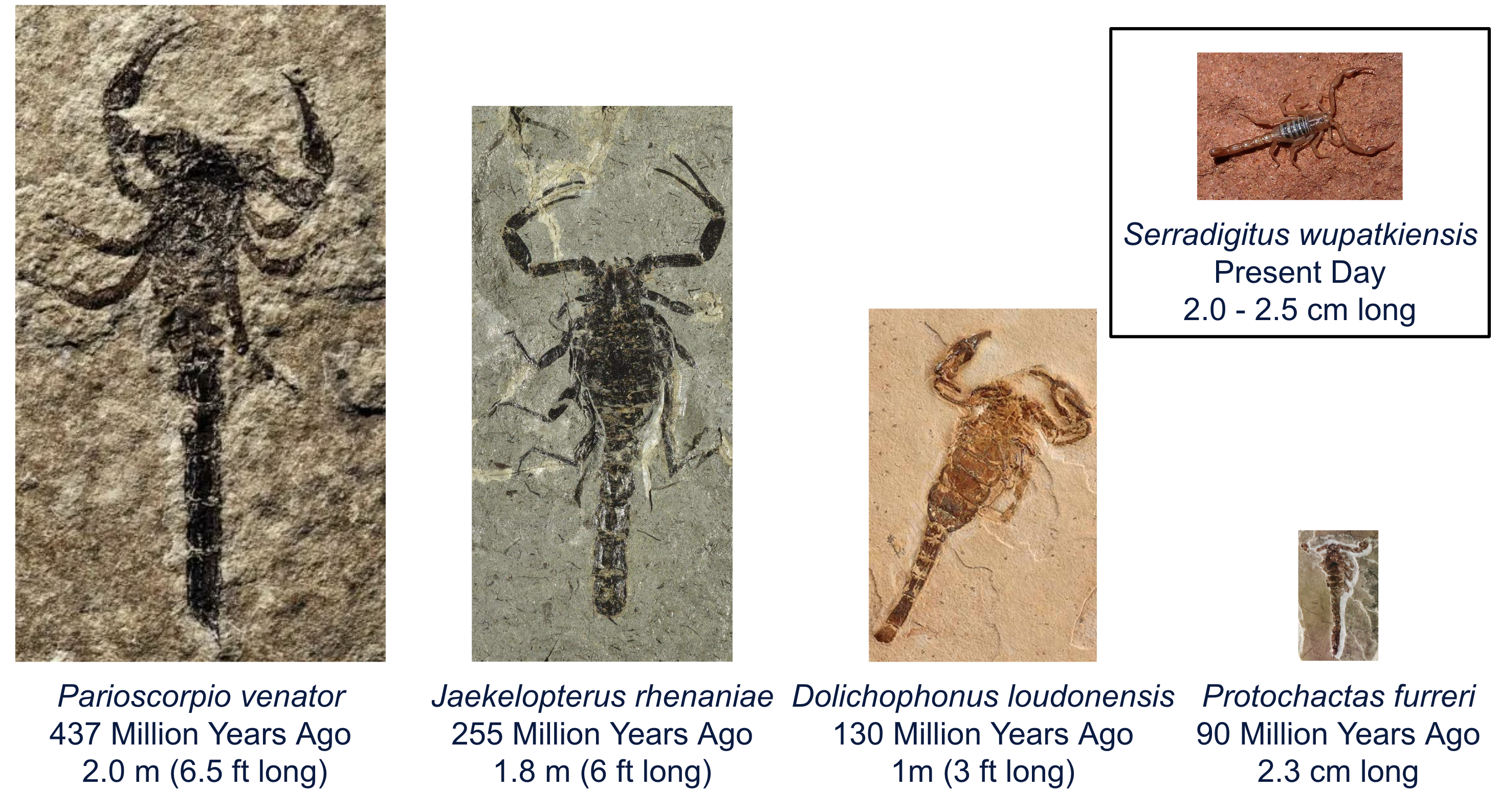
Which of the following conclusions is supported by this information?