The red-cocked woodpecker is a territorial, non-migratory bird species that lives in mature pine forests in the southern United States. Following more than a century of habitat loss due to deforestation, the red-cocked woodpecker's range dwindled from over half the United States to just a few states by the 1960s.
The food web of the red-cocked woodpecker is shown below.
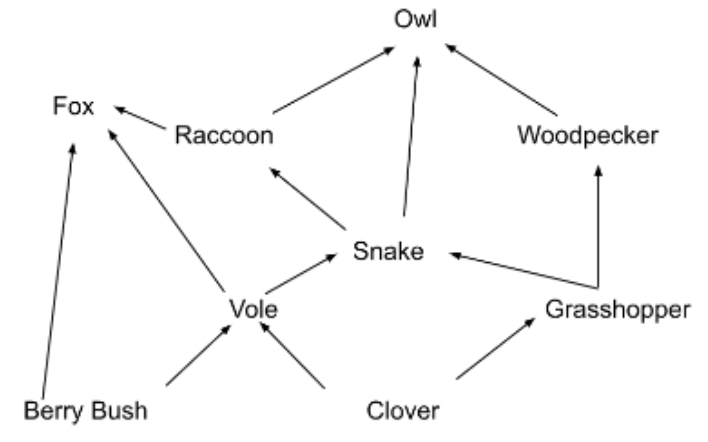 According to the food web, which of the following will most likely occur if deforestation continues to affect the red-cocked woodpecker population?
The red-cocked woodpecker is a territorial, non-migratory bird species that lives in mature pine forests in the southern United States. Following more than a century of habitat loss due to deforestation, the red-cocked woodpecker's range dwindled from over half the United States to just a few states by the 1960s.
The food web of the red-cocked woodpecker is shown below.
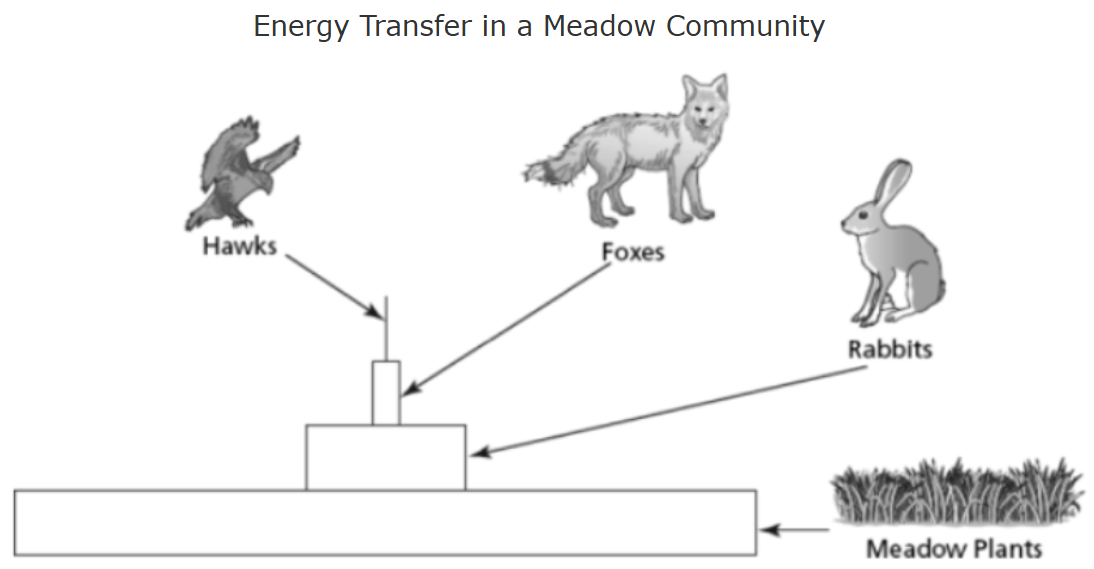 Which statement best describes what will happen if the population of herbivores in the community decreases?
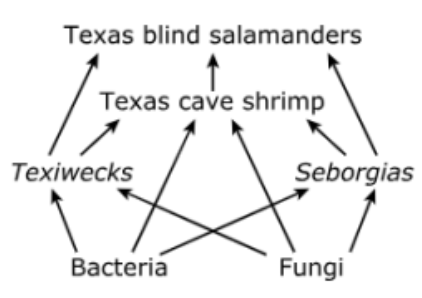 An environmental change that harms which organism would cause the MOST instability in the aquifer ecosystem?
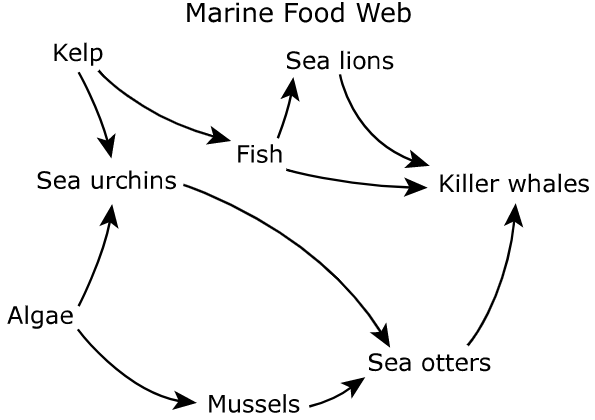 Based on the food web, how would a significant decrease in the sea otter population due to an oil spill most likely affect this ecosystem?
 Which model best represents the amount of energy available for the use of each trophic level represented in the food chain?