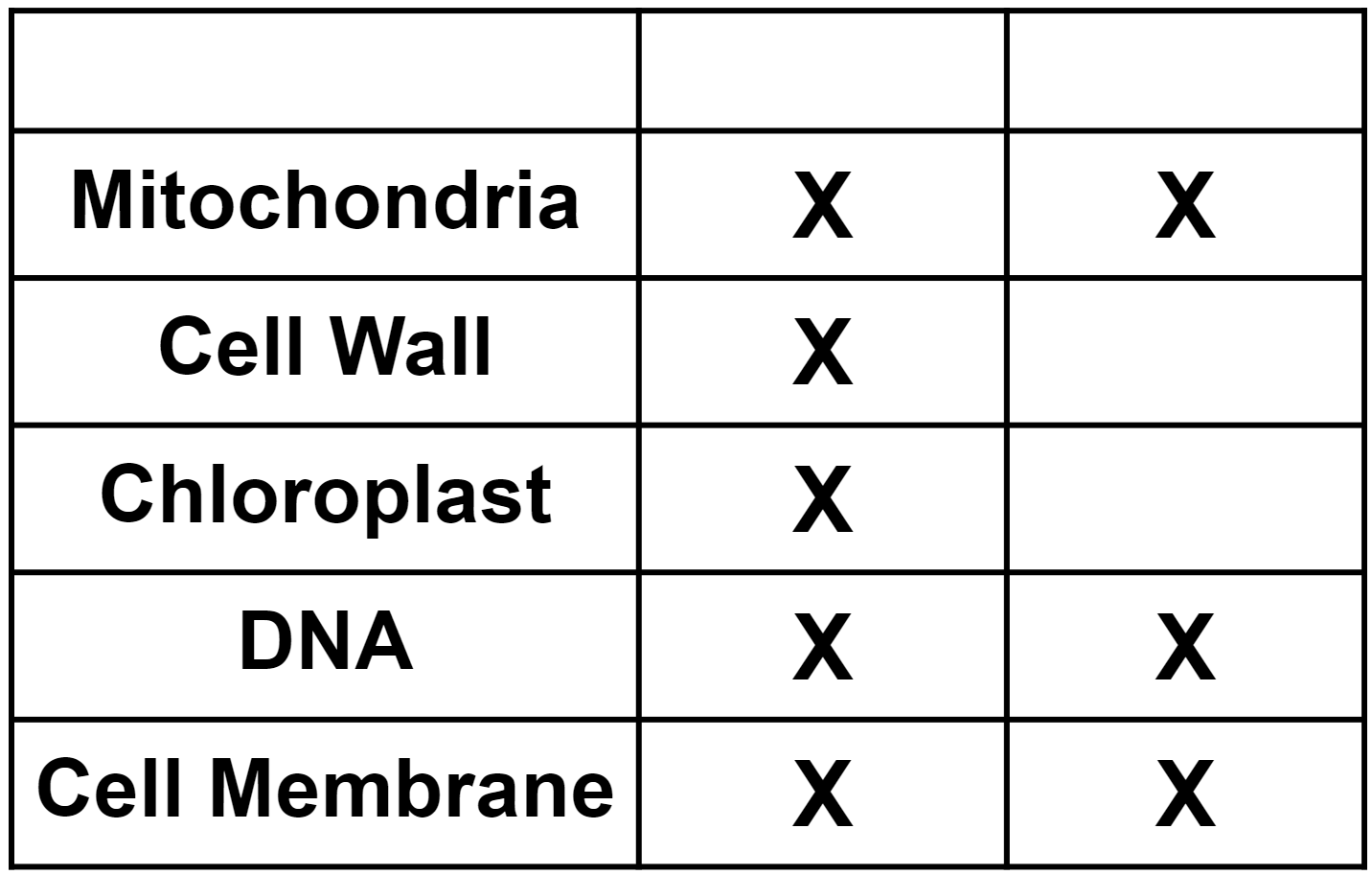
The table below indicates which structures are present in two cells. The X indicates structures that are present in each cell.
Identify the cells below based on their structures.
Andre svarmuligheder:
Animal Cell
Plant Cell
Prokaryote
Students created note cards comparing characteristics of eukaryotic and characteristics of prokaryotic cells.
Which set of note cards most accurately compares these cells?
The table below indicates which structures are present in two cells. The X indicates structures that are present in each cell.
Identify the cells below based on their structures.
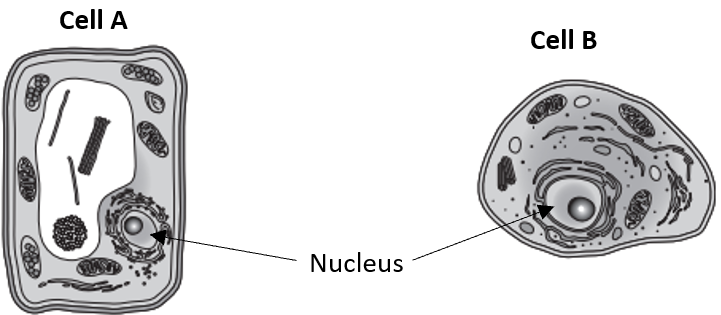
Below are two cells observed under a microscope.
Cell A and Cell B as their genetic material (DNA) .
Determine if the following characteristics belong to a cell or virus.
Virus | Cell | |
|---|---|---|
Contains genetic material in nucleus | ||
Glycoproteins | ||
Cell Membrane | ||
Capsid | ||
Requires a host cell |
Which of these describes a difference between viruses and cells?
Viruses can be transmitted through air, water, food, insect bites, and direct skin contact. Once a virus gains entry to the body, it invades a in order to .
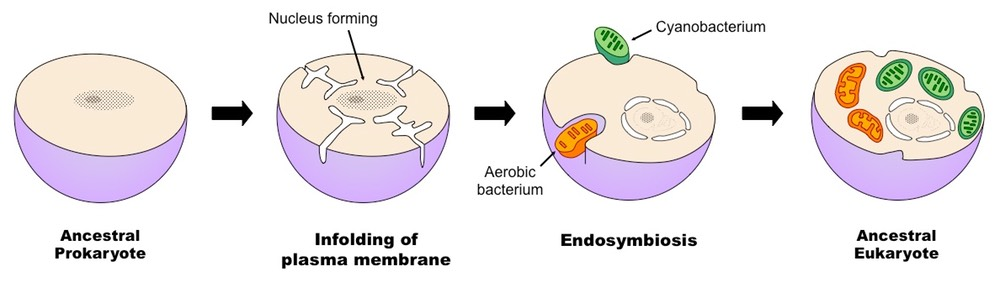
Observe the structures in the diagram below.
This diagram best supports which statement?
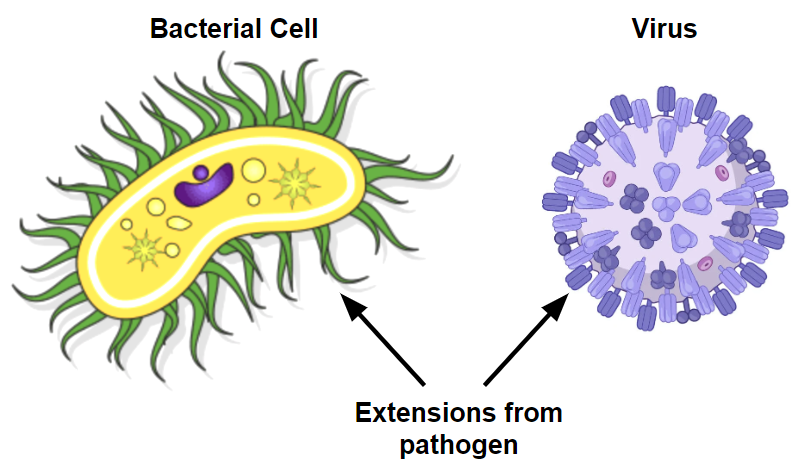
Pathogens such as bacteria and viruses have extensions as shown in the diagrams below.
In bacterial cells, these extensions are used for motion. What are the extensions from a pathogenic virus used for?
Avian influenza is a highly infectious virus that affects birds. Between April and July of 2024, the United States Department of Agriculture (USDA) and the Food and Drug Administration (FDA) reported a total of 18.37 million bird deaths and 0 human deaths.
Which of the following best explains why avian influenza affects birds but not humans?
The human immunodeficiency virus (HIV) is a virus that attacks the body's immune system, making it harder for the body to fight off infections and illnesses. Many people do not have symptoms in the first months of infection. As of August 2024, there are 40 million people living with HIV. One of the most common ways to contract HIV is through coming into contact with body fluids.
Which of the following best explains why someone cannot get HIV if they shake hands with someone with the infection?