Why do cells go through MEIOSIS?
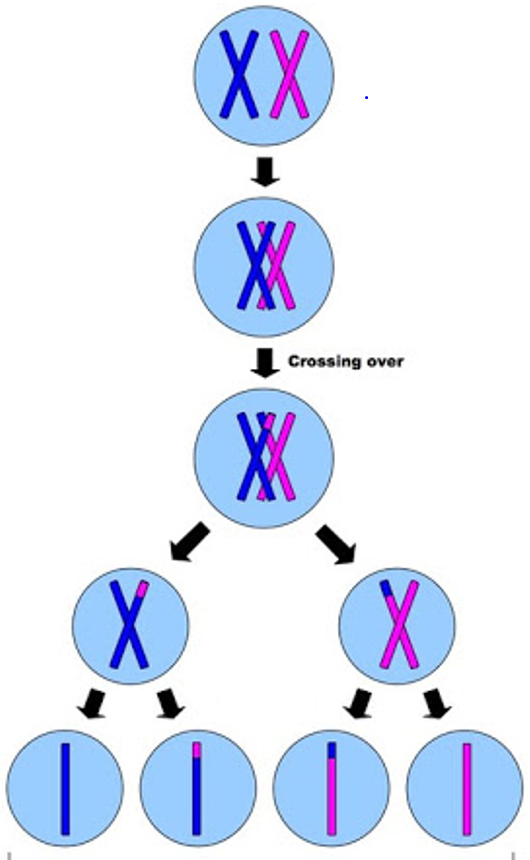
Why do cells go through MEIOSIS?
Students: This remediation is for independent practice. Use your notes from class and slides below to complete this assessment and your re-test will open for the last 20 minutes of class.
Read carefully and do your best! Your retest grade will be updated in Skyward.
If you would like to come for tutorials, reminder I will have them after school on Monday (12/16) and Tuesday (12/17) after school from 3:15pm - 4:15pm.
Determine if the statement applies to either Mitosis or Meiosis.
Select the correct answer in each row.
Mitosis | Meiosis | |
|---|---|---|
Creates genetically IDENTICAL cells | ||
Creates genetically DIFFERENT cells | ||
4 daughter cells | ||
2 daughter cells | ||
Crossing over occurs | ||
Crossing over does NOT occur |
Mitosis is a type of cell division that creates daughter cells. These daughter cells are .
Meiosis is a type of cell division that creates daughter cells. These daughter cells are .
At the end of MEIOSIS, the cells contain of the genetic information because . The daughter cells at the end of meiosis are .
Why do cells go through MEIOSIS?
Mitosis and meiosis are both processes involved in cell division. Unlike mitosis, meiosis involves --
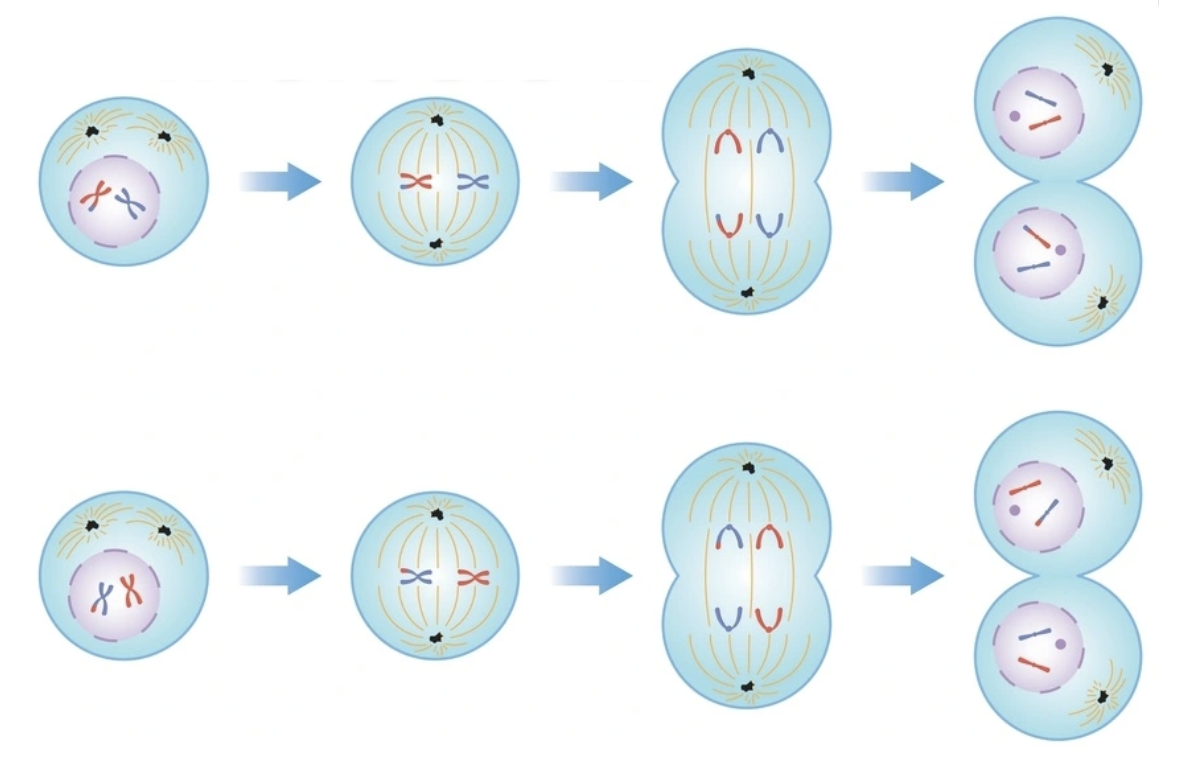
This is an example of .
This type of cell reproduction makes .
Mutations of these cells because they are body cells.
The function of these cells includes .
This is an example of .
This type of cell reproduction makes .
Mutations of these cells because they are sex cells.
The function of these cells includes .
A mutation occurs in the gamete of a woman. Who would most likely be affected by this genetic error?
When a new mutation occurs in a SOMATIC CELL of a sexually reproducing organism, what percentage of the individual's offspring are likely to inherit the mutation?
Crossing-over during meiosis is important for sexual reproduction. This process most likely leads to which of the following?
Which of the following statements describes why siblings born from the same parents can look similar but are not identical?
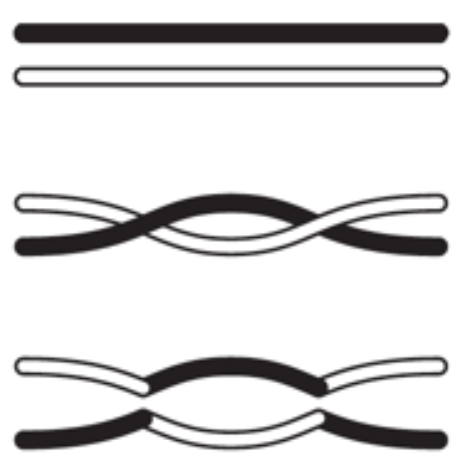
On the model below, select where crossing over occurs.
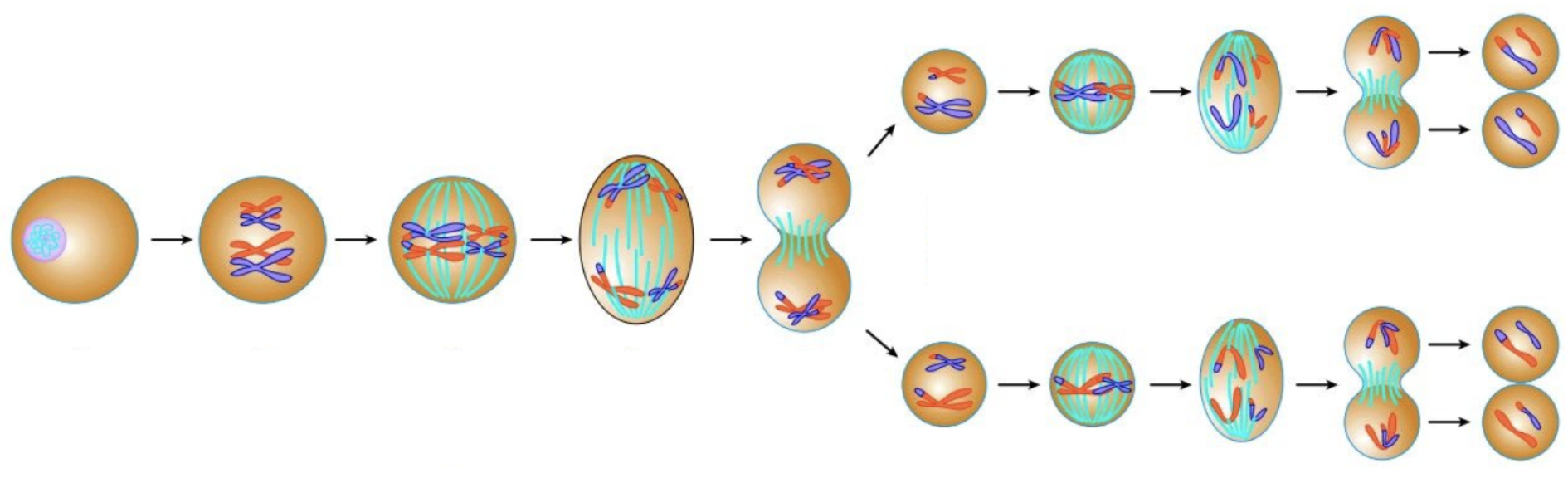
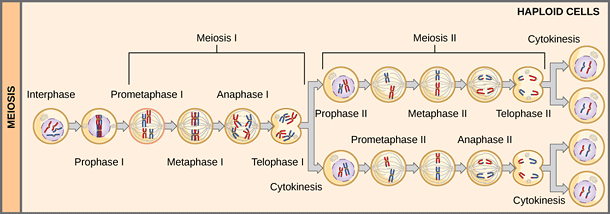
Observe the diagram of Meiosis I and Meiosis II and complete the sentence that follows.
During Meiosis I the are separated while in Meiosis II the separate to form haploid cells containing half the amount of chromosomes.
Identify the following items as either Meiosis I or Meiosis II
Homologous Chromosomes separate
Sister Chromatids separate
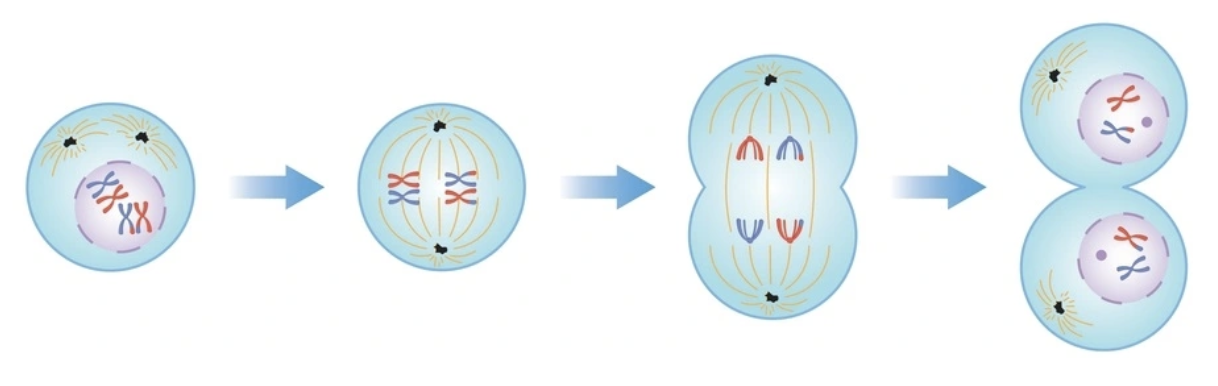
Meiosis I
Meiosis II