What is the sex of this rat? How do you know?
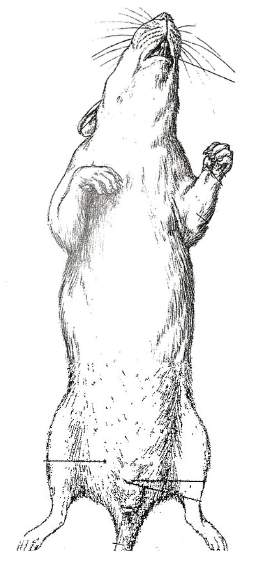
What is the sex of this rat? How do you know?
Answer the questions below as you will need to be prepared for when your teacher asks you questions while you dissect.
Make sure that EVERYONE in your group can identify all structures and explain their functions. The teacher will come around to quiz you and will randomly pick someone from your group to explain. It is in your best interest for EVERYONE to understand EVERYTHING because you will get a group grade based on individual responses.
Answer the questions below as you will need to be prepared for when your teacher asks you questions while you dissect.
Make sure that EVERYONE in your group can identify all structures and explain their functions. The teacher will come around to quiz you and will randomly pick someone from your group to explain. It is in your best interest for EVERYONE to understand EVERYTHING because you will get a group grade based on individual responses.
Why are we dissecting a rat and not a different type of animal?
What does "dissecting" mean?
When completing a dissection, the scissors should always be angled in order to .
What PPE (personal protective equipment) will you be using for the dissection?
Select 4 items.
Failure to follow ANY rule(s) will result in which two of the following?
The teeth of a rat are called . This structure belongs to the system.
How are the eyes of a rat similar to humans? (Select two)
The whiskers of a rat belong to the system. This structure would be similar to the of a human.
What is the sex of this rat? How do you know?
Identify the following structures as belonging to males, female, or both:
Male | Female | |
|---|---|---|
Scrotal sacs | ||
Vulva | ||
Incisors | ||
Pupil |
For this dissection you will be making multiple incisions. What does that mean?
You must be careful when making incisions and point the tip of your scissors downward following the letter I shape.
Determine if the following organs belong to the abdominal cavity or thoracic cavity.
Lungs
Liver
Intestines
Heart
Thoracic Cavity (2 items)
Abdominal Cavity (2 items)
The separates the thoracic and abdominal cavities. This structure is part of the system because it will contract and relax which moves the lungs for breathing.
Select 4 structures your lab manual states we will be removing for observations:
There is not blood or urine in these preserved specimens. What is the liquid that will be inside of the rat?
Cutting through the rib cage may be more difficult. When dissecting, the lead or assistant dissector should be careful not to damage the heart and lungs which are directly beneath the rib cage.
They heart and kidneys will be removed and cut in order to view the internal structures. Once cut, it should open up like a butterfly or a book.
What structure holds the stomach and intestines in place? (The plastic like film)
Rats' digestive tracts are comparable to that of humans. Once a rat (or human) eats their food, in what order will the food pass through the digestive tract?
Esophagus (throat)
Mouth (chewing)
Stomach
Large intestine
Small intestine
Rectum