Complete the diagram using the vocabulary below:
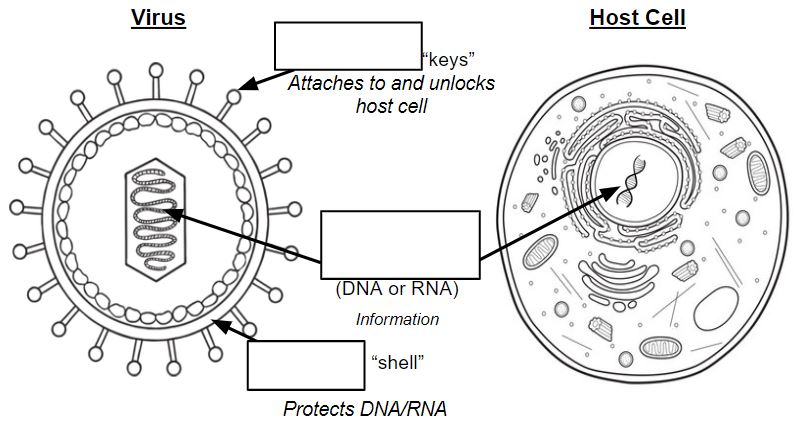
Mmuae Afoforo a Wobɛpaw:
Glycoprotein
Genetic Material
Capsid (Protein coat)
Complete the diagram using the vocabulary below:
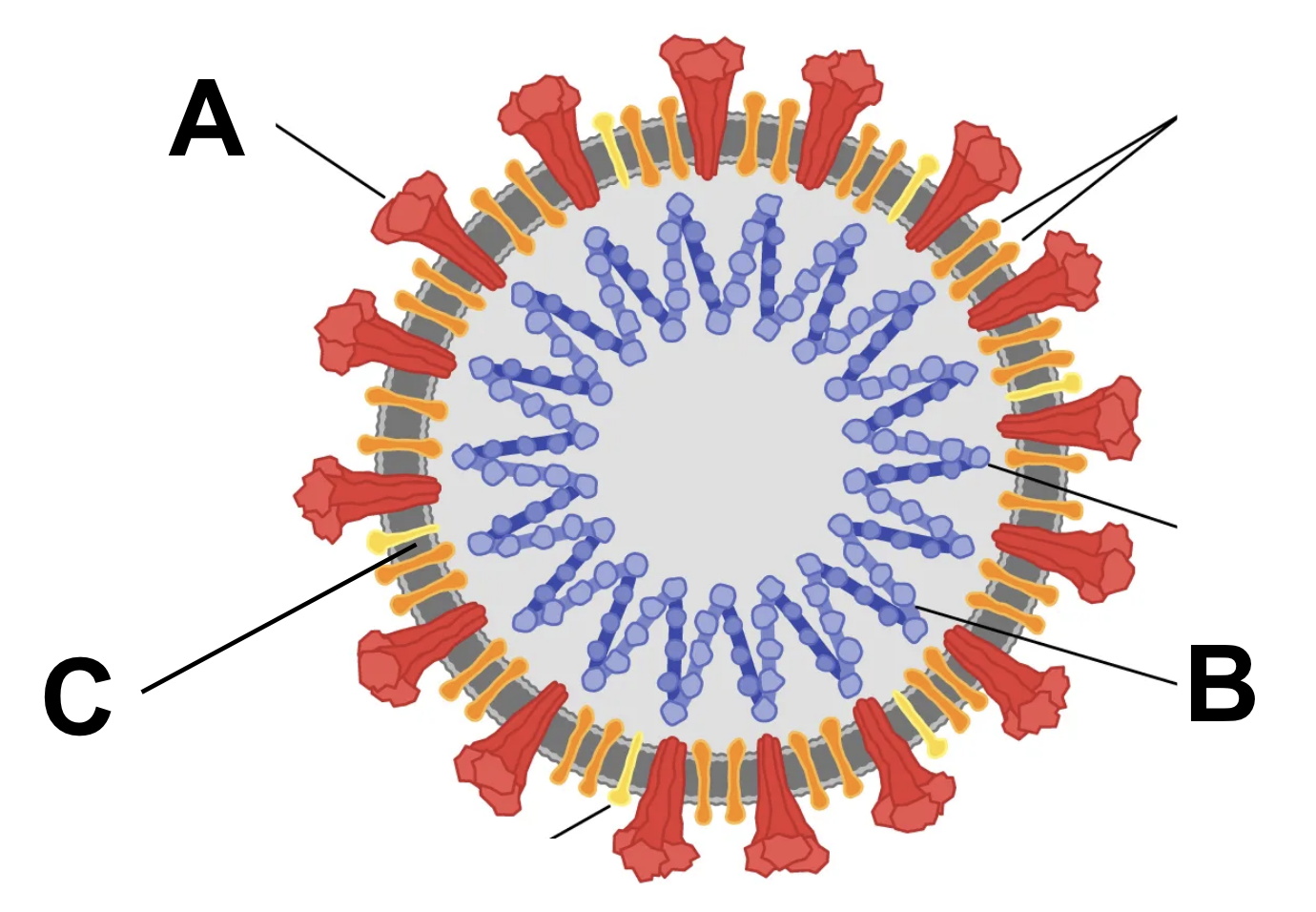
Below is a picture of SARS-CoV-2, the virus that causes COVID-19. Match each structure with its function (job).
| Draggable item | arrow_right_alt | Corresponding Item |
|---|---|---|
Information for making viral proteins | arrow_right_alt | Structure A |
Protects the genetic material | arrow_right_alt | Structure B |
Attachment and entry into host cell | arrow_right_alt | Structure C |
Prokaryotic and eukaryotic cells are similar to Viruses because...
Which of these describes a difference between viruses and cells?
Because viruses do not have a ______________________ they _____________________ on their own.
Viruses are (i)________________because they are non-living, so they require a (ii) ____________to reproduce. Viruses cannot reproduce on their own because they lack (iii)____________ (so they *cannot make protein*).
Viruses have a capsid ("protein shell") which protects the __________. This is similar to the _____________ of a eukaryotic cell.
Viruses can replicate/reproduce on their own.
In order to reproduce, what does a virus need?
A corona virus, which causes disease in humans, tries to enter a plant cell - but cannot get in. Why not?
Any virus, such as coronavirus, can infect any living thing. It does not matter what kind of cell they are trying to infect.
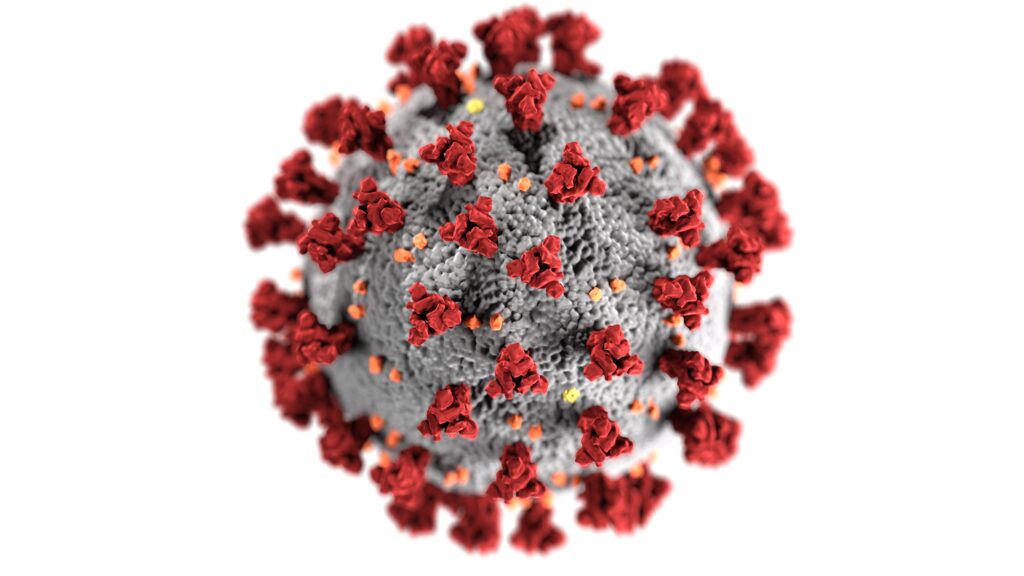
The projections on the surface of this virus allow the virus to ---
What role do the glycoproteins found on the outside of the virus play?
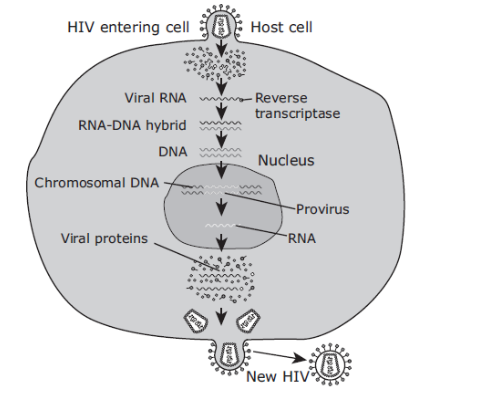
A diagram of an HIV infection is shown.
Which conclusion about the HIV infection of a host cell is best supported by the diagram?
The West Nile virus is a single-stranded RNA virus spread by mosquitos. Symptoms of severe illness include high fever, headache, neck stiffness, muscle weakness, vision loss, numbness, and paralysis. However, 8 out of 10 people do not feel any symptoms at all, and doctors claim that West Nile Virus is not contagious.
Which of the following best describes why someone cannot give West Nile Virus to anyone else?