The diagram below represents how body temperature changes over time.
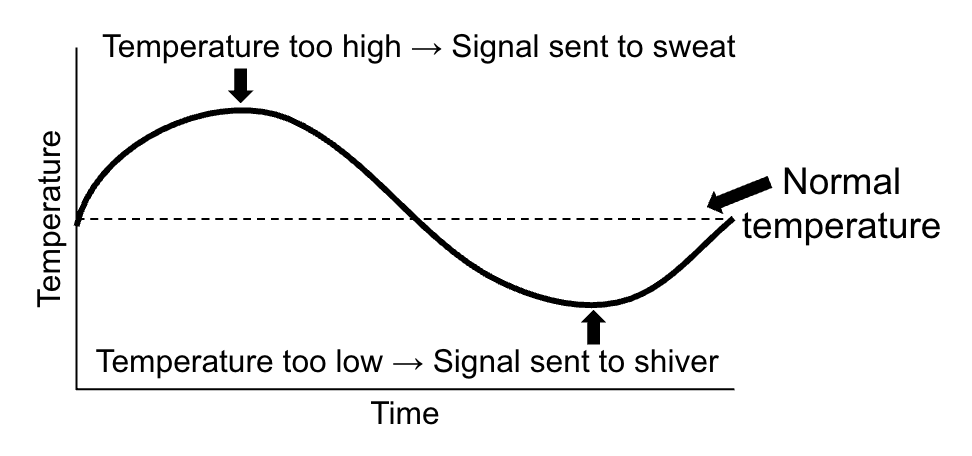
To maintain homeostasis, sweating and shivering occur at different times and are regulated because body temperature is .
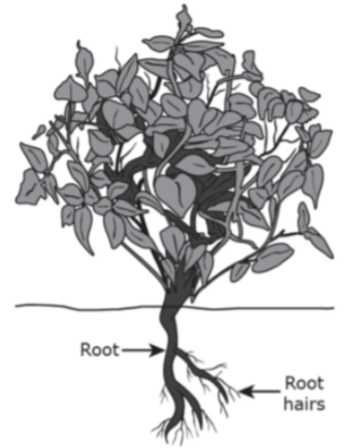
Plant roots have extensions called root hairs. These root hairs are important in the homeostasis of the plant.
Root hairs increase the surface area of the roots. How does this help the roots with their function?
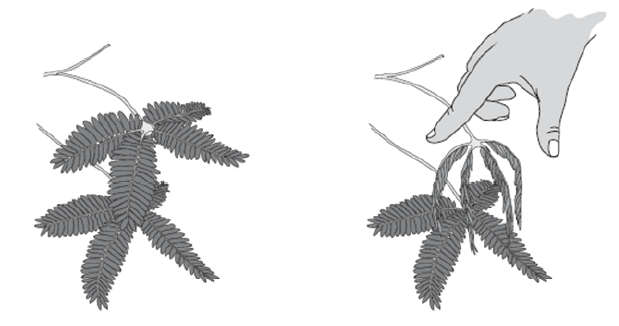
The mimosa plant displays thigmotropism by collapsing its leaves in response to touch, as shown in the pictures below. The plant on the left is undisturbed. The upper stem of the plant on the right has been touched.
Which of the following best describes how mimosa plants respond to stress from their environment?
When a child is born, their mother experiences many reactions in response to the labor and delivery. A table describing the response to birthing an offspring is shown.
# | Labor and Delivery (Birthing of an Offspring) |
|---|---|
1 | Chemical signals release the hormones oxytocin to initiate contractions, endorphins to relieve pain, and adrenaline for alertness. |
2 | The pelvic bones shift and widen as ligaments relax in response to chemical signals. |
3 | The uterine muscles contract, pressing the offspring through the birth canal. |
4 | Stress response signals additional oxytocin production to aid uterine contractions to reduce bleeding. |
Which set of statements describes how body systems interact for labor and delivery?
A drought affects the area where this plant is growing. How will the plant respond to this environmental condition?
Select TWO correct responses.