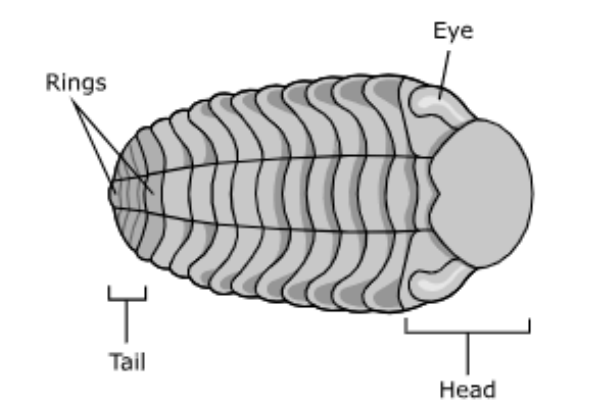
Scientists studied the evolution of ancient organisms known as trilobites. An image of a trilobite is shown, and some of its body structures are labeled.
 Scientists collected fossils of one species of trilobite that determined to have lived during a 2 million year span. The scientists observed that, over time, the number of rings in the trilobites' tails have changed. The graph shows the results of this investigation.
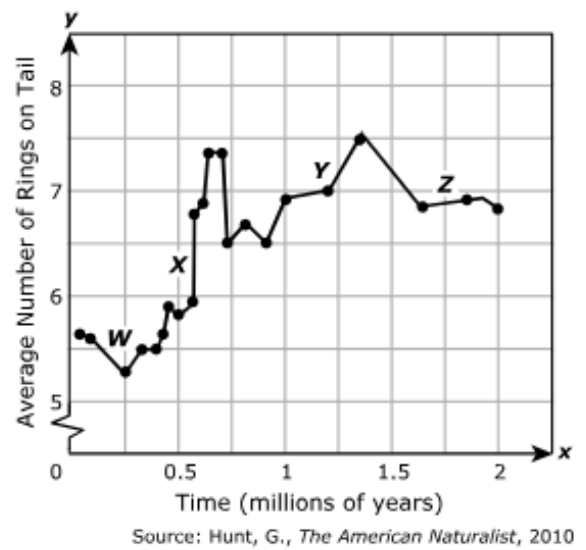 Which labeled section of the graph represents a time when the environment where trilobites lived was changing rapidly?
Scientists studied the evolution of ancient organisms known as trilobites. An image of a trilobite is shown, and some of its body structures are labeled.
Scientists collected fossils of one species of trilobite that determined to have lived during a 2 million year span. The scientists observed that, over time, the number of rings in the trilobites' tails have changed. The graph shows the results of this investigation.
Which labeled section of the graph represents a time when the environment where trilobites lived was changing rapidly?
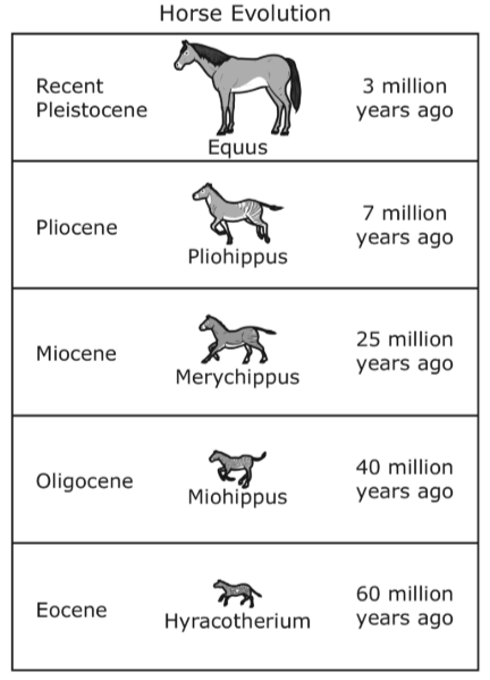 The data in the diagram is evidence that...
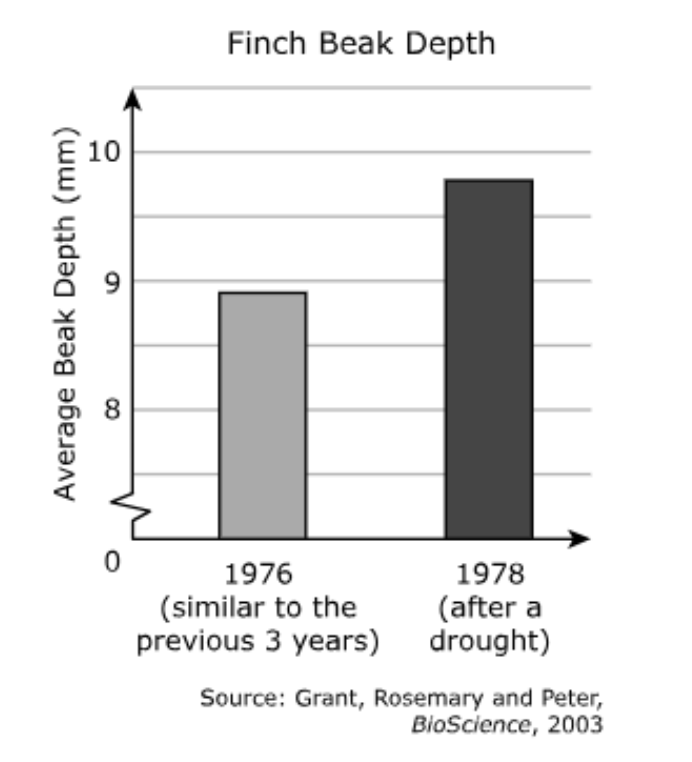 Which factor BEST describes the change in this population of finches?
 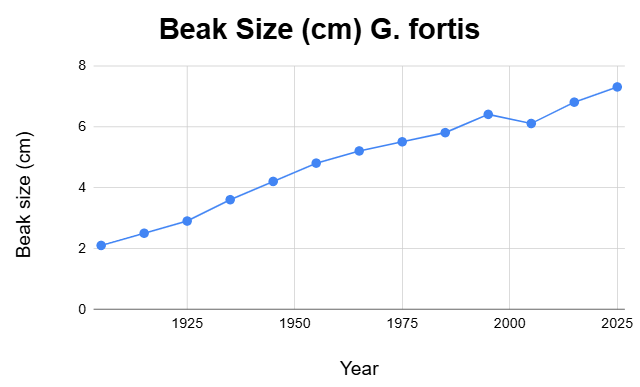 Which of the following questions would be MOST important for scientists to answer to determine if natural selection caused the increase in average beak size?
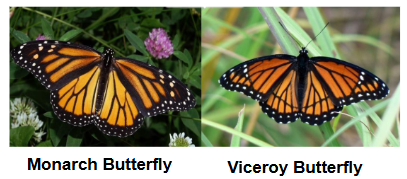 Which of the following observations provides the most definitive evidence that