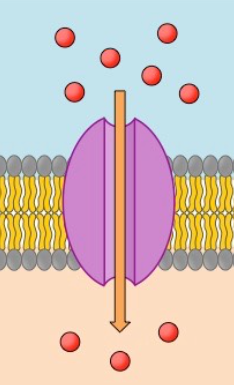
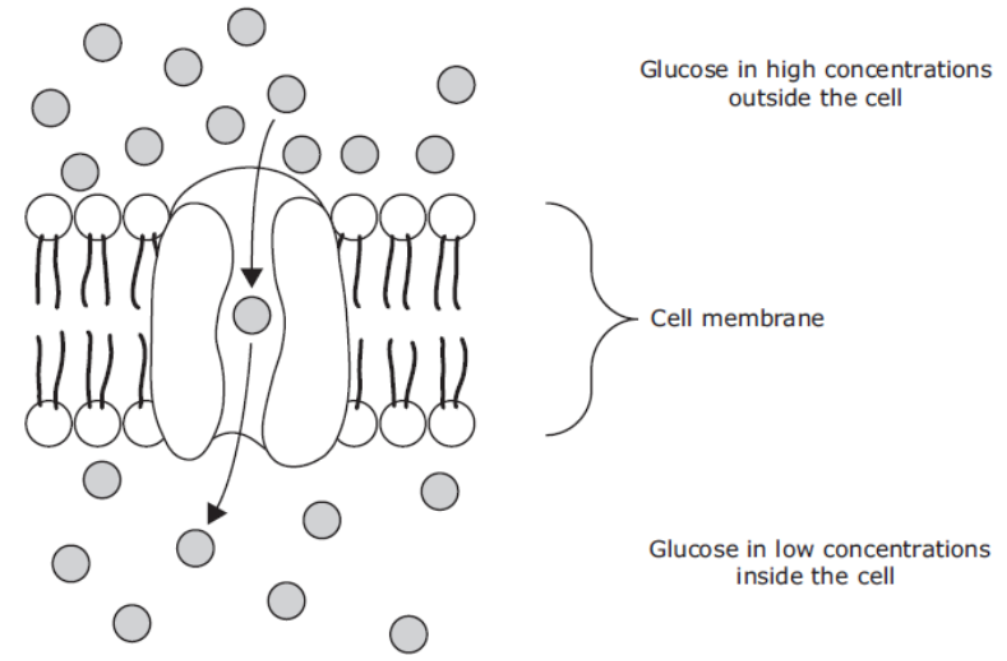
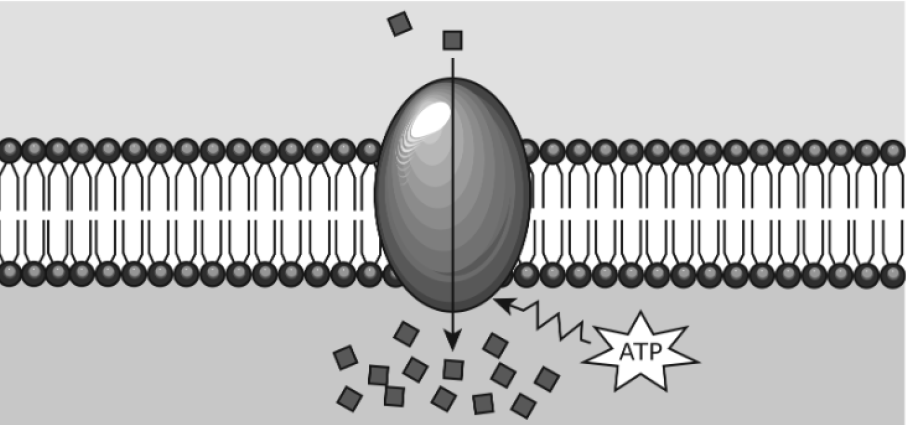
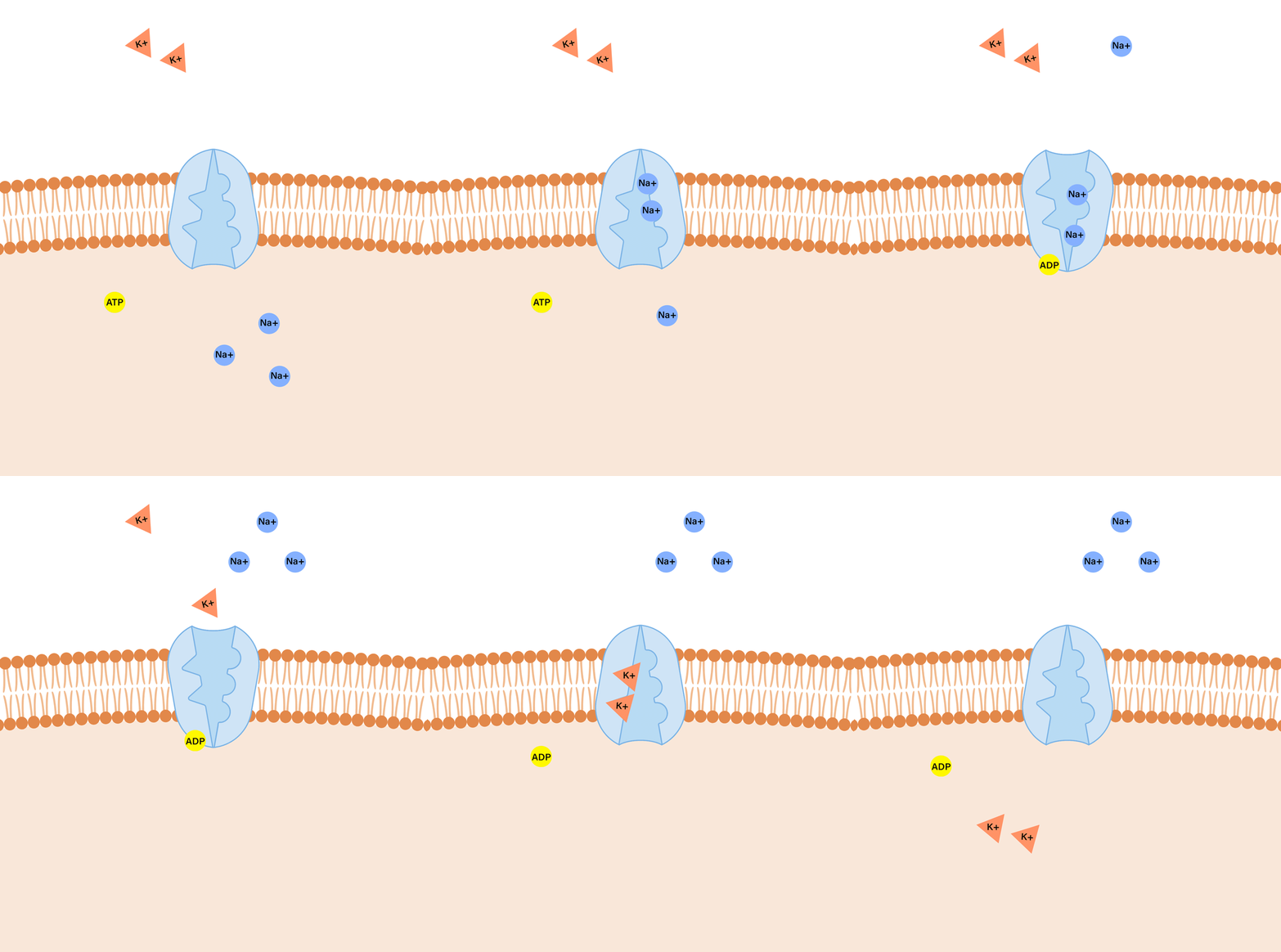
The diagram below depicts THREE examples of cell transport. Label each of the THREE examples below.
Move ONE correct answer to each box. Not all answer choices will be used.
As a result of passive transport, the concentration of many types of molecules…
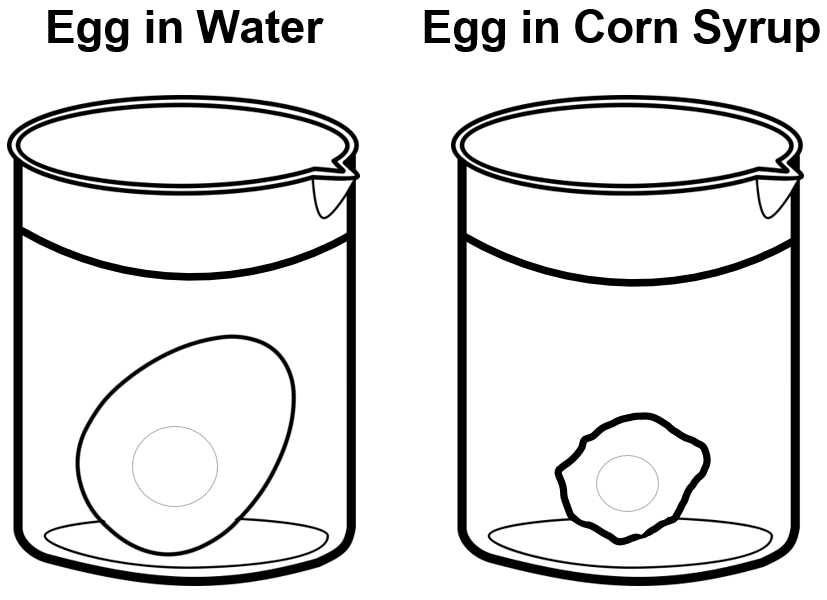
Students used vinegar in order to dissolve away the shells of eggs and used the eggs as a model of human red blood cells. The students observed the changes in the eggs when they were placed in different solutions.
Complete the statement to explain why the egg in corn syrup got smaller.
The water concentration inside of the egg was the water concentration in the corn syrup, therefore the water molecules the egg.
Complete the statement to explain why the egg in corn syrup got smaller.
The solution is and the cell is .
A type of cellular transport is shown below.
Which description best identifies this type of cellular transport?
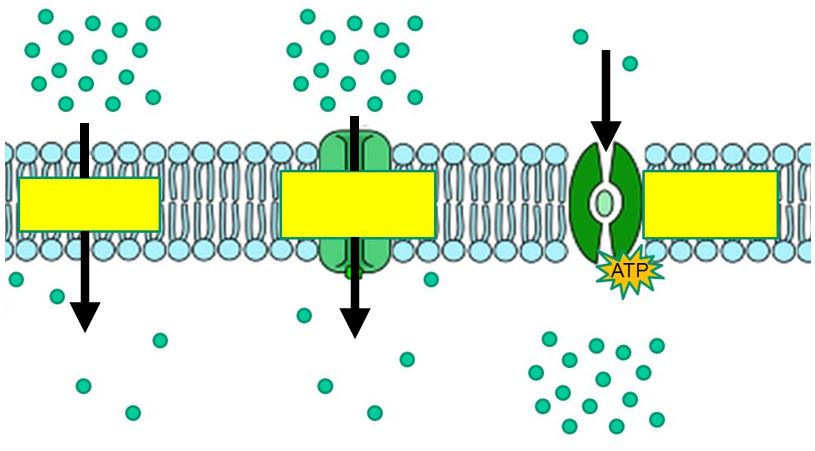
The diagram below shows cellular activity across a cell membrane.
Which two processes does this diagram model?
Determine which characteristic applies to each type of cell transport.
Select the correct answer in each row.
Molecules move from HIGH to LOW concentration | Energy is Needed | |
|---|---|---|
Osmosis | ||
Facilitated Diffusion | ||
Protein Pump | ||
Endo/Exocytosis |
In animal intestinal cells, the calcium-ion pump moves calcium ions against a concentration gradient across the cell membrane.
What type of transport is used, AND why is this type of transport necessary?
Read the question carefully. Then enter your answers in the box provided.
![]()
In order to send electrical signals throughout the body, the cell membrane must use energy to send sodium ions (Na+) from a low concentration inside the cell to a high concentration outside the cell.
This is an example of which method of transport?
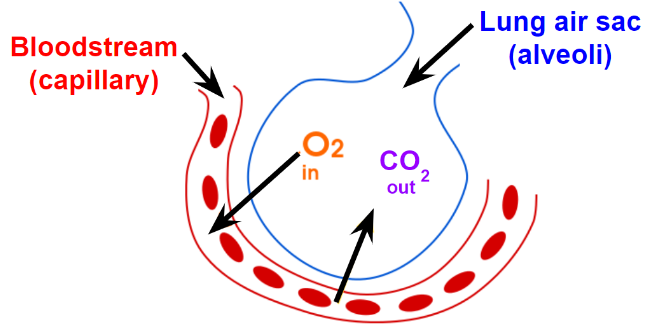
The lungs exchange gas with our blood to maintain homeostasis. When we breathe in, there is a high concentration of oxygen in our lungs and a low concentration of oxygen in our blood.
This movement of oxygen (O2) molecules from a high to low concentration is an example of what type of cell transport?
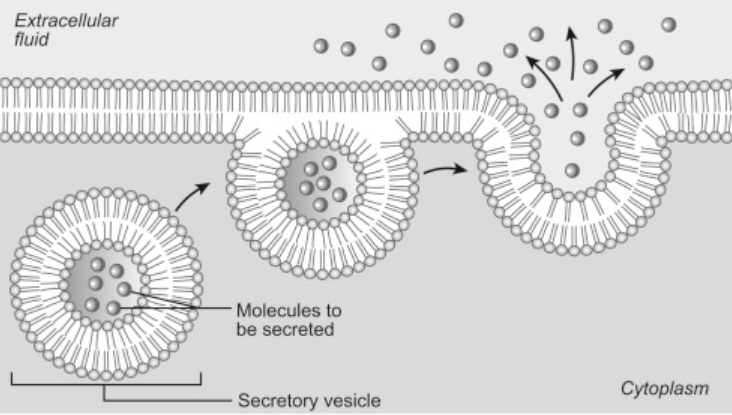
After an animal cell breaks down food for energy, it is left with waste. Waste can become toxic to the cell and is held in storage bubbles, known as vacuoles. When a storage bubble is full, the cell will send the bubble to the cell membrane, where the bubble fuses with the cell membrane so that the waste can exit the cell.
What type of cell transport is taking place?