The Ecological Significance of TSD
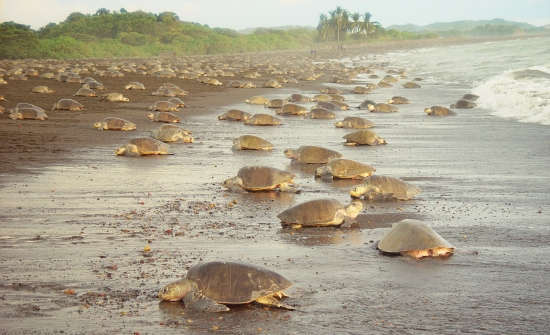
Climate change, which can alter nest temperatures, could potentially shift the ratio of turtle populations, impacting their survival and reproduction. For instance, if climate change leads to warmer temperatures, it could result in a surplus of females, which could disrupt the population's balance and hinder reproduction.
What are the potential ecological implications of climate change on turtle populations?
In humans and many other animals, sex is determined genetically at fertilization. A female's egg cell carries an X chromosome while the male's sperm cell can either carry an X or a Y chromosome.
A female embryo is a result of an X chromosome from a female gamete and an X chromosome from a male gamete.
A male embryo is a result of an X chromosome from a female sex cell and a Y chromosome from a male sex cell.
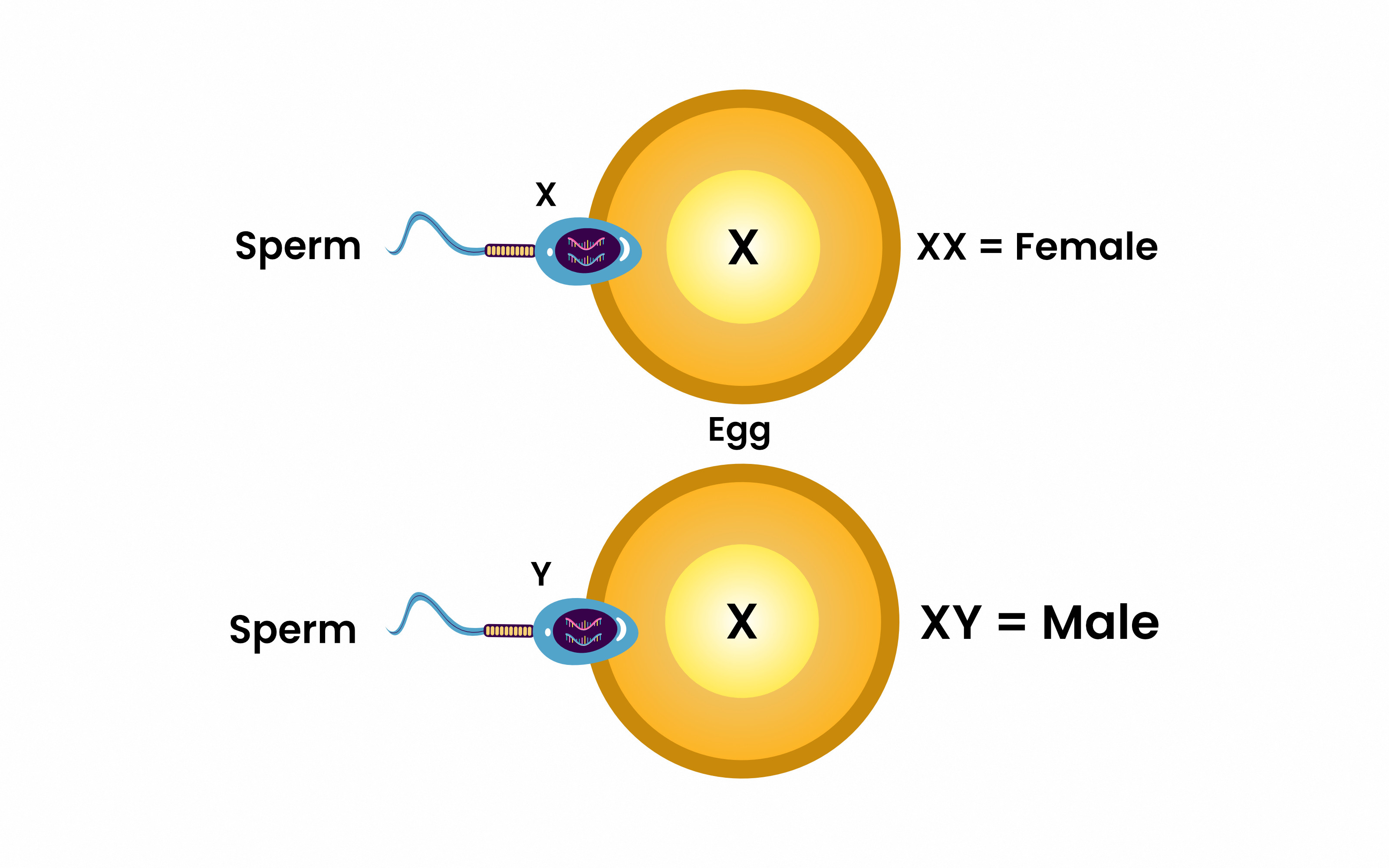
The female gamete is a while a male gamete is a .
What type of chromosomes can each cell have?
Y chromosome
X chromosome
Egg cell (gamete)
Sperm cell (gamete)
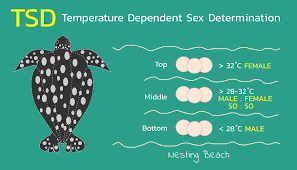
However turtles rely on a process called Temperature-Dependent Sex Determination (TSD). This means that the temperature during the incubation period of the embryo will determine the sex of the offspring.
How does TSD work?
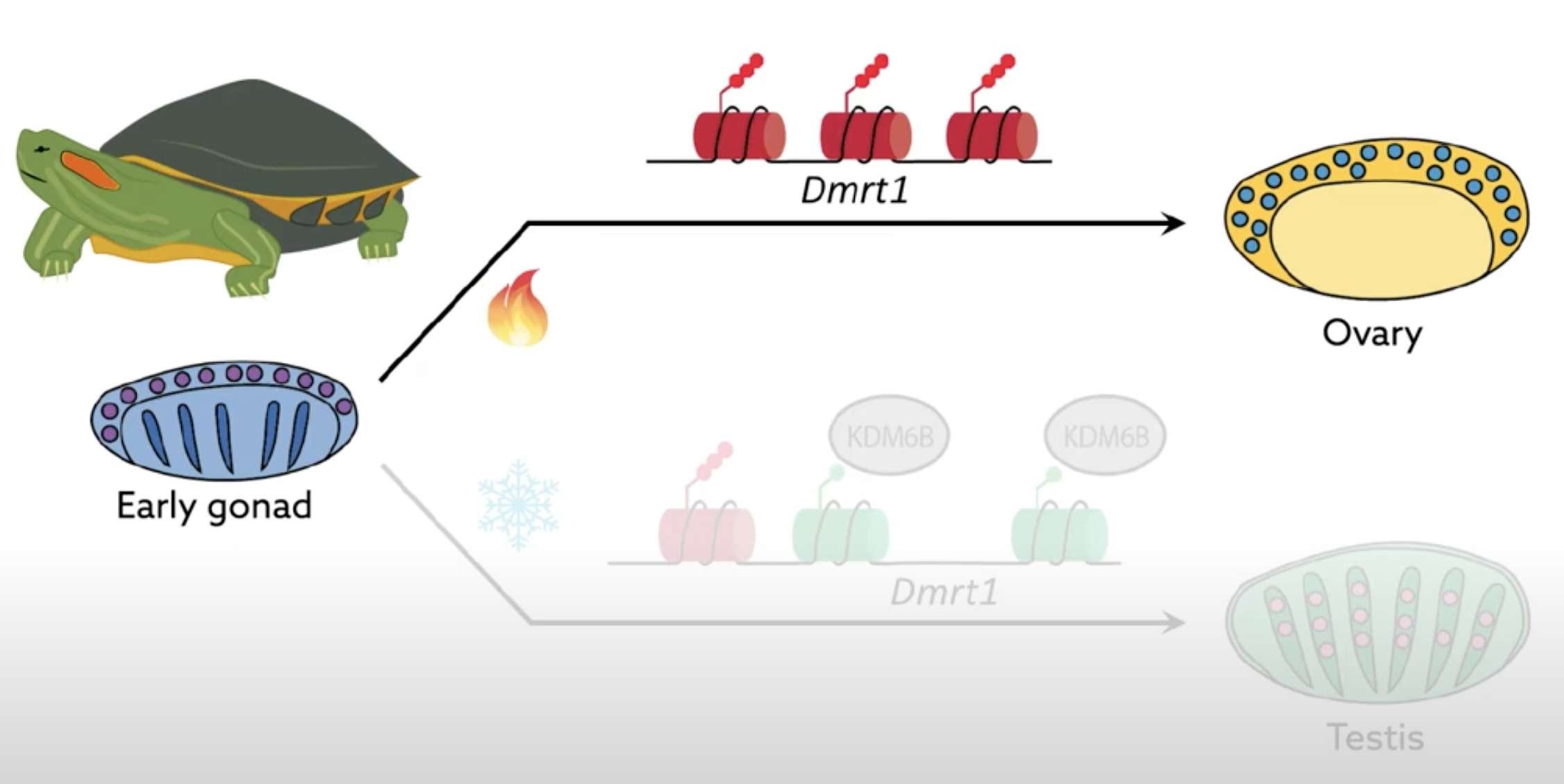
Genes are sections of DNA that provide the instructions for building proteins. Temperature influences gene expression like a switch, turning ON or OFF specific genes that control the development of female or male characteristics. The specific gene responsible for sex determination is called, Dmrt1.
are sections of DNA that provide instructions to build
What is gene expression?
Gene expression is a regulated process that is impacted by internal and external factors. For example temperature is an external factor that can activate (switch ON) or deactivate (switch OFF) genes that are then expressed through protein synthesis.
Gene expression is process.
is an external factor that can (switch OFF) or can (switch ON) genes.
An early gonad is that will either become an ovary or a testis.
How is sex determined in humans?
Match the following:
| Draggable item | arrow_right_alt | Corresponding Item |
|---|---|---|
Male embryo | arrow_right_alt | XX chromosome |
Female embryo | arrow_right_alt | XY chromosome |
How is gender determined in turtles?
What is TSD?
How does temperature influence sex determination in TSD turtles?
What impacts gene expression?
Warm Temperatures (33 degrees Celsius)
In turtles warmer temperatures will cause the gonad (a reproductive organ) to become an ovary resulting in a female.
This happens when elevated temperatures cause KDM6B (a switch) to be absent. This means that the switch is OFF and NO expression of Dmrt1 will occur.
As a result genes responsible for female development will be expressed and genes for male development will be deactivated.
Cooler Temperatures (26 degrees Celsius)
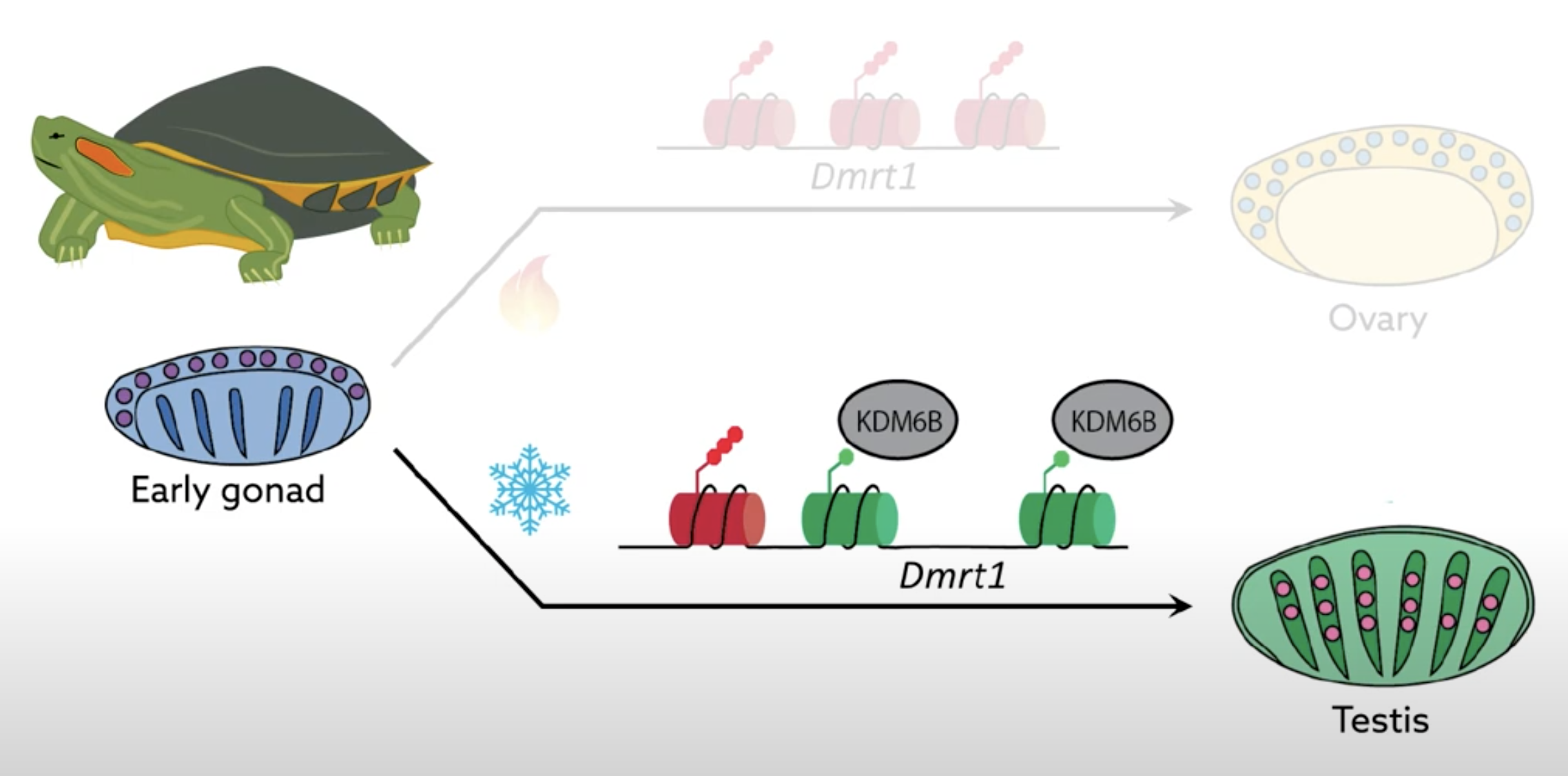
In turtles cooler temperatures will cause the gonad to become a testis resulting in a male. This happens when lower temperatures cause KDM6B (a switch) to be present. This means that the switch is ON and expression of Dmrt1 will occur.
As a result genes responsible for male development will be expressed and genes for female development will be deactivated.
The Ecological Significance of TSD
Climate change, which can alter nest temperatures, could potentially shift the ratio of turtle populations, impacting their survival and reproduction. For instance, if climate change leads to warmer temperatures, it could result in a surplus of females, which could disrupt the population's balance and hinder reproduction.
Match the following
| Draggable item | arrow_right_alt | Corresponding Item |
|---|---|---|
Cooler temperature | arrow_right_alt | female turtle |
Warm temperatures | arrow_right_alt | male turtle |
In the absence of the switch is and no expression of will occur.
No expression of Dmrt1 will result in gene expressions and genes will be .
In the presence of the switch is and expression of will occur.
Expression of Dmrt1 will result in gene expressions and genes will be .