Survival of the Fittest:
What was the question we were investigating in this lab?
Which type of bird was most fit to survive?
Based on question #2 above:
What made that bird able to survive?
What could they do that the others could not?
Which population would be best able to reproduce?
(In order to reproduce you must be able to survive)
When examining the finches, many scientists observe how changes to the environment/access to food affects phenotypic distribution within the population. This means they are looking to see how the frequency of physical traits changes over time.
Complete the sentences below based on data from our lab:
The frequency of round beaks over time because .
The frequency of sharp beaks over time because.
Which graph best represents the phenotypic distribution of beak shape if we were to run our lab for 10 generations?
(In your own words, what do you think this means? Write 2 to 3 sentences)
In terms of evolution, what makes an organism "fit"?
(Select all that apply)
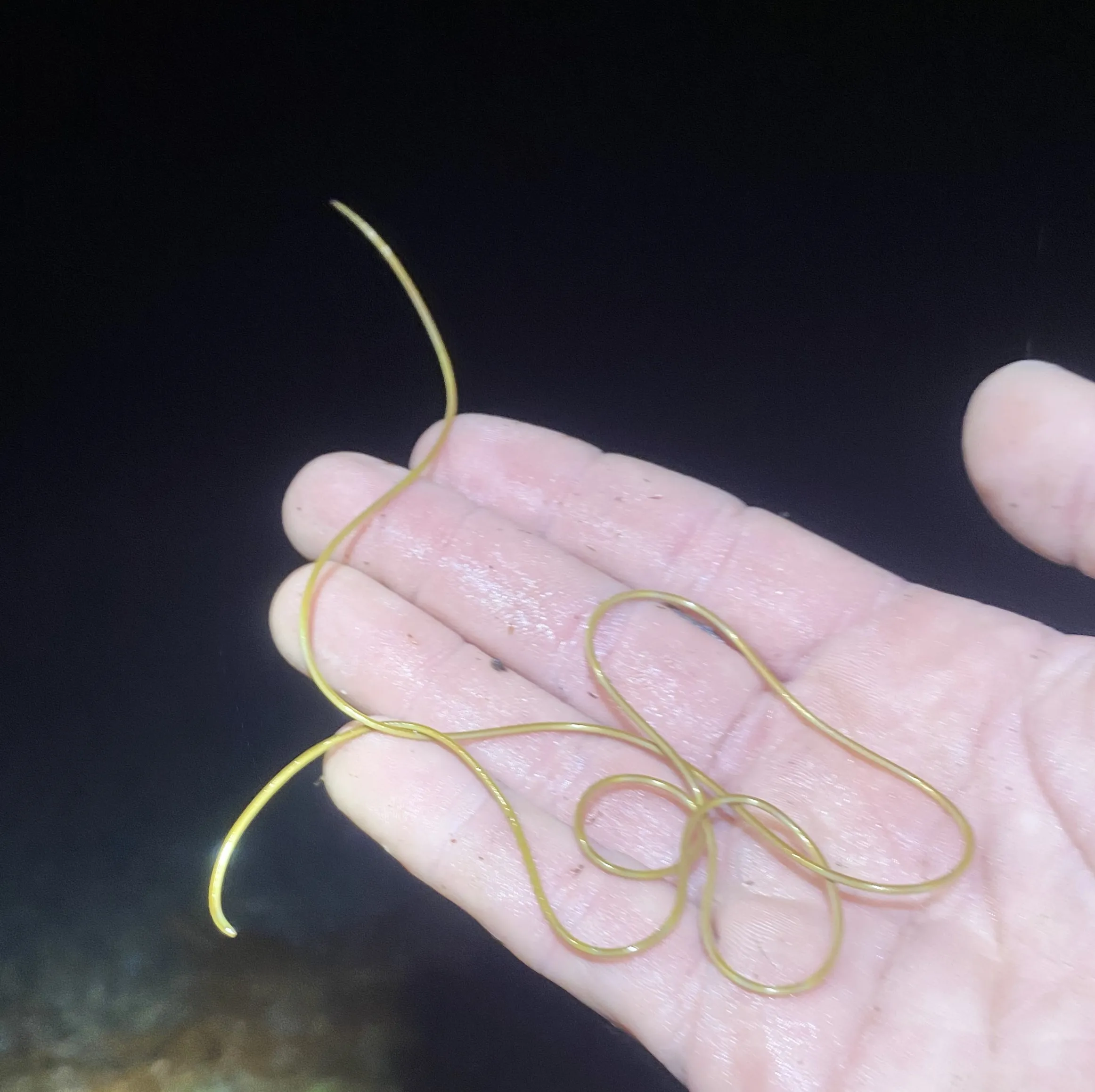
In the Amazon rainforest, many birds rely on long, stringy worms (like spaghetti) for food. Which bird would have the highest fitness?
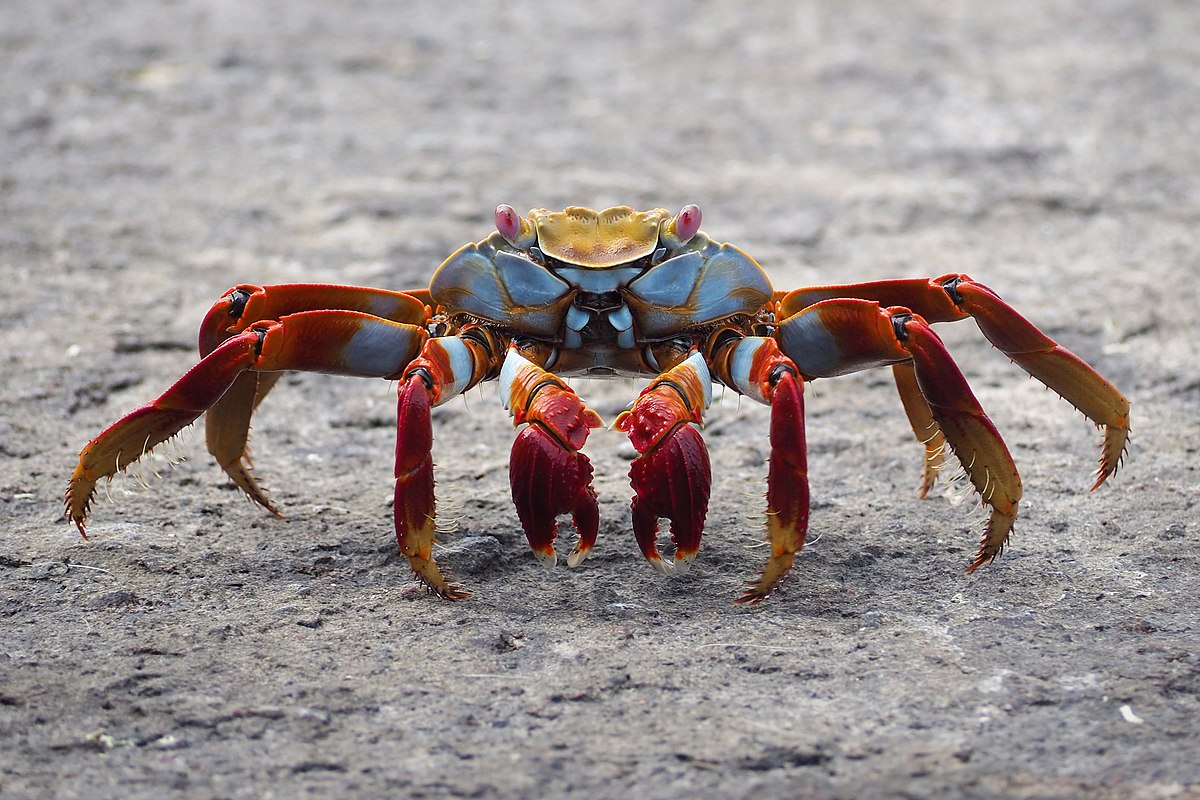
On the Galapagos Islands, many birds rely on crabs with a thick outer shell for food. Their beaks have to crack and cut the shells in order to eat the crab meat inside. Which bird would have the highest fitness?
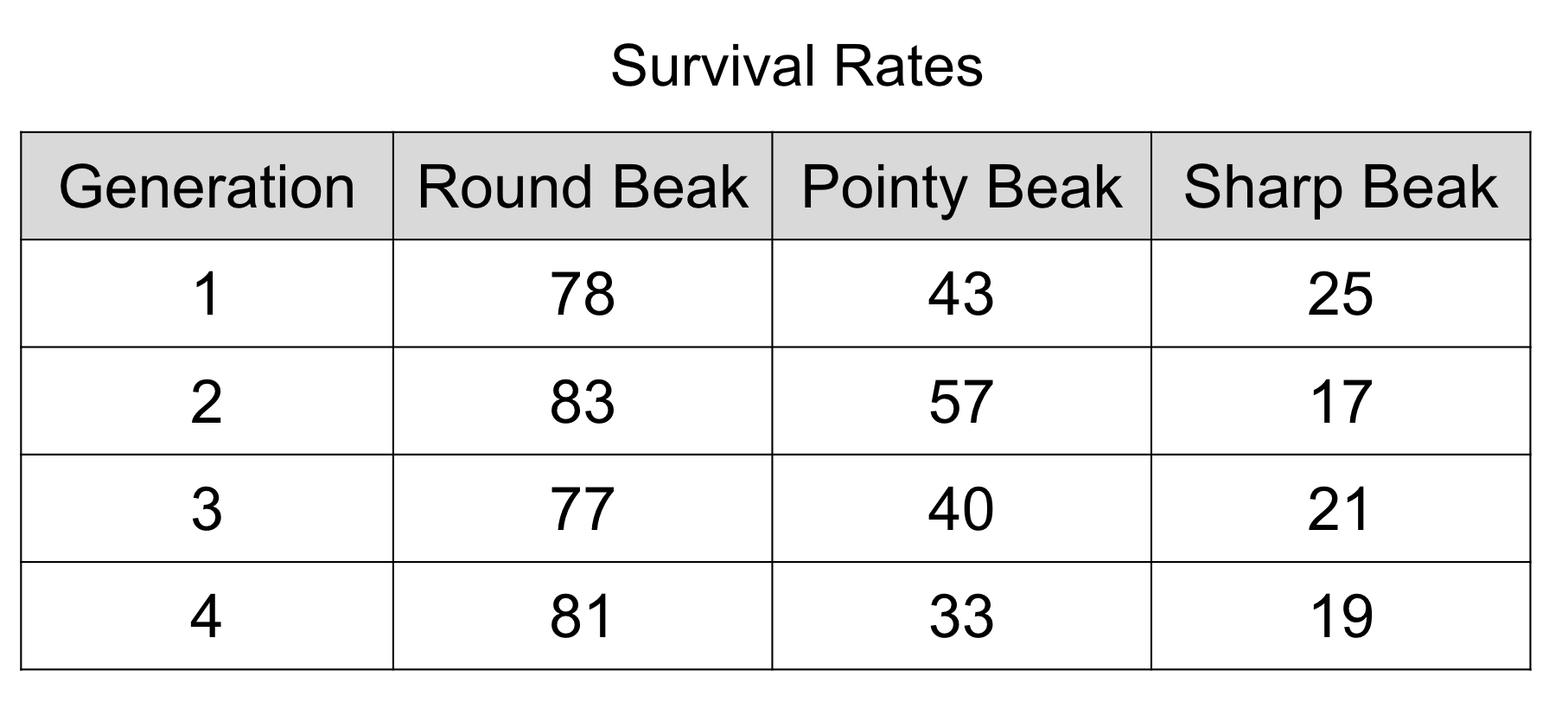
The data table above shows the survival rates of three populations of finches over four generations. Which beak has the highest fitness, and how do you know?
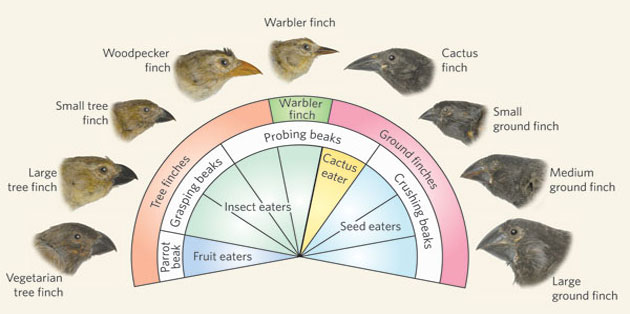
The diagram below shows different beak shapes of finches. In the ancestral species of finches, beak size was much larger than in three living species of finches.
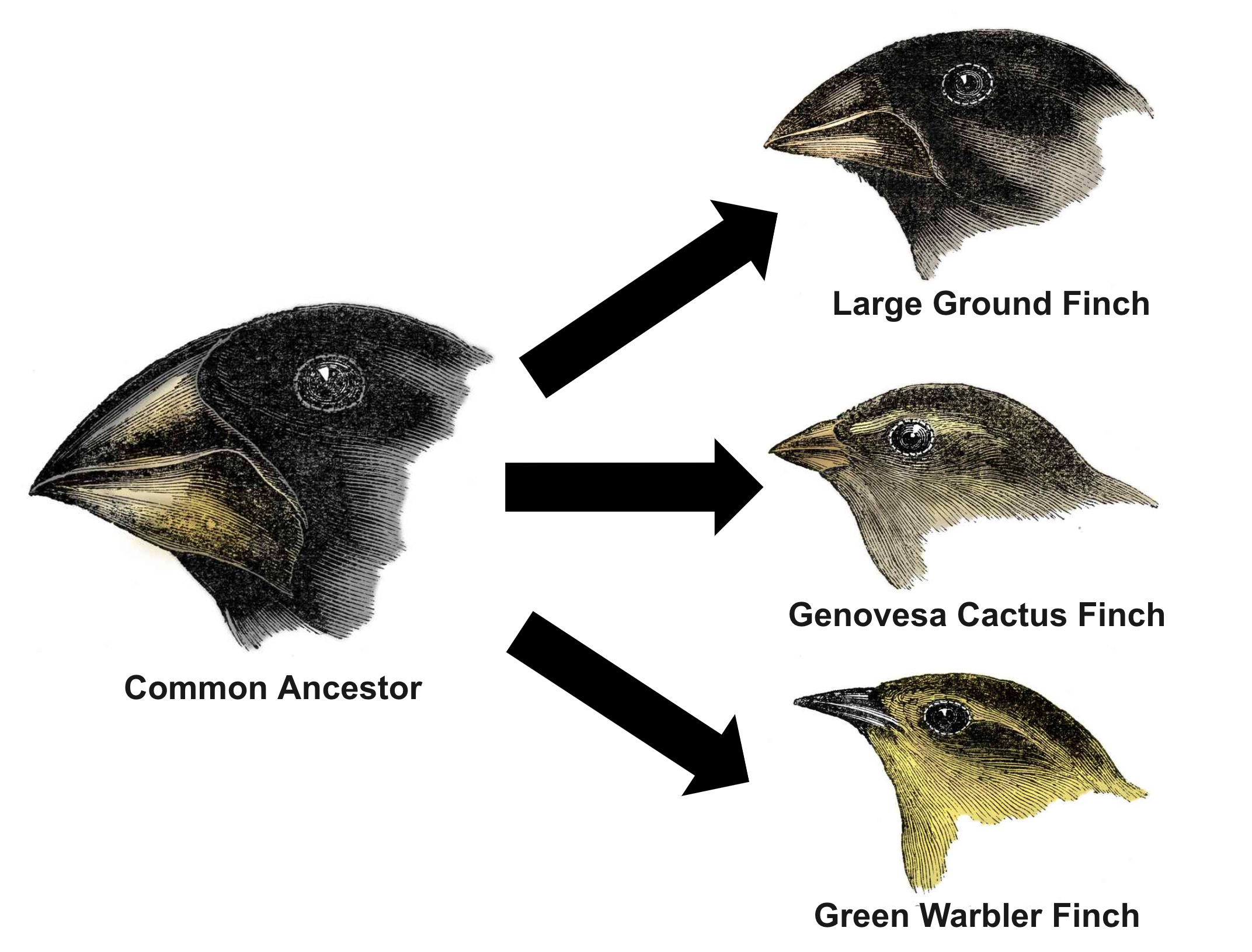
Which question would BEST help determine whether the change beak size and shape of these finches was influenced by natural selection?
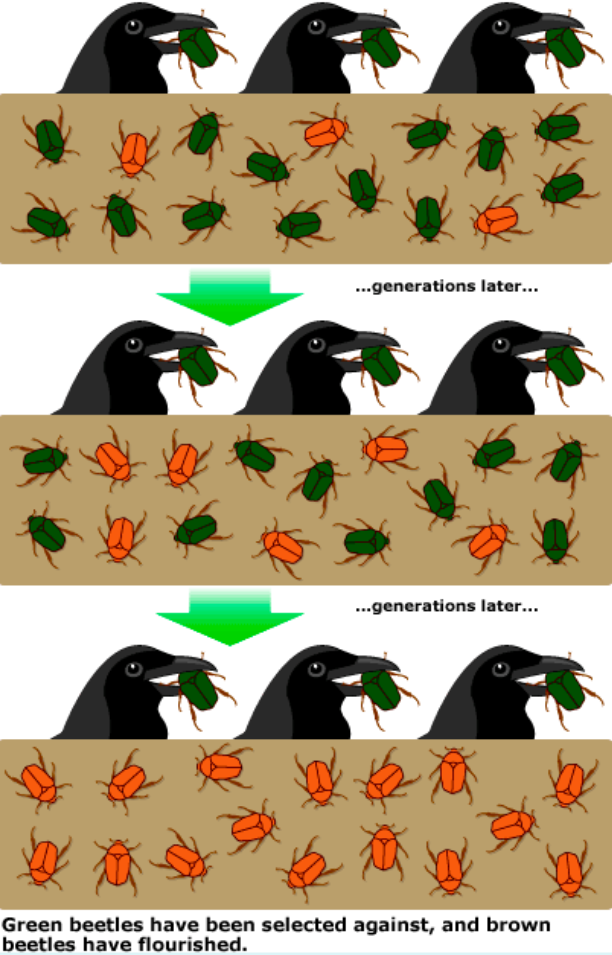
Let's interpret the diagram!
Over time, the phenotypic distribution of green beetles .
The phenotypic distribution of orange beetles .
Based on the diagram, the are the most fit because .
Claire is thinking about today's lab and says round beaks (like the spoon) will always have the highest fitness.
Do you agree or disagree with Claire? Why or why not?
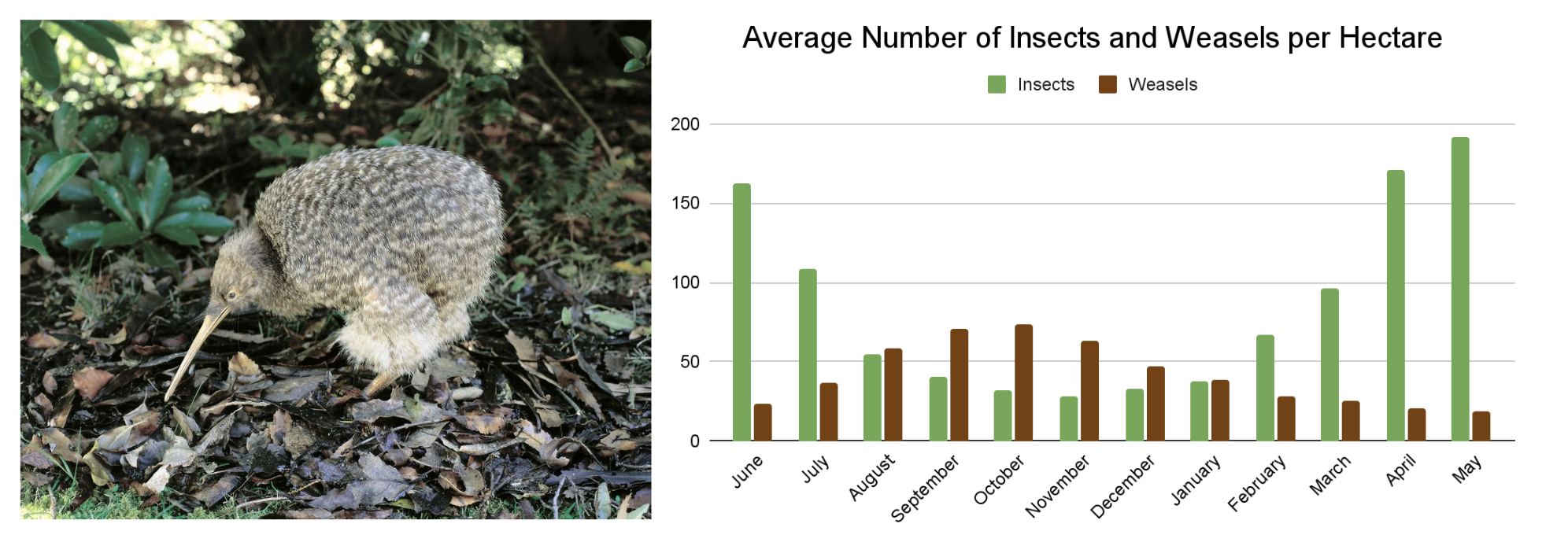
Based on the graph, when are insects the highest?
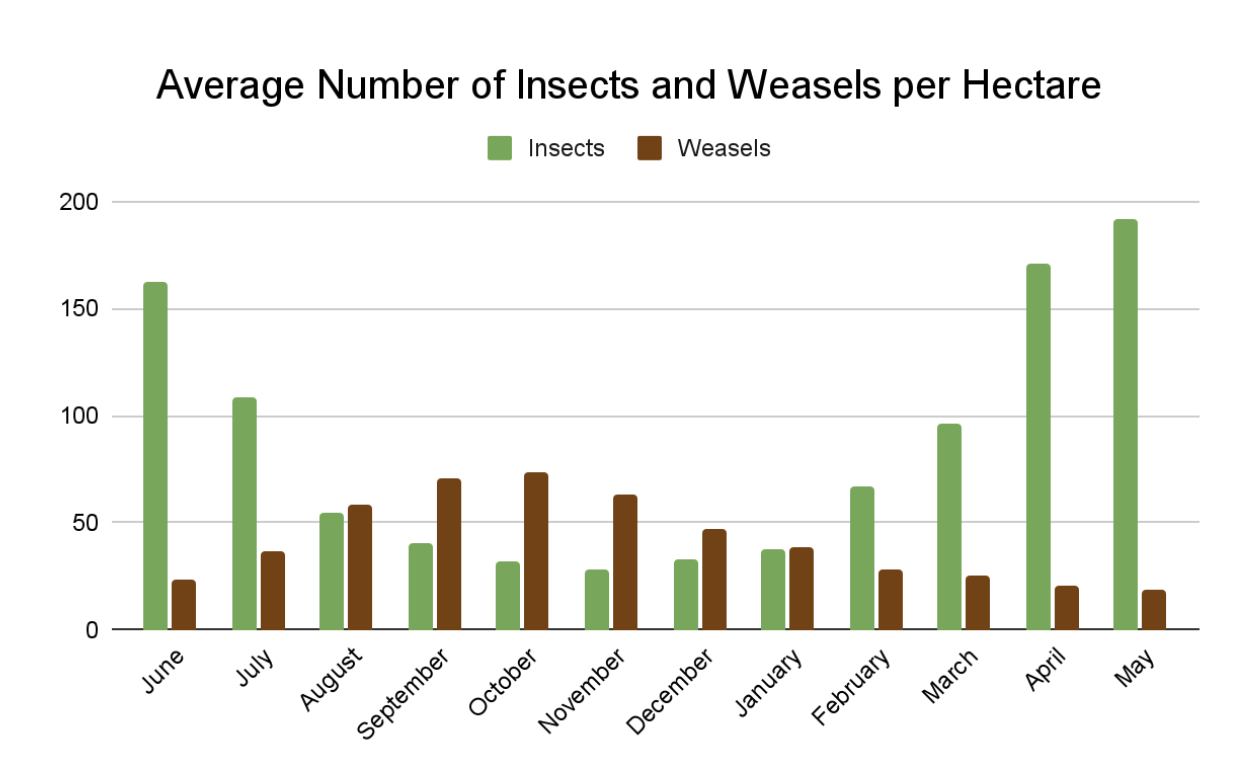
Based on the data, what month(s) would baby Kiwis have the best chance of survival and why?
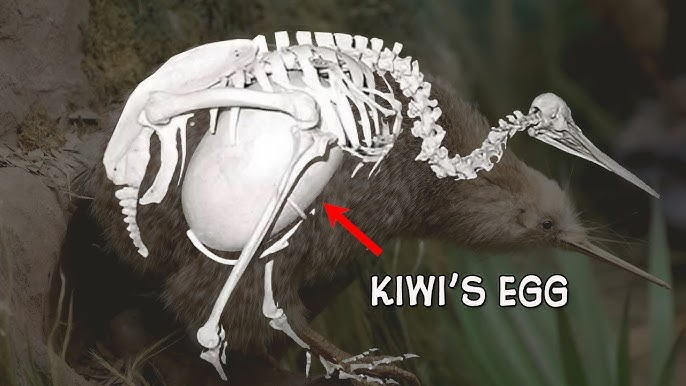
The Great Spotted Kiwi can only lay a single egg once per year.
While the female Kiwi reproductive cycle lasts from July through February, breeding season (when Kiwis lay their egg) is typically in January. The male kiwi then incubates the egg until it hatches in April or May.

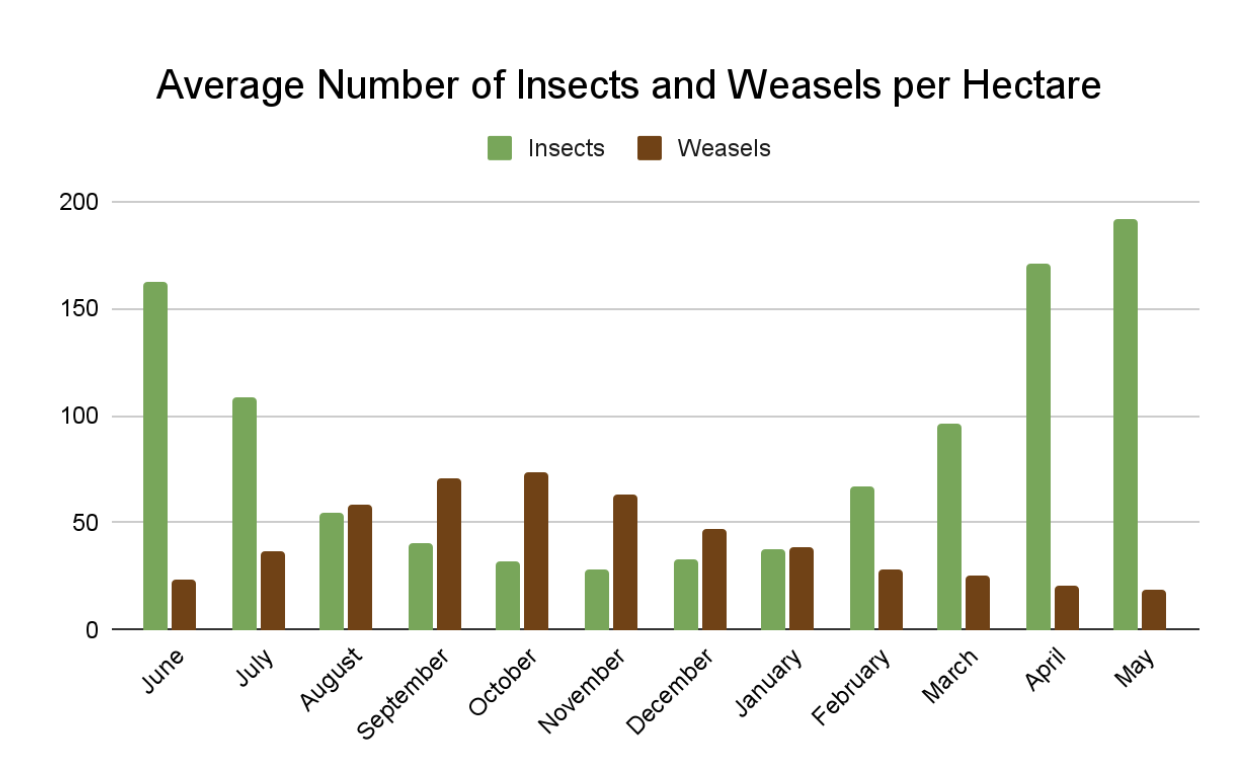
Based on the information in the charts, what is the most likely explanation for the Great Spotted Kiwi to lay their eggs in January instead of any other month?
Differences within a population, such as having a Green allele or an Orange allele, is known as variation.
Based on the scenario, how is variation within a population beneficial to survival?
On a particular island, many trees leave seeds in the soil. What type of beak is most fit for eating these seeds?
On a different island, there is not enough rainfall for seeds to grow. However, the environment is perfect for cacti to grow.
What type of beak is most fit for this environment?
Assume there is a population of Finches where some have grasping beaks and others have probing beaks.
If all of the insects in an area die off from disease, will all of the birds die off too?
Based on your answer to the previous question, which of the following statements is TRUE?
Based on the graph, when are weasels the highest?
If Kiwi eggs take 3 months to hatch, when should the mother kiwi lay her egg to ensure her baby hatches at the appropriate time?