1
What elements make up carbohydrates?
What elements make up carbohydrates?
1
1
1
What is the monomer of carbohydrates?
Which structure is a polymer of carbohydrates?
What common suffix often indicates a sugar?
Which type of molecule serves as the building block for carbohydrates?
| Draggable item | arrow_right_alt | Corresponding Item |
|---|---|---|
Polysaccharide | arrow_right_alt | two monosaccharides |
Disaccharide | arrow_right_alt | one simple sugar |
Monosaccharide | arrow_right_alt | several monosaccharides joined together |
Which term describes a long chain of monosaccharides that are bonded together?
What is a common example of a monosaccharide?
Carbohydrates can form polymers, which are long chains made up of smaller units called monomers. The three main types of carbohydrate polymers are starch, glycogen, and cellulose. Here’s a comparison and a key difference between them:
1. Starch:
Monomer: Glucose Structure: Starch is a polymer made of long chains of glucose molecules, typically in the form of two types: amylose (unbranched) and amylopectin (branched). Function: It is used by plants as a way to store energy. Location: Found mainly in plant cells, like in potatoes, rice, and corn.
2. Glycogen:
Monomer: Glucose Structure: Glycogen is also a polymer of glucose, but it is more highly branched than starch. Function: It is the main storage form of energy in animals, especially in liver and muscle cells. Location: Found in animal cells, such as in liver and muscle tissue.
3. Cellulose:
Monomer: Glucose (but in a different form than starch and glycogen) Structure: Cellulose is made of glucose units, but the glucose molecules are linked together differently, forming straight, rigid chains that can bond together to form strong fibers. Function: It provides structural support in plant cell walls. Location: Found in the cell walls of plants.
What is the main function of starch in plants?
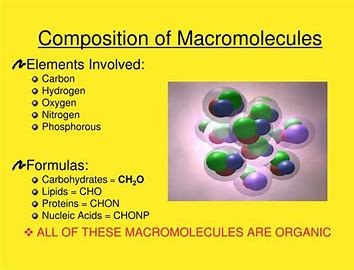
What elements make up carbohydrates?
| Draggable item | arrow_right_alt | Corresponding Item |
|---|---|---|
Nucleic Acids | arrow_right_alt | CHO |
Carbohydrates and Lipids | arrow_right_alt | CHON |
Proteins | arrow_right_alt | CHONP |
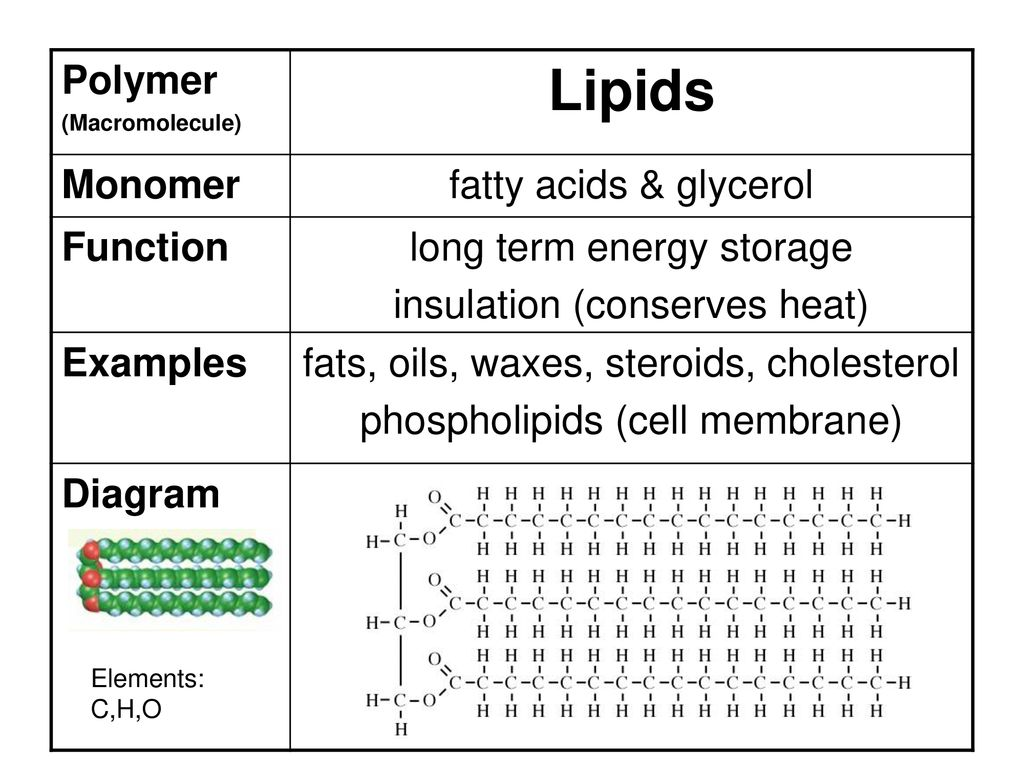
What is the monomer of lipids?
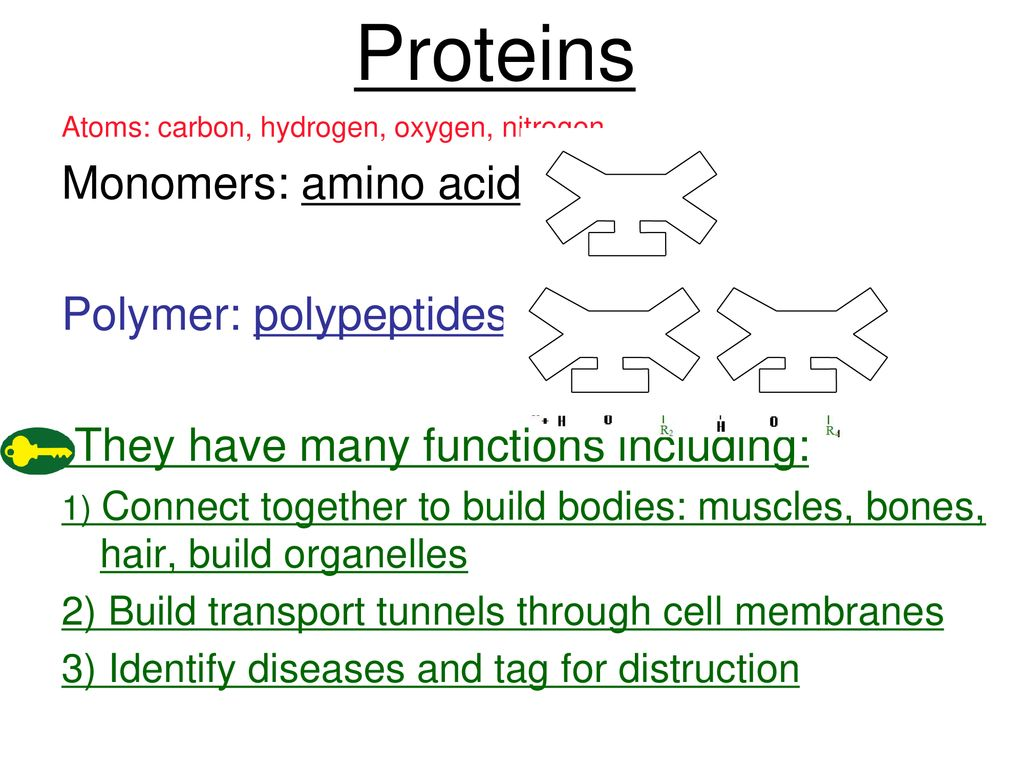
What is the monomer of proteins?
Why is cellulose important for plants, and how does its structure contribute to this role?
What elements make up lipids?
What elements make up proteins?
What elements make up nucleic acids?
What is the polymer of lipids?
What is the polymer of proteins?