Twa kɔ nsɛm atitiriw so
Log in
Sign up for FREE
arrow_back
Laabri

Unit 6 remediation (10.24.25)

star
star
star
star
star
Last updated about 3 hours ago
36 Nsɛmmisa
1
2
3
Ɛhia
1
Ɛhia
1
Ɛhia
2
Bio.3.1.2
Ɛhia
4
1
Bio.3.1.2
1
Ɛhia
1
Ɛhia
1
Ɛhia
2
Ɛhia
1
1
1
1
1
1
Question 1
01:05
keyboard_arrow_down
Ɛhia
1
Question 2
01:17
keyboard_arrow_down
Ɛhia
1
Question 3
02:36
keyboard_arrow_down
Ɛhia
1
Question 4
00:59
keyboard_arrow_down
Ɛhia
1
Question 5
07:09
keyboard_arrow_down
Ɛhia
1
Asemmisa {{asɛmmisaAhyɛnsode}}
5.

Semi-conserve means

Question 6
00:43
keyboard_arrow_down
Ɛhia
1
Question 7
03:57
keyboard_arrow_down
Ɛhia
1
Question 8
05:11
keyboard_arrow_down
Ɛhia
1
Question 9
00:32
keyboard_arrow_down
Ɛhia
1
Question 10
02:55
keyboard_arrow_down
Ɛhia
1
Question 11
03:33
keyboard_arrow_down
Ɛhia
1
Question 12
04:28
keyboard_arrow_down
Ɛhia
1
Questions 13 & 14
05:35
keyboard_arrow_down
Ɛhia
1
Ɛhia
1
Question 15
07:08
keyboard_arrow_down
Ɛhia
1
Question 16
04:54
keyboard_arrow_down
Ɛhia
1
Asemmisa {{asɛmmisaAhyɛnsode}}
16.

AAG would match to

Question 17
02:58
keyboard_arrow_down
Ɛhia
1
Question 18
06:56
keyboard_arrow_down
Ɛhia
1
Asemmisa {{asɛmmisaAhyɛnsode}}
19.

Deoxyribonucleic acid is the building block of all living organisms. Which of the following statements is correct?

Asemmisa {{asɛmmisaAhyɛnsode}}
20.

Match the type of RNA on the left with the correct function on the right.

  • tRNA

  • rRNA

  • mRNA

  • carries instructions for protein synthesis from the nucleus to the cytoplasm

  • carries amino acids to the ribosome and mtches them to the coded mRNA message

  • forms an important part of the ribosome

Asemmisa {{asɛmmisaAhyɛnsode}}
21.

Move the characteristics on the left to the correct category on the right.

  • found in cells

  • contains deoxyribose

  • contains ribose

  • contains the base Uracil (U)

  • contains the base Thymine (T)

  • made up of nucleotides

  • type of nucleic acid

  • moves into the cytoplasm

  • found only in the nucleus

  • BOTH DNA & RNA

  • RNA only

  • DNA only

Asemmisa {{asɛmmisaAhyɛnsode}}
22.

The template DNA strand: ATC CGC

Complimentary DNA strand:

The transcribed mRNA strand:

Asemmisa {{asɛmmisaAhyɛnsode}}
23.

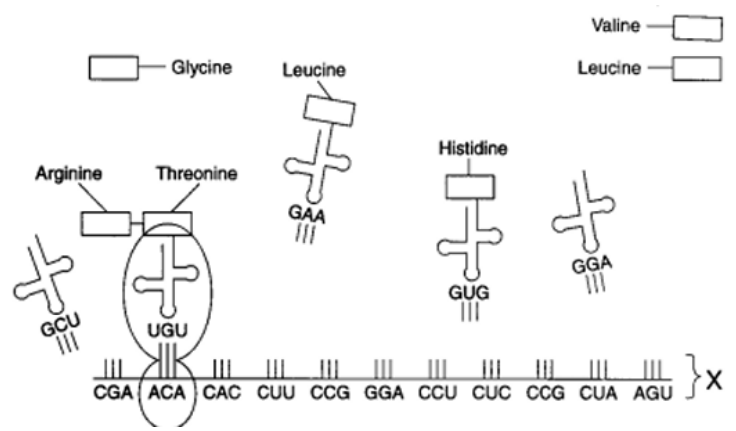
Use the image below to answer the following questions:

Draggable itemarrow_right_altCorresponding Item

Part B

arrow_right_alt

mRNA

Part C

arrow_right_alt

Peptide bond

Part D

arrow_right_alt

tRNA

Part A

arrow_right_alt

Ribosome

Asemmisa {{asɛmmisaAhyɛnsode}}
24.

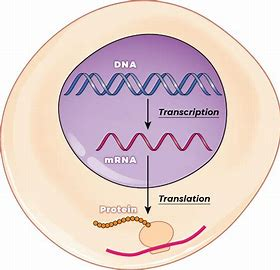
Put the steps of protein synthesis in the order that they occur in.

  1. mRNA connects to the ribosome and translation begins.

  2. RNA nucleotides match their bases to the bases on one of the DNA strands and a strand of mRNA is made.

  3. The Stop codon is reached and mRNA leaves the nucleus with the copied strand of DNA.

  4. Codons on the mRNA pair up with anti-codons on the tRNA, which brings in the correct amino acids.

  5. Transcription begins when DNA is "unzipped" beginning at a start codon.

  6. Amino acids are added together with peptide bonds to make a protein. Translation is complete.

Asemmisa {{asɛmmisaAhyɛnsode}}
25.

Indicate whether each statement describes transcription or translation:

Transcription

Translation

Peptide bonds form between amino acids

mRNA is synthesized

A ribosome (protein) is assembled

tRNA anticodons bond with mRNA codons

Asemmisa {{asɛmmisaAhyɛnsode}}
26.

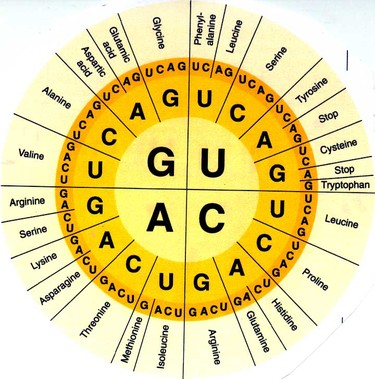
DNA Template strand: TAC CAG CGC ATT

Amino Acids:

Mmuae Afoforo a Wobɛpaw:
Met
Val
Stop
Ala
Asemmisa {{asɛmmisaAhyɛnsode}}
27.

If a DNA molecule consists of 29% Guanine, how much cytosine will it contain?

Asemmisa {{asɛmmisaAhyɛnsode}}
28.

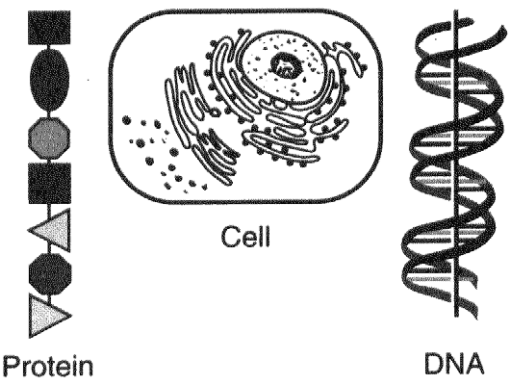
What is the relationship between the structures depicted in the diagram above?

Asemmisa {{asɛmmisaAhyɛnsode}}
29.

A strand of DNA nucleotides contains the following base sequence:

TAC AAT TAG AGG TAA

After a mutation occurs, the strand contains this mutated base sequence:

TAC ATT AGA GGT AA

Which of the following terms best describes the mutation?

Asemmisa {{asɛmmisaAhyɛnsode}}
30.

Match type of DNA mutation on the left with the definition on the right.

  • substitution

  • insertion

  • deletion

  • a base is removed

  • one base is switched for another

  • a base is added

Asemmisa {{asɛmmisaAhyɛnsode}}
31.

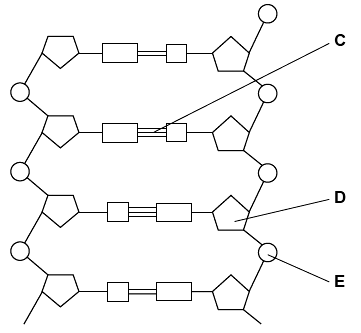
Letter C represents

Letter D represents

Letter E represents

Mmuae Afoforo a Wobɛpaw:
covalent bond
phosphate
hydrogen bond
deoxyribose
ribose
Asemmisa {{asɛmmisaAhyɛnsode}}
32.

What is the primary function of transfer RNA (tRNA) in protein synthesis?

Asemmisa {{asɛmmisaAhyɛnsode}}
33.

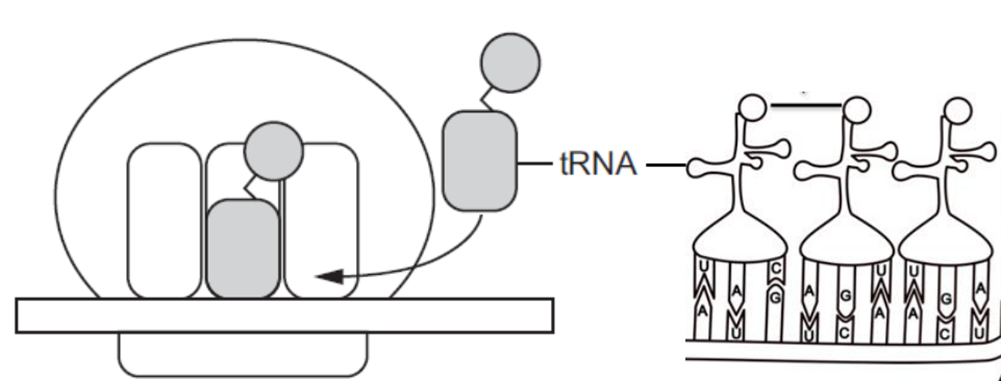
The picture above demonstrates the process of adding amino acids in the order that the , also known as a ribosome.

Asemmisa {{asɛmmisaAhyɛnsode}}
34.

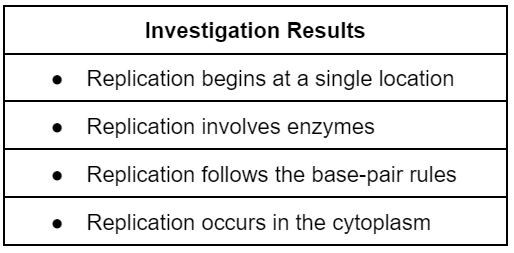
The investigation results show the process of . The location of this process occurs in the . This information indicates that the cell does not have a nucleus and would therefore be classified as a .

Mmuae Afoforo a Wobɛpaw:
DNA replication
prokaryote
cytoplasm
transcription
eukaryote
Asemmisa {{asɛmmisaAhyɛnsode}}
35.

Select the true statements.

Asemmisa {{asɛmmisaAhyɛnsode}}
36.

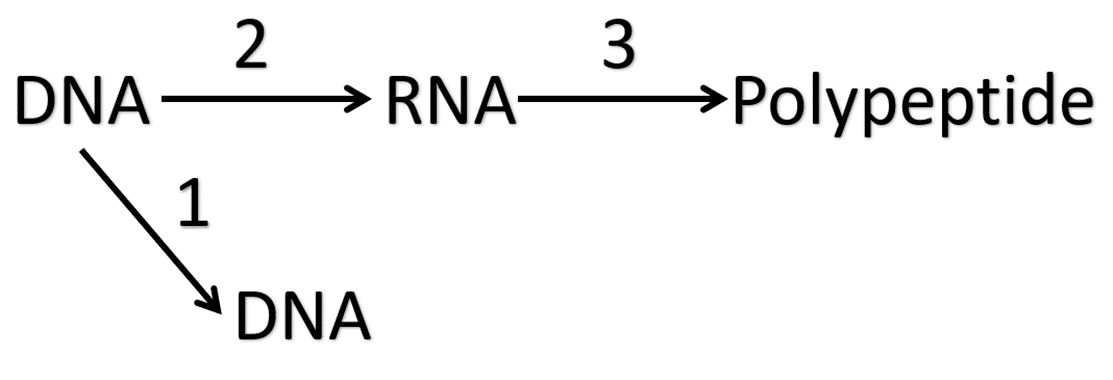
1: 2: 3:

Which occurs in the nucleus?

Which occurs in the cytoplasm?

Mmuae Afoforo a Wobɛpaw:
Translation
1 & 2
2 & 3
Transcription
1
2
Replication
3

You must earn at least 70% on the remediation in order to receive the retake assignment. You will have two attempts. You must complete the remediation before leaving class today (Monday, October 27, 2025). The retake opportunity is a performance-based assessment, which will allow you to earn up to a 70% for your unit test.

Asemmisa {{asɛmmisaAhyɛnsode}}
1.

DNA is made up of repeating units (monomers) called

Asemmisa {{asɛmmisaAhyɛnsode}}
2.

The sugar found in DNA is called

Asemmisa {{asɛmmisaAhyɛnsode}}
3.

The outer parts of the double helix make up the ___________ - _____________ backbone.

Asemmisa {{asɛmmisaAhyɛnsode}}
4.

Which enzyme is responsible for "gluing" the Okazaki fragments together on the lagging strand?

Asemmisa {{asɛmmisaAhyɛnsode}}
6.

Transcription is the first step to synthesis (create) _________ in your body.

Asemmisa {{asɛmmisaAhyɛnsode}}
7.

Which of the following is NOT a possible base-pair combination?

Asemmisa {{asɛmmisaAhyɛnsode}}
8.

The process of transcription uses the genetic code (DNA) to make:

Asemmisa {{asɛmmisaAhyɛnsode}}
9.

Genes code for:

Asemmisa {{asɛmmisaAhyɛnsode}}
10.

Where does transcription occur?

Asemmisa {{asɛmmisaAhyɛnsode}}
11.

Which of the RNA structures are used for transcription?

Asemmisa {{asɛmmisaAhyɛnsode}}
12.

Proteins are made up of ____________

Asemmisa {{asɛmmisaAhyɛnsode}}
13.

The codon is on the _________

Asemmisa {{asɛmmisaAhyɛnsode}}
14.

The anticodon is on the _________

Asemmisa {{asɛmmisaAhyɛnsode}}
15.

More than one codon combination can code for the same amino acid.

Asemmisa {{asɛmmisaAhyɛnsode}}
17.

Bases are read in groups of _____

Asemmisa {{asɛmmisaAhyɛnsode}}
18.

What happens during nondisjunction in cell division?