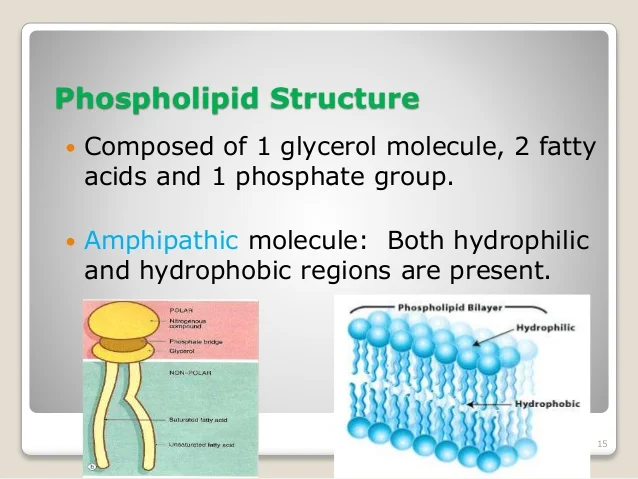
Phospholipids create bi-layers because of their __________________ properties
Phospholipids create bi-layers because of their __________________ properties
vocab review: https://quizlet.com/_bjtyx9?x=1qqt&i=281tcf
| Draggable item | arrow_right_alt | Corresponding Item |
|---|---|---|
nonpolar | arrow_right_alt | -water |
-philic | arrow_right_alt | -to fear/hate |
polar | arrow_right_alt | -to love |
-hydro | arrow_right_alt | the head; loves water |
-phobic | arrow_right_alt | the tails; hates water |
Phospholipids create bi-layers because of their __________________ properties
The cell membrane of a red blood cell will allow water, oxygen, carbon dioxide, and glucose to pass through. Because other substances are blocked from entering, this membrane is called
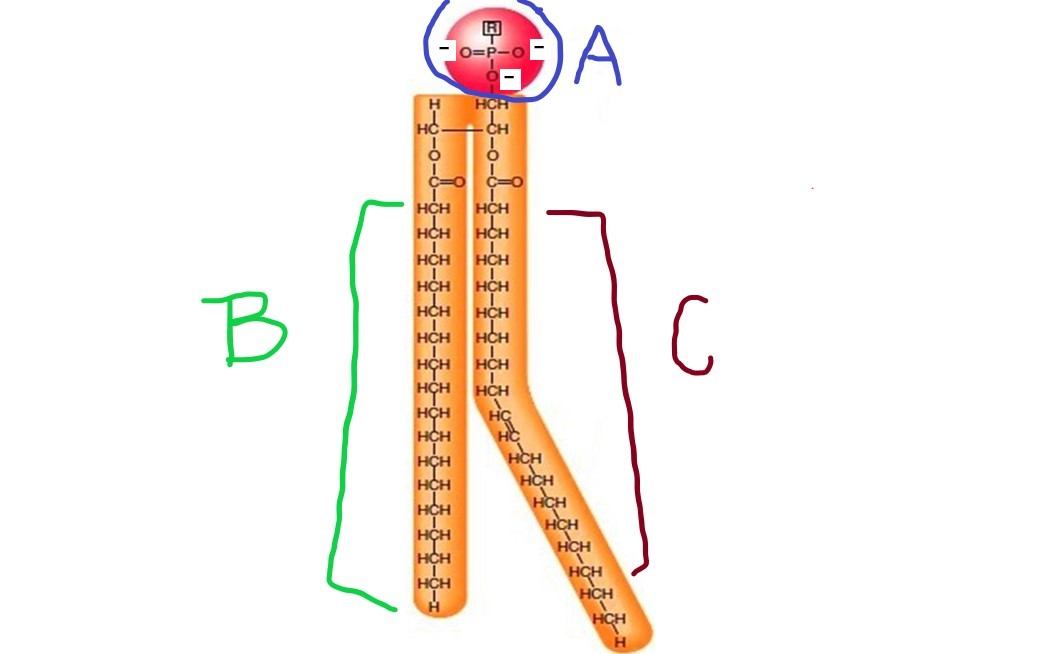
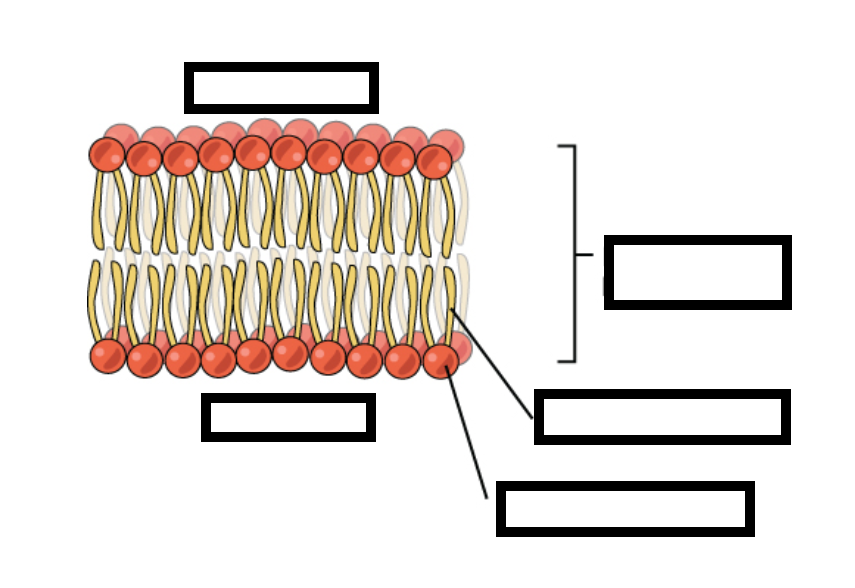
Below is a diagram of a phospholipid. This macromolecule (lipid) composes all of the membranes in a cell. To understand the general structure of a phospholipid bilayer you must first be able to identify the location of the phosphate in this molecule as well as the fatty acid or lipid area.
A
B & C
polar
non-polar
hydrophilic
hydrophobic
Phosphate group
fatty acid or lipid
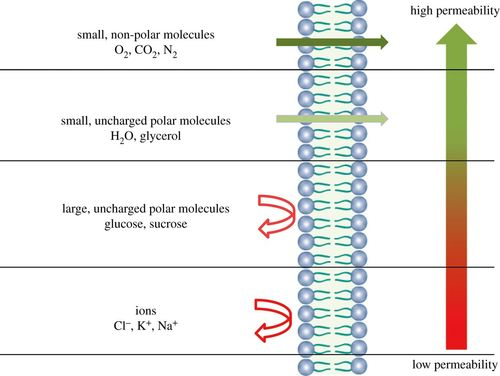
According to the diagram above, what types of substances can easily pass through the fatty inside of a phospholipid bilayer?
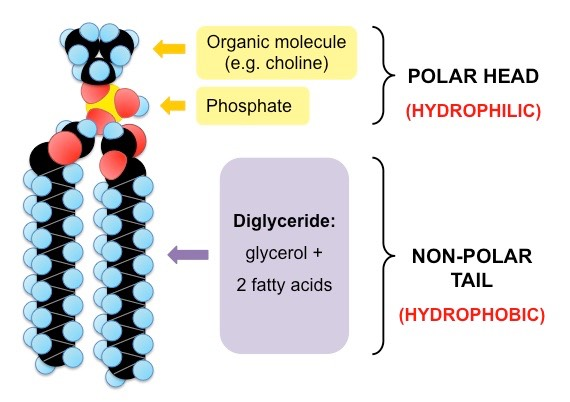
Explain in your own words the diagram of a phospholipid in as much detail as possible. Be sure to include:
1pt) an explanation of the structure (what is the head and what is the tail made of?)
1pt) an explanation of the polarity (which part is polar? nonpolar?)
***Remember I have to manually grade this so you will not see your score for this question until I have time to grade it.
Make the correct function to each item below.
| Draggable item | arrow_right_alt | Corresponding Item |
|---|---|---|
carbohydrates (or sugar groups) | arrow_right_alt | transports some substances through the membrane |
integral proteins | arrow_right_alt | makes sure the phospholipids don't move too far apart or get too close together |
cholesterols | arrow_right_alt | important for cell recognition so your immune system cells can identify foreign cells like bacteria |
Put the words below into the appropriate classification.
Use this cards to study/: https://quizlet.com/_bjtvjv?x=1qqt&i=281tcf
Note: They are also color-coded :)
Microtubule
Microfilament
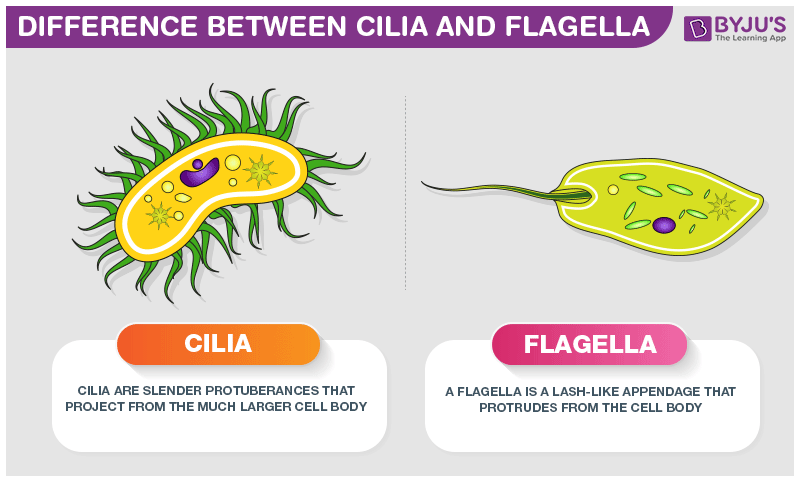
Cilia
flagella
Cytoskeleton
Cell Structure
Cell Motility
Which plasma membrane component (molecule) can be either found on its surface or embedded in the membrane structure?
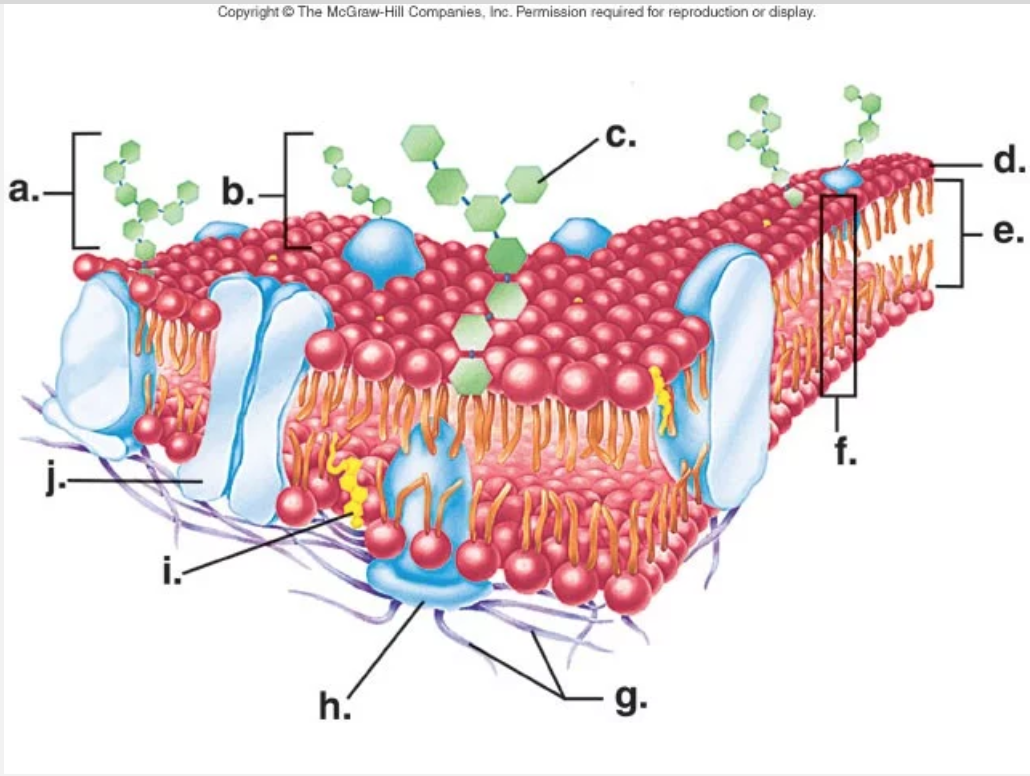
What function does the protein labeled J most likely have?
What is most likely the function of protein h?