Twa kɔ nsɛm atitiriw so
Log in
Sign up for FREE
arrow_back
Laabri

1.6 Cell Transport Lesson

star
star
star
star
star
Last updated about 3 hours ago
26 Nsɛmmisa
Hyɛ no nsow a efi ɔkyerɛwfo no hɔ:

This video below is optional - if you are still struggling with Cell Transport I highly recommend it :)

This video below is optional - if you are still struggling with Cell Transport I highly recommend it :)

1
1
Ɛhia
1
Ɛhia
1
1
2
1
Ɛhia
1
Ɛhia
1
Ɛhia
1
Ɛhia
1
Ɛhia
1

The questions below are the practice test questions from the Mastery Check. Therefore, there is NOT a mastery check for this lesson. You will have 3 attempts on this Lesson and I will input your highest grade.

Ɛhia
1
Ɛhia
1
Ɛhia
1
Ɛhia
1
Ɛhia
1
Ɛhia
1
Ɛhia
1
Ɛhia
1
Ɛhia
1
1
SB1d
Question 1
02:01
Question 2
02:31
Questions 4 & 3
02:45
Asemmisa {{asɛmmisaAhyɛnsode}}
5.

Draggable itemarrow_right_altCorresponding Item

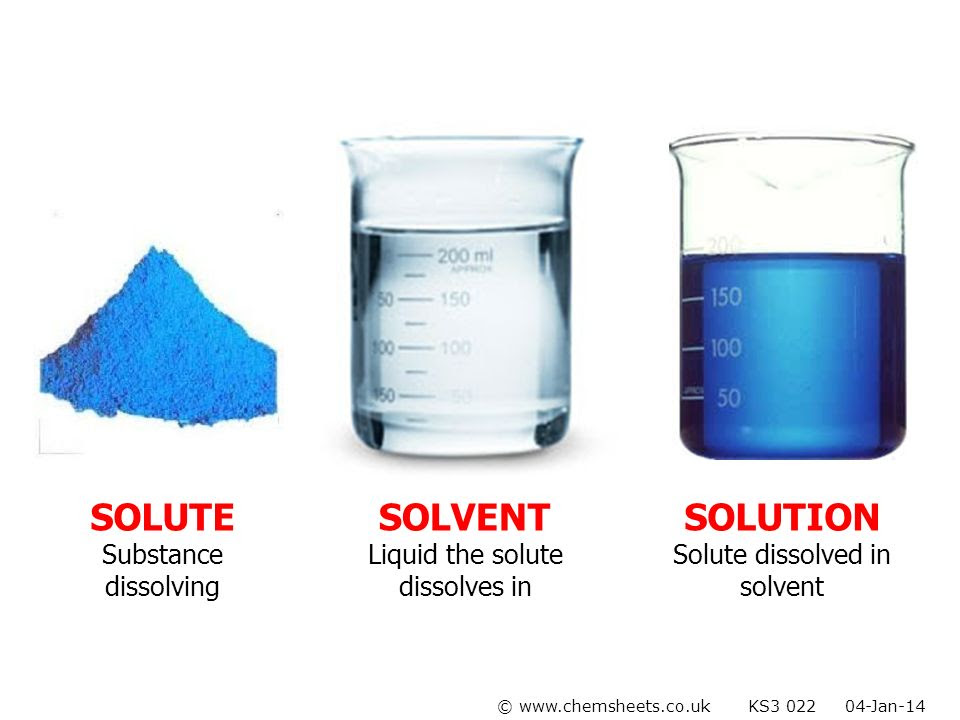
solvent

arrow_right_alt

the substance to be dissolved. (ex: sugar)

solution

arrow_right_alt

a liquid substance capable of dissolving other substances (ex. water)

solute

arrow_right_alt

a mixture that forms when one substance dissolves another. (ex. sugar water)

Asemmisa {{asɛmmisaAhyɛnsode}}
6.

Draggable itemarrow_right_altCorresponding Item

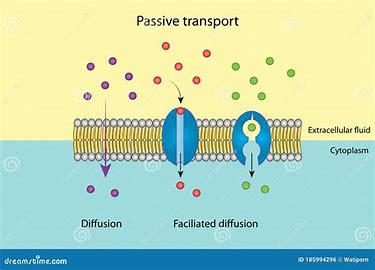
facilitated diffusion

arrow_right_alt

solutes move from an area of high to low concentration

osmosis

arrow_right_alt

the transport of substances through a cell membrane along a concentration gradient with the aid of carrier (integral) proteins.

simple diffusion

arrow_right_alt

the process by which water molecules diffuse across a cell membrane. water moves towards more solutes

GET OUT YOUR UNIT 1 PACKET TO FILL IN YOUR NOTES SHEET:

Asemmisa {{asɛmmisaAhyɛnsode}}
7.
  • osmosis

  • simple diffusion

  • endocytosis

  • exocytosis

  • facilitated diffusion

  • vesicle transport

  • Passive Transport

  • Active Transport

Asemmisa {{asɛmmisaAhyɛnsode}}
8.

Passive

Active

No energy required

Goes against the gradient (from low to high concentration)

ATP is used to power the movement of solutes

Moves down the gradient (high to low concentration)

Asemmisa {{asɛmmisaAhyɛnsode}}
9.

By regulating what goes in and out of the cell, the cell membrane helps to regulate...

Asemmisa {{asɛmmisaAhyɛnsode}}
10.

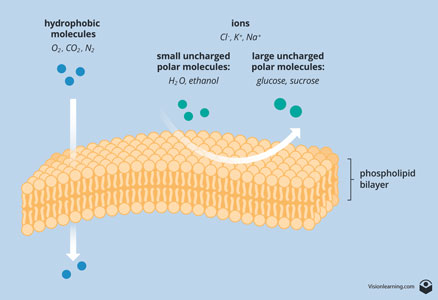
Sometimes particles need assistance crossing the phospholipid bilayer, because they are too large &_________ and need the help of a transport protein.

Asemmisa {{asɛmmisaAhyɛnsode}}
11.

ATP, also known as adenosine triphosphate, contains a large amount of energy that is released when a phosphate bond is broken. This release of energy is required in _________ transport.

Asemmisa {{asɛmmisaAhyɛnsode}}
12.

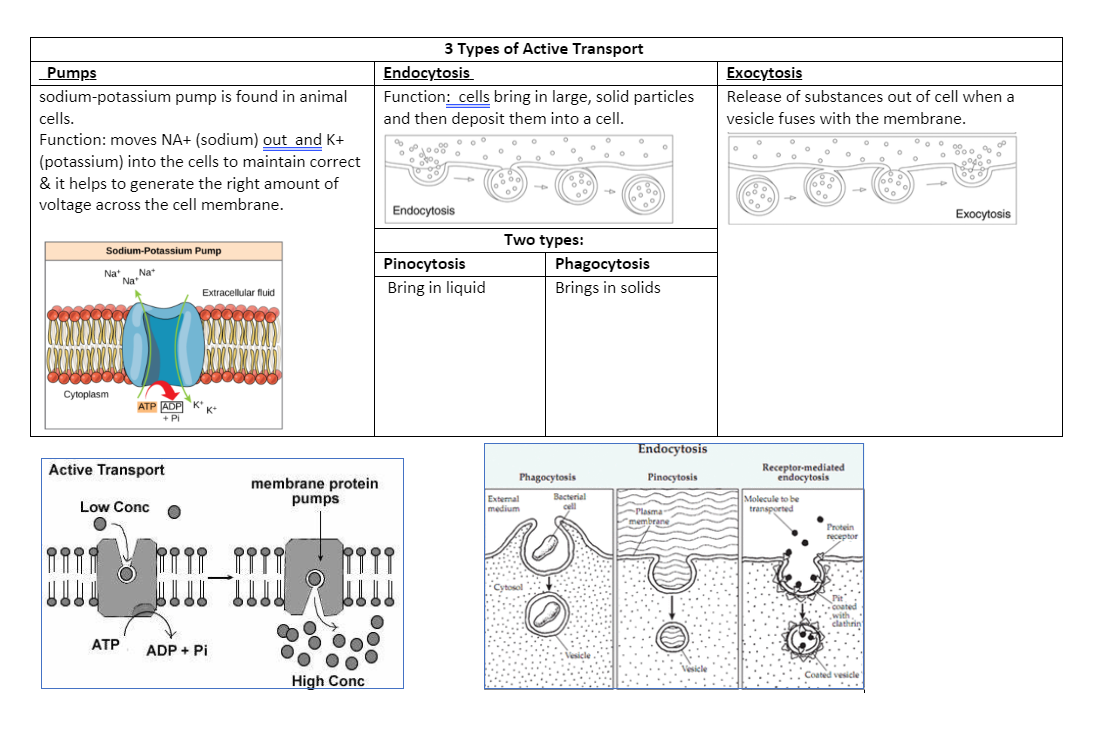
Match the following processes of Active Transport

Draggable itemarrow_right_altCorresponding Item

Protein Pumps

arrow_right_alt

the general term for removing cell waste by expelling it in vesicles

Exocytosis

arrow_right_alt

the general term for taking in bulky material into the cell.

Endocytosis

arrow_right_alt

proteins changes shape to move molecules against concentration gradient

Asemmisa {{asɛmmisaAhyɛnsode}}
13.

Match the following processes of Active Transport (endocytosis)

Draggable itemarrow_right_altCorresponding Item

phagocytosis

arrow_right_alt

Moving extracellular fluid into the cell

pinocytosis

arrow_right_alt

Moving extracellular large molecules into the cell. "cell eating solids"

Asemmisa {{asɛmmisaAhyɛnsode}}
14.
Mmuae Afoforo a Wobɛpaw:
hypertonic
isotonic
hypotonic
Asemmisa {{asɛmmisaAhyɛnsode}}
15.

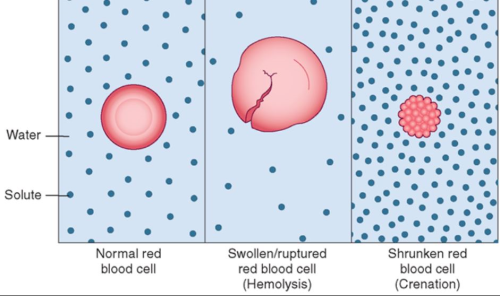
Each category has 2 characteristics. They are color coded :)

  • water leaves and enters the cell at the same rate

  • this is what cells prefer

  • shrink until it dies

  • water is moving out of the cell.

  • swell until it bursts

  • water is moving into the cell

  • isotonic

  • hypertonic

  • hypotonic

Asemmisa {{asɛmmisaAhyɛnsode}}
16.

Glucose enters a cell from high concentration to low concentration using an integral protein. This is an example of __________

Asemmisa {{asɛmmisaAhyɛnsode}}
17.

Passive transport their concentration gradient.

Cells maintain homeostasis with active transport which their concentration gradient.

Asemmisa {{asɛmmisaAhyɛnsode}}
18.

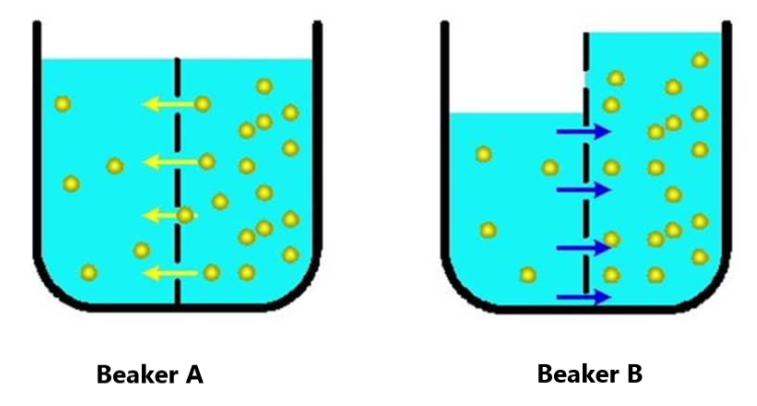
What process is occurring in each of the beakers above?

Asemmisa {{asɛmmisaAhyɛnsode}}
19.

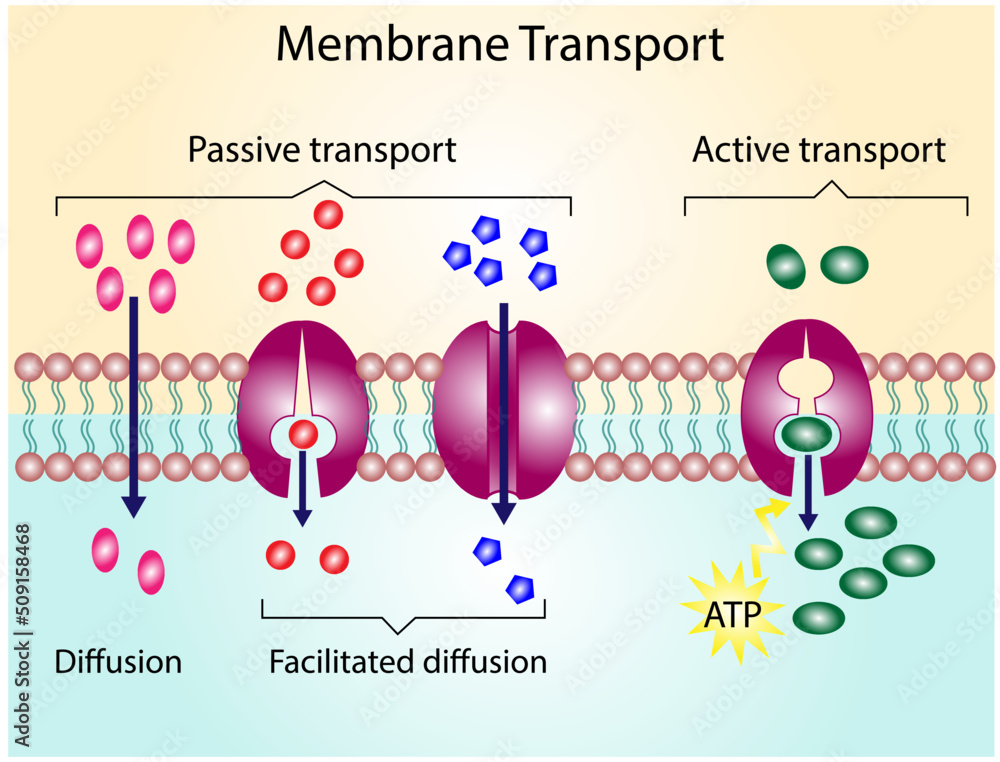
Which of the following statements correctly compares facilitated diffusion and active transport?

Asemmisa {{asɛmmisaAhyɛnsode}}
20.

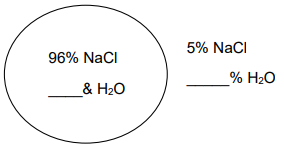
The concentration of water inside the cell would be: %

The concentration of water outside the cell would be: %

Note: type only a number in the blank

Asemmisa {{asɛmmisaAhyɛnsode}}
21.

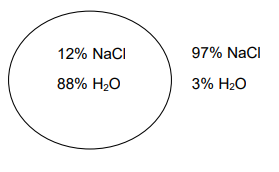
The cell will the cell.

Asemmisa {{asɛmmisaAhyɛnsode}}
22.

A red blood cell placed in distilled water will swell and burst due to the osmosis of

Asemmisa {{asɛmmisaAhyɛnsode}}
23.

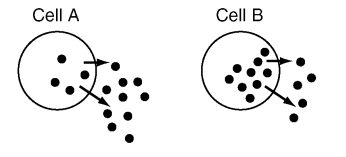
In the diagram below, the dark dots indicate small molecules. These molecules are moving out of the cells, as indicated by the arrows. The number of dots inside and outside of the two cells represents the relative concentrations of the molecules inside and outside of the cells.

ATP is being used to move the molecules out of the cell by

Asemmisa {{asɛmmisaAhyɛnsode}}
24.

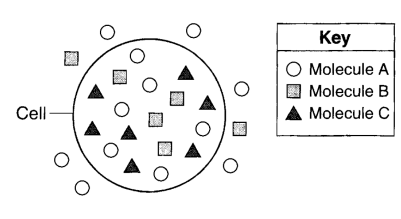
The diagram below represents a cell and several molecules. The number of molecules shown represents the relative concentration of the molecules inside and outside of the cell.

Molecule B could enter the cell as a direct result of

Asemmisa {{asɛmmisaAhyɛnsode}}
25.

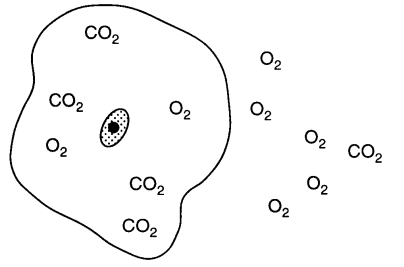
The diagram below represents a cell in water. Gas molecules can move freely across this cell membrane. Some molecules are located inside the cell and others are in the water outside the cell.

Based on the distribution of these molecules, what would most likely happen after some time due to diffusion?

Asemmisa {{asɛmmisaAhyɛnsode}}
26.

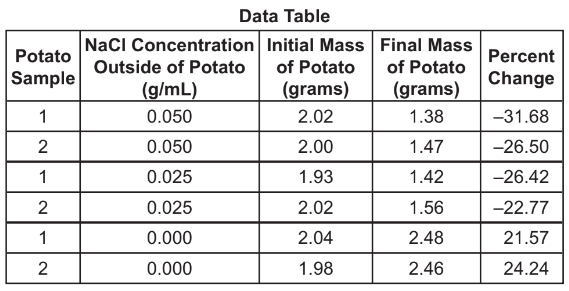
Examine the data table.

Complete statements below that support the data and explain the movement of molecules across the cell membranes.

The two potatoes in the 0.025g/mL solution of the potato cells. Therefore, the 0.025g/mL solution is a