Mmuae Afoforo a Wobɛpaw:
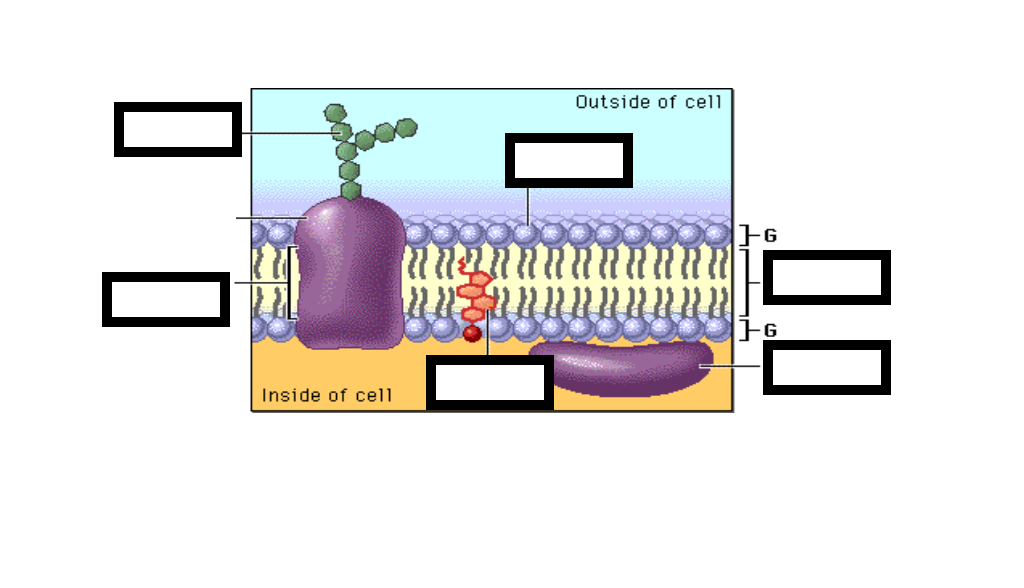
Polar Hydrophilic Head
Protein
Carbohydrate
Cholesterol
Peripheral Protein
Nonpolar Hydrophobic Tail
Because the phospholipid molecules are free to move and the membrane is made of many different parts, the plasma membrane is said to be:
Which of the following is a function of the cell membrane?
Diffusion is the movement of molecules from:
The movement of water across a selectively permeable membrane is called:
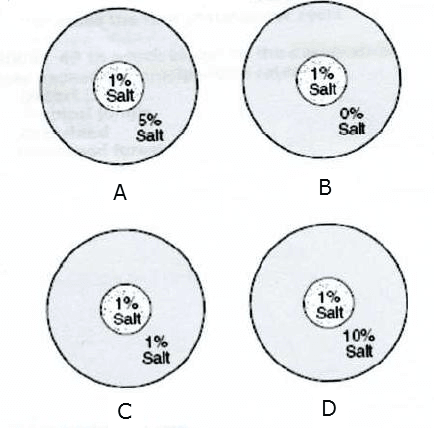
In the diagram above, which of the following represents a cell in equilibrium with the surrounding solution?
What process requires energy for particles to pass through the cell membrane?
One of the functions of proteins in a cell membrane could be:
Most of the molecules in cell membranes are:
The phospholipid bilayer describes a structure with:
If all materials were allowed to cross the cell membrane, then a cell’s contents would be the same as its surroundings. This does NOT happen because the cell membrane is:
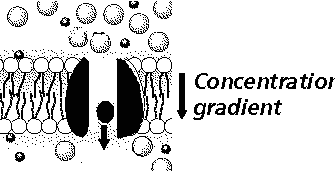
The molecule shown in the illustration above is passing through the transport protein from an area of high concentration to an area of low concentration. This process is called:
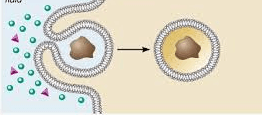
The unicellular organism pictured above is taking IN a large food particles by which process?
If hypotonic cells are placed in a highly concentrated sugar solution, water will: