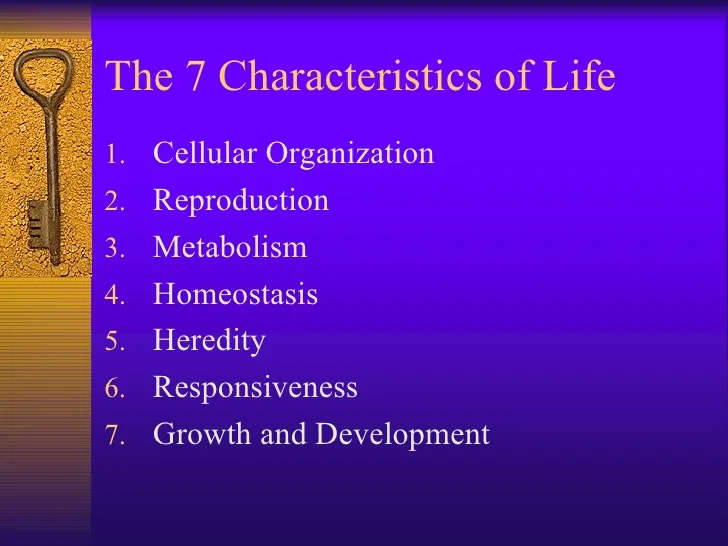
Which of the seven criteria of life is the cell membrane MOST ESSENTIAL for maintaining as it carefully moves molecules in and out of the cell in order to maintain balance?
A friend tells you he read somewhere that rotting garbage can turn into maggots, which are fly larvae, and the maggots can then grow into adult flies. What part of the cell theory could you use to refute (disprove) his claim?
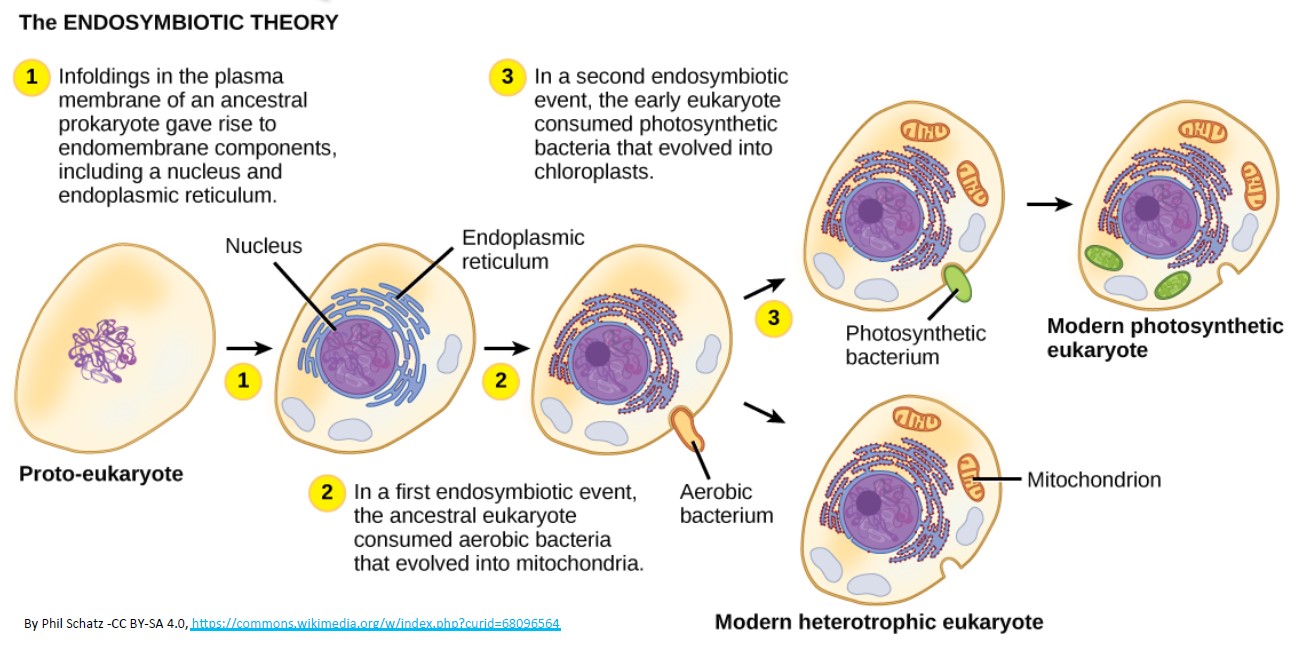
The endosymbiotic theory suggests that larger, more complex eukaryotic cells evolved by engulfing smaller prokaryotes and using prokaryotic mechanisms to their advantage in a symbiotic relationship.

According to the endosymbiotic theory, which two membrane-bound organelles were merged into the same cell to create the modern photosynthetic eukaryote?
Match the characteristic to either prokaryotic or eukaryotic cells.
Ex: Plants, Animals, Protists, Fungi
Uni- or Multicellular
No nucleus
No membrane bound organelles
Unicellular only
Has membrane bound organelles (ex: mitochondria)
Has a nucleus
Ex: Bacteria
Prokaryote (5)
Eukaryote (5)
Select all the organelles that both prokaryotes and eukaryotes have.
Suppose a certain poison kills human cells by blocking pores in the membrane that surrounds the nucleus. Explain why the poison (would or wouldn't) work on prokaryotic bacterial cells.
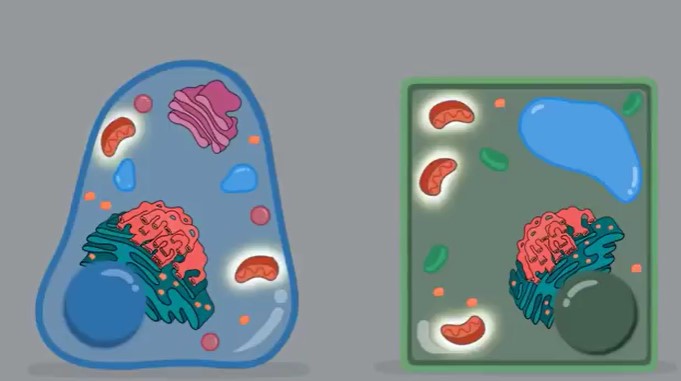
Label the two types of cells.

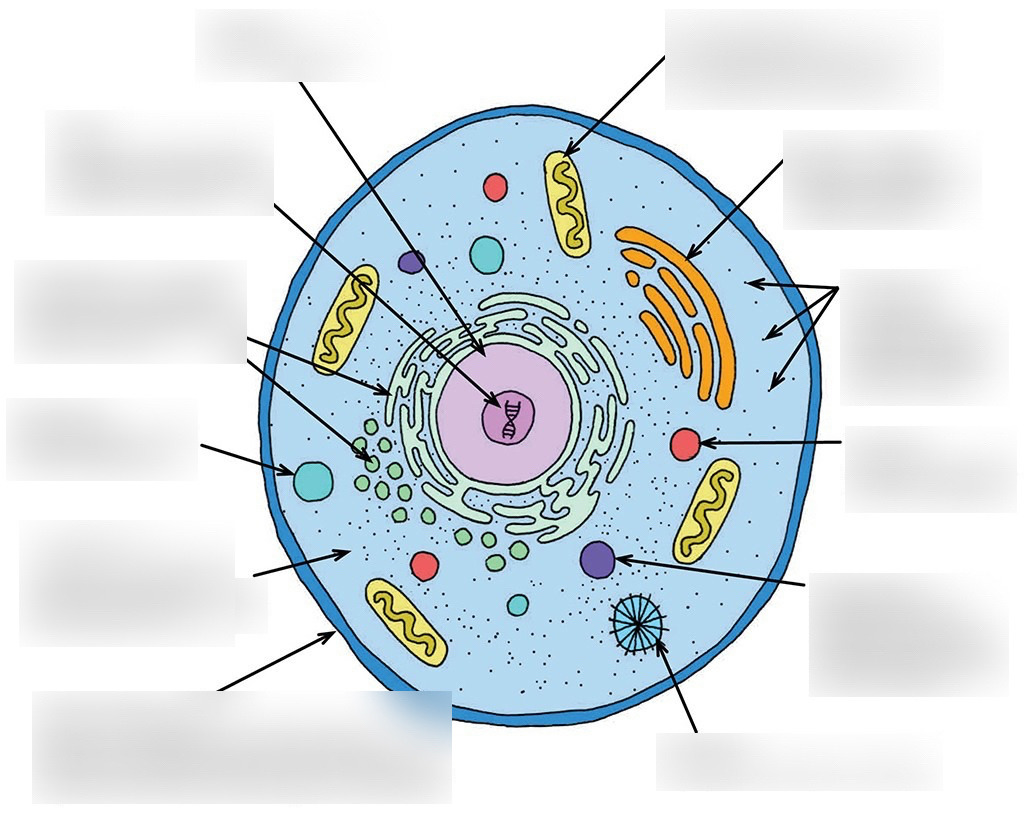
Label the eukaryote cell below.
#7 is blue (function: stores water)
#6: has enzymes to help breakdown waste
#5: makes proteins

Match the organelle to its description.
| Draggable item | arrow_right_alt | Corresponding Item |
|---|---|---|
smooth ER | arrow_right_alt | storage for the cell (mostly water) |
rough ER | arrow_right_alt | contains digestive enzymes to break down waste |
lysosome | arrow_right_alt | makes lipids |
ribosome | arrow_right_alt | Synthesis, folding, and modification of proteins. Has ribosomes attached. |
vacuole | arrow_right_alt | Synthesizes proteins |
Match the organelle to its description.
| Draggable item | arrow_right_alt | Corresponding Item |
|---|---|---|
cell membrane | arrow_right_alt | holds the DNA |
chloroplast | arrow_right_alt | makes ATP using cellular respiration |
nucleus | arrow_right_alt | uses light energy to make glucose |
mitochondria | arrow_right_alt | semi-permeable boundary between the cell and its environment |
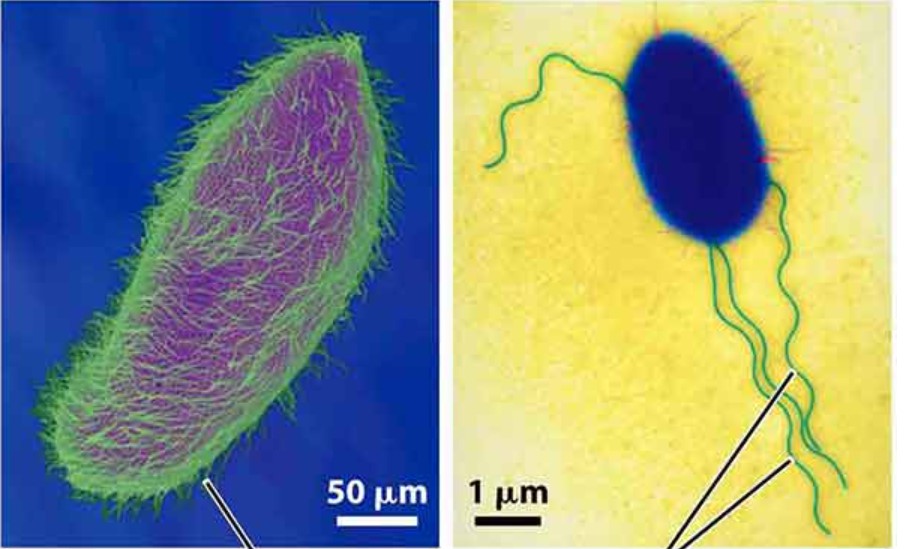
Both of these organelles are used by cells for movement (locomotion). Label the cells with their correct structure either cilia or flagella.

How many ways can we describe passive transport? Check all the boxes that apply.
Use each of the descriptions below to match the macromolecule. (3 items in each category)
trying to build more muscle or grow your hair/nails
long term energy (avocado)
monomer: amino acids
polymer: polypeptide chain
monomer: fatty acids & glycerides
polymer: triglycerides, waxes, steroids
makes up majority of cell membrane
makes up the channels used to move large molecules across the membrane
lipids
proteins
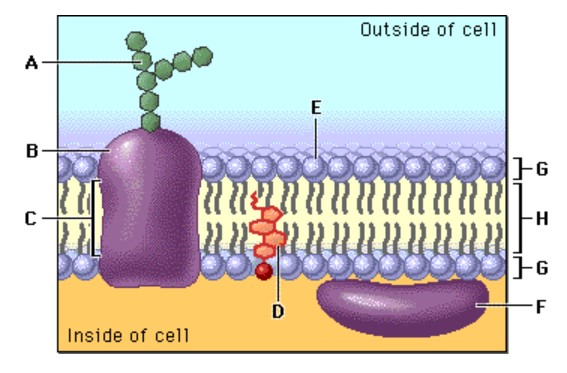
Because the phospholipid molecules are free to move and the membrane is made of many different parts, the plasma membrane is said to be:
| Draggable item | arrow_right_alt | Corresponding Item |
|---|---|---|
F | arrow_right_alt | integral protein |
H | arrow_right_alt | cholesterol |
D | arrow_right_alt | polar, hydrophilic heads |
C | arrow_right_alt | nonpolar, hydrophobic tails |
G | arrow_right_alt | peripheral protein |
When materials diffuse, they move the concentration gradient from high to low concentrations, which requires . The molecules that are and nonpolar can easily pass through the cell membrane, but large polar molecules need protein channels to help move them across.
The movement of material across the membrane during diffusion stops when:
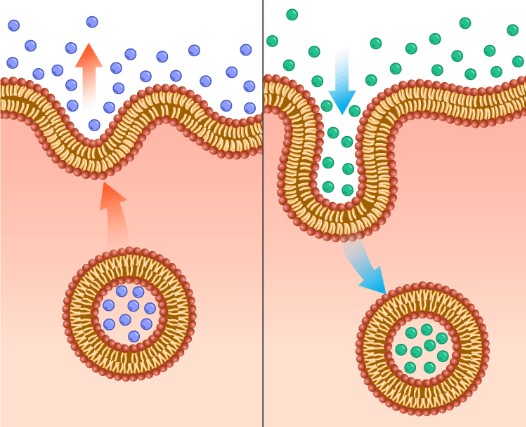
Match the type of transport and descriptions with their use of energy. (5 items in each category)
Up the concentration gradient
No energy required
Exocytosis
Facilitated diffusion
Osmosis
Pinocytosis
Endocytosis
Diffusion
Down the concentration gradient
Requires energy
Active Transport
Passive Transport
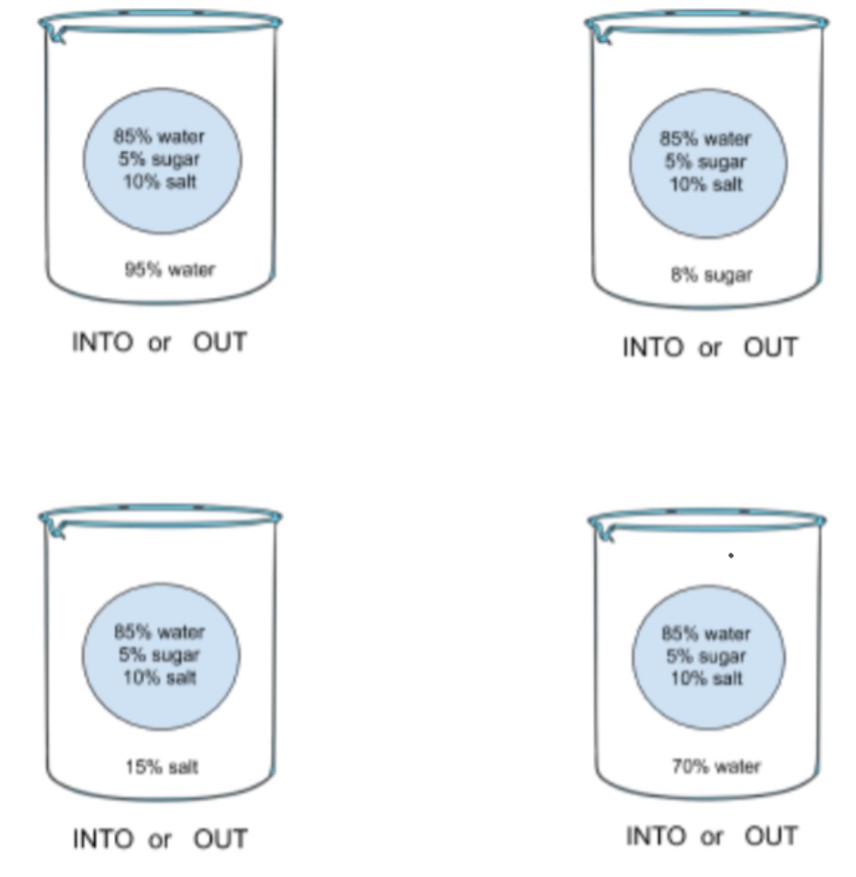
Based on the solute and water precentages shown, where will the water travel?
Click the INTO or OUT circles under each beaker to show your answer. If the beaker is isotonic, do not click either circle for that beaker.

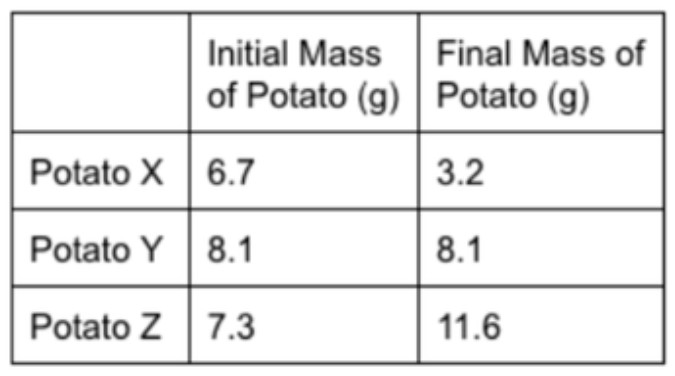
Students placed pieces of potato into three different solutions. The results are shown in the table.
![]()
Match each trial with the correct solutions. Pay close attention to the initial and final masses of the potatoes (did they increase or decrease in mass?)
| Draggable item | arrow_right_alt | Corresponding Item |
|---|---|---|
Potato Z | arrow_right_alt | hypertonic |
Potato X | arrow_right_alt | isotonic |
Potato Y | arrow_right_alt | hypotonic |