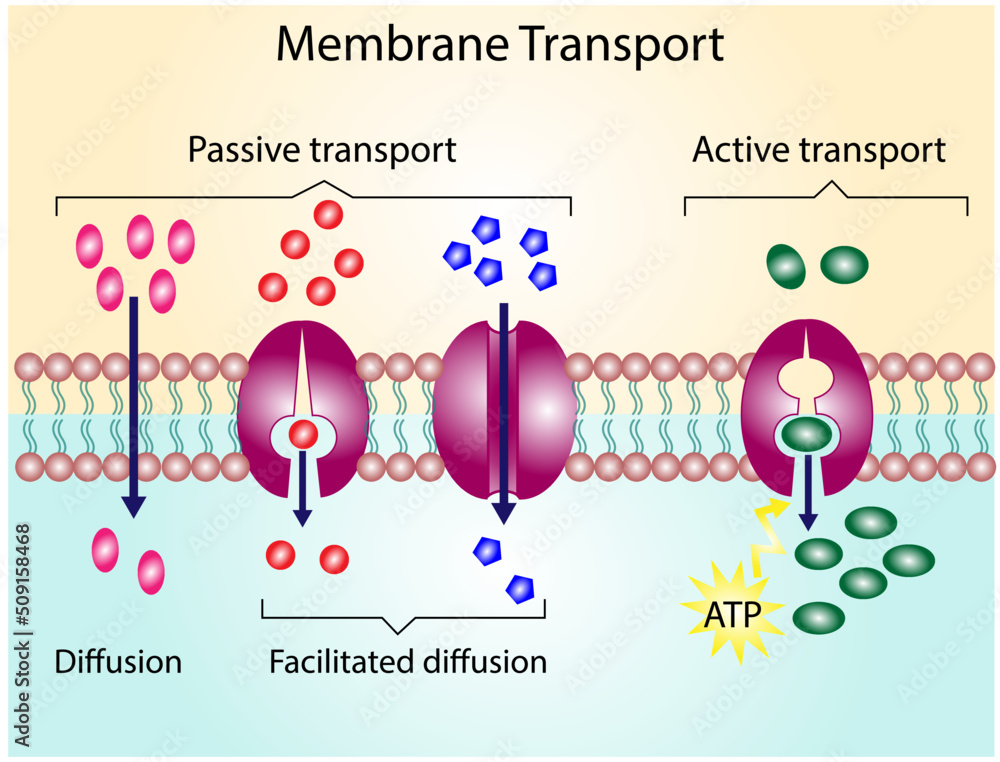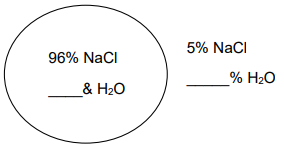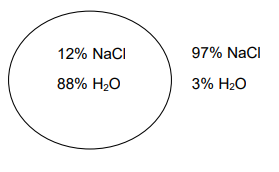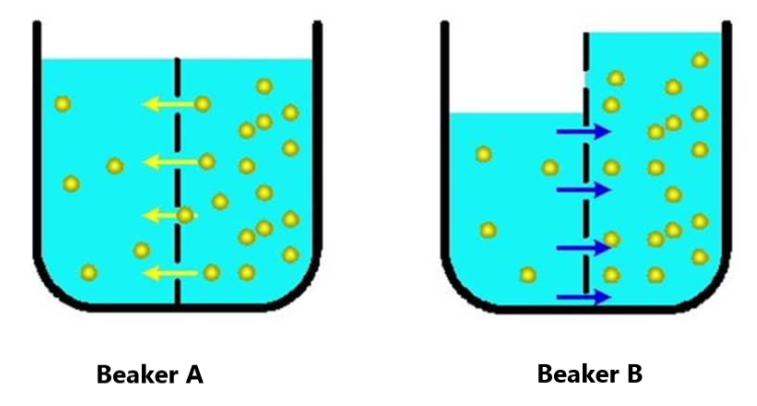
What process is occurring in each of the beakers above?
What process is occurring in each of the beakers above?
Passive transport require cellular energy expenditure because it moves substances their concentration gradient.
Cells maintain homeostasis with active transport which require energy because it moves substances their concentration gradient.
What process is occurring in each of the beakers above?
Which of the following statements correctly compares facilitated diffusion and active transport?
The concentration of water inside the cell would be:
The concentration of water outside the cell would be:
Note: type only a number in the blank
The cell will as water moves the cell.
A red blood cell placed in distilled water will swell and burst due to the osmosis of
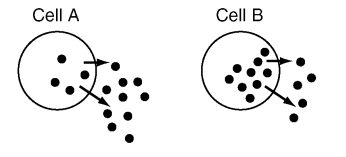
In the diagram below, the dark dots indicate small molecules. These molecules are moving out of the cells, as indicated by the arrows. The number of dots inside and outside of the two cells represents the relative concentrations of the molecules inside and outside of the cells.
ATP is being used to move the molecules out of the cell by
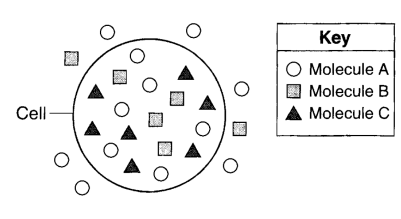
The diagram below represents a cell and several molecules. The number of molecules shown represents the relative concentration of the molecules inside and outside of the cell.
Molecule B could enter the cell as a direct result of
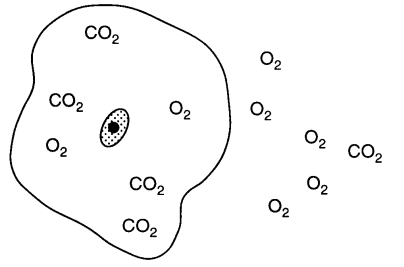
The diagram below represents a cell in water. Gas molecules can move freely across this cell membrane. Some molecules are located inside the cell and others are in the water outside the cell.
Based on the distribution of these molecules, what would most likely happen after some time due to diffusion?
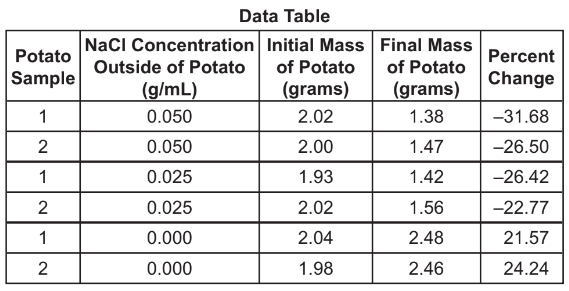
Examine the data table.
Complete statements below that support the data and explain the movement of molecules across the cell membranes.
The two potatoes in the 0.025g/mL solution mass as water molecules moved of the potato cells. Therefore, the 0.025g/mL solution is a solution.