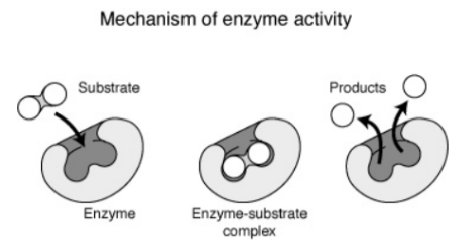
The diagram shows how an enzyme binds to a substrate. When this reaction is complete the
The diagram shows how an enzyme binds to a substrate. When this reaction is complete the
Biology is the study of
The process by which organisms keep their internal conditions relatively stable/constant is called
Which of the following is NOT a characteristic of life?
Proteins are also referred to as
Match the macromolecule with its correct monomer.
| Draggable item | arrow_right_alt | Corresponding Item |
|---|---|---|
Carbohydrate | arrow_right_alt | Amino Acids |
Lipid | arrow_right_alt | Monosaccharide |
Nucleic Acid | arrow_right_alt | Fatty Acid |
Protein | arrow_right_alt | Nucleotide |
Which phrase below BEST describes a polymer?
Which of the following is true of enzymes?
Enzymes lower the to speed up chemical reactions.
The diagram shows how an enzyme binds to a substrate. When this reaction is complete the
An animal’s stomach contains enzymes that break down food. Enzymes perform this function by
Resistance to antibiotics results from variations in the genetic code of Streptococcus pneumoniae. Which type of molecule encodes genetic information in Streptococcus pneumoniae?
Baby food manufacturers sometimes use proteases in their products. Proteases catalyze the breakdown of the proteins in these foods, making digestion easier for infants. Proteases are which of the following types of molecules?
Like complex carbohydrates, proteins are macromolecules that serve many functions and can be chemically broken down and restructured. Both proteins and complex carbohydrates are which of the following?
Which of the following molecules is made up of glycerol and fatty acids?
This macromolecule consists of long chains of hydrogen and carbon-based rings and is used for short-term energy.
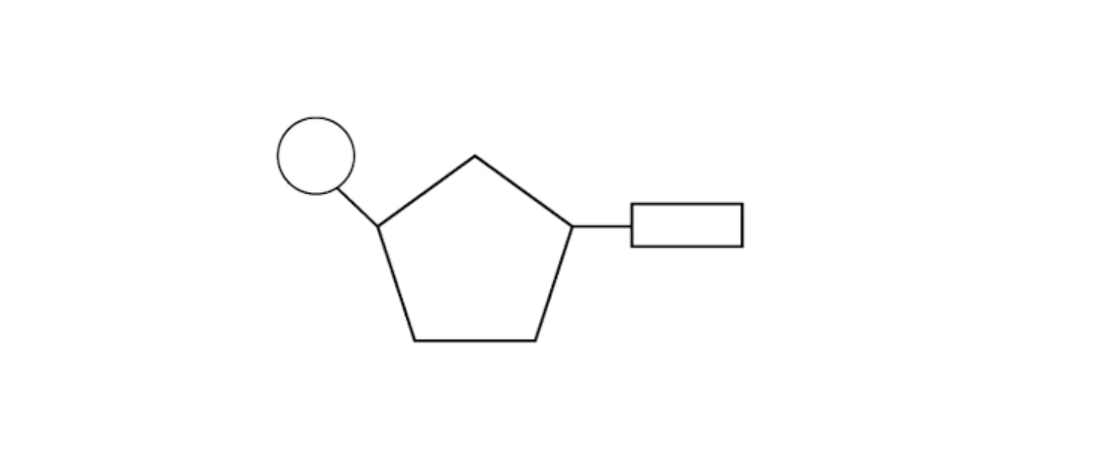
Two of the four principal classes of organic compounds are proteins and nucleic acids. What is the relationship between proteins and nucleic acids?
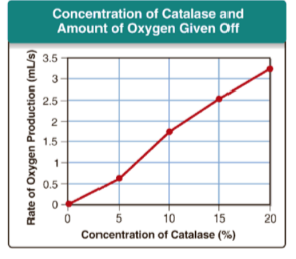
Concentration of Catalase and Amount of Oxygen Given Off
The enzyme catalase speeds up the chemical reaction that changes hydrogen peroxide into oxygen and water. The amount of oxygen given off is an indication of the rate of the reactions.
Based on the graph, reaction rate with increasing enzyme concentration
Which concentration of catalase will produce the fastest reaction rate?
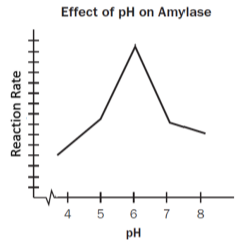
Amylase is an enzyme in saliva that catalyzes the digestion of starch. Based on the graph shown above, what is the optimal pH for amylase?
Match the examples to the correct macromolecule
| Draggable item | arrow_right_alt | Corresponding Item |
|---|---|---|
Protien | arrow_right_alt | Glucose |
Lipid | arrow_right_alt | Enzyme |
Carbohydrate | arrow_right_alt | DNA |
Nucleic Acid | arrow_right_alt | Wax |
While performing a laboratory activity in their Biology class, a pair of students conclude that a substance called pepsin is likely an enzyme that breaks down proteins into smaller parts, called peptides. Which of the following facts could be used as evidence to support their conclusion?
Catalase is a molecule that lowers the activation energy of the chemical reaction that converts hydrogen peroxide into oxygen and water. Which of the following terms best describes catalase?
The local law enforcement agency finds a notorious food critic dead in his home. After interviewing his wife, they discover that he had visited three restaurants earlier that day for breakfast, lunch, and dessert. The detectives went to each restaurant and interviewed the chefs. Below is the evidence they collected.
Table 1: Food Eaten at Each Location
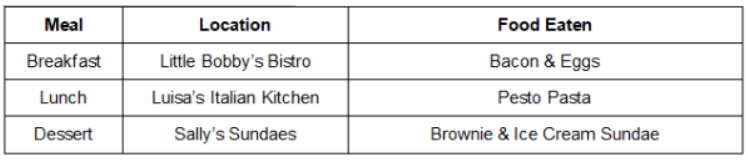
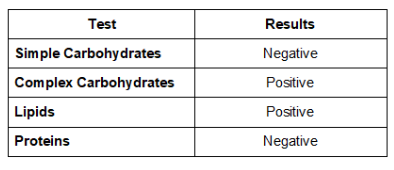
*Note: Pesto is a pasta sauce made of basil and olive oil. The crime scene investigators found vomit in the victim’s car. They believe whatever food caused him to vomit was poisoned and likely caused his death. CSI sent the vomit to be analyzed and tested for macromolecules. Below is what they found.
Table 2: Vomit Test Results
Based on the results from the CSI lab, which of the following restaurant owners most likely poisoned the food critic?
Based on the results from the CSI lab, which of the following restaurant owners most likely poisoned the food critic?
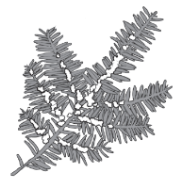
The hemlock woolly adelgid, Adelges tsugae, is a destructive aphid-like insect native to Asia. In North America this pest threatens the health of the eastern hemlock and Carolina hemlock trees. The adelgid was first reported near Richmond, VA, in 1951 and has since spread through the eastern states. The adelgid completes two life cycles within one year. As the adelgid matures, it produces a covering of white wool-like wax filaments. These filaments provide protection from predators and prevent theadelgid from drying out.
Feeding on stored starches that are crucial for the trees’ growth, the adelgid can damage a hemlock enough that it can die within 4 years. Chemical control can help reduce the damage but is limited to individual tree treatments. The best control option is biological because there are natural predators that feed on the adelgid. Several beetle predators have been imported from China and Japan and are slowly becoming established in the infested areas.
The white wool-like wax filamentous substance that the adelgid produces for protection is most likely made up of
Which of the following graphs best illustrates how the presence of an enzyme changes the energy profile of a biochemical reaction?