Levels of Ecological Organization
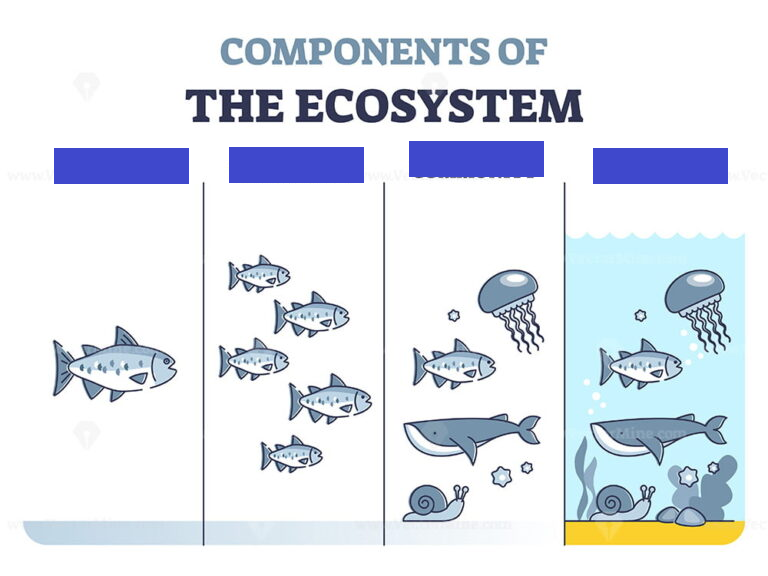
Mmuae Afoforo a Wobɛpaw:
ecosystem
organism
population
community
Match the following characteristics of life with their best description and/or example.
| Draggable item | arrow_right_alt | Corresponding Item |
|---|---|---|
Obtain and use energy | arrow_right_alt | Cells --> Tissue --> Organ --> Organ System --> Organism |
Maintain homeostasis | arrow_right_alt | Organisms can either be unicellular or multicellular. |
Composed of cells | arrow_right_alt | Snowshoe hares have especially large, furry feet that help them to move atop snow in the winter. They also have a snow-white winter coat that turns brown when the snow melts each spring. |
Grow and Develop | arrow_right_alt | Bacteria cells undergo a process known as Binary Fission when creating offspring. |
Organization | arrow_right_alt | When being outside on a hot summer's day, the human body tends to sweat to release heat and prevent heatstroke. |
Reproduce | arrow_right_alt | Plants that are active during the day, tend to bend towards their light source. |
Respond to a stimulus | arrow_right_alt | Plants are autotrophic organisms that take in light energy to create high-energy sugars. |
Evolution | arrow_right_alt | The common housefly starts out in a larva stage. |
Levels of Ecological Organization
"The biosphere is like Earth's ultimate life support system. It's the part of our planet where living things, including plants, animals, and even microscopic organisms, thrive. Within the biosphere, different species find their homes in specific places called habitats. These are like neighborhoods tailored to their needs, providing the right mix of food, water, shelter, and space. Now, when we study how all these living things interact with each other and their environment, we're delving into the world of ecology. Ecology helps us understand the relationships between plants, animals, and their surroundings, including the air, water, and soil. Within an ecosystem, each species has a particular role called a niche. Imagine it like a job description for a species. Some organisms might be like recyclers, breaking down dead matter, while others might be like gardeners, helping plants grow. Understanding these terms helps us appreciate the complex web of life on our planet."
Which term refers to the job an organism plays within its environment?
Symbiotic Relationships
| Draggable item | arrow_right_alt | Corresponding Item |
|---|---|---|
parasitism | arrow_right_alt | only the bacteria will benefit; human host is not harmed |
Commensalism | arrow_right_alt | both the bacteria and the human host will benefit |
mutualism | arrow_right_alt | only the bacteria benefits; the human host is harmed |
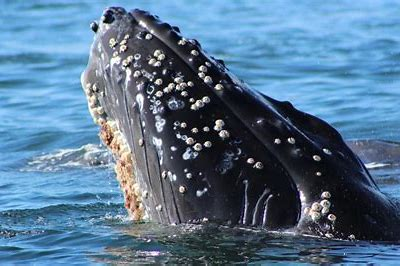
Whales and Barnacles
Barnacles adhering to the skin of a whale or shell of a mollusk: Barnacles are crustaceans whose adults are sedentary. The motile larvae find a suitable surface and then undergo a metamorphosis to the sedentary form. The barnacle has a habitat where nutrients are available. (In the case of lodging on the living organism, the barnacle is transported to new sources of food.) The presence of barnacle populations does not appear to hamper or enhance the survival of the animals carrying them.
What type of symbiotic relationship are the whale and barnacles?
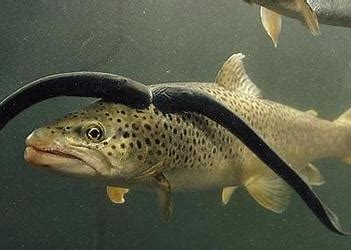
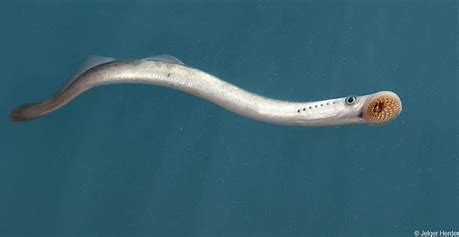
Sea Lamprey and Fish
The Sea Lamprey latches onto a fish and uses its teeth to hold on to the skin of a fish, leaving an open wound for the lamprey to feed on. It drops off, usually without killing the fish. Sea Lampreys are not specific on any species of fish; they will latch onto any living thing and try to feed.
What type of symbiotic relationship is the Sea Lamprey and fish?
Wasps and Insects
Several species of wasp, immobilize another insect by stinging it. The female then carries the insect to a burrow, where she lays eggs within its body. After the female’s eggs hatch, the larvae consume the living tissues of the insect, this will eventually kill it.
What type of symbiotic relationship is the Wasp and Insects?
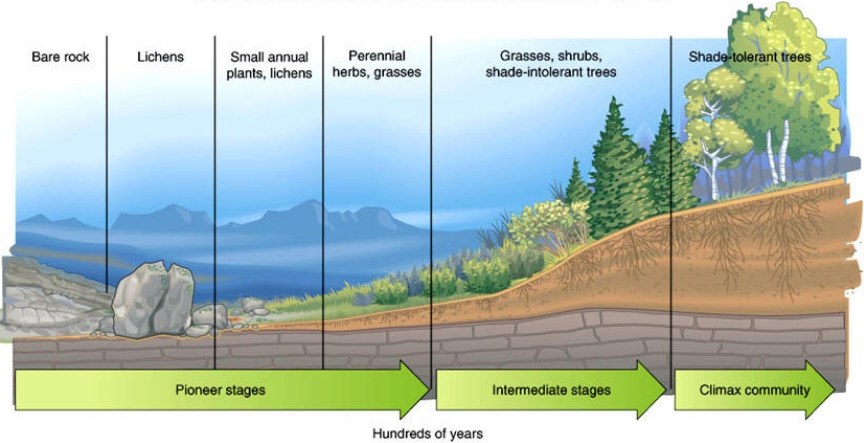
A fire is an example of ____ succession because there was soil was left behind.
Is the above image an example of primary or secondary succession?
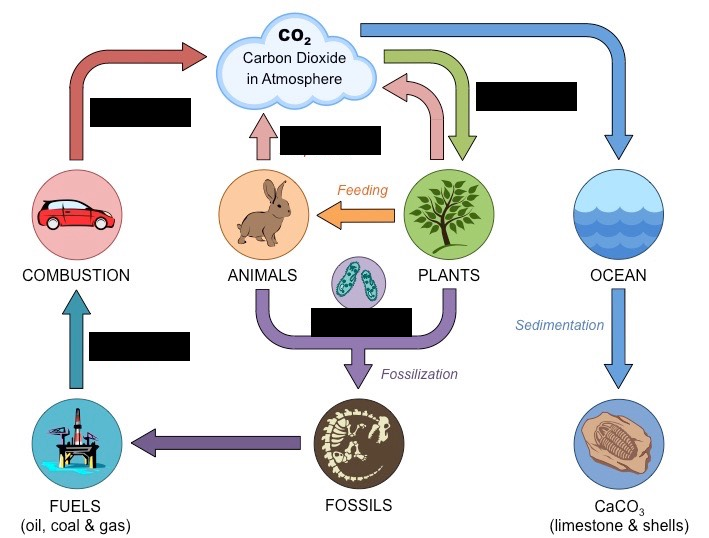
Label the parts of the carbon cycle that are missing.
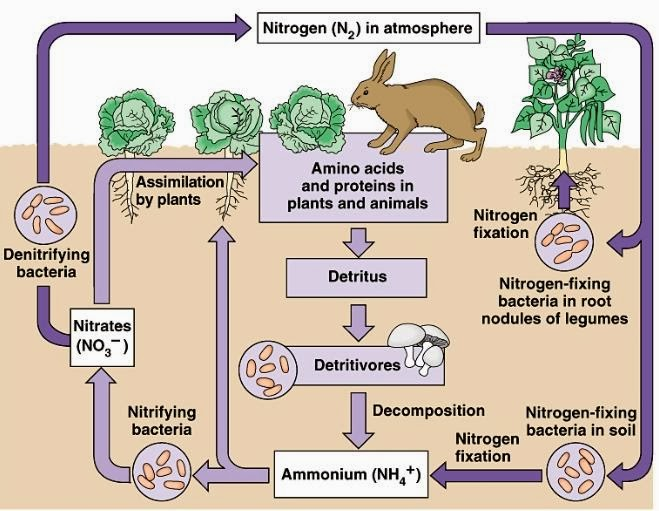
Imagine the nitrogen cycle is like a big adventure for nitrogen atoms. They start out in the air as something called "nitrogen gas," which is like a bunch of nitrogen atoms holding hands really tightly.
Now, plants and animals, like us, need nitrogen to grow big and strong. But, they can't use the nitrogen gas in the air because it's all locked up in a tight group. So, the nitrogen atoms need to go through a process called assimilation.
Assimilation is like a magical transformation! Some special bacteria and plants work together to change the nitrogen gas into a form that plants can use. It's like turning a big, tough puzzle piece into a small, easy one that can fit into a plant's puzzle.
Once the plants have these usable nitrogen pieces, they can use them to grow leaves, stems, and even fruits. Then, when animals eat those plants, they get the nitrogen too! It's like passing along the magic of growth from plants to animals.
So, assimilation is like the superhero power that turns tough nitrogen gas into a form that plants and animals can use to grow big and healthy!
What does assimilation do in the nitrogen cycle?
Match the nitrogen cycle vocabulary
| Draggable item | arrow_right_alt | Corresponding Item |
|---|---|---|
nitrogen fixation | arrow_right_alt | plants take in nitrates from the soil and use it for their processes |
decomposition | arrow_right_alt | converting nitrates to nitrogen gas |
assimilation | arrow_right_alt | breaking down of dead organisms, returning elements to the environment |
denitrification | arrow_right_alt | organisms that consum dead organisms for energy |
decomposer | arrow_right_alt | process by which nitrogen gas is converted into inorganic nitrogen compounds that can be used by plants/animals |
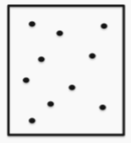
Population Density
Emigration
Death (mortality)
Birth (natality)
Immigration
Lack of resources
Overproduction of resources
High Population Density
Low Population Density
Select the line on the graph that represents:
Type I: Late loss; heavy parental care
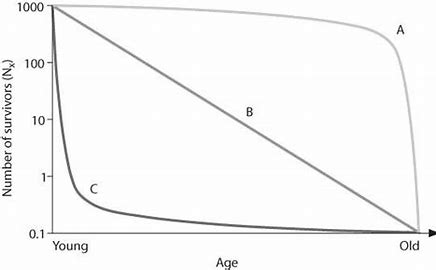
Select the line on the graph that represents:
Type II: Constant loss; mortality unaffected by age
Select the line on the graph that represents:
Type III: Early loss; produce lots of offspring at once and many die right away
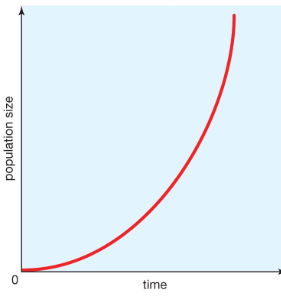
Unlimited growth
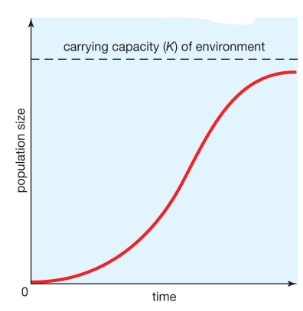
Extreme growth followed by slow growth
example: Human population
example: animal populations
Exponential Growth
Logistic Growth
The graph below shows information about the growth of a population.
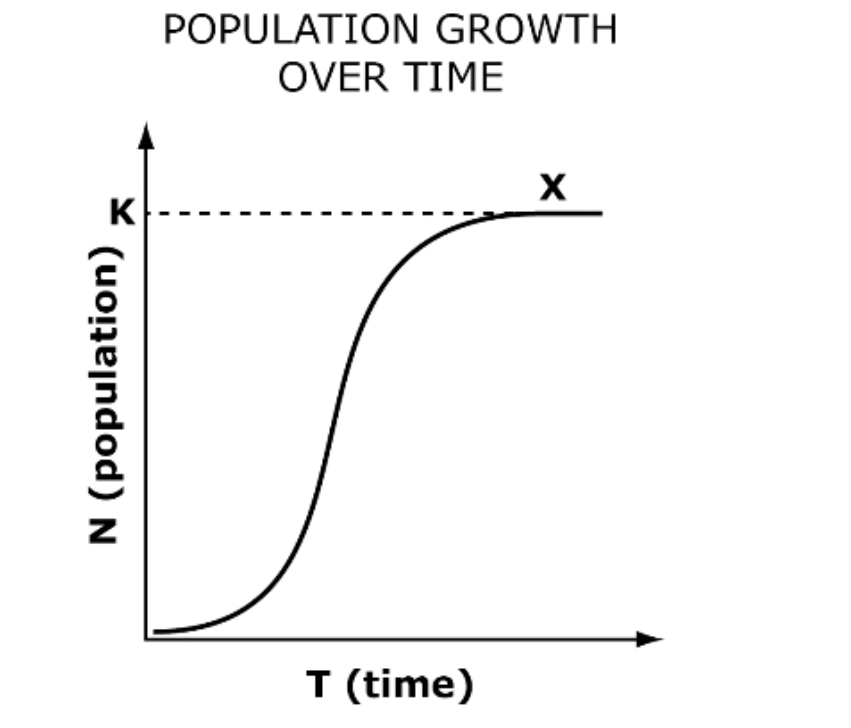
Which best explains what occurred at point X on the curve?
Human activities affect the quality and supply of natural resources for future generations. Since the Industrial Revolution, the use of fossil fuels has greatly increased industrial productivity, but it has also caused environmental issues. Which of the following is least likely to be caused by the burning of fossil fuels?
Monoculture is the agricultural practice of producing a single crop over a large area. In the 1980s, scientists discovered and produced a monoculture of cotton that was eventually planted throughout the southern states. What could be one possible side effect of the monoculture cotton?
What happens when an ecosystem becomes less diverse?
Identify the characteristic of life that is indicated in the following statement: a caterpillar hibernates in a cocoon and emerges as a butterfly.
Sequence the following with increasing complexity of levels of ecological organization.
*Start with the lowest level at the top*
organism
community
population
biosphere
ecosystem
The chart below shows three ecological terms used to describe levels of organization on Earth.
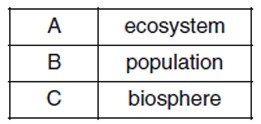
Which diagram best represents the relationship of these ecological terms?
The diagram below represents a process that occurs in nature.
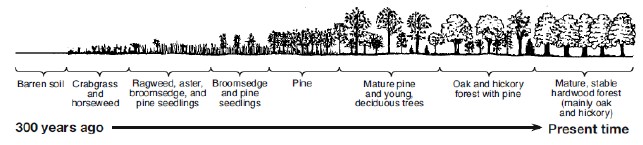
If the oak and hickory trees were burned in a forest fire, leaving bare soil, which group of plants would most likely be the first to grow back?
Base your answer to the following question on the diagram below and on your knowledge of biology
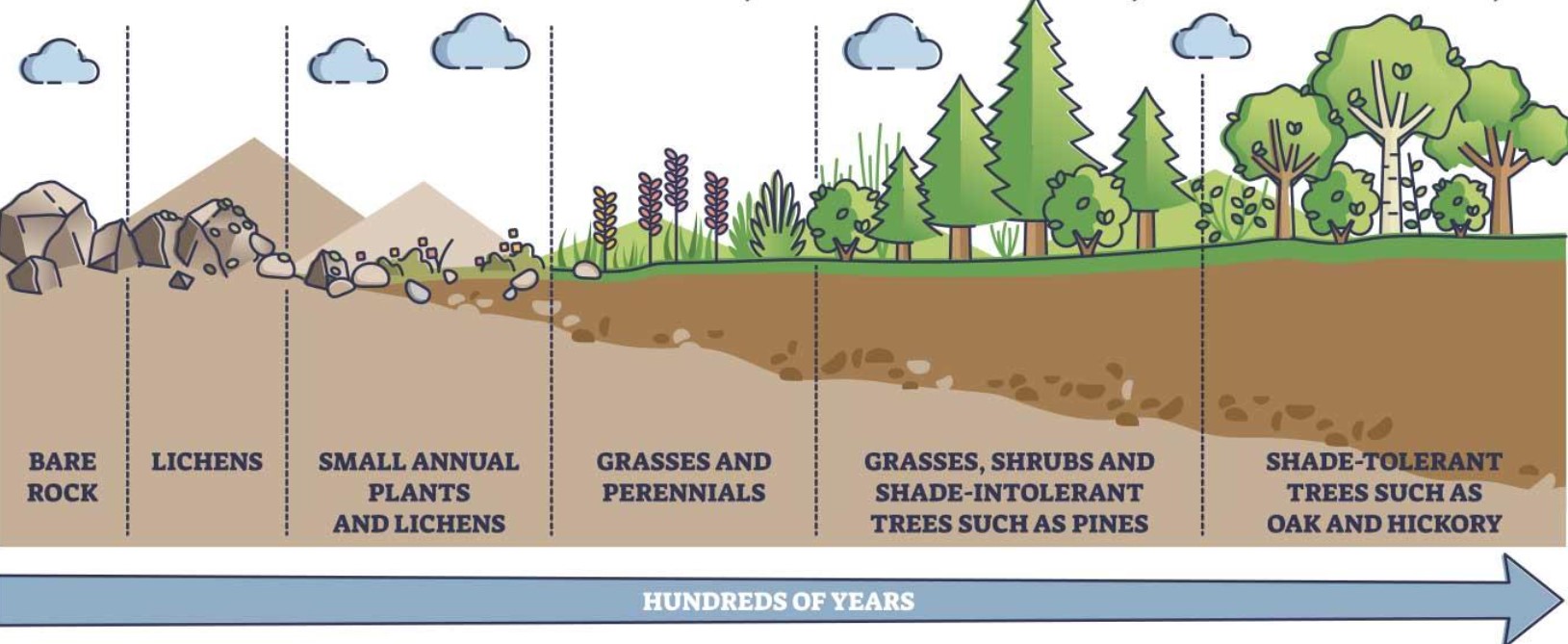
The lichens an be classified as
Which statement best describes a situation where competition occurs in an ecosystem?