Twa kɔ nsɛm atitiriw so
Log in
Sign up for FREE
arrow_back
Laabri

Population Ecology Lab

star
star
star
star
star
Last updated about 3 hours ago
23 Nsɛmmisa
Ɛhia
1
Ɛhia
1
Ɛhia
1
Ɛhia
1
Ɛhia
1
Ɛhia
1
Ɛhia
1
Ɛhia
1
Ɛhia
1
Ɛhia
1
Ɛhia
1
Ɛhia
1
Ɛhia
1
Ɛhia
0
Ɛhia
1
Ɛhia
1
Ɛhia
1
Ɛhia
1
Ɛhia
1
Ɛhia
1
Ɛhia
1

After this point, these answers are not in the simulation, APPLY what you have learned.

Ɛhia
1
Ɛhia
1

Ecology Lab - Predator Prey Interactions *home edition

In any ecosystem, there are interactions between predators and prey, and herbivores, carnivores, and omnivores. The population numbers of each group depends on those interactions. Too many predators might cause the loss of a prey species. Not enough prey, could eliminate the predators because they won’t have enough to eat. This simulation will explore interactions of organisms that live in a forest ecosystem.

Process

1. Open the simulator: https://www.learner.org/wp-content/interactive/envsci/ecology/ecology.html

*You may want to split your screen so you can look at this document while running the simulation.

2. The simulation will start with two plants highlighted.

Asemmisa {{asɛmmisaAhyɛnsode}}
1.

What do you think will happen to these plants in this ecosystem? Can they both survive together? Why or Why not.

Asemmisa {{asɛmmisaAhyɛnsode}}
2.

Run the simulation until it stops at Day 100. . Observe the population in the graph.

Upload a screen shot of the graph.

Asemmisa {{asɛmmisaAhyɛnsode}}
3.

Describe what happened to Plant A and to Plant B:

Asemmisa {{asɛmmisaAhyɛnsode}}
4.

The competitive exclusion principle states that two species in the same environment will compete for resources. In those cases, one species will be the winner and one will be the loser. Consider the two plants. What resources are they competing for, and why would one of them be the winner? Your answer requires you to make some assumptions about how these plants live.

What happens when a herbivore is added?

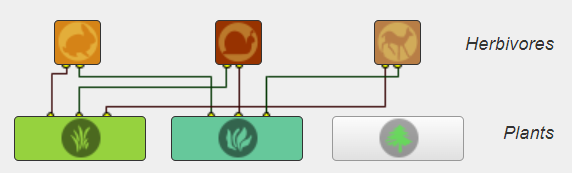
RESET the simulation. Choose the rabbit and then determine what happens when it eats plant A and then plant B and when it eats both types of plants. Enter the final totals in the data table by estimating from the graph. Run the simulation until it reaches 100 days. Reset between each test. Note: You can roll your mouse over the line on the graph to get the population number.

Asemmisa {{asɛmmisaAhyɛnsode}}
5.

Make and complete a table that looks like this:

Upload a picture of your table below.

Asemmisa {{asɛmmisaAhyɛnsode}}
6.

In which scenario is the ecosystem the most stable? Suggest a reason for this and use the word COMPETITION in this explanation.

Most herbivores are GENERALISTS, and will eat almost any plant available to them as food. It is unrealistic to have a herbivore that only eats plant A. Though some animals are SPECIALISTS and only eat one type of food. - Reset the simulation and activate all 3 herbivores and set them to eat both plant A and plant B.

Asemmisa {{asɛmmisaAhyɛnsode}}
7.

What happened to plants A and B when all three herbivores were present and ate both types of plants?

Asemmisa {{asɛmmisaAhyɛnsode}}
8.

Add a squirrel to the ecosystem that also eats both plant A and Plant B. Describe what happens to the squirrel in this setting.

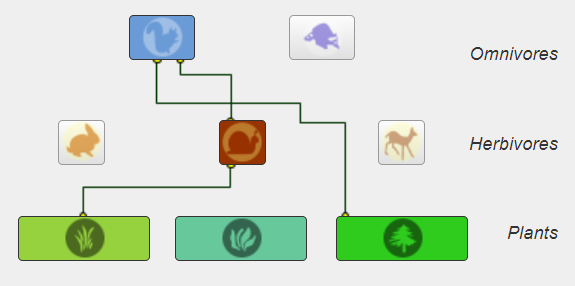
Squirrels are omnivores. Rest the simulation and change:

- include snails to eat plant A

-include squirrels to eat snails and a tree (plant C).

Asemmisa {{asɛmmisaAhyɛnsode}}
9.

What happens to the squirrels?

Asemmisa {{asɛmmisaAhyɛnsode}}
10.

What happens to the herbivores?

Asemmisa {{asɛmmisaAhyɛnsode}}
11.

Suggest a reason that added a food source that only the squirrels ate impacted the ecosystem so much:

Asemmisa {{asɛmmisaAhyɛnsode}}
12.

Which plant has the largest population size?

Asemmisa {{asɛmmisaAhyɛnsode}}
13.

Which type of animal has the smallest population size (herbivores or omnivores)?

Part 2: Explore Predator and Prey Interactions

Predators and prey populations often cycle. For example, if there are more rabbits in an ecosystem, there can be more wolves. As the wolves increase in number, the number of rabbits will begin to decline. This is called a PREDATOR PREY CYCLE.

Process: Click the green button that says “presets” to clear your other data and start fresh.

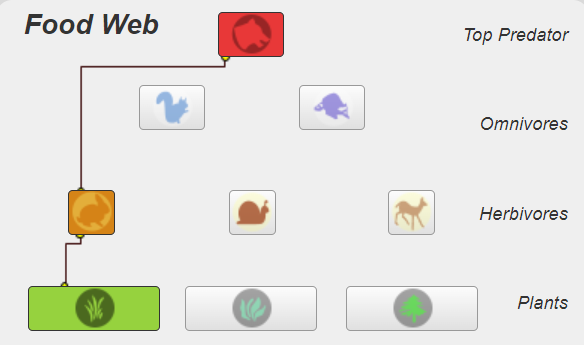
In this simulation, we are going to simplify things. You will have a rabbit, plant A, and a wolf.

- Set the simulation to run with these plant A, a rabbit, and a wolf. - This time, use the “STEP” button to run the simulation to year 30.

17. Complete the table below. ( - Scroll over the lines to determine the population size at each time period.)

Asemmisa {{asɛmmisaAhyɛnsode}}
14.

Upload a picture of the graph that is generated:

Take a screenshot or using the "Snipping Tool" feature on your laptop (search in bottom left of computer)

Asemmisa {{asɛmmisaAhyɛnsode}}
15.

Complete this table

Upload a screen shot

Asemmisa {{asɛmmisaAhyɛnsode}}
16.

What happened to the plant population between day 2 and day 10? Explain why this occurred.

Asemmisa {{asɛmmisaAhyɛnsode}}
17.

What happened to the rabbit population between day 5 and day 10? Explain why this occurred.

Asemmisa {{asɛmmisaAhyɛnsode}}
18.

What happened to the plant population between day 10 and day 20? Explain why this occurred.

Asemmisa {{asɛmmisaAhyɛnsode}}
19.

At 30 days, compare the wolf population to the rabbit population:

Asemmisa {{asɛmmisaAhyɛnsode}}
20.

Click the run button to take the simulation to day 200. What ultimately happens to all three populations?

Asemmisa {{asɛmmisaAhyɛnsode}}
21.

Predict what would happen if we added another herbivore to the system. *You can run this sim if you want*

Would the number of wolves increase? Why or why not

Asemmisa {{asɛmmisaAhyɛnsode}}
22.

Pandas are animals that are SPECIALISTS and only eat one type of food (bamboo) in the forest where they live. If another animal moves into the forest and also eats that type of food. What will likely happen to the panda?

Asemmisa {{asɛmmisaAhyɛnsode}}
23.

Keystone species = a species on which other species in an ecosystem largely depend, such that if it were removed the ecosystem would change drastically.

A wolf is a KEYSTONE species. Explain how the wolf indirectly affects the population numbers of plants.