Asemmisa {{asɛmmisaAhyɛnsode}}
1.
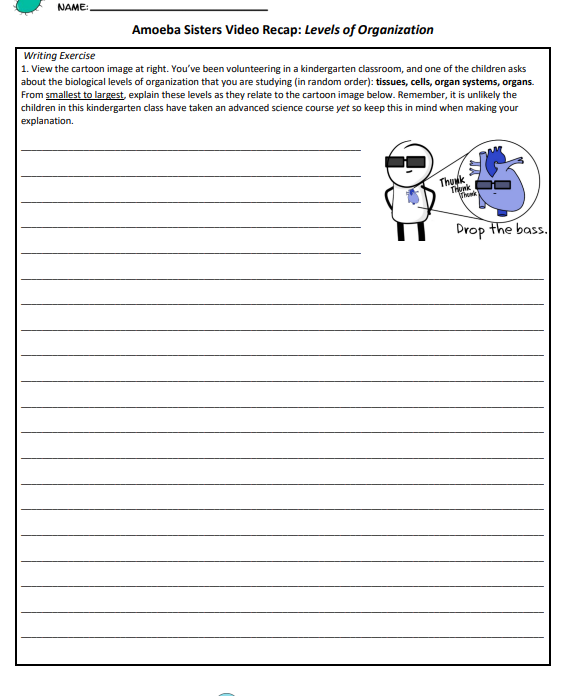
You're already familiar with the organization of things... Think back to middle school science when you learned about organ systems. Order the following terms from largest to smallest
largest @ the top
tissue
organ system
organ
cell
organelles
Levels of Ecological Organization
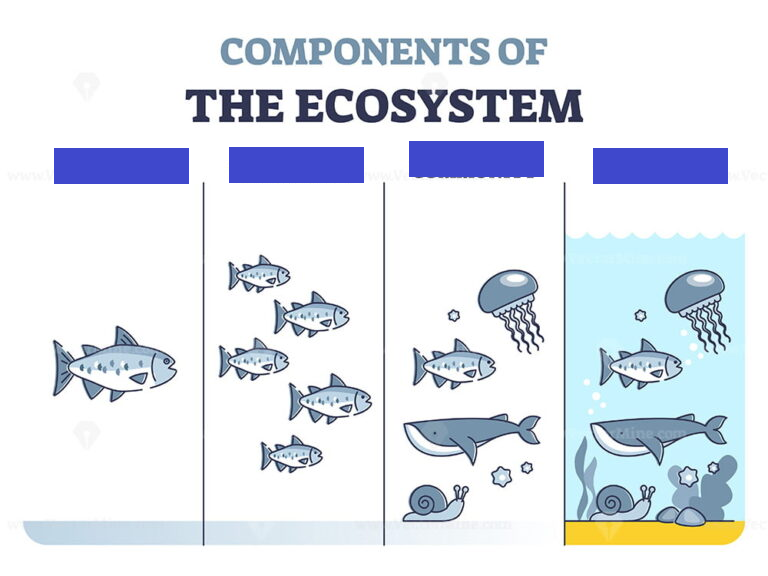
Put the levels of ecological organization in order from smallest to largest.
smallest @ the top
ecosystem
community
population
biome
biosphere
species
Label the following iteams as either abiotic or biotic
Whale
Water
Fish
Sand
Snail
Soil
Plant
Sunlight
Biotic
Abiotic
Which is all of the organisms found on Earth and all of the areas in which they live?
| Draggable item | arrow_right_alt | Corresponding Item |
|---|---|---|
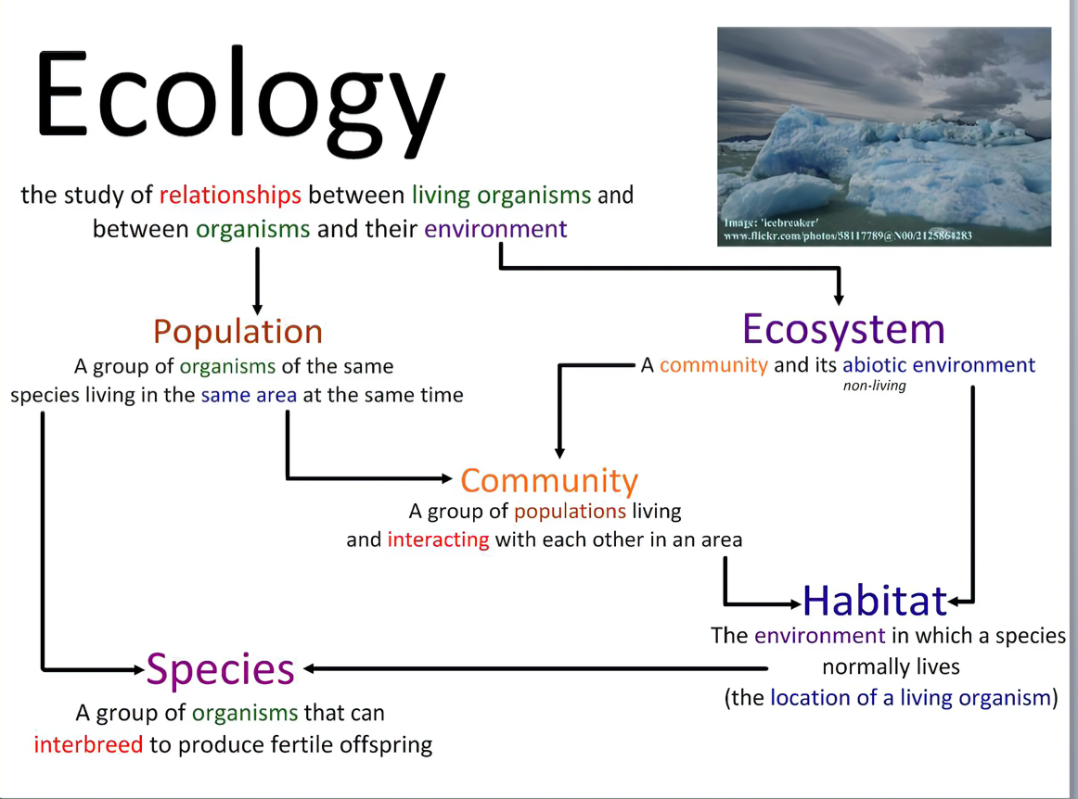
community | arrow_right_alt | a group of organisms that can interbreed |
species | arrow_right_alt | environment in which the species lives |
population | arrow_right_alt | a community and its abiotic environment |
ecosystem | arrow_right_alt | a group of populations living and interacting with each other |
habitat | arrow_right_alt | a group of organisms of the same species living in the same area at the same time |
Which of the following statements is false?
Associate the following statements with the level of Biological organization they fall under
The light, sun, soil, air and living organisms within the Rainforest.
Mrs. Dombrowski, pretending to be a cat
The cornea (outer layer) of the eye
Nose, mouth, trachea, bronchi and lungs all working together.
A complete strand of DNA encoding all the necessary information to create a bird.
A Prokaryotic Bacteria
The number of residents in Fort Worth
The heart
All the living organisms in the Trinity River
Cell
Tissue
Organ
Organ system
Organism
Population
Community
Ecosystem
"The biosphere is like Earth's ultimate life support system. It's the part of our planet where living things, including plants, animals, and even microscopic organisms, thrive. Within the biosphere, different species find their homes in specific places called habitats. These are like neighborhoods tailored to their needs, providing the right mix of food, water, shelter, and space. Now, when we study how all these living things interact with each other and their environment, we're delving into the world of ecology. Ecology helps us understand the relationships between plants, animals, and their surroundings, including the air, water, and soil. Within an ecosystem, each species has a particular role called a niche. Imagine it like a job description for a species. Some organisms might be like recyclers, breaking down dead matter, while others might be like gardeners, helping plants grow. Understanding these terms helps us appreciate the complex web of life on our planet."
Which term refers to the job an organism plays within its environment?
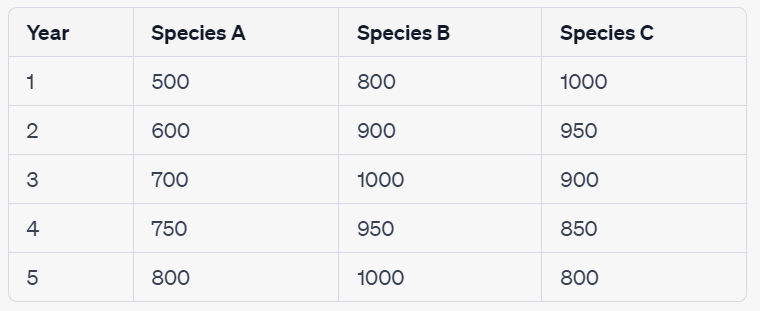
Refer to the table below, which shows the population sizes of different species in an ecosystem over a span of 5 years.
Based on the table, which species showed the most consistent population growth over the 5-year period?