Twa kɔ nsɛm atitiriw so
Log in
Sign up for FREE
arrow_back
Laabri

Unit 5 Practice Test

star
star
star
star
star
Last updated about 3 hours ago
24 Nsɛmmisa
1
1
1
Ɛhia
1
Ɛhia
1
1
Ɛhia
1
1
1
1
1
1
1
1
1
0
1
0.5
1
1
1
1
1
1
Asemmisa {{asɛmmisaAhyɛnsode}}
1.

What do we call observable traits in an organism (the physical characteristics)?

Asemmisa {{asɛmmisaAhyɛnsode}}
2.

Which term represents different forms of a gene?

Asemmisa {{asɛmmisaAhyɛnsode}}
3.

Assume a purple (P) moth mates with a yellow moth (p), and ALL of the offspring (F1) are heterozygous and purple. Which cross represents the genotypes of the parent generation?

Asemmisa {{asɛmmisaAhyɛnsode}}
4.

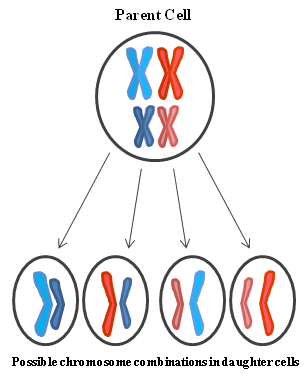
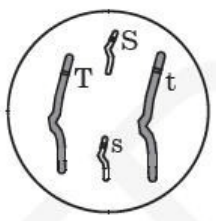
The diagram above depicts a diploid cell containing two pairs of homologous chromosomes. Assume that the cell undergoes meiosis. Given the law of independent assortment, what would be the possible genotypes of the gametes that result from meiosis?
Asemmisa {{asɛmmisaAhyɛnsode}}
5.

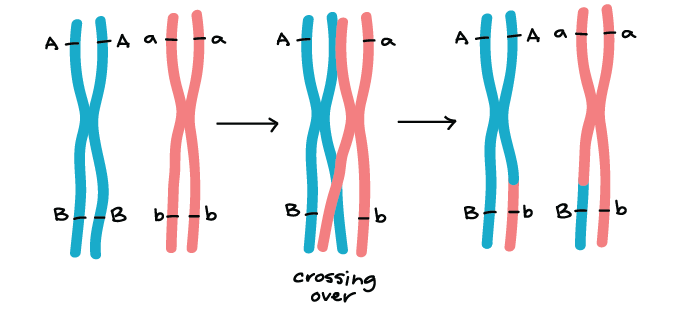
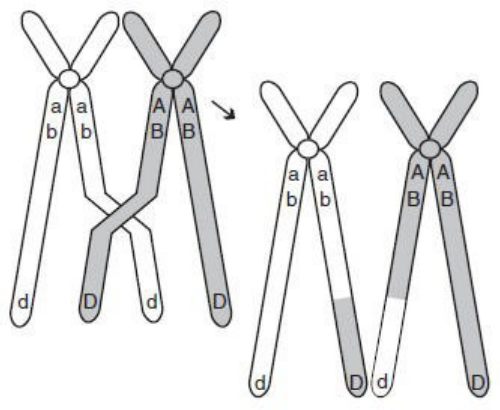
The diagram above illustrates an event called "crossing over" that commonly occurs during Meiosis I. Based on the diagram, which of the following statements best describes the important effect that this event has on the gametes produced by meiosis?

Asemmisa {{asɛmmisaAhyɛnsode}}
6.

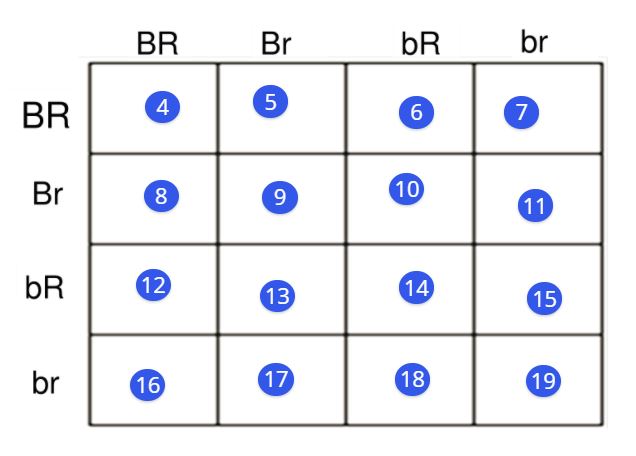
What is the genotype for box 12?

Asemmisa {{asɛmmisaAhyɛnsode}}
7.

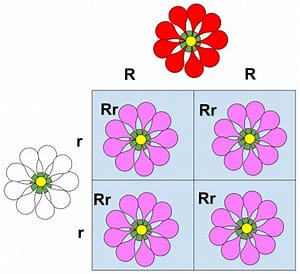
Definition: when a dominant allele, or form of a gene, does not completely mask the effects of a recessive allele, and the organism’s resulting physical appearance shows a blending of both alleles.

One example is shown in the roses below.

Which type of non-mendelian genetics pattern is this?

Asemmisa {{asɛmmisaAhyɛnsode}}
8.
  • Aa

  • PP

  • rr

  • RR

  • ff

  • Tt

  • Homozygous Dominant

  • Heterozygous

  • Homozygous Recessive

Asemmisa {{asɛmmisaAhyɛnsode}}
9.

Asemmisa {{asɛmmisaAhyɛnsode}}
10.

Which of the following most accurately restates Mendel’s Law of Segregation?

Asemmisa {{asɛmmisaAhyɛnsode}}
11.

During meiosis I in prophase I, homologous chromosomes pair up and exchange genetic material in a process known as crossing over. Each chromosome in a homologous pair carries different alleles (A vs a and B vs b) for the same gene. Which of the following statements best describes the significance of this process in genetic variation?

Asemmisa {{asɛmmisaAhyɛnsode}}
12.

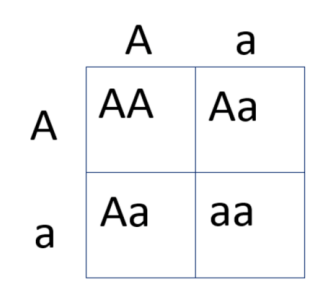
Black fur (A) is dominant over white fur (a).

In this punnet square, two heterozygous individuals have a 75% probability of having black-furred offspring and a 25% probability of having white-furred offspring, or a 3:1 ratio.

Mathematically, if the two parents have 20 offspring. How many should be expected to have black fur?

Asemmisa {{asɛmmisaAhyɛnsode}}
13.

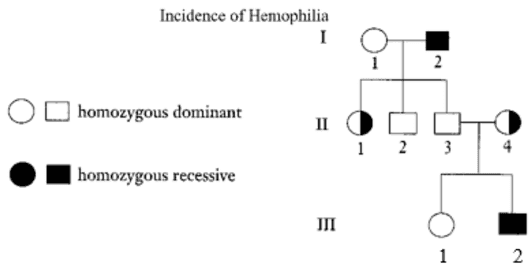
For the trait being followed in the pedigree, individuals II-1 and II-4 in the figure above can be classified as _____.

Asemmisa {{asɛmmisaAhyɛnsode}}
14.

When red and yellow spotted beetles are mated, 25% of the offspring are red, 50% are red and yellow spotted, and 25% are yellow. This trait is one controlled by _____.

Asemmisa {{asɛmmisaAhyɛnsode}}
15.

Which cellular change in an organism could be inherited by the next generation?

Asemmisa {{asɛmmisaAhyɛnsode}}
16.

Color blindness is typically a recessive trait, and it is usually linked to the X chromosome. Since males have one X and one Y chromosome (XY), if they inherit the recessive allele for color blindness on their X chromosome, they will express the trait. Females have two X chromosomes (XX), so they would need to inherit the recessive allele on both X chromosomes to be color blind. If they have one normal allele, they will be a carrier but not express color blindness.

An individual of phenotype XBXB marries an individual whose phenotype is XbY. What proportion of their male children will be colorblind?

**This will not be a question that counts on the test. Just a challenge question to see how you do.***

Asemmisa {{asɛmmisaAhyɛnsode}}
17.

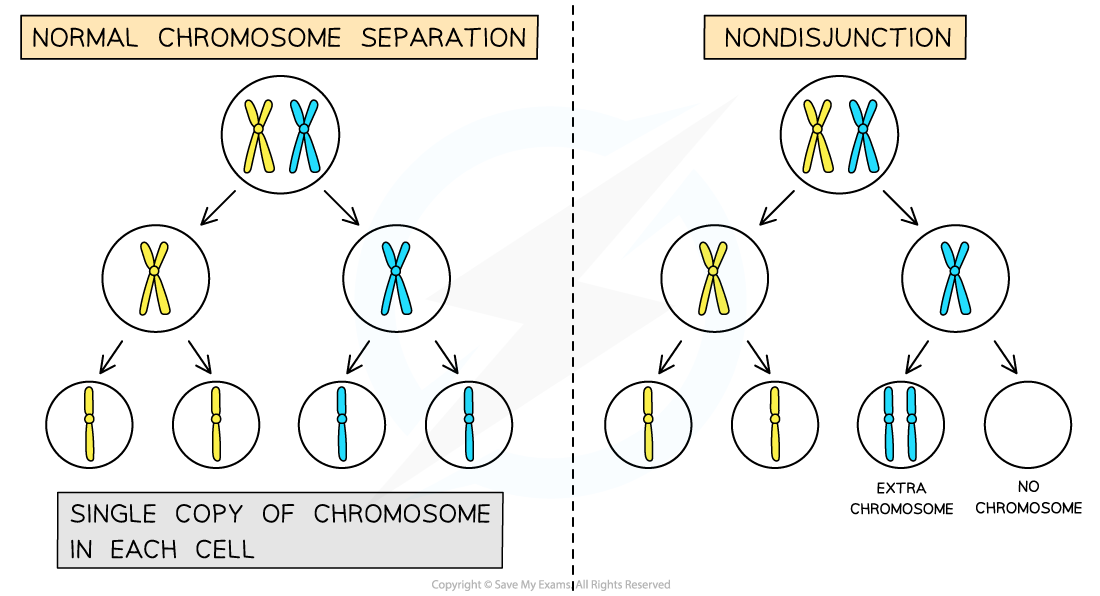
Nondisjunction is the failure of chromosomes to separate properly during cell division. What is a possible consequence of nondisjunction in gametes?

Asemmisa {{asɛmmisaAhyɛnsode}}
18.

Two siblings from the same litter of golden retriever puppies show both shared traits and distinct differences in coat color and size. Which process best explains the genetic variations observed among the siblings?

Asemmisa {{asɛmmisaAhyɛnsode}}
19.

Which of the following is an example of codominance?

Asemmisa {{asɛmmisaAhyɛnsode}}
20.

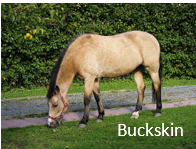
In horses, the allele for a bay coat (brown with black mane, tail and legs) and the allele for a cream coat can combine to make a buckskin coat.

The allele B is used for bay; C is used for cream.

Buckskin horses have one bay allele and one cream allele (BC).

The genotype BC makes a buckskin coat, as neither allele is dominant.

Cross a bay stallion with a cream mare. What are the offspring phenotype percentages?

Asemmisa {{asɛmmisaAhyɛnsode}}
21.

Mrs. Jay has decided she wants to go into the dog breeding business and wants to use her dog Millie. Millie is heterozygous light brown (BW), a combination of dark brown (BB) and white (WW). Mrs. Jay wants to get puppies that are dark brown, light brown and white and has two choices of dogs she can mate with Millie: Denver, who is also light brown or Charley, who is white.

Help Mrs. Jay figure out who she should mate with Millie to get three different colors of puppies.

Asemmisa {{asɛmmisaAhyɛnsode}}
22.

In a botanical garden, two sections are dedicated to different types of plant reproduction.

In one section, the gardener notices that the **potato plants** are thriving and producing new tubers underground, resulting in many identical plants. In another section, the gardener observes **sunflower plants** that are blooming and producing seeds, which will grow into genetically unique plants.

Based on this scenario, which statement accurately describes the reproduction processes occurring in these two sections?

Asemmisa {{asɛmmisaAhyɛnsode}}
23.

A male and female child have three copies of chromosome 21. Although both parents are unaffected, their doctor explains that the disorder associated with having an extra chromosome 21, known as Down syndrome, results from a chromosomal mutation during the formation of reproductive cells. Which argument best supports this claim?

Asemmisa {{asɛmmisaAhyɛnsode}}
24.

The diploid chromosome number for domestic cats (Felis catus) is 38. A somatic cell would have .