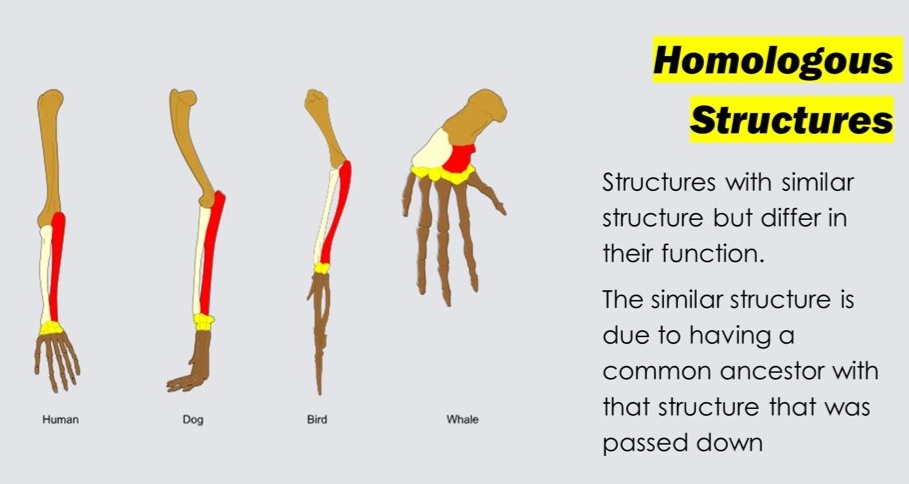
The above diagram provides a good example of
The above diagram provides a good example of
Here are five key pieces of evidence for evolution, explained simply:
1. **Fossil Record**: Fossils are the remains of ancient organisms found in rock layers. They show how species have changed over time. For example, we can see how modern whales evolved from land-dwelling ancestors.
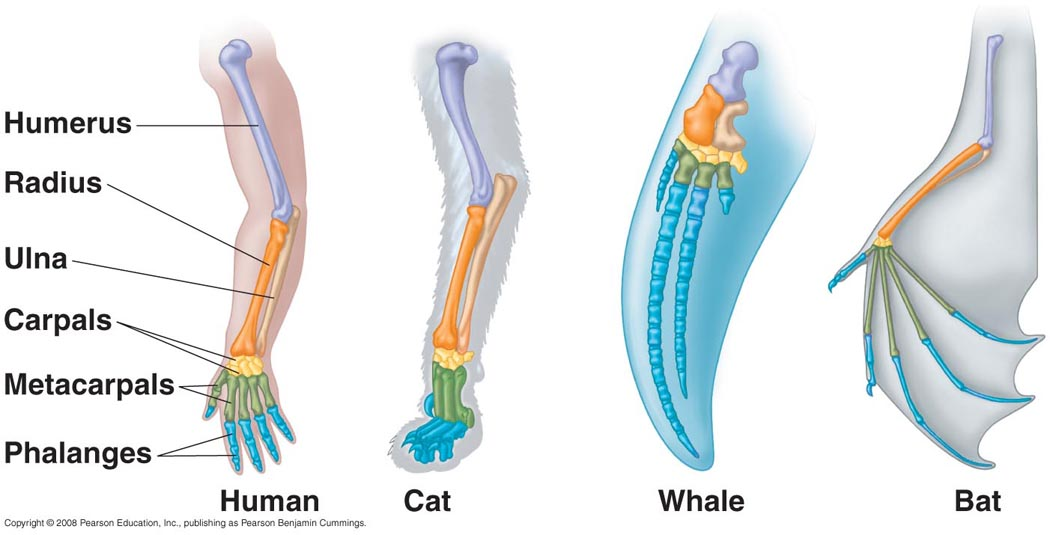
2. **Comparative Anatomy**: By studying the body structures of different animals, we see similarities that suggest they share a common ancestor. For instance, the bones in a human arm, a bird's wing, and a whale's fin have similar structures, indicating they evolved from a common ancestor.
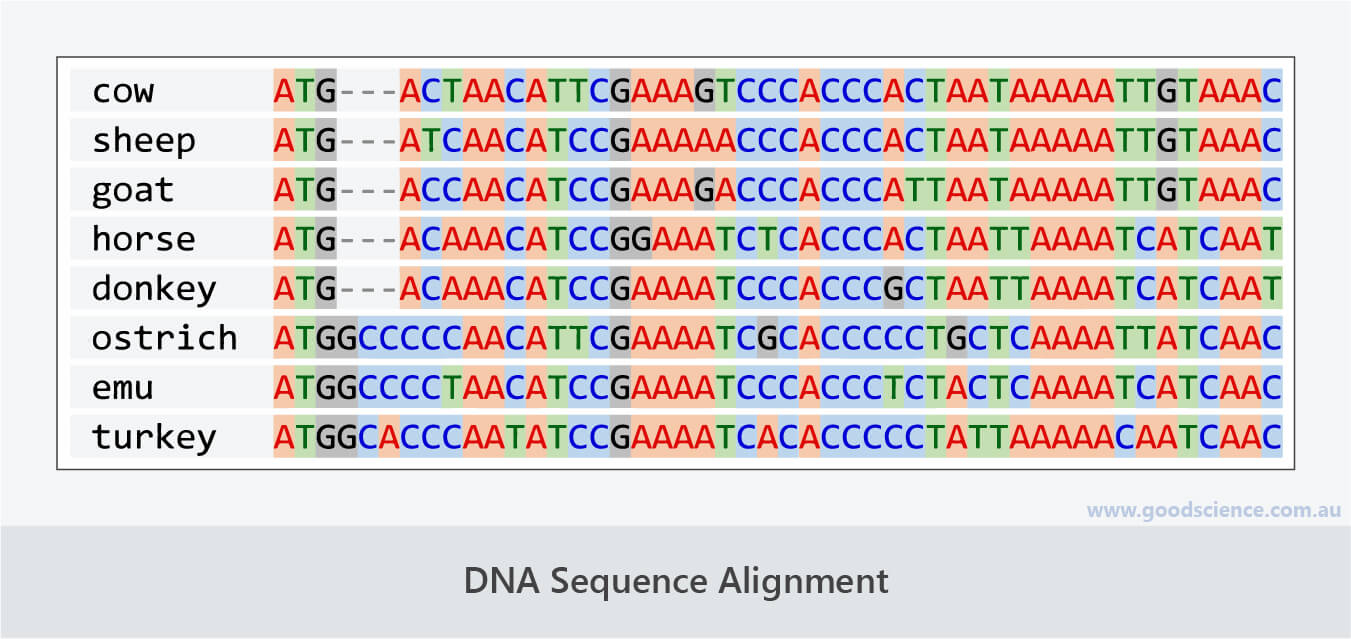
3. **Genetics**: DNA comparisons between different species show how closely related they are. The more similar the DNA, the closer the evolutionary relationship. For example, humans share a large percentage of their DNA with chimpanzees.
4. **Embryology**: When embryos of different species develop, they often look very similar in the early stages. This similarity suggests that these species have a common ancestor. For example, human and fish embryos both have gill slits in early development.
5. **Biogeography**: The distribution of species across different geographic areas can explain how they evolved. For instance, unique species on isolated islands, like the Galápagos finches, show how populations adapt to different environments over time.
These pieces of evidence help scientists understand how life on Earth has changed and adapted over millions of years!
What do fossils tell us about evolution?
Homologous structures, analogous structures, and vestigial structures are key concepts in evolutionary biology that illustrate different aspects of evolutionary relationships.
Homologous structures are features in different species that share a common ancestry, even if their functions differ. For example, the forelimbs of humans, whales, and bats have different functions (grasping, swimming, and flying, respectively) but share a similar bone structure.
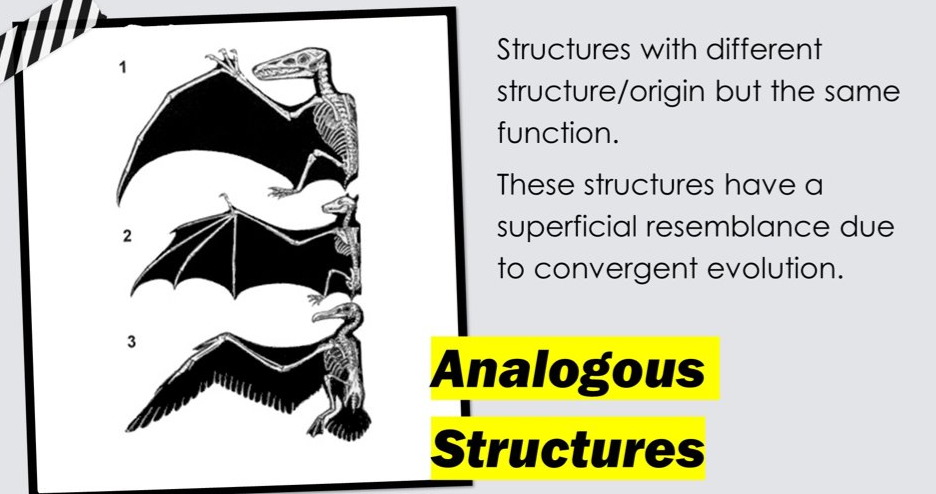
Analogous structures, on the other hand, are features that serve similar functions but do not share a common evolutionary origin; an example is the wings of insects and birds, which both enable flight but evolved independently.
Lastly, vestigial structures are remnants of organs or features that once had a function in ancestral species but are now reduced or nonfunctional. An example is the human appendix, which is much less useful than it was in our herbivorous ancestors. Together, these structures provide insight into the complex history of evolution and the relationships between different species.
What are homologous structures?
The above diagram provides a good example of
If a similar diagram to the one above was constructed comparing the wing of a bird, the wing of a bat, and the wing of an insect, the insect wing would serve to illustrate an example of
DNA sequences can be used to determine the evolutionary relationships of species because
Define: Homologous structures
What is natural selection?
Which of these is NOT a line of evidence for evolution?
According to homologous structures, the similarities of mammal limbs provide evidence that...
The study of embryos of various organisms to show a common ancestor because of similarities in development is known as what?
Two organisms that are closely related would have...
How do fossils provide evidence that evolution has happened on Earth?
Scientists compare organisms' DNA to support the theory that all species share a common ____
Similar structures with different purposes found in different species are known as...
similar structure
different structure
similar function
different function
common ancestor
different ancestors
divergent evolution
convergent evolution
Homologous Structure
Analogous Structures
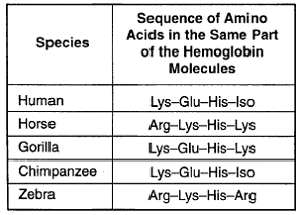
Based on this evidence, a researcher could conclude that the two closest relatives are
Based on this evidence, how many amino acid similarities do horses and zebras have?
How many nucleotide differences are between the emu and turkey?
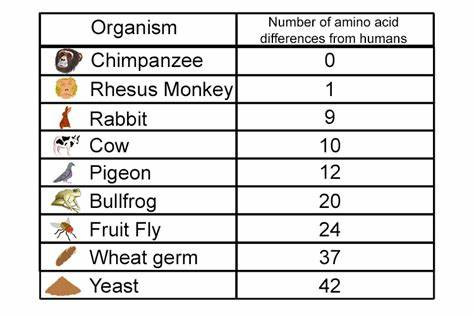
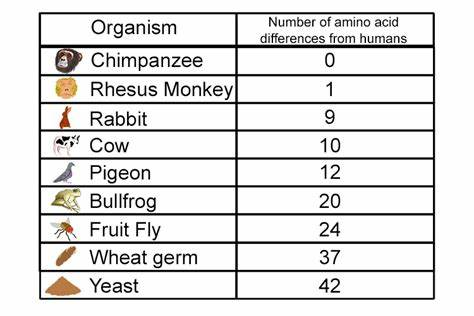
How many differences exist between humans and a bullfrog?
Which organism is most closely related to humans?
DNA sequences can be used to determine the evolutionary relationships of species because
Which evidence of evolution studies the similarities in body structures of different animals?
What similarity do embryos of different species often show?
What does biogeography study in relation to evolution?
Which of the following is an example of analogous structures?
What is a vestigial structure?