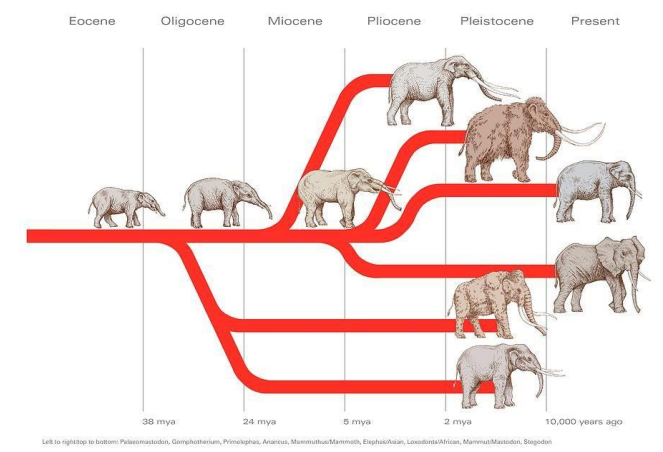
Analyze the diagram above. Which pattern of evolution results in one species splitting into many over time?
Analyze the diagram above. Which pattern of evolution results in one species splitting into many over time?
Analyze the diagram above. Which pattern of evolution results in one species splitting into many over time?
Fossil evidence shows that structures considered vestigial in living organisms
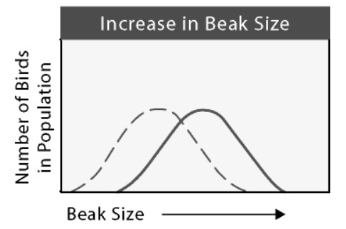
During a period of droughts in the Mojave Desert, seeds that are small and easily eaten become more and more rare, leaving mostly seeds that are large with hard-cased shells behind. The only birds that can eat these particular seeds are those with large beaks. If the drought continues for several more years, what should be expected to happen as a result of natural selection?
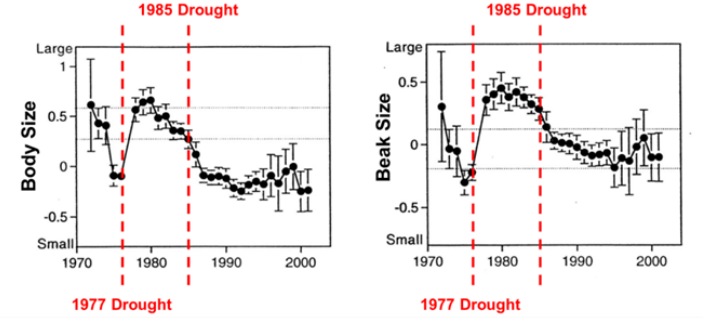
From 1831 to 1836, Darwin traveled around the world, observing animals on different continents and islands. On the Galapagos Islands, Darwin observed several species of finches with unique beak shapes. He observed these finches closely resembled another finch species on the mainland of South America and that the group of species in the Galápagos formed a graded series of beak sizes and shapes, with very small differences between the most similar. Darwin imagined that the island species might be all species modified from one original mainland species. Years later, scientists still study differences in the finches on the island. Data was collected on body size and beak size from 1970 to 2000. As shown in the data tables below, there were two droughts. During each drought, the decrease in rainfall led to a decrease in the number of berries available for the finch diet. The finches only had hard seeds as a primary food source.
*click graph to enlarge
Scientists analyzed the data and noted that the body size and beak size changed in the Finches population. What is a possible explanation for what the scientists observed?
Scientists can explore whether two different animal species have evolved from a common ancestor, using evidence from all of the sources below except
The snowshoe rabbit has white fur in winter and dark fur in summer. What is the main survival advantage of this fur color change to the rabbit?
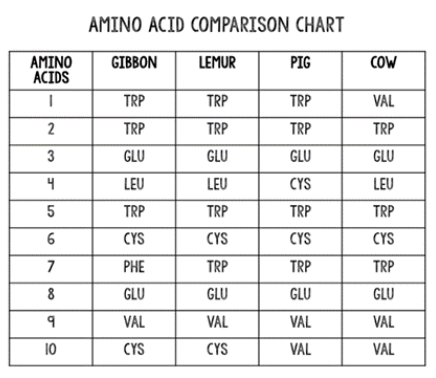
The table below shows the order of amino acids present in a protein from five different organisms.
*click table to enlarge
Based on this evidence, a researcher could conclude that the two closest relatives are
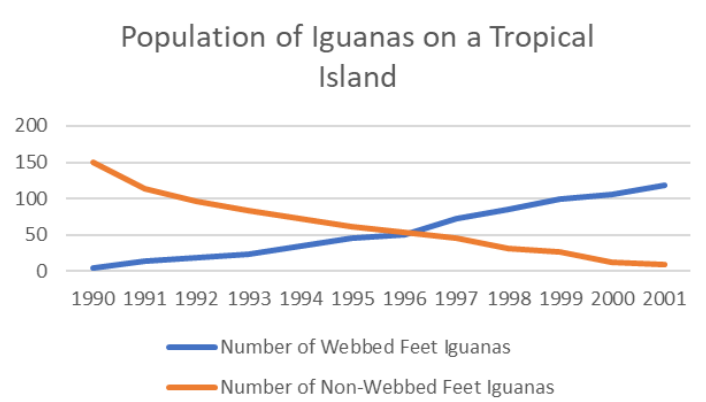
A population of green iguanas lived on a tropical island. Originally, most of the iguanas had feet without webbing between their toes and a long round tail. A few iguanas had webbed feet and short, flat tails. As the years passed, the iguana population changed, as shown in the figure below.
*click g
Which explanation below best explains the shift in population as shown in the data table?
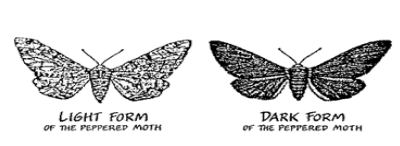
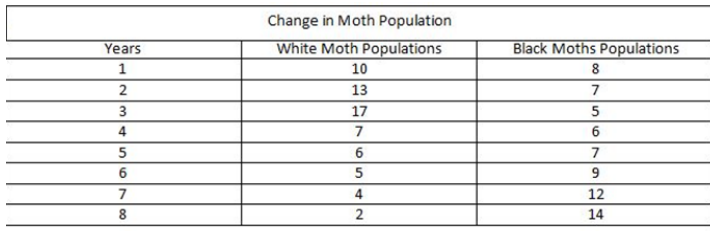
Peppered moths vary in color from light gray to almost black. During the day, the moths rest on trees that have light gray bark. Near cities like London, the light gray trees were covered with soot that came from the smokestacks of factories. The trees got darker and darker from the soot. The changes in the moth population are shown in the data table below.
*click table to enlarge
Over time, England established Environmental regulations to clean up London, the soot levels in the air significantly decreased. In the future, what should they expect to happen to the moth population?
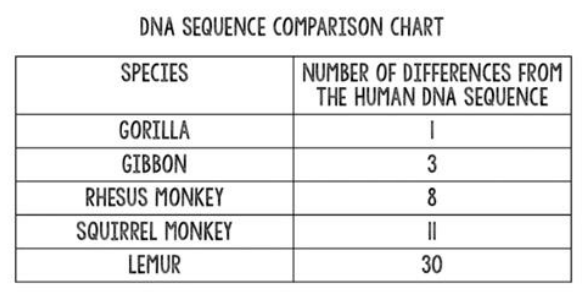
In the table below, the DNA found in five primate species was compared to the DNA found in humans. The number of sequence differences was recorded.
Based on the data in this table, what inference could you make about these species compared to humans?
Early during development, organisms as diverse as a human, a mouse, and a bat can appear indistinguishable. All of their embryos look nearly identical, suggesting that
Which of the following is not a principle of natural selection?
When a lion preys on a herd of antelopes, some antelopes are killed and some escape. What part of Darwin’s concept of natural selection might be used to describe this situation?
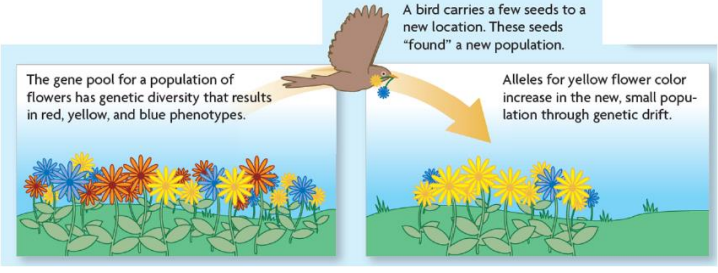
Which of the following phenomena is illustrated by the example shown in the image above?
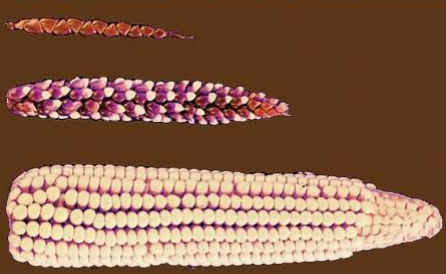
This image depicts the evolution of corn (maize). At the top of the image is the fruit of a wild ancestor called teosinte. At the bottom is a modern ear of corn that was developed by humans. Which of the following mechanisms of evolution led to teosinte's transformation into modern corn over a period of at least 10,000 years?
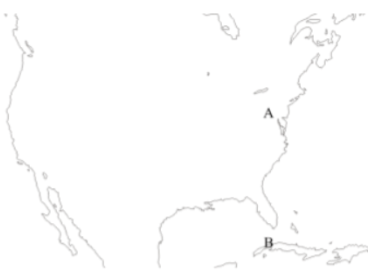
A population of songbirds breeds in the summer at Location A and winters at Location B. If half of the population begins staying at Location B year-around, which of the following is most likely to happen?
On Daphne Major, one of the Galapagos Islands, live many different sized finches. After a severe drought, large, hard seeds remain, and all the birds with small beaks died of starvation. This is an example of .
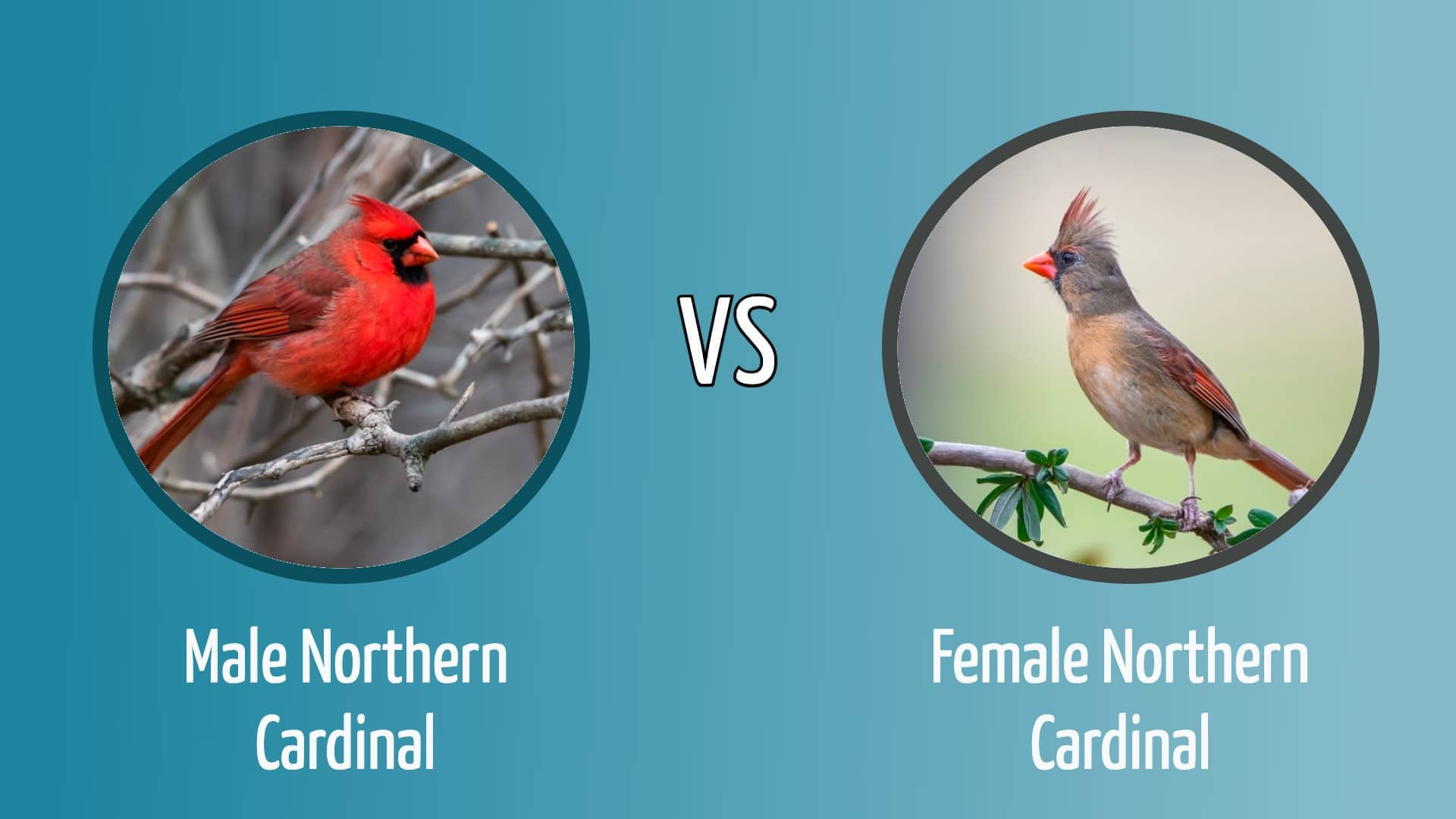
In a species of birds, males with colorful feathers attract females, and dull coloration helps the females camouflage from predators. This is an example of
Geographic isolation caused the separation of rainforest frog populations into a population in the north and a population in the south. The separated populations later reconnected because the climate got wetter and warmer, causing the rainforest to expand. When males from the north mated with females from the south, the offspring failed to develop past the tadpole stage. When males from the south mated with females from the north, the offspring developed more slowly than the offspring of pairs of northern frogs. This data supports which event occurred while the two populations of frogs were separated?
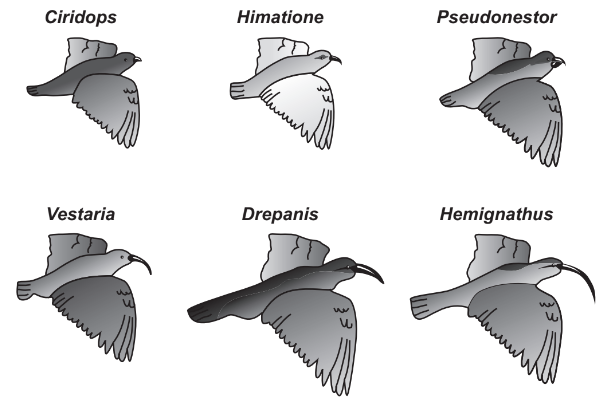
Hawaiian honeycreepers include a number of related bird species with different beak types, as shown below.
According to evolutionary theory, what most likely led to high biodiversity among these birds?
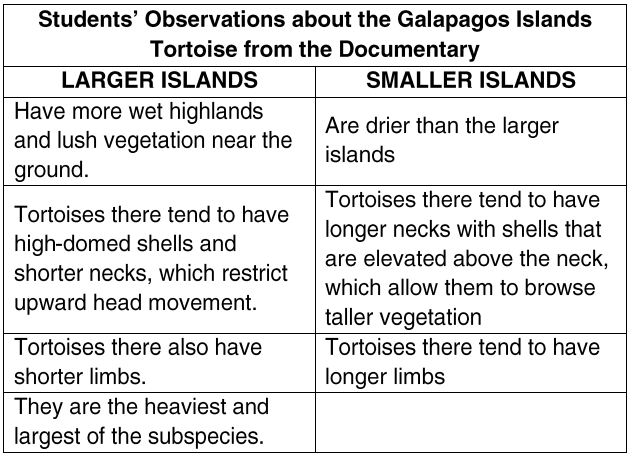
A group of students watched a documentary on the Galápagos Island tortoise as part of their studies on the theory of evolution. They learned that there is only one species of Galápagos Island tortoise, but there are several subspecies. While watching the video they made the following observations:
*click table to enlarge
Based on the information given, which of the following is the BEST plausible explanation for the emergence of the tortoise subspecies?
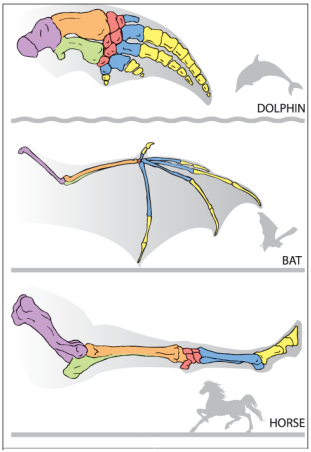
Using evidence from the comparative morphology of the following organisms:
Choose the best argument that describes the relationship between these organisms and uses evidence to support that relationship.
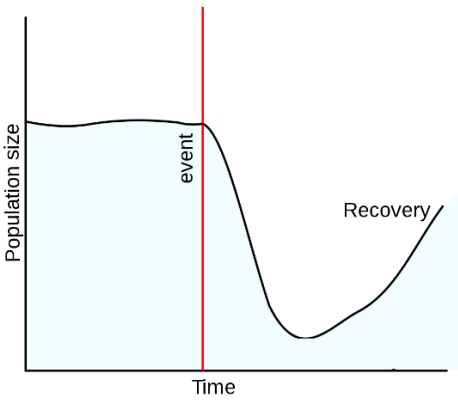
A scientist explains that this is a graph of a genetic drift event. The scientists hypothesized that this was an example of a bottle neck event such as a wildfire rather than being an example of natural selection. Evaluate the following graph:
Choose the best explanation using the graph as evidence to explain why the scientist is correct.
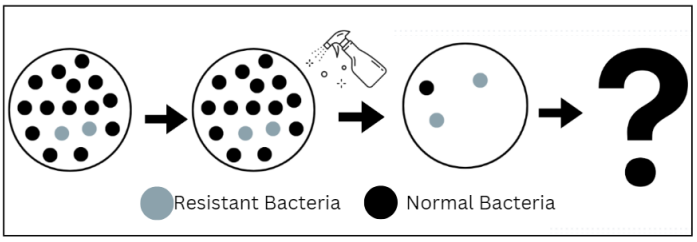
A student has created a partial model of the process that could create antibiotic resistant bacteria. View the partial model below:
*click image to enlarge
Choose the appropriate last step to complete the model.
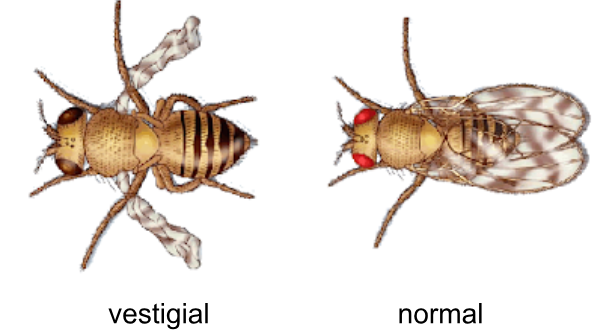
Insects with wing mutations that prevent flight (e.g. “vestigial wing” mutation in fruit flies) usually can’t survive long in nature. Flightlessness is generally selected against, but in some environments it could be selected for.
In which environment would useless wings be selected for?
Prokaryotes, such as bacteria, have evolved to use binary fission over other forms of reproduction. Why might this be an evolutionary advantage for these organisms?
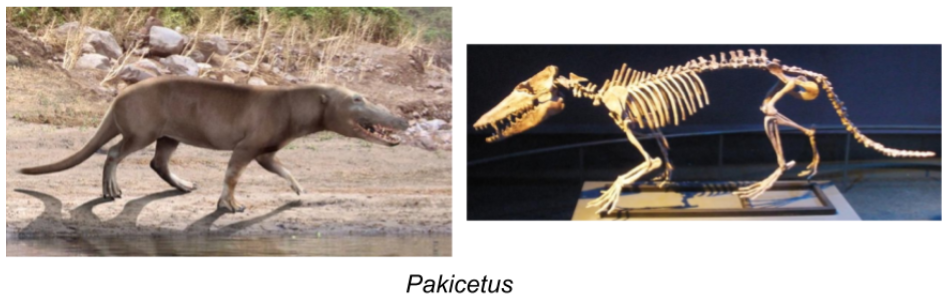
Fossils of organisms from the past have been found all over the world. During the fossilization hard tissue such as bone is replaced with minerals, while soft parts such as flesh and DNA decompose. Many fossils have provided new evidence in support of evolution such as this fossil of the Pakicetus below.
*click image to enlarge
Some scientists have hypothesized that this is an ancestor of both the whale and the hippopotamus from approximately 50 million years ago. What evidence could scientists use to back up this claim?
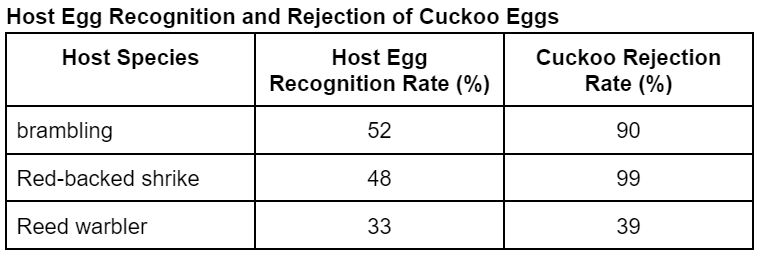
The common cuckoo is a parasitic bird that lays its eggs in the next of host birds. The cuckoo’s ability to copy the marking patterns on host birds’ eggs has evolved over time. However, the egg patterns of host bird species have also evolved, making them harder to copy and easier for parents to recognize. When host birds do not recognize an egg in their nest, they push it out of the nest. When host birds fail to reject a cuckoo egg, they care for the extra egg, and when it hatches, the baby cuckoo pushes the host bird’s eggs out of the nest. The table shows the rate at which three host species recognized their own eggs and the rate at which it rejects cuckoo eggs.
First use the drop-down menus to explain the data.
Based on the data, the has coevolved with cuckoos over the longest period of time. This is because it has a developed ability to produce recognizable eggs and the rejection rate of cuckoo eggs.
Next, use the drop-down menus to support an explanation abut genetic change in cuckoo and host populations.
The coevolution of genetic traits that allow cuckoos to copy how eggs and their hosts to produce recognizable eggs is a result of because the genes of successful birds are passed to offspring, the frequency of the genes that cause those beneficial traits in these populations.
A genome is the complete set of genetic material present in a species. Genome analysis usually includes the study of both the structure and the function of genes. Analysis of the structure involves determining the sequence of all genes in the chromosomes of individuals, and analysis of the function involves determining how the genes are expressed in an individual.
Use the drop-down menus to explain how the two areas of genome analysis help researchers determine the sequences and patterns of expression of the genes in a species' genome.
Analysis of genome structure and function helps researchers understand ow the products of genes, , interact during the of individuals of the species.
Use the drop-down menu to explain how information about the genomes of different species could influence our understanding of genetics.
Understanding the structure and function of the genomes of species helps researchers determine .
Within 10 years of the introduction of a new pesticide, nearly all of the descendants of the insects are resistant to the usual-sized dose. What is the best explanation for this change?
Choose the best explanation for the process.
In order for the mutation to be passed on to other fruit flies, it must be coded for in the DNA found in